

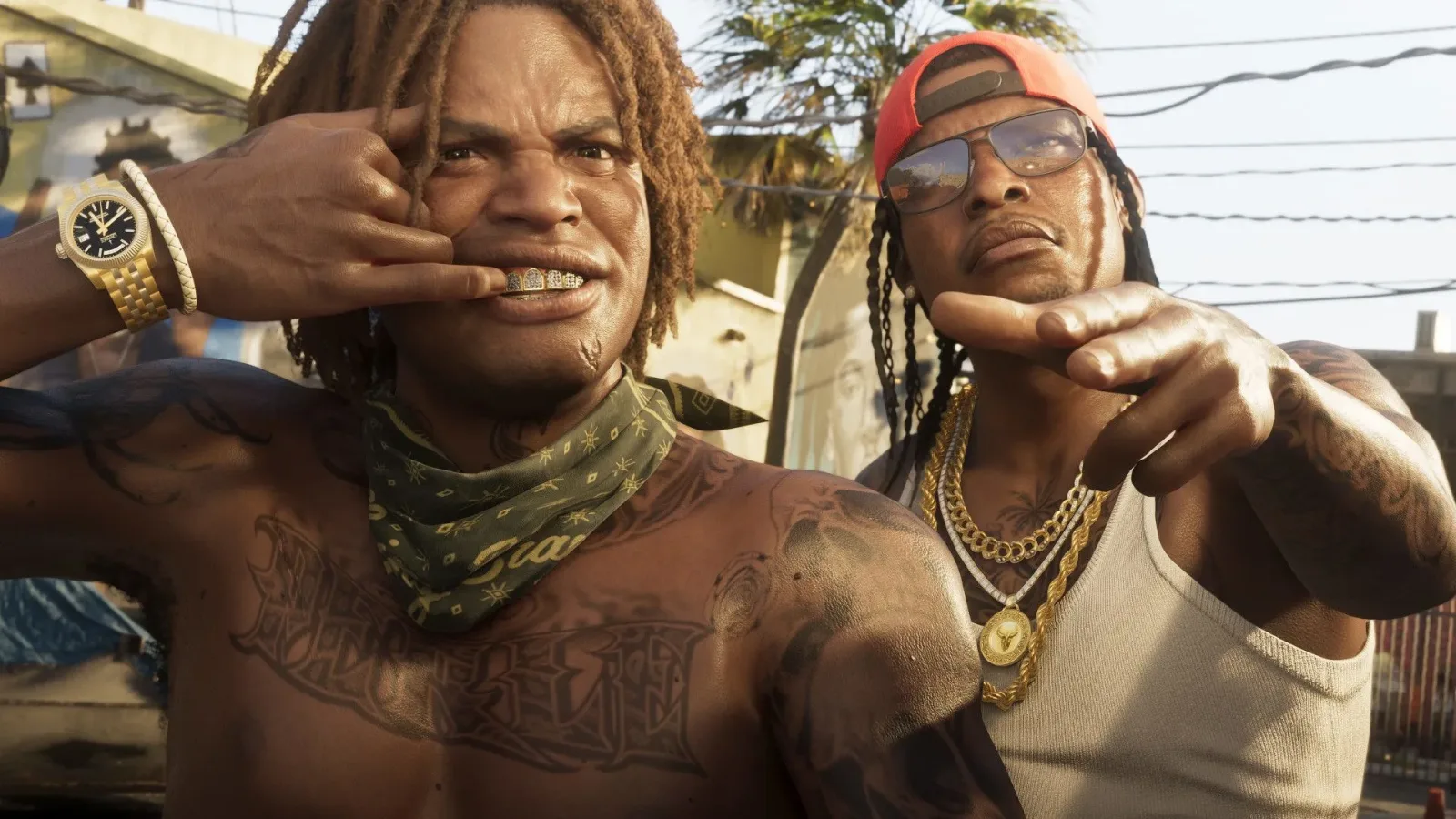
Rockstar Games has introduced new modding guidelines that could substantially reshape the kinds of community projects built around Grand Theft Auto, Red Dead Redemption, and the publisher's other games. The newly stated rules place firm limits on fan-made content that expands official narratives, adds new missions or characters to established continuity, merges assets between Rockstar titles, or makes a game run on hardware and platforms where it has not received an official release.
The policy arrives before the planned November 19 launch of Grand Theft Auto 6, a release that is already expected to become one of the biggest events in games. While a PC version of the next Grand Theft Auto has not been announced, the guidelines have immediately prompted concern among PC modders and roleplaying communities, particularly because Rockstar has previously made a significant move into that space through its acquisition of the team behind the FiveM roleplay framework for Grand Theft Auto 5.
FiveM remains a major part of the broader GTA community. Its servers support custom roleplaying experiences built on Grand Theft Auto 5, and the framework surpassed 200,000 concurrent players on Steam in March. That existing relationship makes the scope and wording of the new restrictions especially notable: Rockstar is recognizing the importance of a creative community while also drawing sharper boundaries around how its worlds, stories and intellectual property can be used.
Embedded X/Twitter post
"Respect our games" is the starting point
The guidelines open with a simple instruction: "Respect our games." Rockstar explains that it creates the worlds, characters and stories that make up the official continuity of its games, and that it retains the right to decide the limits of community use of those games and its brand.
For useful background on this topic, read Echoes of Mora Launches on Steam, Sending Players Into a Village Lost Beneath the Water.
That principle is then applied to one of the most consequential restrictions in the document. Modders are instructed not to expand or alter Rockstar's official storylines, plots, missions, characters, or other elements of its established continuity.
In practice, that language could affect a huge range of projects traditionally associated with single-player game modding. Fan creators have frequently made additional missions, alternate story paths, new characters, expanded towns, restored concepts, and other additions that treat a completed game as a foundation for further storytelling. Under this policy, projects that build directly upon Rockstar's canonical settings or present new content as an extension of official events appear to fall within prohibited territory.
The wording leaves important questions unanswered. It is not yet clear how Rockstar will distinguish between a modification that simply provides gameplay tools or cosmetic changes and one that improperly modifies established continuity. A server or mod can exist in a familiar city without necessarily claiming to be part of an official story, but it may still add missions, named characters, locations, dialogue or lore that blur that line. The document establishes the boundary, though the practical standard for enforcement will matter just as much as the rule itself.
Cross-game projects face a direct restriction
Another section prohibits mods that combine maps, locations, characters, storylines, in-game assets, or other intellectual property from one Rockstar game with another Rockstar title. This targets a particularly popular kind of fan project: the crossover mod.
Modders have long enjoyed putting familiar places and people into new contexts, whether that means recreating an older game world in a newer engine, importing vehicles and props across entries, or using one Rockstar title as a platform for an expanded version of another. The new guidelines make clear that this kind of mixing is not permitted, even when both the original material and the destination game belong to Rockstar.
The restriction could be especially significant for large-scale map projects. One recent example is a Red Dead Redemption 2 project recreating Mexico from the original Red Dead Redemption, including added NPCs, settlements, wildlife and other content. Work of that nature is the sort of cross-title recreation that now appears difficult to reconcile with the published rules. Whether existing projects will be removed, revised, tolerated, or assessed individually has not been specified.
There is a creative consequence beyond any one mod. Rockstar's back catalogue contains connected settings, recurring locations and recognizable historical eras that naturally invite fans to build bridges between games. Those experiments can preserve older worlds, offer new technical showcases, and let players revisit locations using more modern tools. Rockstar's policy instead prioritizes clear separation between each official release and its assets.
No unofficial ports to other hardware
The guidelines also directly address platform conversions. Modders are told not to alter Rockstar games so they can operate on consoles, hardware devices or other platforms that Rockstar has not officially supported.
This language closes the door on unofficial efforts to make older Rockstar games playable on newer consoles, alternative devices or operating systems without an official version. It also speaks to fan-made ports and technical adaptations that are sometimes created when a publisher has not brought a game forward to modern hardware.
Such projects can be complicated from both legal and technical perspectives. Some preservation-minded fans see them as a way to keep inaccessible games running, while rights holders may view them as unauthorized distributions, derivatives, or uses of proprietary code and assets. Rockstar's new policy is unambiguous about its position: players and creators should not modify the company's games for platforms that do not have an official Rockstar release.
That restriction may also matter for a future PC edition of Grand Theft Auto 6. Rockstar has not announced a PC launch for the game. Until it does, there is no official PC platform for the title to mod in the conventional sense, let alone any legitimate basis for fans to attempt an unofficial conversion. The new guidelines underline Rockstar's control over where its games appear and when they do so.
A sharp contrast with the energy of GTA roleplay
The timing has made the policy a flashpoint. Rockstar's acquisition of the FiveM team was widely seen as an acknowledgment that roleplay servers, custom multiplayer spaces and creator-led communities were important to the long-term life of Grand Theft Auto 5. FiveM's success demonstrates the extraordinary appetite for player-driven scenarios in Rockstar's sandbox worlds.
Yet roleplay's appeal is often rooted in reinvention. Communities create custom jobs, social systems, businesses, emergency services, events and character arcs that do not exist in the base game. The new guidance does not spell out the future of FiveM or identify which forms of roleplay remain acceptable. It does, however, set limitations that could bear on any project that uses official characters, story elements, locations, assets or continuity in expansive new ways.
There is room for a distinction between community-created roleplay experiences and mods that explicitly extend Rockstar's authored single-player narratives. But that distinction is not fully explained in the text currently available. For creators and server operators, the key issue will be whether Rockstar provides more detailed examples, separate framework-specific rules, or case-by-case clarity as the policy is applied.
Fans push back on the scope of the policy
Reaction from players and modding fans has been strongly critical. Online discussion has focused on the breadth of the prohibited categories, with many reading the policy as a ban on some of the most ambitious and imaginative forms of Rockstar game modding. A common complaint is that the rules leave little space for the fan projects that add new adventures, revive unused ideas, revisit older locations or adapt games for audiences with limited official options.
The criticism is understandable because mods are not a single thing. Some are visual tweaks, accessibility changes, bug fixes or quality-of-life tools. Others are new cars, physics adjustments and gameplay systems. At the most elaborate end are total conversions, story expansions, map recreations and platform adaptations. Rockstar's statement most plainly challenges that latter group, but its language may encourage creators across the spectrum to reassess what they can safely make and share.
Supporters of a stricter approach may argue that Rockstar is protecting the integrity of its stories, avoiding confusion over what is official, and guarding against unauthorized uses of its property. Those concerns are particularly understandable for a company preparing to launch a major new entry in one of entertainment's most valuable franchises. A clearly defined official continuity can be important when characters, events and locations carry substantial commercial and creative weight.
For modders, though, the concern is that protecting continuity can become a restriction on experimentation. Fan-made content has often served as both a creative outlet and a technical proving ground, extending a game's lifespan long after official updates have slowed. The tension between those goals is now much more visible.
What it could mean for GTA 6
It is too early to say exactly how these rules will affect the eventual modding scene around Grand Theft Auto 6. The game is scheduled for November 19, but Rockstar has not announced a PC version. Modding questions will therefore remain largely theoretical until the game reaches a platform where user-created modifications have historically flourished.
Still, the guidelines offer a clear indication of Rockstar's priorities ahead of that moment. Creators should not assume that the open-ended traditions associated with earlier PC Rockstar games will automatically carry forward. New missions, canonical story extensions, cross-game asset imports, recreated maps from other Rockstar releases and unofficial hardware ports are all specifically implicated by the policy.
The immediate challenge for Rockstar will be communication. The company has set out what it does not want, but creators will want more precision about what remains possible. Clarification around roleplay servers, original assets, non-canonical scenarios, single-player utility mods and existing community projects would help establish whether the policy is a narrowly focused protection of official material or the beginning of a much tighter modding environment.
For now, the message is unmistakable: Rockstar wants firm control over its stories, worlds, platforms and the lines between its games. As Grand Theft Auto 6 approaches, the modding community is left to determine how much creative room remains inside those lines.
Community
Discussion
Start the conversation.
No comments have been posted yet.