

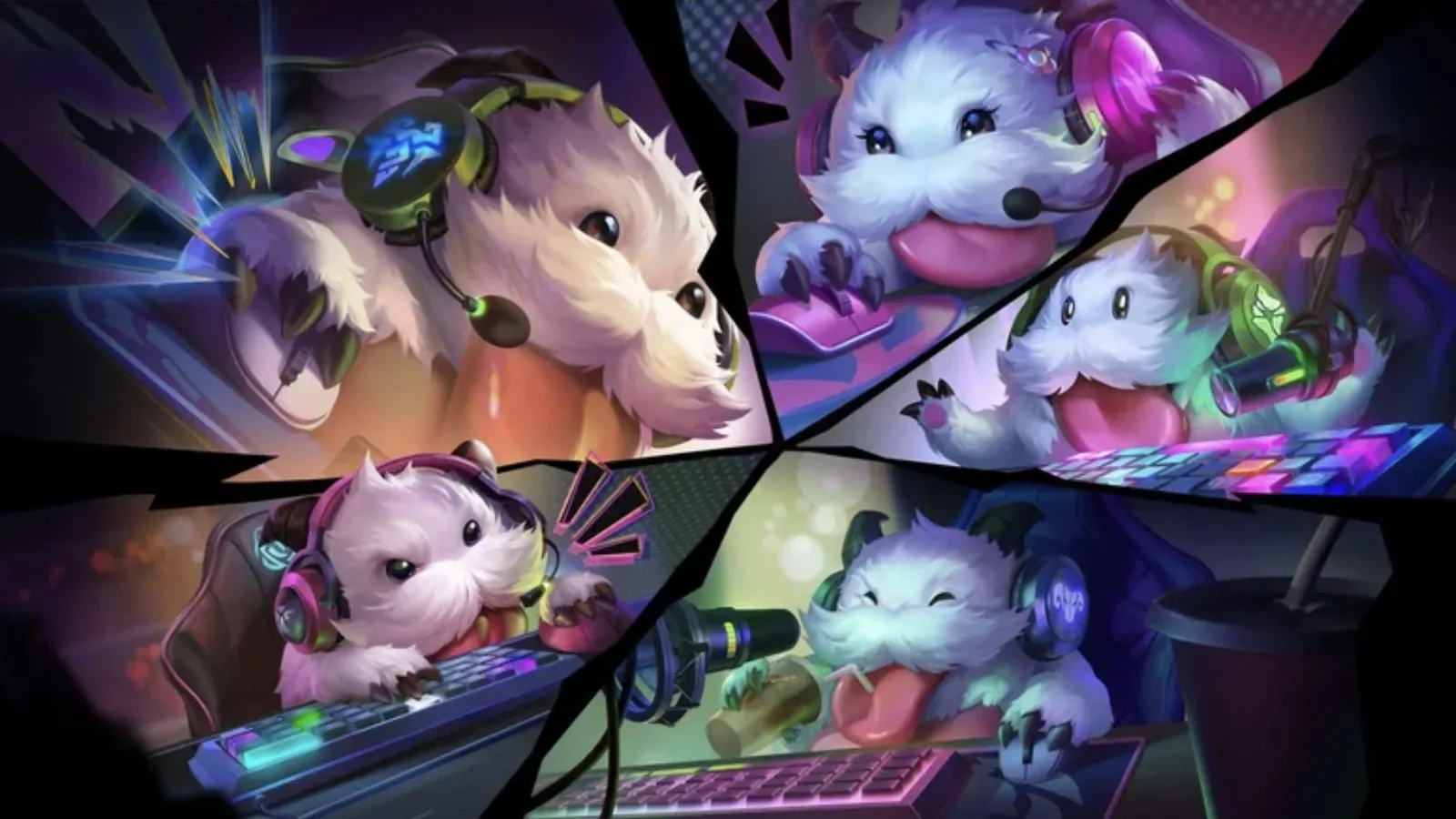
League of Legends players will need to wait longer for the game's planned team voice chat feature. Riot Games has delayed the system ahead of its previously announced arrival in October's 26.20 update, and the developer has not provided a new timetable for the rollout.
The postponement comes only two weeks after Riot revealed that voice chat was finally headed to the long-running multiplayer online battle arena game in select regions. For a competitive title that has existed for 17 years, the prospect of a built-in way to speak directly with a full team during matches was a major announcement. The abrupt delay is understandably disappointing, but Riot says it is taking additional time to ensure the feature reaches the standard its community deserves.
That wording offers little detail about what changed behind the scenes. Riot did not identify a particular technical problem, policy concern, or launch requirement that forced the delay. Still, the decision highlights how complicated voice communication can be in a game with League of Legends' scale, competitive intensity, and long-standing reputation for difficult player interactions.
Embedded X/Twitter post
Voice chat was meant to arrive with patch 26.20
The original plan placed team voice chat in patch 26.20, scheduled for October, initially in selected regions rather than as an immediate worldwide launch. A limited regional release would have allowed Riot to assess the feature's performance and player response before expanding access more broadly.
For useful background on this topic, read Microsoft Patent Explores Ad-Supported Xbox Game Access Between Play Sessions.
Now, even that first stage is on hold. Riot has confirmed that voice chat will not make the intended 26.20 debut, but it has not attached the feature to another patch or given players an estimate for when testing or deployment might resume.
That absence of a revised target matters. Delays tied to a specific update can sometimes mean a feature has simply slipped by a patch cycle. Without a replacement window, however, players should not assume voice chat will arrive in the following update. Riot may be dealing with implementation work that needs further iteration, or it may want more time to settle questions surrounding safety, moderation, and eligibility.
For now, the clearest point is that the feature remains in development. The delay does not mean Riot has abandoned team voice chat. Rather, the studio has stepped back from the October plan before putting the system in front of players.
A long-requested feature for a highly competitive game
Voice communication has been requested by many League of Legends players for years. In coordinated team games, spoken callouts can make a substantial difference. Players can quickly communicate objective timers, jungle movements, lane states, enemy summoner spell usage, engage opportunities, retreats, and late-game shotcalling. Typed messages and pings remain useful, but they do not always provide the speed or nuance of a live conversation.
League of Legends already supports voice communication for players who organize their own groups through its party-based functionality. The planned addition was notable because it would have brought team voice chat closer to the matchmade experience, potentially allowing teammates who were not already friends or grouped together to communicate verbally.
That distinction is important in ranked play. A team assembled through matchmaking often has no established communication routine. Players may use pings efficiently, type brief strategic notes, or rely on outside voice applications when playing with friends. But a built-in option could make verbal coordination more accessible to solo and duo players--provided they feel safe and comfortable using it.
There is also a reason Riot has approached the matter cautiously. A voice channel can improve teamwork, but it can also create a new route for harassment. Competitive pressure, anonymous matchmaking, and disagreements over decisions can turn even a routine game into a hostile environment. Adding voice therefore involves more than getting microphones and audio routing to work reliably.
Moderation may be central to the challenge
Riot has not stated why voice chat was delayed, so any explanation beyond its stated quality goal remains uncertain. Moderation is nevertheless an obvious area of concern for a system like this.
League of Legends has long faced criticism over toxic behavior in matches, and Riot has spent years introducing and refining tools intended to address disruptive conduct. Text filtering, reporting systems, penalties, behavior tracking, and player-reputation initiatives have all been part of the wider effort to improve game environments. Voice communication presents a different set of challenges because harmful behavior can happen in real time and may be harder to review, detect, or act upon than a written message.
The proposed approach reportedly included an Honor requirement. Players would need to maintain a minimum Honor level, demonstrating a history of constructive in-game behavior, before gaining access to team voice chat. Such a gate could reduce the chance that the system is immediately dominated by players with recent behavioral issues. At the same time, eligibility rules alone would not solve every problem. Riot would still need to determine how reports work, what players can mute or block, how abuse is evaluated, and whether enforcement is timely and consistent enough to sustain confidence in the feature.
A careful rollout would also need to consider the player experience for people who do not want to speak. Voice chat should not become an unofficial requirement that leaves quieter players feeling excluded from team strategy. Strong opt-in controls, simple muting options, clear indicators, and communication tools that remain effective without a microphone could all be important to a successful implementation.
The "voice skin" idea may require more work
Another previously discussed part of the feature was the idea of "voice skins," which would let players alter how they sound to teammates. This could be a playful customization option, but it adds another layer of complexity to an already sensitive communication system.
Voice alteration raises practical questions about clarity and accessibility. In a fast match, teammates need to understand a callout immediately. An effect that makes voices difficult to identify or comprehend could work against the core purpose of team communication. The feature would also need safeguards against effects that disrupt teammates, imitate other people in misleading ways, or interfere with moderation processes.
It is not known whether voice skins contributed to the delay. Riot has not connected the postponement to that feature, and it would be premature to treat the customization concept as the cause. Still, it illustrates why delivering voice chat is not as simple as adding an audio button to the client. The system has to fit League's competitive needs while remaining understandable, fair, and manageable at scale.
Quality means more than stable audio
When Riot says it wants to meet a quality bar for the community, that can cover a broad range of issues. Basic technical performance is one part of the picture: players need dependable connections, acceptable voice quality, sensible volume controls, and an interface that works without distracting from the match.
But the larger quality test is likely social as well as technical. A feature can operate flawlessly from an engineering perspective and still fail players if it increases abuse, makes reporting confusing, or encourages pressure on people who prefer not to use voice. Conversely, an overly restrictive system might prevent problems but offer too little value to the players who hoped voice chat would improve coordination.
Regional deployment adds further considerations. Languages, local expectations, network conditions, legal requirements, and available moderation support can vary. Starting in selected regions may have been intended to make those challenges easier to evaluate. Delaying that initial release suggests Riot would rather resolve more of those questions before beginning the public phase.
What players can expect now
Players should not expect team voice chat in League of Legends patch 26.20 as originally planned. There is no confirmed replacement patch, no new date, and no detailed breakdown of the work still required.
In the meantime, League's existing communication options remain unchanged. Pings, text chat, party voice tools, and external methods used by premade groups will continue to be the ways teams coordinate. The delayed feature could eventually offer another option for matchmade teams, but its final form--and the conditions for access--may change as development continues.
The wait will be especially frustrating for players who saw the initial announcement as a long-overdue modernization for one of PC gaming's largest competitive games. Yet the risks of rushing voice into a community where behavior management is already a major concern are equally clear. A poorly prepared launch could damage trust in the system and make a useful coordination tool feel like another source of friction.
Riot's decision leaves League of Legends without a firm voice chat roadmap, but it also signals that the developer is not treating the addition as a minor checkbox feature. Whether that extra time results in better moderation, clearer player controls, a refined Honor requirement, or changes to voice customization remains to be seen. Until Riot shares more, the only confirmed change is that team voice chat has moved beyond its planned October 26.20 launch window.
Community
Discussion
Start the conversation.
No comments have been posted yet.