

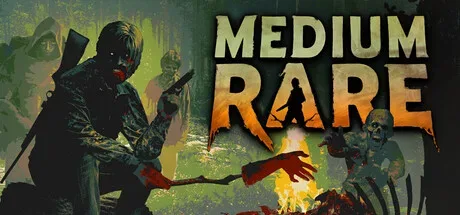
Medium Rare, a turn-based horror dungeon crawler built around dice-led combat and strict inventory management, is set to join the October Steam Next Fest demo lineup. Its demo is scheduled to become publicly available on October 9, giving PC players on Steam an early chance to confront its unsettling premise: a desperate climb up a mountain to rescue a missing wife who may already have become part of someone else's meal.
The game's title may sound playful at first glance, but its central idea is anything but. Medium Rare takes place in a world shaped by industrialized cannibalism, turning hunger, resource scarcity, and human bodies into themes that sit at the heart of its horror. Players head uphill into danger with a singular goal in mind, though the journey appears designed to make certainty impossible. The person being pursued might still be alive. She might not. And the mountain itself seems likely to make the answer difficult to reach.
Its playable demo is expected to offer a relatively compact first taste of that ordeal. An average completion time is estimated at roughly one hour and 20 minutes, suggesting a focused run rather than a sprawling multi-evening commitment. That structure should fit naturally into Steam Next Fest, where players often sample a number of unfinished games and developers need to make an immediate impression with a small but representative slice.
A horror dungeon crawl where every decision carries forward
Medium Rare's core structure is built around moving through dangerous areas and deciding, one section at a time, whether to continue advancing or retreat to base. That seemingly simple choice is where the game's tension is expected to emerge. Pushing on could mean finding critical supplies, gaining ground, or moving closer to the rescue. It could also mean entering the next encounter with fewer options, a damaged loadout, and no easy route back.
For useful background on this topic, read Gears of War: E-Day Campaign Review-in-Progress: A Brutal Return to Kalona.
Falling back, meanwhile, offers a potential chance to regroup. In survival-focused horror games, retreat is rarely framed as a clean victory; it is often a concession made to preserve the possibility of surviving later. Medium Rare's area-by-area advancement system looks positioned to make that calculation a constant part of a run. Players will need to judge not merely whether they can win the battle directly in front of them, but whether winning it leaves them equipped to handle whatever comes next.
That rhythm places the game somewhere between a traditional dungeon crawl, a turn-based tactical challenge, and a survival horror expedition. The destination is clear, but the route is meant to be uncertain. The mountain is not just a setting to traverse. It is an escalating test of judgement, supplies, and nerve.
Dice-based gunfights put chance under the spotlight
Combat in Medium Rare uses dice-based gunfights, bringing an explicit element of chance into its turn-based confrontations. Dice systems can make every action feel more volatile than a conventional accuracy percentage hidden behind the scenes. A shot, defensive decision, or riskier move may depend on a roll that is visible and immediate, encouraging players to weigh probabilities rather than simply execute a known optimal sequence.
For a horror game, that design can do a great deal of atmospheric work. Tension often comes from incomplete control: the player can prepare, plan, and make sensible choices, but cannot eliminate danger altogether. Dice turn that uncertainty into part of the game's language. A plan may be strong without being guaranteed, and the threat of an unfavorable outcome can make an encounter frightening before an enemy even acts.
The turn-based format should also give players time to consider those outcomes. Rather than relying on reflexes alone, Medium Rare appears to ask for deliberate choices made under pressure. What is worth spending now? Is a chance at a decisive hit better than a safer but less effective option? Is it time to use an item that could be crucial two rooms from now? Those questions fit especially well with the game's broader focus on carrying only what matters.
Just as importantly, a dice-driven system can help individual runs feel distinct. When chance intersects with limited resources and player choice, repeated attempts need not unfold in exactly the same way. Even players who understand the mountain's broad rules may face different outcomes based on what they bring, what they find, and how events develop in combat.
Inventory tetris turns equipment into a survival problem
Medium Rare also leans into inventory-tetris design, where the physical space an item occupies is as important as its basic utility. This approach has become a familiar source of pressure in survival and horror games because it transforms loot into a problem with no universally correct answer. A useful item is not automatically worth taking if it forces out something even more vital.
In the context of Medium Rare, every carried object is said to matter. That means the player's inventory is not simply a menu of accumulated power; it is a restricted toolkit with meaningful tradeoffs. Ammunition, weapons, healing supplies, defensive tools, and newly discovered objects could all compete for precious space. Before moving farther up the mountain, players may need to decide whether to prioritize the equipment that solves the immediate threat or the supplies that make a longer push possible.
This is likely to be particularly important because of the choice between continuing deeper into the dungeon and returning to base. A full inventory might feel reassuring, but it can also limit the ability to bring back useful discoveries. Conversely, traveling light can create room for rewards while making the next fight more dangerous. The most effective approach may change from one area to another, and the demo should give players an opportunity to see how tightly its inventory logic is connected to its wider expedition loop.
There is also a thematic fit between this system and Medium Rare's industrialized-cannibalism setting. Horror rooted in production, consumption, and the reduction of living people into material has an inherently practical, dehumanizing quality. Inventory management is practical by nature: it asks what an object is worth, what it can do, and what must be left behind. Within this setting, those calculations may take on a more uncomfortable edge.
A compact demo with a deliberately grim hook
The rescue mission at the center of Medium Rare provides a direct emotional anchor for its mechanics. The player is not simply descending into an unknown dungeon for treasure or attempting to survive an abstract apocalypse. They are climbing toward a personal answer. The uncertainty over the wife's fate adds dread to that objective, particularly in a world where people may be processed as food.
That premise gives the game a stark and memorable hook, but it also leaves plenty of open questions that the demo may begin to explore. Who operates the mountain's cannibalistic machinery? What does the protagonist know before beginning the ascent? Is rescue truly possible, or is the climb more about discovering what has already happened? Medium Rare has not needed to answer every question in advance for the setup to work. The unknown is part of what makes the trek unsettling.
The estimated 80-minute demo length may prove useful here. A short horror demo has room to establish a world, teach systems, and end before the tension loses its shape. If its dice combat, inventory constraints, and push-or-retreat decisions come together effectively, Medium Rare could leave players thinking about choices they made long after they step away from the mountain.
What to expect from the October Steam Next Fest appearance
Steam Next Fest is one of the biggest recurring opportunities for PC players to test upcoming games, and Medium Rare arrives with several features that could make it stand out among a crowded field. Its mix of turn-based play and horror is less common than action-led scares, while its premise is immediately distinct. The demo's relatively brief completion time should also make it accessible to players looking to fit another discovery into a busy festival schedule.
Players interested in tactical games may be drawn to the dice-focused firefights and resource decisions. Survival-horror fans may find the real appeal in the oppressive setting, uncertain mission, and persistent concern over whether to press ahead or withdraw. Meanwhile, dungeon-crawler players will have an opportunity to test how its run structure handles progression, risk, and repeat attempts.
Medium Rare's demo is scheduled for public availability on October 9 as part of the October Steam Next Fest lineup. For anyone who enjoys horror that builds suspense through calculated risk rather than speed alone, it looks like a demo worth putting on the list. The climb may be short in demo form, but its underlying question is suitably grim: how far would you go up the mountain when every extra step could bring you closer to the truth--or make you part of the menu?
Community
Discussion
Start the conversation.
No comments have been posted yet.