

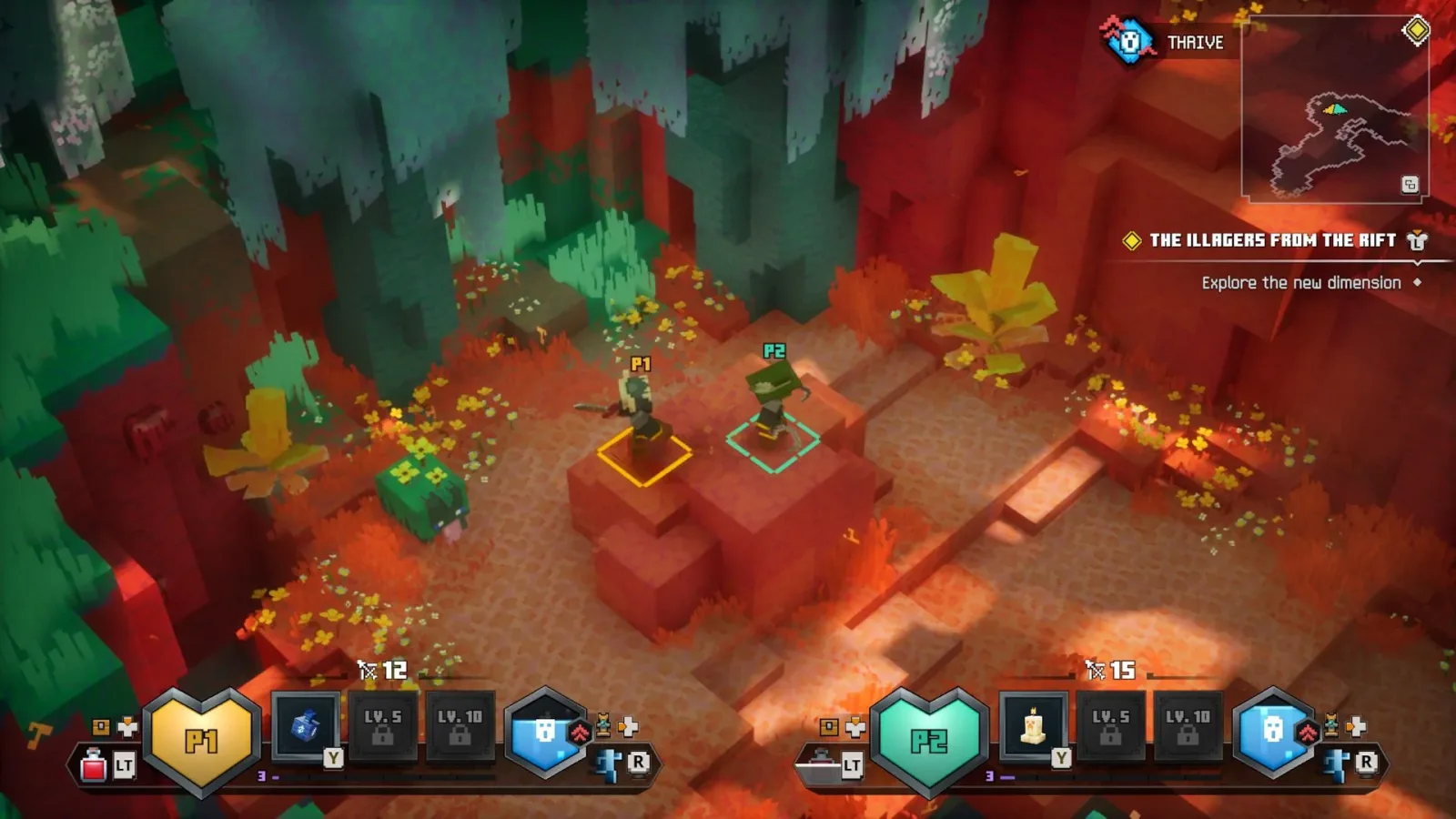
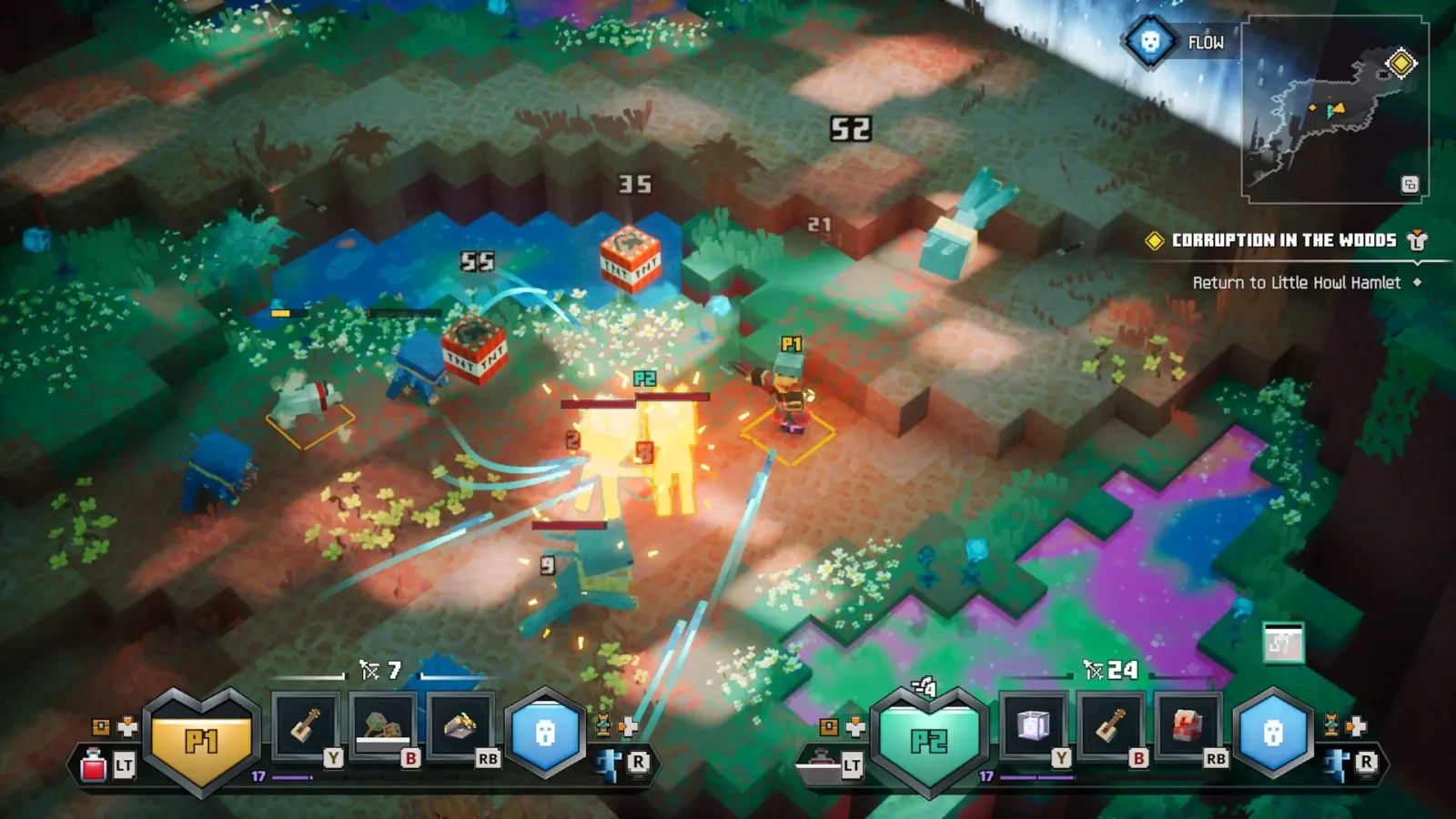
Minecraft Dungeons II arrives as a notably broader take on the approachable action-RPG formula established by its predecessor. Released on September 29, the sequel does not attempt to turn itself into a direct recreation of Minecraft's mining-and-crafting sandbox. Instead, it remains an isometric, loot-driven adventure built around fighting huge packs of familiar blocky monsters, exploring dungeons, collecting increasingly powerful gear, and--most importantly--sharing the journey with another player.
That decision is central to what makes the game work. Minecraft Dungeons II is not positioned as a replacement for dense, theorycrafting-heavy action-RPGs where players spend hours optimizing fractions of a percentage in their builds. Its systems are clearer, its objectives are easier to follow, and its pace is designed to keep a mixed-skill group moving forward. The result is a sequel that seems especially well suited to family co-op, including adults playing alongside children, while still providing adjustable difficulty for teams that want more resistance from its hordes.
It is a purposeful evolution rather than a radical reinvention. There are still mobs to mow down, treasure to uncover, gear numbers to chase, and special abilities to deploy at just the right moment. Yet a larger structure, more varied equipment, and a striking new realm give the adventure more texture than the original's mission-to-mission format.
A Minecraft Spin-Off That Still Does Its Own Thing
Minecraft Dungeons has always been an unusual spin-off. It uses the visual language, enemies, and broad fantasy charm of Minecraft, but leaves behind the features most closely associated with the main game. There is no core loop of chopping trees, mining ores, building homes, and crafting tools. Minecraft Dungeons II continues down that same separate path.
For useful background on this topic, read Arc Raiders Team Shifts Update Strategy After Live-Service Workload Takes Its Toll.
The campaign picks up after the previous game's villain was defeated, although newcomers should not have trouble following the setup. A brief period of calm has ended as soul corruption begins spreading across the Overworld. The Illager High Council has learned to open dangerous portals, bringing threats to the Squid Coast and forcing people to establish a new home called Brave Haven.
From there, players set out to push back against the council and its forces. Zombies, skeletons, slimes, Endermen, and other recognizable enemies are once again part of the danger, but the main narrative objective involves sealing rifts connected to a new dimension known as The Sift. The plot is straightforward, but it provides an effective reason to keep traveling, rescuing people, and diving into combat-heavy missions.
That uncomplicated storytelling is consistent with the game's overall priorities. It wants players to know what they are doing, where they are going, and why a nearby dungeon is worth entering. For a game focused on cooperative momentum, that clarity is a strength rather than a limitation.
Brave Haven Makes the Adventure Feel More Connected
One of the sequel's most meaningful changes is Brave Haven itself. Rather than serving as a compact menu-like hub used largely to jump into levels, it is an expansive area to explore. Players can wander through villages, find chests and secrets, meet non-player characters, discover side activities, and locate the entrances to longer dungeons.
This structure gives quests more context. Instead of simply choosing a task from a list, players can encounter people who need help and learn the immediate stakes of the request. A mission might involve rescuing somebody's friend or helping bees find a more suitable place to establish their hives. These are not elaborate role-playing storylines, but they give the action a more personal, adventurous framing.
Brave Haven also supports a generous fast-travel system. Trams can move players closer to a goal, cutting down on unnecessary backtracking. Those who would rather roam on foot can do that too, battling enemies along the path and increasing their opportunities to find loot. It is a simple choice, but one that accommodates different moods: efficient progression when the group wants to stay focused, and casual wandering when the appeal lies in smashing every monster in sight.
The broader hub helps Minecraft Dungeons II feel less like a sequence of disconnected assignments and more like a journey through an inhabited world. It is still accessible and guided, but there is more room for curiosity between the major dungeon runs.
The Sift Is a Colorful and Curious New Dimension
The most surprising addition is The Sift, a strange realm that stands apart from Minecraft's familiar darker dimensions. The Sift is expected to come to Minecraft sometime in 2027, making its early appearance in Minecraft Dungeons II particularly interesting.
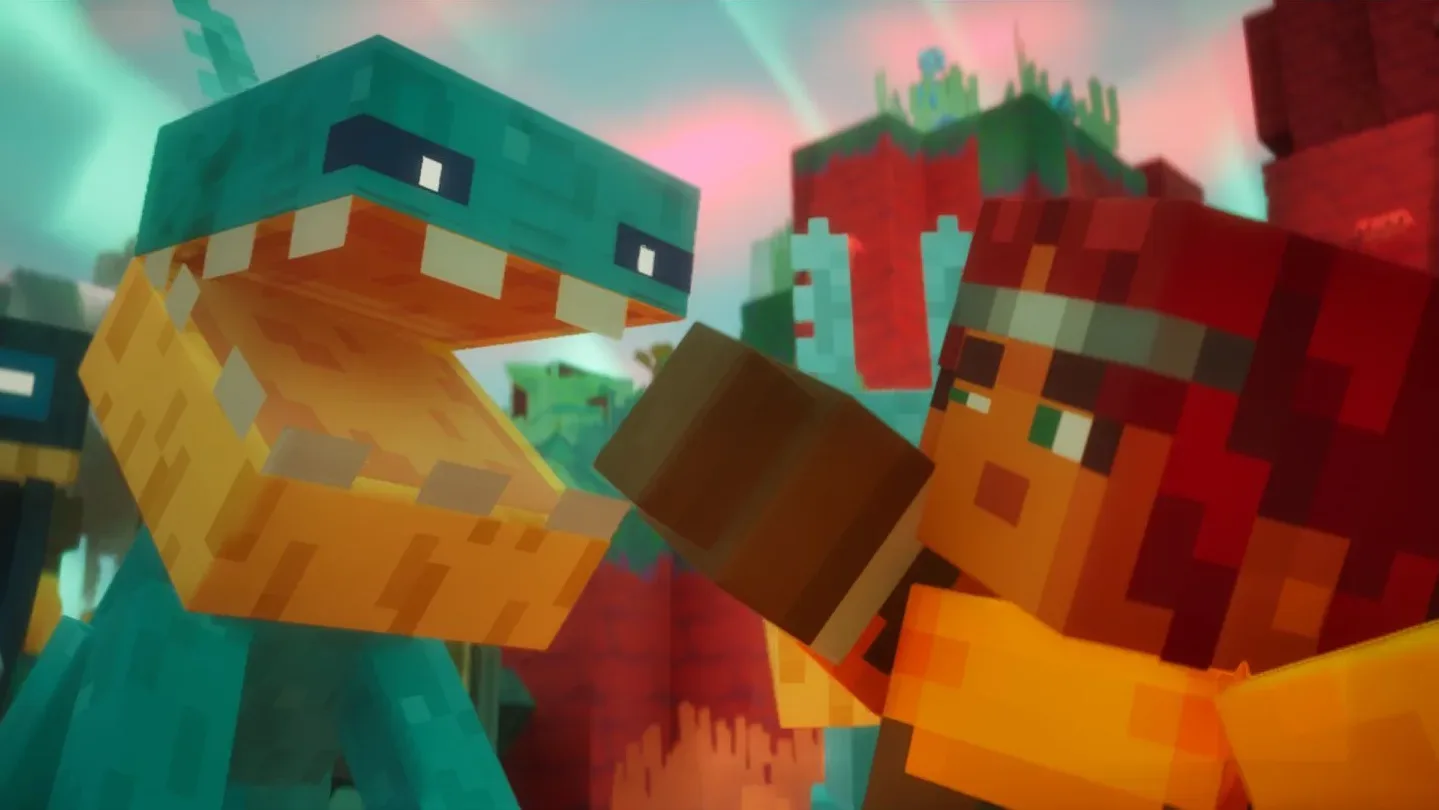
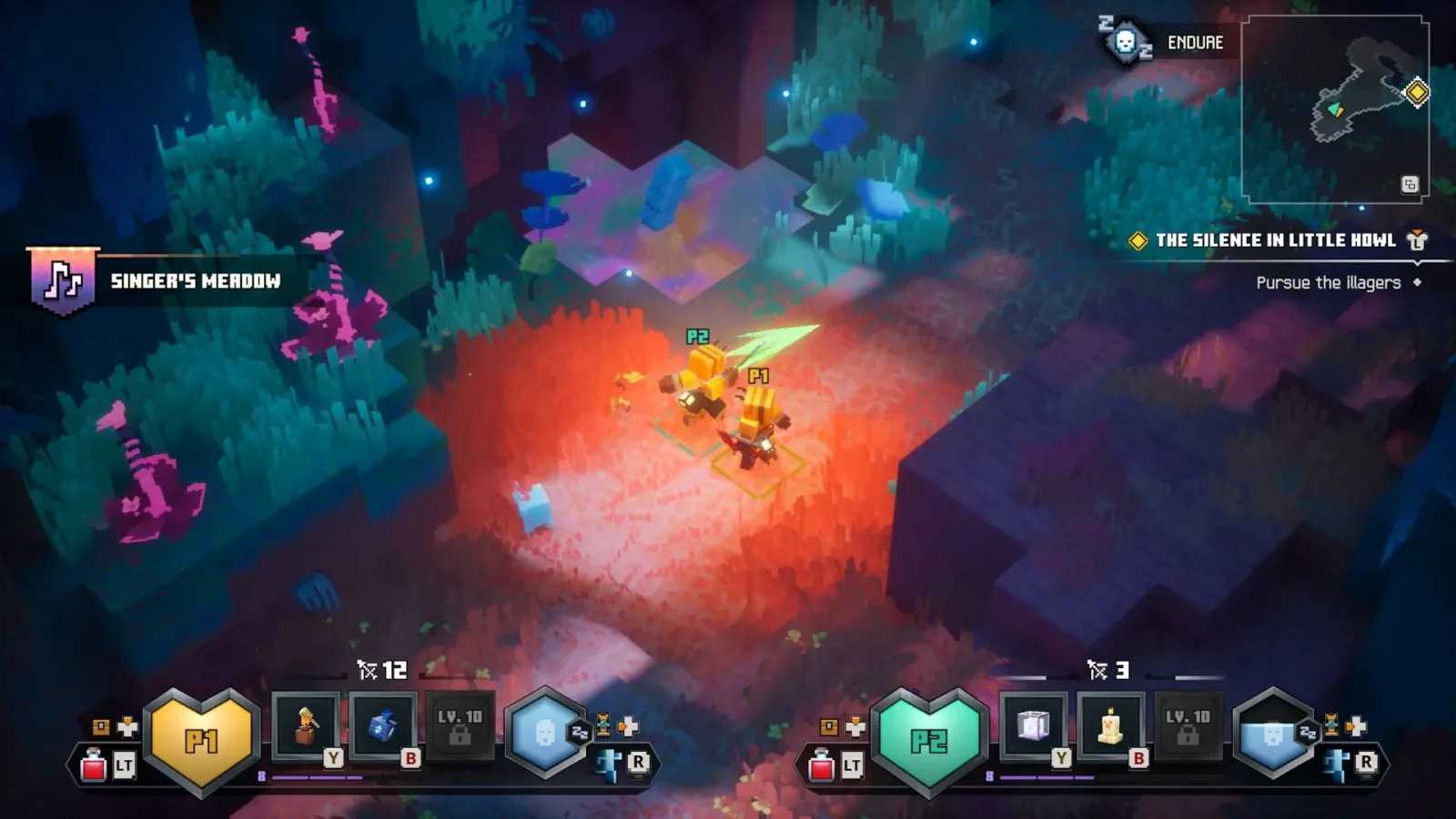
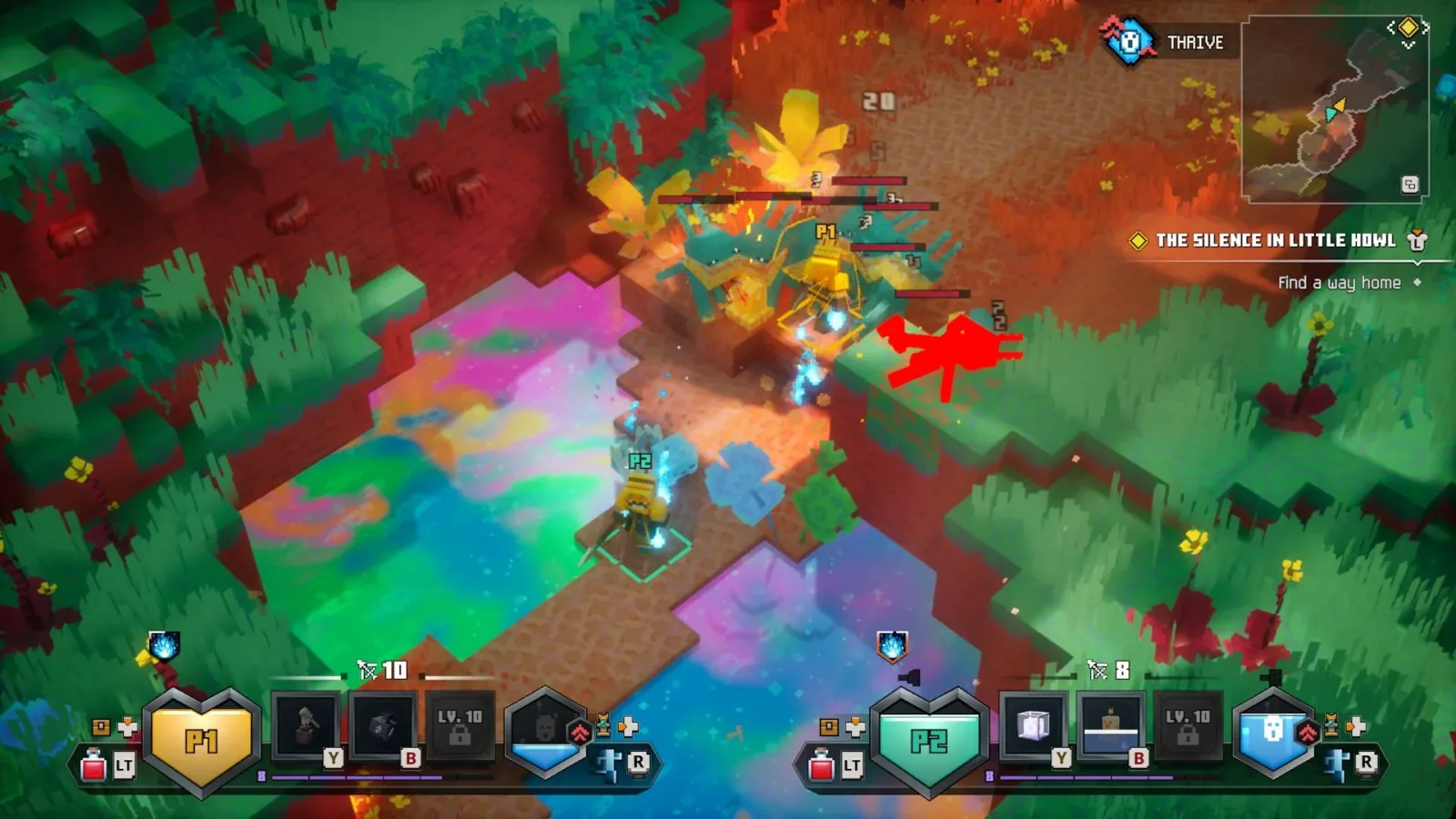
Visually, The Sift is a major contrast to the Nether and The End. It is colorful, surreal, and full of odd fantasy creatures. Blue-toned grass, rainbow-like streams, and a palette of pinks and blues establish a dreamlike atmosphere. Its animals and enemies resemble blocky storybook beings, loping creatures, furry frog-like monsters, and designs that can evoke creature-collecting games. Among its most charming inhabitants are blue rabbits that can hop atop one another in unstable little towers before tumbling down.
These visits are short rather than full-scale expeditions. Players enter through a rift, fight through a compact segment of The Sift, emerge on the far side, and close the portal. Even in this limited role, the dimension provides a welcome burst of novelty. Its unusual environment and the threat of a new eldritch enemy called the Harmonizer make each rift feel distinct from the standard Overworld battles.
The brevity also suggests that Minecraft Dungeons II is deliberately offering a glimpse rather than a complete exploration of the realm. For now, those sequences function as memorable detours that make the campaign's world feel a little stranger and more magical.
More Gear Slots Create Better Build Choices
Loot remains one of the game's main rewards, and Minecraft Dungeons II offers substantially more equipment flexibility than the original. Armor is no longer treated as one all-encompassing piece. Players now collect separate helmets, chest pieces, leggings, and boots, each with their own levels, effects, and advantages.
That shift produces a steady stream of satisfying upgrades. Finding boots with a much higher level than an old pair, for example, has an immediate and obvious payoff. The game does not demand exhaustive spreadsheet-style optimization, but it does make gear drops exciting enough to support the constant forward push through quests and dungeons.
Progression also opens access to merchants rescued during the story. Their upgradeable shops offer ways to purchase equipment, while discovered spellbooks can be used for enchanting. A blacksmith eventually gives players a path to improve favored items instead of automatically abandoning them whenever a slightly larger number appears on a new drop.
Character identity is further shaped through two sets of slots. Up to three special skills can be equipped, with options including attack-supporting bees, area buffs, lightning strikes, and altered arrow types. Three Talismans add another layer of tailored bonuses. Together, these choices make it easier for a co-op pair to settle into complementary roles. One player can lean toward damage, another toward support, or both can build around abilities that help control crowded fights.
For a game intended to welcome younger or less genre-experienced players, that is a smart level of customization. There is enough room for cooperation and personal preference without overwhelming the party with complicated systems.
Co-Op Is the Main Event
Everything in Minecraft Dungeons II appears to point back to shared play. Difficulty settings can make the game gentler for someone who wants to cut through enemies with minimal friction, or significantly tougher for a group ready to coordinate more closely. The interface and objective guidance reinforce that inclusive approach, helping keep downtime low.
Its best moments are likely to come from the small cooperative stories that happen outside the main plot: arguing playfully over who received the better drop, scrambling to revive a teammate, discovering that both players forgot which on-screen character they were controlling, or celebrating a hard-fought quest completion. Those are the moments that make couch and online co-op memorable, and the game's simple structure leaves plenty of space for them.
It may not satisfy players looking for limitless endgame complexity, deeply granular min-maxing, or a Diablo-style loop built around ever-more intricate systems. The absence of even a light mining or crafting layer also remains conspicuous given the Minecraft name. Gathering ore from breakable rocks for a blacksmith, or assembling new armor from collected materials, could have linked this spin-off more closely to its parent game without sacrificing accessibility.
Early Technical Issues Temper an Otherwise Strong Follow-Up
The pre-release Xbox build did show technical problems. Inventory slots could occasionally become impossible to select, forcing a full quit and reload before players could change the stuck item or Talisman. Restarting could introduce another annoyance, with activity in one player's inventory causing the other controller to vibrate repeatedly.
Online and offline play also appeared confusing. Switching to offline play caused previously used characters to disappear temporarily, creating the alarming impression that progress had been lost. The option to choose a play mode was not consistently presented, either. In one case, returning online required selecting a character that had previously been used in online play. Progress ultimately remained intact, but the route to resolving the issue was far from clear.
Because these observations come from a pre-release build, they may not represent the final experience. Still, they are meaningful concerns in a game whose greatest strength is smooth, low-friction co-op. Families and casual groups benefit most when joining a game is effortless, inventories behave reliably, and nobody has to interrupt an evening of dungeon crawling to troubleshoot menus.
A Welcoming Sequel With More Room to Explore
Minecraft Dungeons II succeeds by understanding what made the original appealing. It is a friendly, colorful action-RPG that can create real teamwork across a wide range of ages and experience levels. The sequel adds a more engaging world structure through Brave Haven, delivers a deeper and more satisfying gear chase, and introduces The Sift as a wonderfully bizarre new space to visit.
There is still room for the game to connect more boldly with Minecraft's defining mechanics, and the early technical roughness deserves attention. But the foundation is strong: accessible combat, useful build choices, plentiful treasure, and a rhythm that makes players want to keep moving together toward the next quest marker. For co-op groups seeking an action game that is easy to pick up without feeling entirely empty of progression, Minecraft Dungeons II is a compelling step forward.
Community
Discussion
Start the conversation.
No comments have been posted yet.