

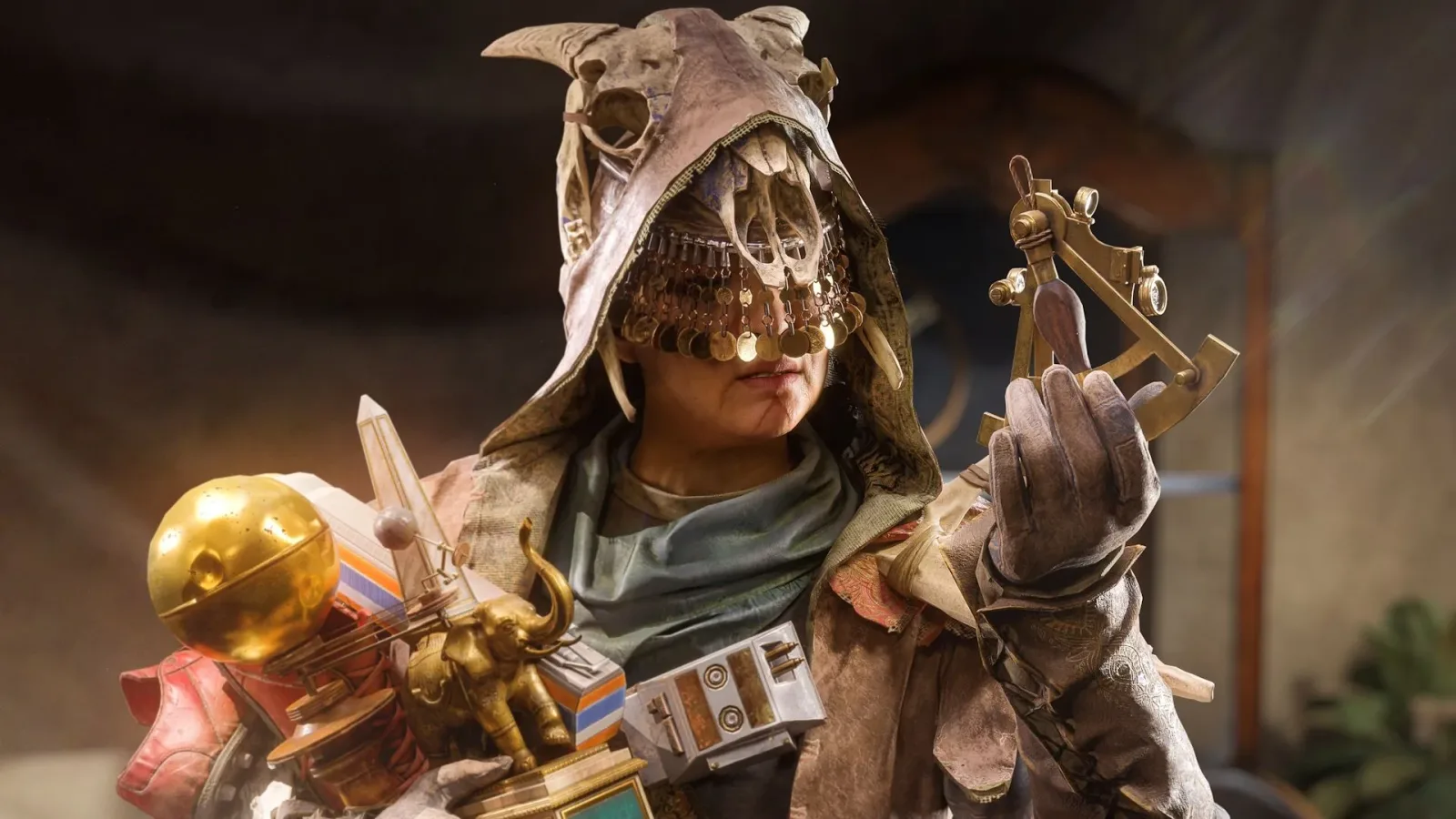
Arc Raiders has had the kind of opening many live-service games chase for years: a major launch, a large and active player base, and a rapid succession of updates and patches intended to keep the momentum going. Yet behind that apparent success, Embark Studios has been confronting a more difficult reality. Maintaining an always-online shooter for millions of players has placed significant pressure on the development team, prompting the studio to rethink how it delivers new content.
Aleksander Grøndal, Arc Raiders' executive producer, has spoken candidly about the demands of the project's first year and the personal cost of trying to meet constant player expectations. His assessment is not that live-service work is unexpectedly challenging in the abstract; rather, it is that the scale and intensity of those challenges proved greater than even an experienced developer anticipated.
That recognition has led Embark toward a different direction. Instead of continuing to pursue a rapid cadence of smaller monthly additions while simultaneously handling every urgent issue that arises, the studio has slowed its approach. The goal is to put out larger updates at a more manageable pace, creating room for more meaningful work without continually pushing the team beyond its available capacity.
Live-service success brings a different kind of pressure
Arc Raiders' early months required Embark to do several jobs at once. New gameplay content had to be built and tested. Patches were needed to resolve bugs and exploits. Player feedback had to be considered continuously, especially when the game was being discussed by a community numbering in the millions. Those priorities do not wait in neat, separate queues. A serious issue can immediately disrupt content plans, while a feature intended to refresh the game can introduce its own technical complications.
For useful background on this topic, read Baldur's Gate 3 Publishing Director Defends The Blood of Dawnwalker's Divisive Time Limit.
Grøndal described the transition to a fully live-service game as extraordinarily hard, even though he had been warned about it beforehand. He had also understood enough of the challenge to caution others about it. But knowing that an ongoing game will be demanding is very different from experiencing the daily reality of supporting one after launch.
That distinction matters because Arc Raiders is not simply a game that shipped and moved into a conventional post-release support phase. It is a service that must remain responsive, functional, engaging, and commercially viable over time. Players expect fixes when something goes wrong, communication when problems emerge, and new reasons to return once they have learned the existing content. For a studio, each of those expectations becomes recurring work rather than a one-time launch obligation.
Embark initially responded with frequent updates, regularly adjusting the experience while trying to add fresh elements. In the short term, that kind of schedule can reassure a community that the developer is active and listening. It can also become difficult to sustain. The more quickly a team commits to shipping new material, the less room it has to absorb unforeseen problems, refine features, or step back and assess what is actually resonating with players.
Fast updates were not enough to solve every problem
Grøndal said the team was working to release content as fast as possible, but that the pace was still not enough to satisfy every expectation. He also acknowledged that some of the material may not have been interesting enough. This is a notable admission because it identifies two separate pressures that often collide in service games: quantity and quality.
A rapid update schedule can produce a steady stream of changes, but frequent releases alone do not guarantee that players will view each addition as substantial or exciting. At the same time, bigger and more ambitious content takes longer to develop. When a studio attempts to increase both the speed and impact of updates while also maintaining the game, the workload can quickly become unrealistic.
For Arc Raiders, routine maintenance was a major part of that equation. Bug fixes, exploit responses, and other operational constraints are not optional extras. They are essential to preserving trust in a multiplayer game. However, these tasks can consume the same engineering, design, quality assurance, and production resources needed for planned content. A team may have a roadmap, but that roadmap can be repeatedly reshaped by problems that need immediate attention.
Grøndal explained that Embark was repeatedly operating beyond its capacity, making planning difficult. That is a common danger for a successful live-service launch: strong demand can create the impression that the answer is always more output, faster. But development capacity has limits. If every priority is treated as urgent, the result can be a team permanently in crisis mode.
Embark's revised approach is centered on a slower cadence with larger feature rollouts, rather than constantly trying to maintain a monthly stream of additions while addressing ongoing technical needs.
The change does not mean the studio is stepping away from Arc Raiders or ignoring its players. Instead, it suggests that Embark is trying to establish a production model that can support the game over a longer period. A sustainable cadence is particularly important for a live-service title because the work does not end after one season, one patch cycle, or one anniversary. Decisions made during the first year can set expectations and working patterns that last far beyond it.
Developer wellbeing is becoming part of the plan
The most serious part of Grøndal's comments concerns the wellbeing of the people making Arc Raiders. He said the team had been "super tired" and, at one point, "super unhappy." He also connected the internal strain to player dissatisfaction, underscoring how developer health and game quality are not separate issues.
When teams are exhausted, it becomes harder to make careful decisions, test thoroughly, communicate clearly, and create work that feels inspired rather than merely urgent. Players may only see delayed features, uneven updates, or fixes that take longer than expected. The people building the game experience the accumulation of deadlines, feedback, unexpected issues, and the pressure of knowing that a large audience is waiting.
Grøndal's perspective is informed by earlier experience working on major releases at Electronic Arts, including Battlefield and Star Wars: Battlefront projects. Those games included online components, but Arc Raiders' fully live-service structure presents a different operating model. A traditional major release can still involve extensive support after launch, yet a game designed around continuous service places ongoing delivery at the center of its identity.
He also spoke personally about burnout. After the launch of a Battlefield game during his time at EA, he continued pushing himself until he needed five months of sick leave. He described being completely broken by that period. That experience appears to be directly shaping Embark's current thinking: the studio wants a framework in which developers can remain creative without sacrificing a healthy work-life balance.
This is more than a general statement about workplace culture. It is an operational question for Arc Raiders. If the studio's plans depend on employees repeatedly working beyond a sustainable level, then the plans themselves need to change. The move toward fewer, bigger updates can be read as an attempt to align the game's content strategy with the limits of the people responsible for making it.
What a slower, larger update model could mean
For players, a reduced frequency of updates may initially feel like a compromise, especially after an early period defined by regular monthly changes. But larger releases can offer benefits if they give Embark more time to develop features thoroughly and ensure additions have a clearer purpose. A bigger update has the potential to create a more visible moment for the community, rather than asking players to evaluate a constant succession of smaller changes.
There are risks, of course. Live-service audiences can be sensitive to gaps between new content, and competing games are always trying to capture attention. Embark will need to balance the desire for a healthier pace with the need to keep Arc Raiders responsive and compelling. Critical fixes cannot simply wait for the next major content drop, particularly when exploits or stability issues affect the game.
Still, the studio's acknowledgement of the problem is significant. It is easy for successful launches to be framed solely in terms of player numbers, patch counts, and engagement. Arc Raiders' situation is a reminder that those measures do not reveal the full picture. A busy update calendar may look positive from the outside while masking an unsustainable burden inside the studio.
As Arc Raiders approaches its first anniversary, Embark is attempting to turn lessons from its demanding opening stretch into a more durable production rhythm. The team's aim is not simply to produce content more slowly. It is to make room for better planning, more creative flexibility, necessary maintenance, and a healthier working environment.
Whether that balance leads to stronger long-term updates will be judged by the Arc Raiders community over time. But Grøndal's comments make Embark's priorities clear: continual growth cannot come at the cost of burning out the people building the game. For a live-service shooter intended to endure, protecting the team may be one of the most important updates the studio can make.
Community
Discussion
Start the conversation.
No comments have been posted yet.