

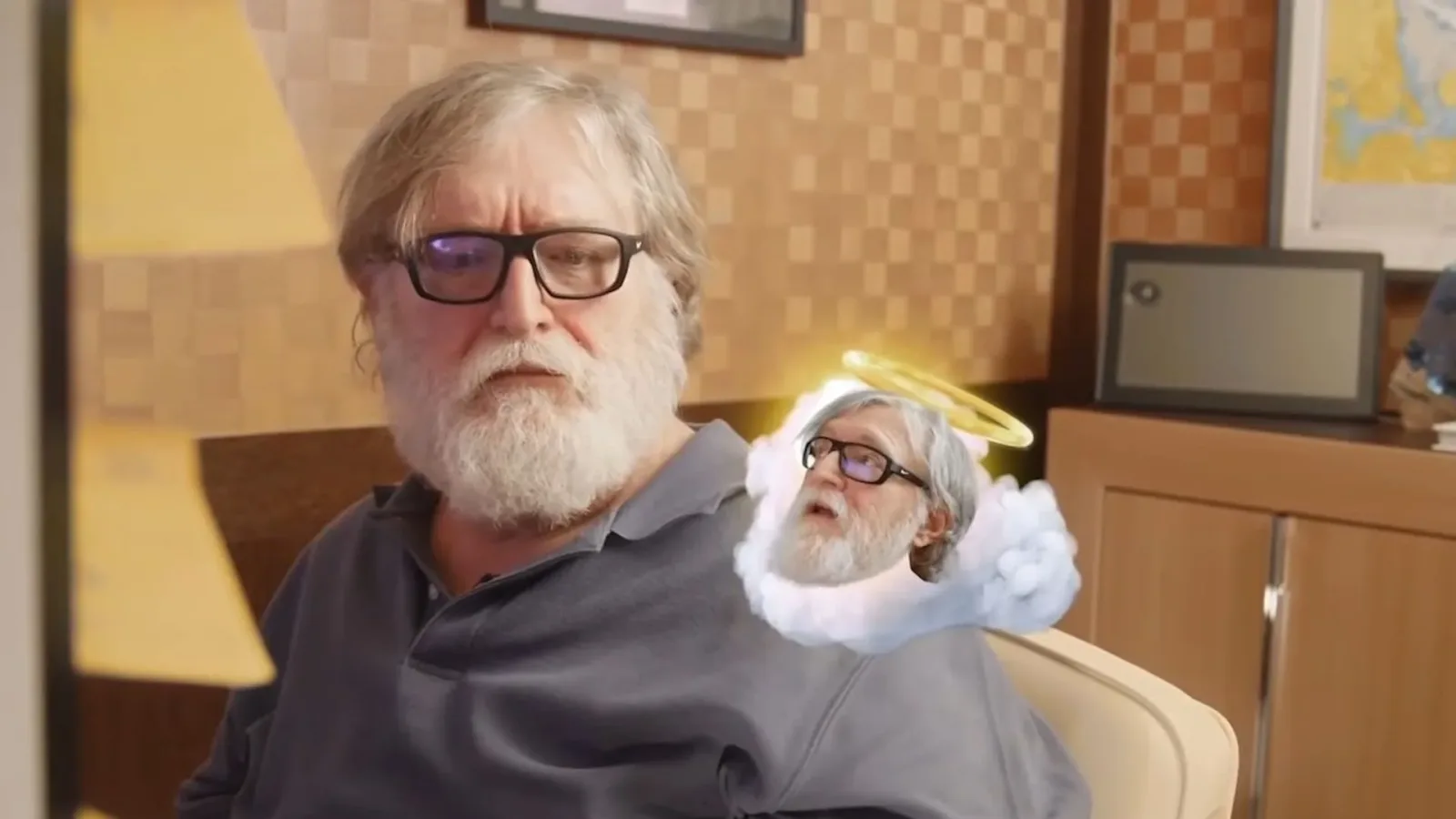
Steam's rise from a controversial new client into the defining storefront and ecosystem for PC gaming is one of the industry's most consequential stories. For players today, buying a game digitally, downloading it in minutes, receiving patches automatically, and keeping a library tied to a single account are routine expectations. In the early 2000s, however, that future was anything but assured.
Minh Le, the Counter-Strike co-creator who later worked at Valve for several years, has offered a candid recollection of the thinking around Steam's origins. Speaking in an interview with Indie Game Joe, Le connected Valve's decision to pursue its own distribution platform with the company's damaging relationship with publisher Sierra.
His account describes a period in which Valve had reasons to question the traditional publishing model, while many of the people working inside the company remained uncertain that players were ready to embrace large-scale digital distribution. The eventual launch of Steam alongside Half-Life 2 would prove transformative, but Le remembers that it was far from an obvious success before faster connections became commonplace.
A difficult publishing relationship
Before Steam became a central part of Valve's business, the studio worked with Sierra on the original Half-Life. Sierra published the landmark first-person shooter, which arrived in 1998 and helped establish Valve as one of PC gaming's most important developers. The relationship later deteriorated significantly, leading to legal disputes between the companies.
For useful background on this topic, read Zach Cregger Names Resident Evil 4, Dark Souls 3 and More Among His All-Time Favorite Games.
Le characterized that experience as an important motivation for Valve's shift in direction. In his recollection, Gabe Newell's response to the complications of dealing with publishers was blunt: Valve no longer wanted to rely on them. Le said the Sierra relationship had left a strong negative impression and contributed to a determination to take greater control over how Valve's games reached customers.
"I think Gabe was the guy who said, 'Fuck these publishers,'" Le said, describing the attitude he remembers around Valve's push toward a direct distribution model.
Le suggested that Sierra's work on Half-Life, and the broader frustrations that followed, helped make the idea of an independent platform more appealing. He also recalled Sierra in connection with Half-Life 2, though Sierra did not publish Valve's 2004 sequel. By that point, the relationship between the companies had already soured dramatically.
That distinction matters because Half-Life 2 became inseparable from Steam's early adoption story. Valve did not simply release a new sequel through conventional channels and hope audiences would discover its digital service. Instead, it made Steam mandatory for people purchasing and playing one of the most anticipated PC games of its era.
Half-Life 2 gave Steam its breakthrough moment
When Half-Life 2 launched in 2004, it carried extraordinary attention. The original game had been a critical and commercial success, and Valve's sequel was among the most closely watched releases in PC gaming. By requiring Steam activation, Valve gave its new platform an enormous initial audience.
The decision was strategically significant. Steam was not merely a shop page for a single title; it was a client intended to manage ownership, updates, downloads, and access to games. Tying it to Half-Life 2 guaranteed that a large number of players would have to install it, create or use an account, and become familiar with the service.
For Valve, this created an install base at the exact moment the company was seeking to move beyond dependence on outside publishers and physical retail. The model gave the developer much more authority over its relationship with customers. It also laid the foundation for Steam's eventual evolution from a Valve-focused service into an open marketplace for games from publishers and independent creators across the PC industry.
The move was not universally welcomed at the time. Mandatory online activation represented a major adjustment for players accustomed to buying boxed games, installing from physical media, and playing without needing an online account. Concerns about internet access, download times, and the long-term reliability of a new platform were understandable given the era's technology.
Even Valve staff questioned whether downloads would work
Le's recollections underline just how different the internet landscape was in 2001 and 2002. At that point, physical stores remained the normal place to buy new games. Downloading a major retail release was not yet an everyday proposition for much of the PC audience, particularly where slower connections made transferring large files an all-day task.
He said that many people at Valve, including coworkers, openly wondered whether the plan could succeed. Their concern was practical rather than abstract: if downloading a game as comparatively modest in size as the original Half-Life could take a day, what would happen when digital delivery became the expected way to get new releases?
"A lot of people at Valve, a lot of my coworkers, we were like, 'Is this going to work?'" Le recalled. "Because this was 2001, 2002. In 2002, peoples' internet was not very good, [it was] very slow."
Those doubts reflected the real conditions facing PC players at the time. Broadband was not yet as widespread as it would become, Wi-Fi was far from the seamless household expectation it is today, and physical retail still offered immediacy. A customer could visit a store, buy a box, and install a game at home. Digital delivery asked people to trust their connection, their account, and a still-young online service.
Le said Valve's team did not fully anticipate how quickly the underlying technology would improve. Faster broadband, broader home networking, increasingly reliable online services, and changing consumer habits would steadily remove many of the barriers that had made the idea appear risky.
"We just didn't really anticipate the speed at which the internet would grow," Le said, looking back on Steam's transformation over roughly 25 years.
Steam's influence went far beyond Valve's own games
Steam's importance is easy to see in hindsight, but its eventual scope was not preordained. The platform began in a world where boxed PC software and publisher-controlled retail relationships were still dominant. Valve's determination to manage distribution more directly was initially rooted in its own needs, including updates and access for its games. It ultimately altered the business structure of PC gaming.
For developers, the platform provided a route to customers that could avoid some of the costs and constraints associated with manufacturing, shipping, and securing shelf space at retail. For players, it consolidated game libraries and made buying software from home increasingly convenient. Features such as automatic patching and persistent digital ownership libraries became major components of the modern PC experience.
That does not mean the shift came without trade-offs or controversy. Steam's early mandatory use for Half-Life 2 was a flashpoint precisely because it represented a new kind of dependency. Players were being asked to accept an online platform as part of access to a single-player retail game. Over time, that arrangement became familiar across gaming, but its early reception illustrates why Le and his colleagues had reason to be unsure.
The platform's success also reshaped expectations for publishers. A service conceived in part as an escape from the traditional publisher relationship eventually became a major commercial channel used by companies throughout the industry. In that sense, Valve's response to a troubled partnership did not just change how Valve released games; it helped change how PC games are sold, updated, and maintained.
A reminder that industry shifts begin with uncertain bets
Le's comments offer an unusually direct view of the uncertainty behind a decision now regarded as pivotal. Steam did not emerge because everyone agreed downloads were ready to replace store shelves. It emerged amid frustration with publishing arrangements, concern over slow internet speeds, and skepticism from people close to the project.
Half-Life 2 supplied the high-profile catalyst Steam needed, while the accelerating improvement of consumer internet connections made the platform increasingly practical. Valve's willingness to accept short-term resistance in favor of a long-term distribution strategy proved enormously consequential.
Steam's modern position can make that outcome look inevitable. Le's memory instead emphasizes the combination of dissatisfaction, timing, and risk that drove it. Valve saw a way to gain more control after its Sierra relationship collapsed, but it still had to persuade -- or, in the case of Half-Life 2, require -- players to take part in a model many had never used before.
For PC gaming, the results are still felt every day. The storefront, the game library, the automatic update, and the expectation that a new release can be delivered instantly all trace back to an era when downloading a full game could seem impractical. Steam's journey from that uncertainty to industry-defining scale remains one of the clearest examples of how quickly technology and player habits can transform the business of games.
Community
Discussion
Start the conversation.
No comments have been posted yet.