

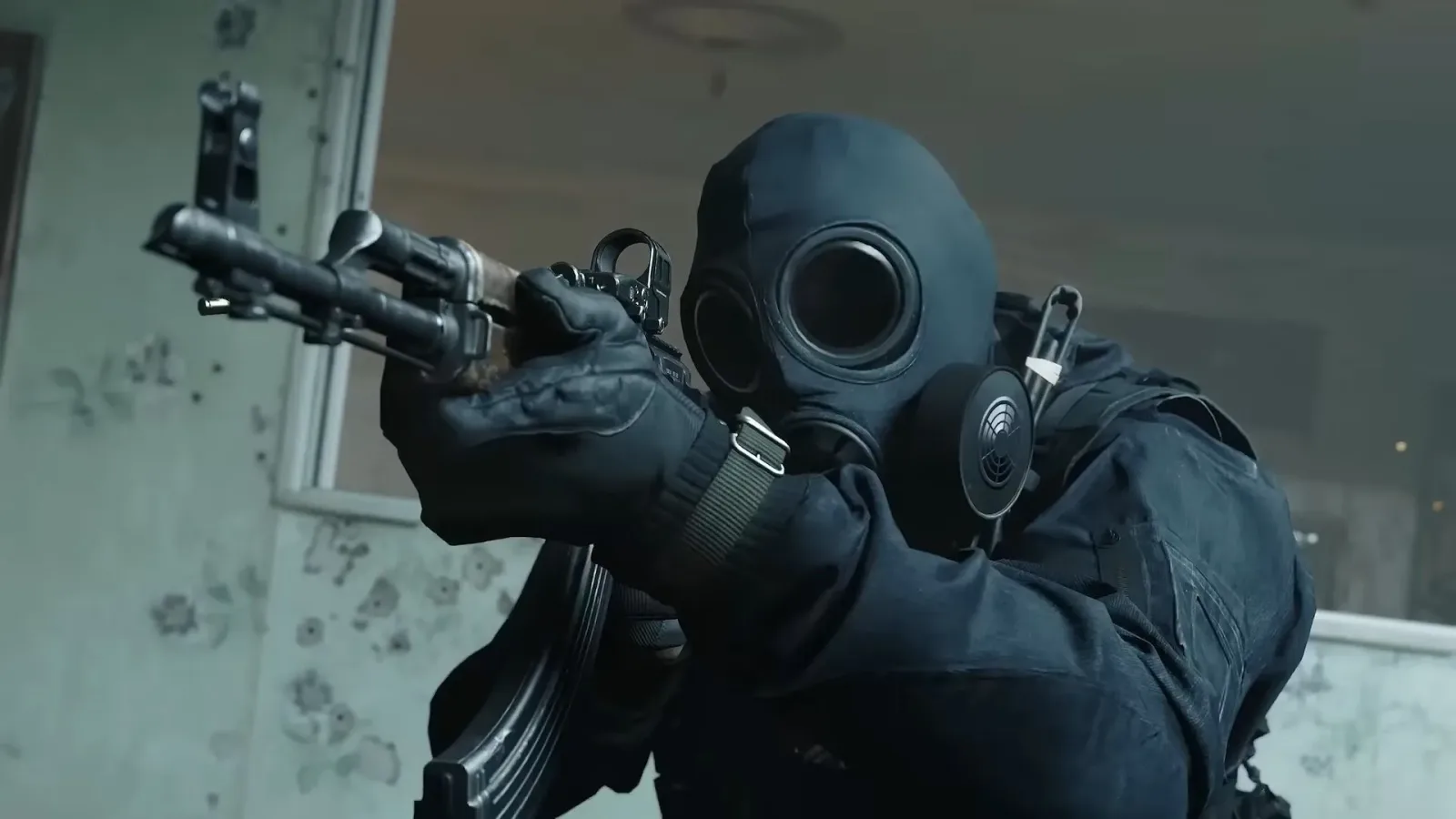
Infinity Ward has changed the controversial Possum ability in Call of Duty: Modern Warfare 4, targeting a DMZ tactic that allowed downed players to turn an apparent elimination into an immediate counterattack. The update addresses one of the mode's most heavily debated perks by putting new limits on when it can be activated after a player has been taken down.
Possum is designed to let an operator play dead after being downed, giving a highly progressed player a potential second chance to remain in the match. In practice, though, many players had treated that opportunity less like an escape route and more like a way to bait an opponent into lowering their guard. A player could be downed, use Possum, then get back up and eliminate the squad that had just won the engagement.
Infinity Ward acknowledged that gap between the perk's intended purpose and its actual use in the latest patch notes. The developer said Possum was supposed to be a survival mechanic for a high-level operator, but it had instead become a combat mechanic. The newly added restrictions are intended to stop players from jumping straight back into the fight they had just lost.
What changed for Possum in DMZ
Under the revised rules, players cannot activate Possum while the team that killed them remains nearby. The restriction is also aimed at situations in which the victorious team stays in the area for an extended period. In those circumstances, Possum will remain unavailable until four minutes have passed.
For useful background on this topic, read Romancing SaGa 3: Destinies United Makes Every JRPG Battle Feel Like an Experiment.
The change does not remove Possum from DMZ outright. Its underlying idea--a narrow route to survival after being downed--remains intact. Instead, Infinity Ward is separating the perk from close-range retaliation. If the team responsible for the down is still controlling the immediate area, the downed player will no longer be able to use Possum to abruptly reverse the outcome of that same encounter.
That distinction is important because DMZ's extraction-oriented structure gives every death and every revival decision more weight than a standard multiplayer respawn. Players are often managing gear, mission progress, positioning, squad coordination, and the possibility of extraction. A perk that allows someone to survive a loss can fit naturally into that structure. A perk that repeatedly turns a secured down into a surprise rematch can feel very different, particularly for the squad that committed resources to winning the engagement.
Why players objected to the perk
The frustration around Possum was not simply that it gave users another chance. Second-chance mechanics are a familiar part of multiplayer game design, and DMZ is built around unpredictable encounters and recovery opportunities. The issue was the timing. When a downed opponent could appear to be out of the fight and then return almost immediately against the same nearby enemies, opponents could be punished for behaving as though they had successfully won.
That can create awkward incentives. A team that downs a Possum user may feel pressured to remain cautious for longer than normal, potentially delaying looting, reviving teammates, repositioning, or pursuing another objective. At the same time, the Possum user gains the possibility of exploiting an enemy's assumption that the fight has concluded. Rather than escaping danger or waiting for a safer opening, the ability could help manufacture a sudden swing in an already resolved skirmish.
For a mode where situational awareness matters as much as gun skill, that dynamic can be especially aggravating. The winning team has to account not only for surviving teammates, reinforcements, third parties, and AI threats, but also for the possibility that the player they just downed is about to stand back up nearby. The new rule attempts to make the result of a successful engagement more dependable without removing every avenue for a Possum-equipped operator to survive.
A survival tool, not a revenge tool
Infinity Ward's explanation frames the adjustment around role clarity. Possum is meant to offer a second chance, not an instant revenge option. That means the most appropriate use case is now likely to be one in which a player has an opportunity to survive after the victorious squad has moved away, rather than one in which the player remains embedded in the middle of the same firefight.
That approach preserves some of the dramatic potential that makes DMZ distinct. A player who is separated from their squad, caught in a bad position, or left behind after a chaotic clash may still have a route back into the match. But the perk should no longer let them exploit the period immediately after an opponent believes the danger has passed.
It also places more importance on the decision to use Possum. Previously, the ability could function as a highly aggressive mind-game tool: appear dead, wait for an opening measured in moments, and retaliate. With nearby opponents blocking activation, the player must instead think about whether the situation can plausibly become safe enough for survival. That is a more restrained use of the perk, but one much closer to the function Infinity Ward says it wanted.
The four-minute condition could matter in prolonged standoffs
The four-minute element is particularly notable because DMZ fights do not always end with one squad instantly moving on. Teams may hold a location to revive allies, watch a body, search for loot, defend an objective, or anticipate an approaching squad. In those prolonged situations, the game's new rule prevents Possum from becoming a reliable answer to a team that maintains control of the space.
At the same time, the timer means the system is not an absolute permanent lockout. If the situation remains unresolved and enough time passes, a player may again have access to Possum. That leaves room for unusual, extended encounters while still putting a meaningful barrier between being downed and immediately returning to combat.
How that plays in practice will depend on the exact proximity range used by the game, as well as how consistently players can understand when the restriction applies. Neither detail is fully settled as a player-facing conclusion yet. A range that is too small may still allow quick re-engagements just outside the boundary, while one that is too broad could make Possum feel unavailable in many normal DMZ situations. Similarly, four minutes is a substantial amount of time in a tense extraction match, but it may be less decisive in a drawn-out battle around a valuable location.
Infinity Ward is leaving room for more tuning
Rather than presenting this as a final answer, Infinity Ward said it will watch how Possum is used after the change. The developer also indicated that the range and duration involved in the restriction can be revisited in a future update.
That willingness to adjust is sensible for a perk with such a narrow design target. Possum needs to be strong enough to justify its place as a high-level operator option, but not so strong that it routinely overrides the outcome of a close-range engagement. The updated version will be judged not only by how often it stops frustrating reversals, but also by whether it still produces believable comeback moments for players who use it defensively.
If the restriction succeeds, DMZ's post-fight rhythm should become clearer. Winning squads will have more confidence that a downed opponent cannot instantly spring back into the same encounter, while Possum users will be encouraged to view the perk as a delayed survival opportunity rather than a direct combat reset. If it does not go far enough--or goes too far--Infinity Ward has signaled that the numbers are still open to adjustment.
Part of a broader DMZ response
The Possum update follows another early response to a major DMZ concern. Infinity Ward had already acted on launch-day complaints involving players monopolizing UAV towers. Together, the changes show an early focus on systems that can create outsized advantages when they are used repeatedly or in ways that undermine the intended flow of the mode.
UAV tower control and Possum play may seem like separate issues, but both affect how safe players can feel when making decisions in the field. One relates to information dominance; the other relates to whether a defeated opponent is truly out of an immediate fight. In both cases, the balance challenge is to retain DMZ's tension and unpredictability without allowing a small number of mechanics to dictate too many engagements.
For now, Possum remains part of Modern Warfare 4's DMZ experience, but its most infamous application has been curtailed. The perk can still provide a second chance. It just should no longer be a dependable way to turn playing dead into an instant ambush against the team that put the player down in the first place.
Community
Discussion
Start the conversation.
No comments have been posted yet.