

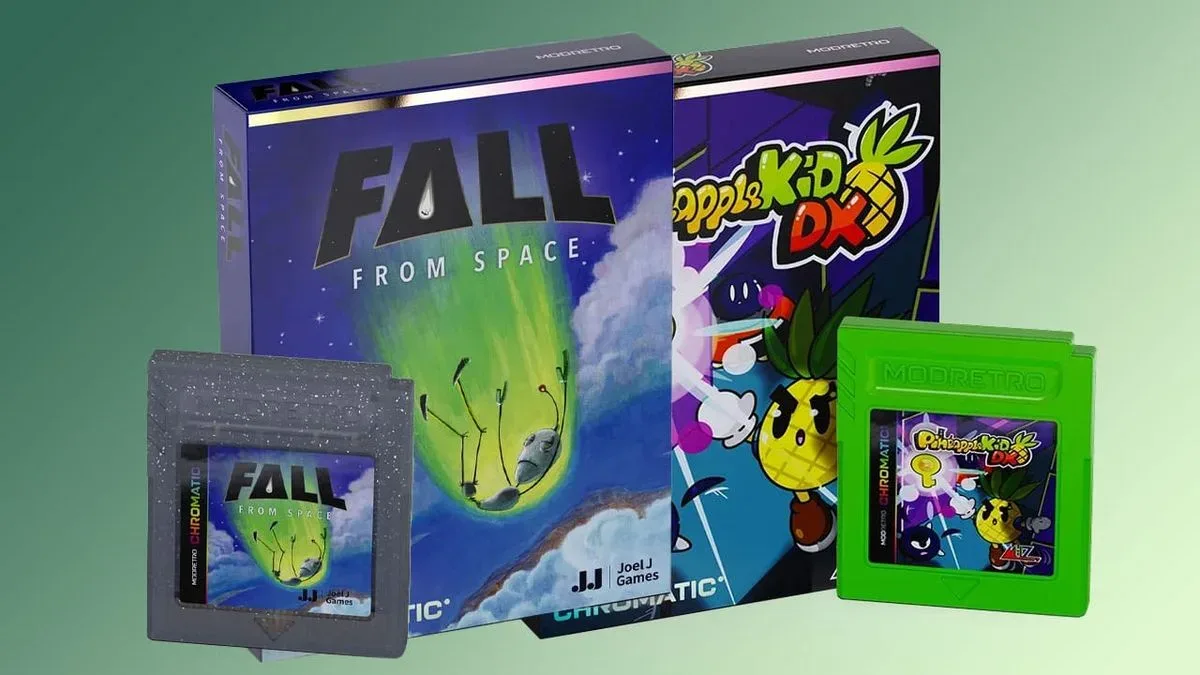
ModRetro's Chromatic catalog has expanded with two more newly produced physical games: Fall From Space and Pineapple Kid DX. Both cartridges are available to buy now, and both are designed not only for the Chromatic handheld but also for Game Boy and Game Boy Color systems.
The releases continue a welcome trend for players who enjoy Game Boy-era design without limiting themselves to used cartridges and decades-old libraries. New independent games are still arriving in physical form, complete with the packaging and manuals that made handheld games feel like small collectibles in the first place. In this case, the two titles offer distinctly different experiences: one is an exploratory role-playing adventure built for a longer session, while the other is a focused puzzle game intended for shorter, repeatable play.
Fall From Space is priced at $44.99, while Pineapple Kid DX costs $39.99. Their releases give Chromatic owners two very different reasons to put a cartridge in the system, whether they want to settle into an expansive quest or clear puzzles a few minutes at a time.
Fall From Space brings exploration and player choice to the handheld
Developed by Joel Jarman, Fall From Space blends elements associated with Metroidvania games and open-world RPGs. Rather than presenting a simple linear trek from stage to stage, the game centers exploration and gives players a world where their actions have consequences. A karma system changes aspects of the experience as the player progresses, adding another layer to decisions made throughout the adventure.
For useful background on this topic, read PlayStation Reveals New Pulse and Pulse Edge Wireless Headsets With Planar Magnetic Audio.
That system also supports the game's multiple endings. Fall From Space is estimated to last around 10 hours for a playthrough, but its branching outcomes and reactive karma mechanics mean that reaching the credits once does not necessarily exhaust what it has to offer. For a game built around Game Boy and Game Boy Color-compatible hardware, that is a notably substantial prospect.
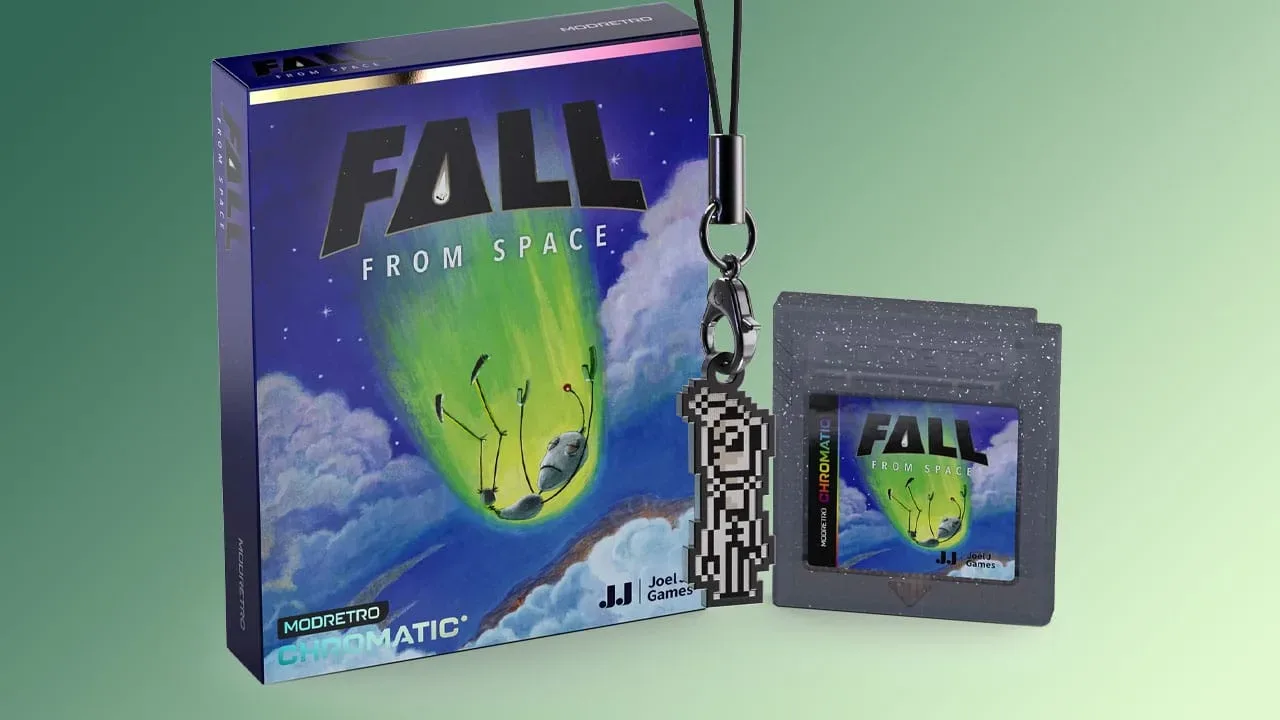
The physical edition is designed as a collector-friendly release as well. Alongside the game, the package includes a full-color manual, a glittery cartridge, and a Chromatic charm intended to hang from the console. The box art is another conspicuous part of the presentation, signaling that ModRetro is treating these games as more than bare cartridges for a niche audience.
Fall From Space also has an eye-catching creative connection in its artwork. Jarman worked with artist Mitsuhiro Arita, whose involvement gives the project a notable visual pedigree. The game's combination of original cartridge-era technical constraints, modern independent development, and established illustration talent reflects how broad the contemporary retro scene has become.
For Chromatic players, the appeal is clear: Fall From Space aims to provide the scale and sense of discovery normally expected from far larger games while retaining the directness of a handheld title. The Game Boy family of systems produced many memorable adventures over the years, but games that combine open exploration, RPG progression, and different endings have always been comparatively ambitious on the format.
Pineapple Kid DX turns a 2021 game into a color puzzler
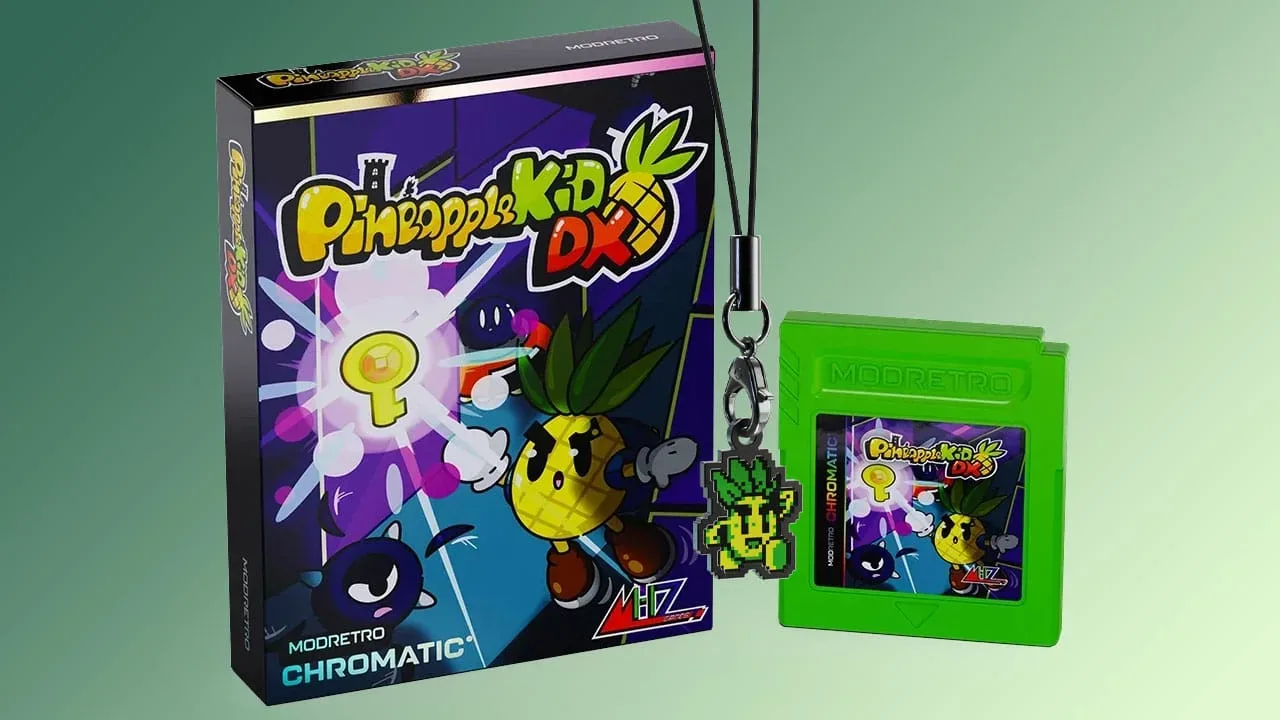
The second release, Pineapple Kid DX, heads in a much more compact direction. It is a color remake of the 2021 game created by MHZ Games and previously distributed by Bitmap Soft. The DX version gives the game a new physical home in the Chromatic lineup while preserving its puzzle-first focus.
Players guide Pineapple Kid through the mysterious 100-Year Tower, navigating hazards, seeking keys, and tackling stages that become more demanding as the journey continues. Its central rule is easy to understand but gives each screen a tactical edge: players must move across every piece of white floor space, transforming it into a lined surface. Once all available squares have been traversed, keys appear, allowing Pineapple Kid to advance.
That structure puts planning at the heart of each puzzle. A route that looks obvious may close off a needed section of the floor, while dangerous objects create added pressure as players try to cover the board efficiently. It is a familiar kind of arcade-puzzle premise, but one that suits the Game Boy-style format particularly well: quick to read, quick to restart, and ideal for replaying until a difficult solution clicks.
Pineapple Kid DX is expected to provide around two or more hours of gameplay. Its $39.99 price reflects that shorter length compared with Fall From Space, though the format naturally lends itself to revisiting levels. A relaxed puzzle game can work just as well as a brief daily routine as it can as a dedicated clearing-the-tower challenge, making this one a potential fit for players looking for a calmer cartridge to keep close at hand.
There is also a cheerful novelty to its fruit-based hero. Game Boy collectors have long sought after unusual character-driven releases such as Amazing Tater and Spud's Adventure, and Pineapple Kid DX keeps that playful tradition alive. Its concept does not need a grim fantasy setting or a world-ending conflict to stand out; an expressive pineapple navigating a strange tower is more than enough of a hook.
A growing physical future for Game Boy-compatible games
The arrival of both games reinforces the role the Chromatic can play in the modern retro market. The system has been positioned as premium hardware for playing Game Boy and Game Boy Color cartridges, but new software is just as important to that proposition as compatibility with the old library. A handheld becomes more compelling when it can support current releases that were designed with its screen, controls, and physical format in mind.
Importantly, these are not locked to one piece of new hardware. Players with functioning original Game Boy or Game Boy Color systems can use the cartridges as well. That compatibility broadens the audience considerably, reaching collectors who prefer vintage devices, enthusiasts with customized hardware, and players who simply want to experience new games on the machines they already own.
Physical releases such as these also preserve a style of game ownership that is increasingly rare in the broader industry. The cartridges come with tangible extras, including boxes and manuals, rather than existing only as downloads tied to an account or storefront. For some players, that matters as much as the game itself. Reading a manual, storing a box, and selecting a cartridge from a shelf remain core parts of the appeal of retro handheld gaming.
The contemporary Game Boy development scene has proven that the platform is not merely an archival curiosity. Developers continue to find creative ways to work within its limits, while fans continue to show interest in buying polished new games for hardware introduced generations ago. Projects such as Fall From Space can push toward larger adventure-game ideas, while Pineapple Kid DX demonstrates the enduring value of concise puzzle design.
Which Chromatic release fits your play style?
The choice between these two releases largely comes down to what players want from their next cartridge. Fall From Space is the larger commitment, offering exploration, RPG systems, multiple endings, and a world altered by the player's karma. It is likely the more suitable pick for anyone wanting a new long-form quest on Game Boy-compatible hardware.
Pineapple Kid DX, meanwhile, is a deliberately smaller and more immediately approachable puzzle experience. Its 100-Year Tower structure, tile-covering objective, and escalating challenges make it a natural choice for players who enjoy solving contained screens and returning for another attempt whenever they have a little free time.
There is room for both approaches in a healthy handheld library. One cartridge can provide a full adventure over many evenings, and another can become a dependable companion for short breaks. With Fall From Space and Pineapple Kid DX now available, ModRetro's Chromatic ecosystem gains examples of both--and gives Game Boy and Game Boy Color owners two more modern physical games to consider.
Community
Discussion
Start the conversation.
No comments have been posted yet.