

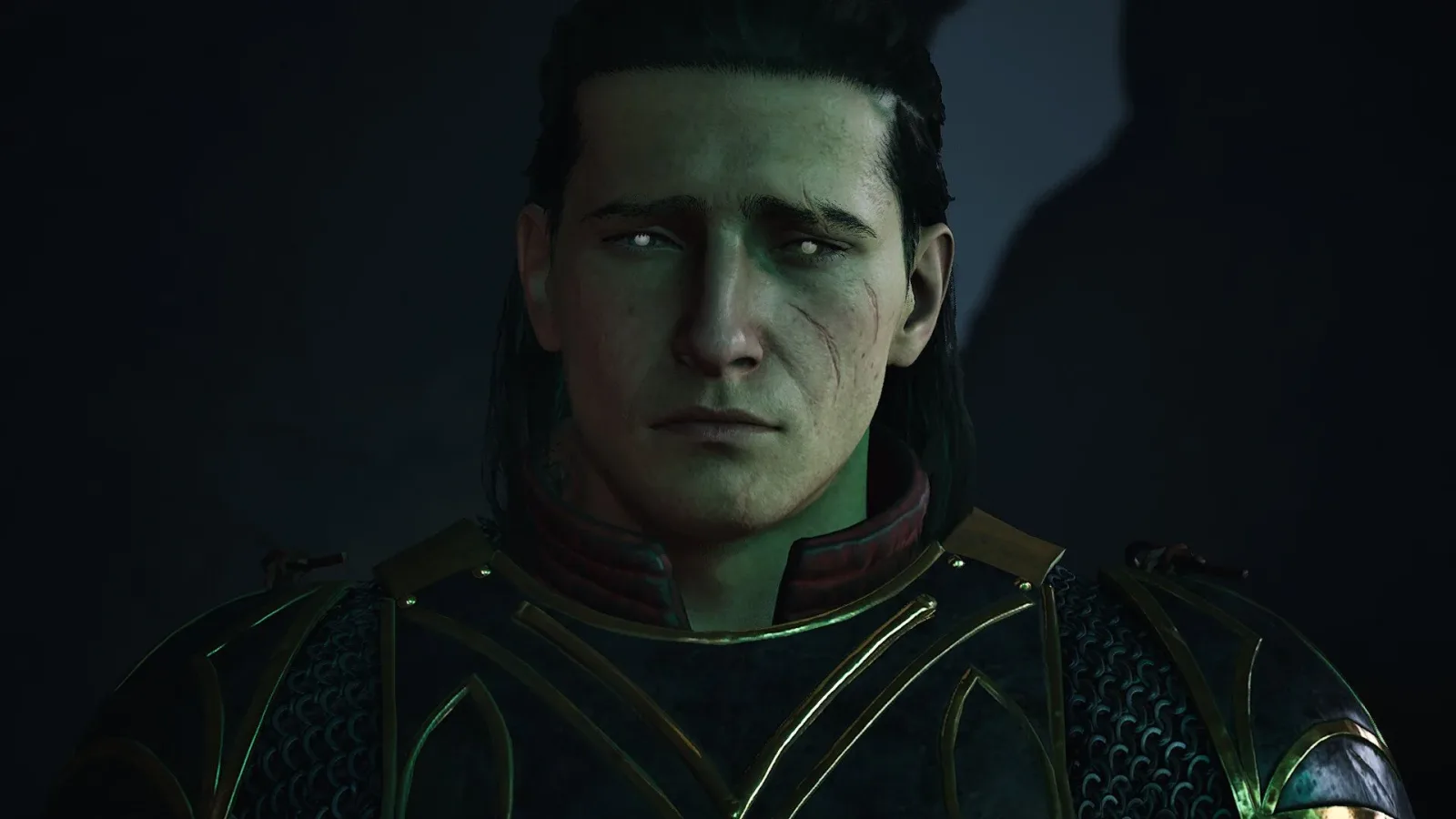
The Blood of Dawnwalker arrived carrying an unusually heavy set of expectations. Rebel Wolves' first game has been discussed alongside The Witcher 3: Wild Hunt since its January 2025 reveal, largely because the studio includes former developers from CD Projekt Red. That history made the comparison understandable: both games place a formidable protagonist in a medieval fantasy setting, both feature consequential dialogue decisions, and both invite players into a world shaped by monsters, violence, and political pressure.
Yet extended play has made the shorthand increasingly inadequate. After roughly 26 hours with The Blood of Dawnwalker, the similarities look more like surface-level DNA than a reliable description of how the new RPG feels. Coen of Laslea is not simply another version of Geralt, and Vale Sangora is not designed to be a replacement for the Continent. The differences are especially clear in mood, combat, exploration, and the constant pressure created by the game's 30-day structure.
That distinction matters because a comparison can be useful before a game launches, when players need a quick point of reference. Once the game is available, though, the same comparison can become a misleading promise. Players expecting the density, quest variety, tone, and accumulated worldbuilding of a long-running Witcher series may find themselves approaching The Blood of Dawnwalker on the wrong terms.
Shared RPG roots do not make the two games twins
There are valid reasons that Geralt and Coen keep being placed in the same conversation. Both are action-RPG heroes operating in high-fantasy worlds with medieval foundations. Neither protagonist is insulated from difficult choices, and player decisions influence the stories that unfold around them. Rebel Wolves' connection to veteran Witcher talent naturally adds another layer to that association.
For useful background on this topic, read Bloxnote Codes for September 2026: Active Apples and Saiyan Walk Reward.
The game's director has indicated comfort with those comparisons, which is hardly surprising. They offer an immediate way to communicate the broad appeal of a new narrative RPG. But a broad comparison is not the same as a mechanical or tonal match. Once players move beyond the elevator pitch, The Blood of Dawnwalker establishes a notably different identity.
The Witcher 3 has room for darkness, tragedy, warfare, and morally thorny decisions, but it also thrives on tonal flexibility. Its world can shift from grim folklore to affectionate absurdity without losing its character. Geralt may investigate horror one moment and stumble into a deliberately silly situation the next. Its storytelling often has a warm, knowing, fairy-tale quality even when the stakes are high.
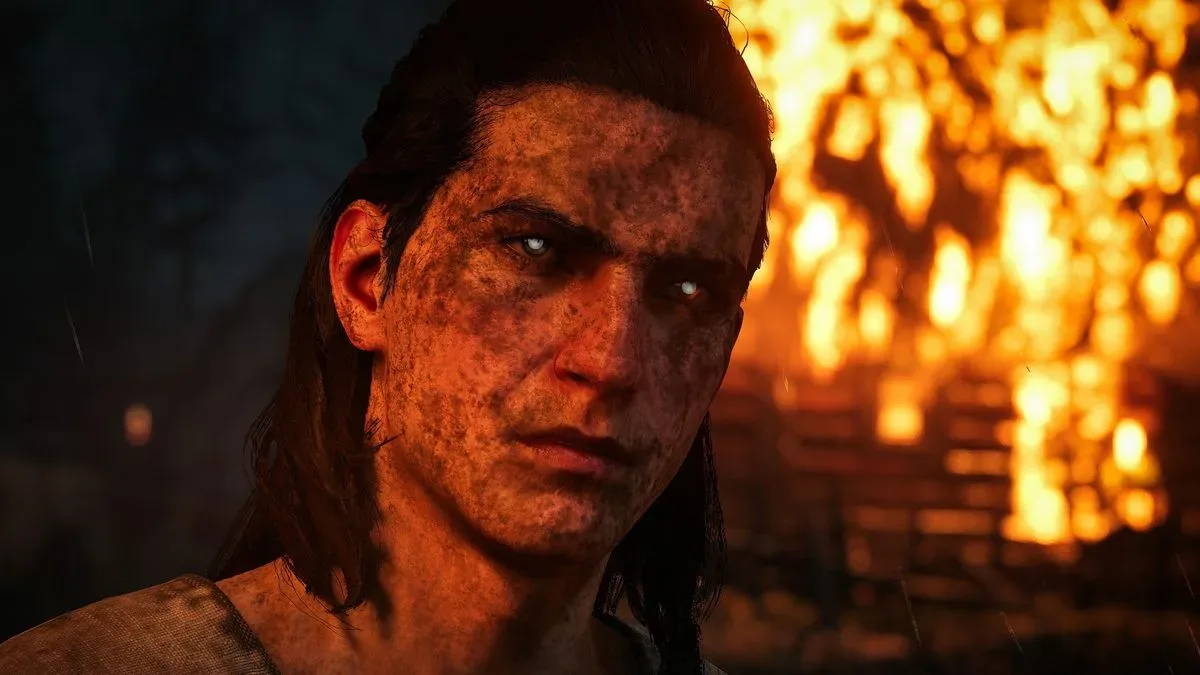
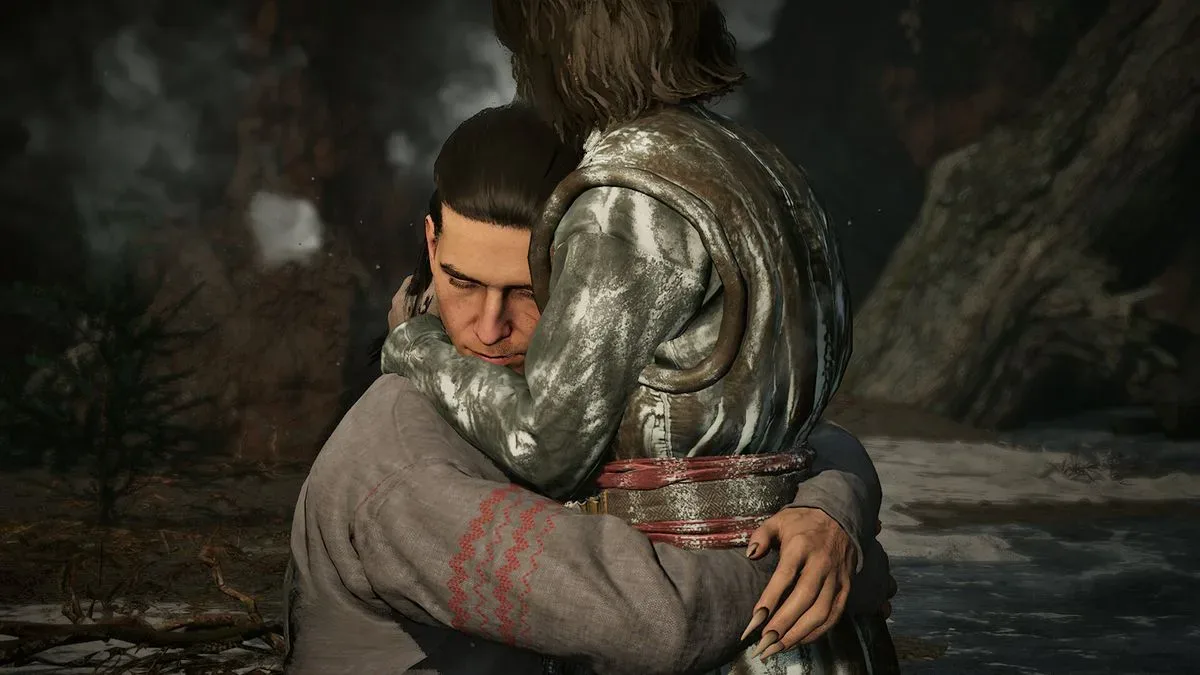
Coen's journey begins from a far harsher place. The Blood of Dawnwalker opens amid the terror of the Black Plague, and its atmosphere remains oppressive. Coen is not introduced as a seasoned professional undertaking another contract in a world he understands. He is an unlikely hero trapped in worsening circumstances, confronting vampiric power and personal desperation. The game offers little indication of a carefree version of Coen waiting beneath the suffering.
That tonal consistency does not mean the game lacks choices or drama. Rather, it means its emotional register is more constrained and bleak. Players looking for the kind of easygoing familiarity that can occasionally surround Geralt's adventures should not assume that Coen's story will provide it.
Coen's combat asks for a different mindset
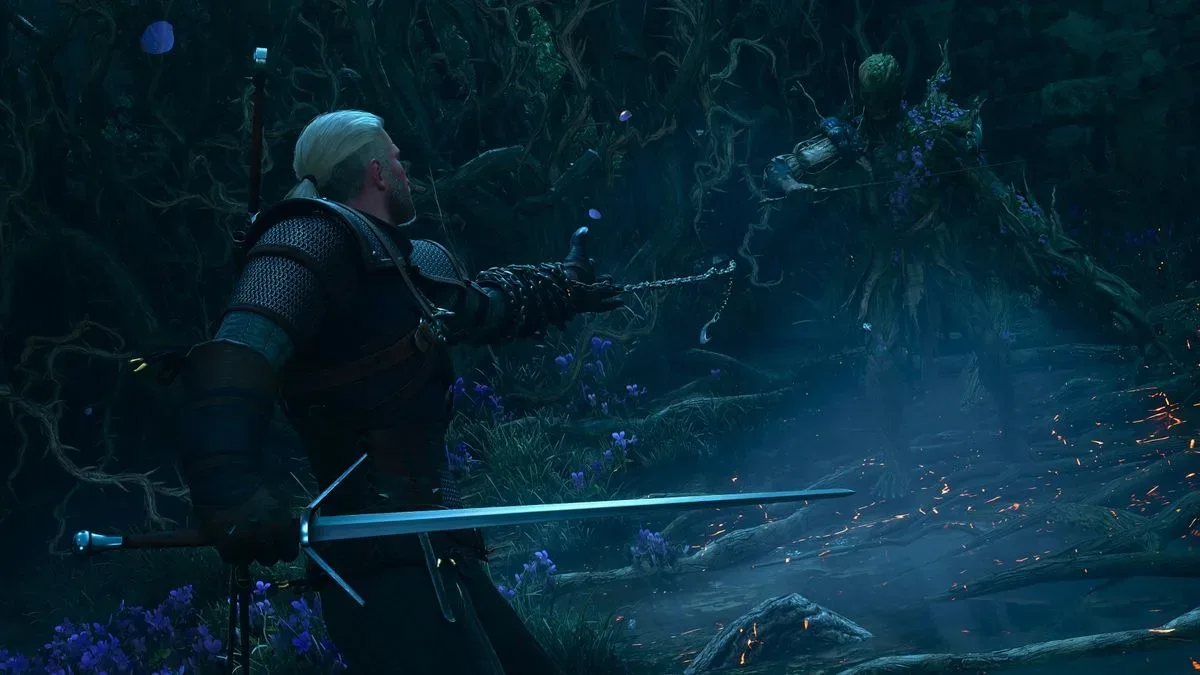
Combat is another major dividing line. Geralt's established toolset has always been central to the Witcher fantasy: steel and silver swords, signs, alchemy, and a range of options built around preparation and monster hunting. The upcoming The Witcher 3: Songs of the Past expansion is set to expand that kit further with a silver hook on a chain, a ranged weapon intended to replace the crossbow and drawn from the original novels. It reinforces Geralt's image as an experienced, adaptable fighter with answers for a wide range of encounters.
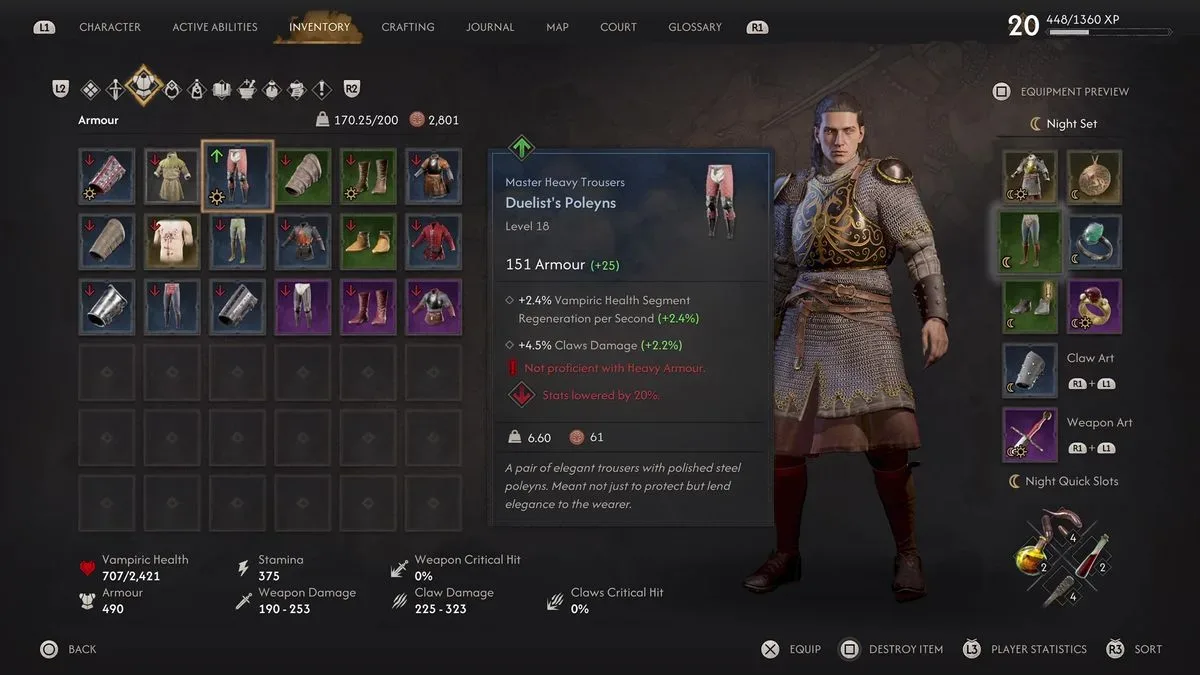
Coen is built very differently. Without witchcraft or his vampire powers, his fighting is focused on melee. Directional blocking and dodging demand attention, timing, and reflexes, while the absence of an easy dodge-roll solution makes it harder to escape encounters through repetition or button presses alone. The intention is less about giving players a flexible monster-slayer toolbox and more about making close-range survival feel tense and deliberate.
That approach has not landed perfectly for everyone. Some players have raised concerns about awkward combat camera angles, and the game's stealth options have also drawn criticism for feeling underdeveloped. Those are meaningful issues, particularly in a game where positioning and response timing can be important. As Rebel Wolves' debut project, The Blood of Dawnwalker can show signs of a team still working through the practical challenges of a large-scale action RPG.
Still, those rough edges should not be confused with an attempt to copy Witcher combat unsuccessfully. Coen's limitations are part of the design's larger purpose. He does not move through Vale Sangora as an already polished fantasy legend. His vulnerabilities, especially before supernatural abilities enter the equation, help define the game's harsher sense of danger.
The 30-day timer changes the open world
The clearest reason to stop treating The Blood of Dawnwalker as a Witcher-like open-world experience may be its approach to time. Coen has a 30-day constraint, but the timer is not simply a blunt punishment designed to rush players through the campaign. The world unfolds at a pace that can still accommodate player choice and exploration. Even so, time is always part of the equation in a way it never is for Geralt.
Coen's actions can trigger edicts, adding pressure as he fights against the vampire lord Brencis. This makes decision-making feel more immediate. Exploring a location, pursuing an objective, or deciding how to deal with a problem is connected to a broader sense that the situation can deteriorate. The game does not offer the same carefree assumption that every distraction can wait forever while the main crisis politely pauses.
That is a major structural difference from The Witcher 3. Geralt's journey can create narrative urgency, but its open world generally permits a player to roam at leisure. The player can spend extensive time following contracts, playing Gwent, or pursuing side stories without a formal countdown bearing down on the broader adventure. In Coen's world, the relationship between exploration and consequences is more deliberately strained.
The result is an RPG that can still feel open while retaining tension. For some players, that will be one of its most compelling ideas. For others, the very existence of a timer may feel restrictive, even if it proves less punishing in practice than it initially appears. Either response is fair, but neither is well served by assuming the game should function like Geralt's sprawling journey.
Vale Sangora should be judged on its own scale
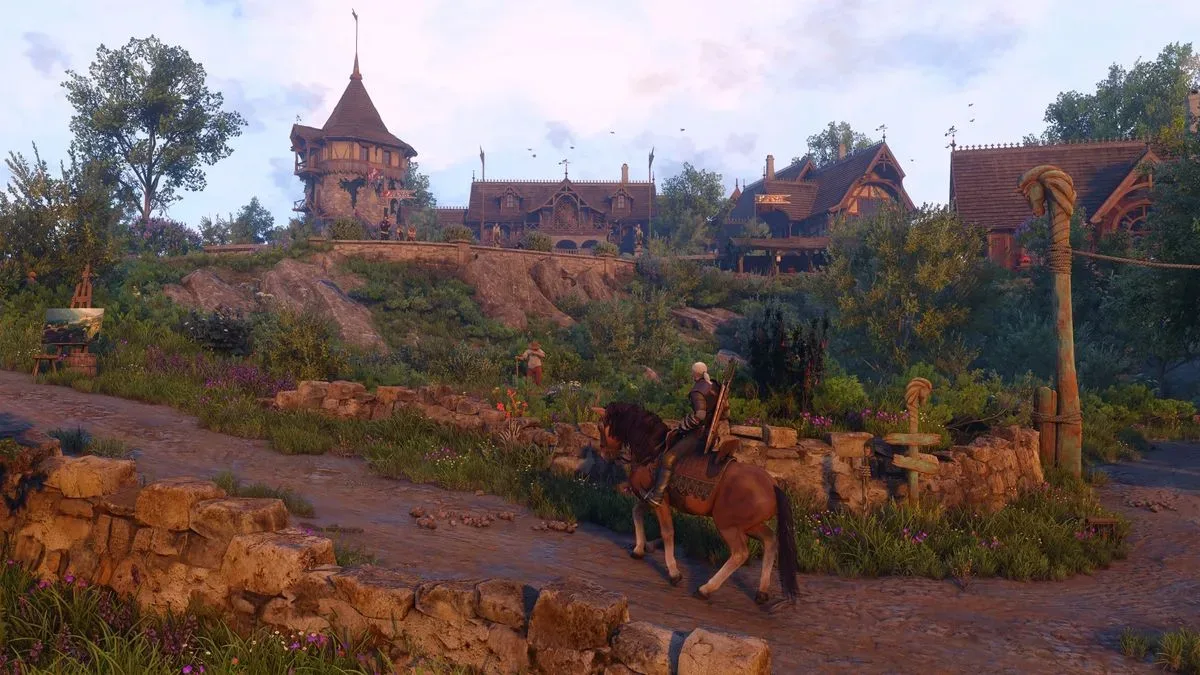
Questions about whether Vale Sangora is as lively, detailed, or densely packed as the Continent also risk missing the point. The Witcher 3 benefited from a substantial foundation: Andrzej Sapkowski's books, two prior games, an established central character, and years of accumulated setting detail. It grew into a gigantic RPG with a wide range of enemies, activities, regions, and narrative scenarios.
The Blood of Dawnwalker is beginning something new. It is the first game in what could become a larger saga, but it cannot reasonably be expected to carry the breadth of a franchise that has already built itself across multiple projects. Vale Sangora is not meant to be a literal country-sized playground, nor does it match the older series' catalog of enemies and mission types.
That does not make the setting lesser by default. Its appeal lies in its particular concentration of pressure: a plague-shadowed land, vampiric authority, a protagonist under a deadline, and choices that can feed into the edict system. A more focused world can support a different kind of role-playing experience, one defined less by sheer volume and more by the feeling that every move exists inside an escalating crisis.
Let Coen become his own benchmark
Rebel Wolves has made an ambitious first impression with The Blood of Dawnwalker, even if some of its systems invite debate. Its camera issues, combat friction, and limited stealth are reasonable targets for criticism. At the same time, the game's willingness to make its hero constrained, its tone relentlessly grim, and its world governed by time gives it a personality that cannot be adequately described as "more Witcher."
The comparison did useful work during the game's early reveal period. It helped players understand why a studio of former Witcher developers making a choice-driven fantasy RPG was worth watching. Now, however, it is more valuable to assess the game through its own aims. Coen does not need to stand in Geralt's shadow, and players do not need a new Continent in order to find something worthwhile in Vale Sangora.
As the potential series develops, its reference points may change again. The further its story moves toward a more modern-day timeline, the less useful the Witcher framing may become. For now, the most accurate expectation is straightforward: The Blood of Dawnwalker shares some RPG ancestry with Geralt's world, but it is a much darker, more pressured, and more mechanically distinct adventure built around Coen's own difficult path.
Community
Discussion
Start the conversation.
No comments have been posted yet.