

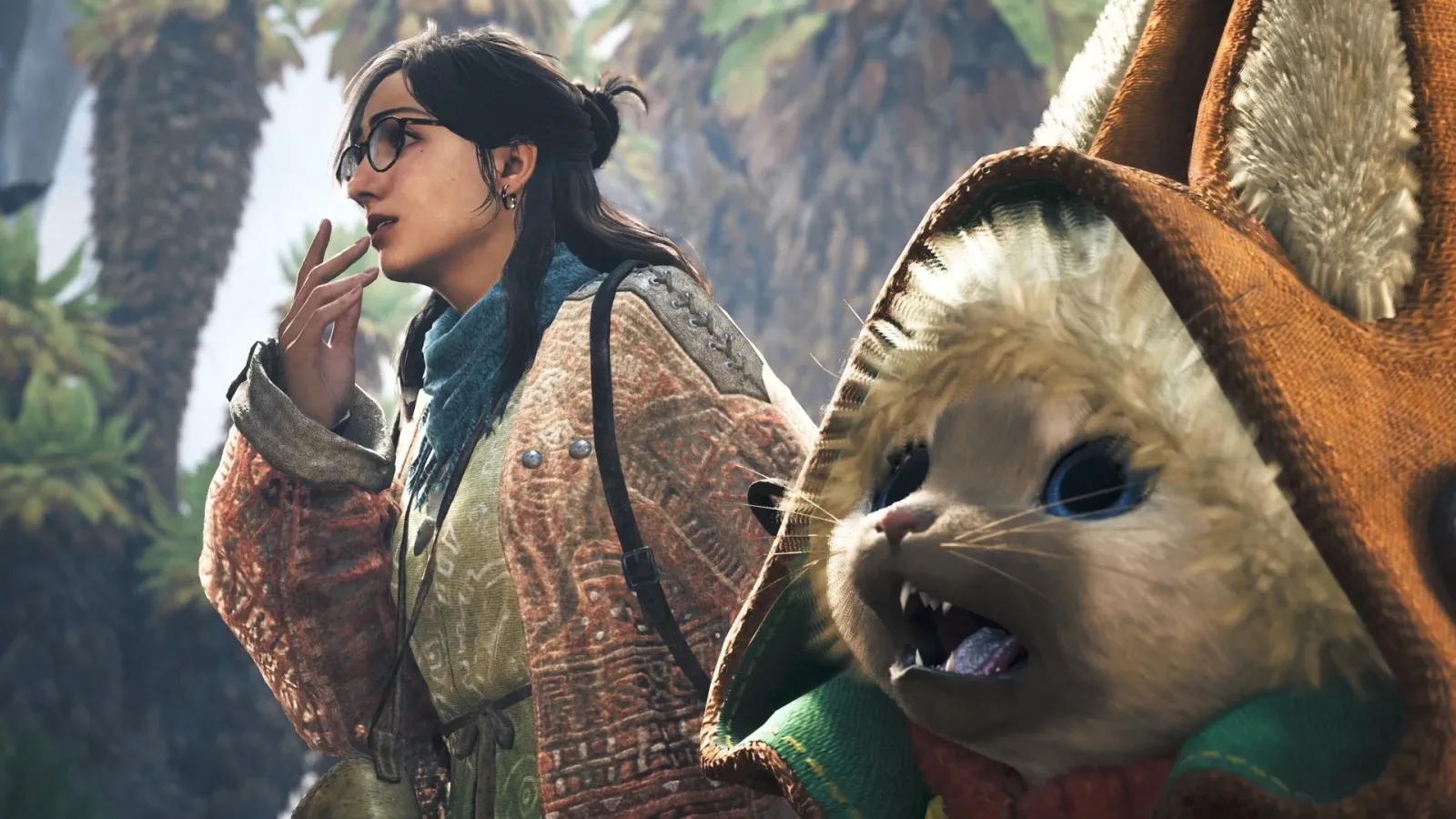
Monster Hunter Wilds: Ascendance is shaping up to be a major test of how far Capcom can push its ambitious hunting game after launch. Due in 2027 for PC, PlayStation 5, and Xbox Series X, the expansion is designed as a substantial post-main-story continuation rather than a modest content drop. Its early showing points toward a familiar Monster Hunter expansion formula--more monsters, equipment, locations, and demanding quests--but with a clear emphasis on making every hunt feel more dangerous and more mechanically intense.
Wilds arrived in 2025 as a big swing for the long-running series. Its seamless and systemic world aimed to make the Forbidden Lands feel more connected than prior Monster Hunter settings, but the transition also came with issues that complicated the game's launch and its wider reception. Capcom has spent the nearly two years since then refining the flagship entry through events and improvements, while working to restore the deliberate challenge that defines the best hunts in the series.
Ascendance appears to be the next step in that process. The new campaign brings hunters to a striking region called the Skybound Eyrie, sends them after threatening new prey and upgraded familiar foes, and introduces a combat tool that could become one of the expansion's most discussed features. Early hands-on gameplay suggests that the result is not simply more Wilds, but an effort to give its endgame a sharper identity.
A new chapter after Gogmazios
Ascendance takes place several years after the defeat of elder dragon Gogmazios in Monster Hunter Wilds' core story. The Hunter's Guild has endured a devastating setback in the intervening period: the returning elder dragon Lao-Shan Lung destroys the guild's stronghold. By the time the expansion begins, however, the guild is older, better prepared, and ready to pursue the colossal threat into a new part of the Forbidden Lands.
For useful background on this topic, read Shape of Dreams Hits PlayStation, Xbox and Switch 2 With Crossplay and Major Anniversary Update.
The campaign's central objective is not limited to Lao-Shan Lung. Hunters will also contend with a tar-like affliction that is spreading through the Windward Plains and affecting the surrounding ecosystem. That setup gives Ascendance room to combine a monumental returning monster with a broader environmental crisis, which is territory Monster Hunter has often used effectively when it wants individual hunts to feel connected to a larger threat.
Capcom's previous large-scale expansions, including Monster Hunter World: Iceborne, have traditionally represented the point where a base game's equipment progression and encounter design become more demanding. Ascendance follows that model, but its focus is especially notable because it arrives after continued work on Wilds' balance and systems. The expansion is aimed squarely at players who have already completed the main campaign and want a higher-level reason to return.
Skybound Eyrie makes positioning even more important
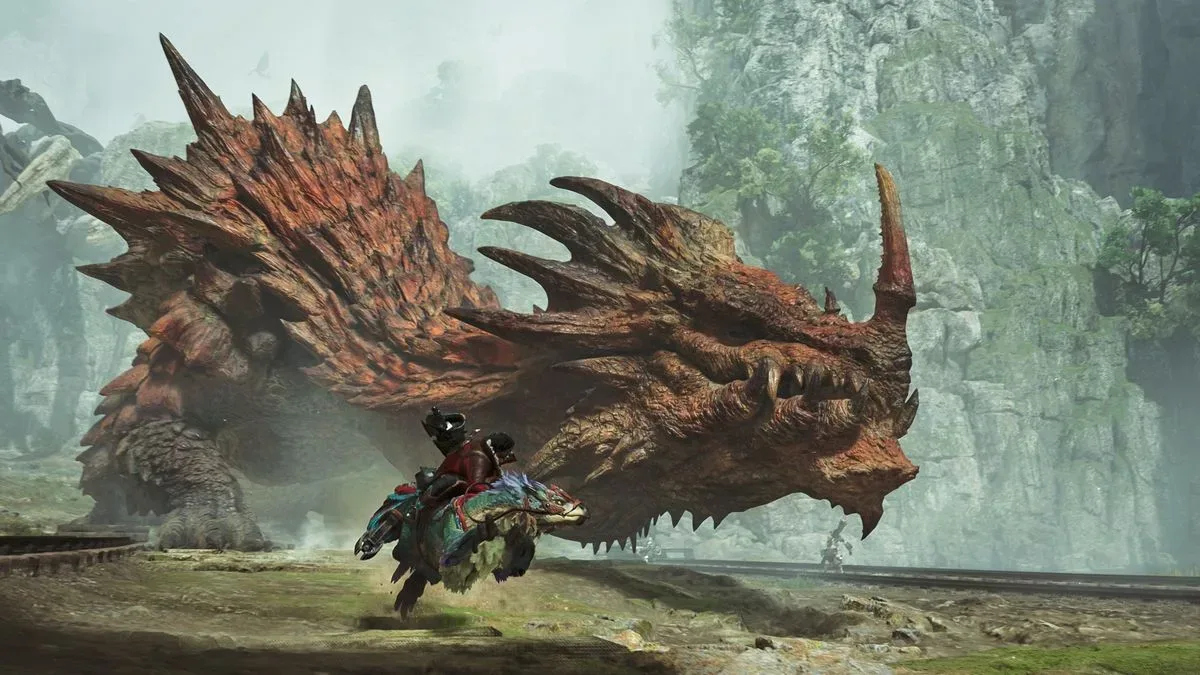
The Skybound Eyrie is immediately positioned as one of Ascendance's defining additions. It is the most vertical environment introduced for Wilds, built around aerial islands and dramatic elevation changes. The setting provides a strong contrast to the Windward Plains, with a more fantastical skyline and a sense of scale that makes traversal part of the pressure of a hunt.
Verticality is not just visual dressing. In the early playable hunts, the region's cliff edges and elevated routes create legitimate hazards. Fast movement, monster attacks, and the usual scramble to stay in range can send an unwary hunter over an edge. Falling off the playable area is a very direct consequence for poor positioning, making the terrain another factor a team must watch alongside health, stamina, sharpness, and item use.
That approach suits Monster Hunter's best battlefields. An arena becomes memorable when it changes the flow of a fight rather than merely serving as a pretty backdrop. Skybound Eyrie appears built to make hunters consider their footing, approach angles, escape paths, and the risks of chasing a fleeing creature through uneven terrain. In a game where even a few seconds spent recovering can change a hunt's momentum, those environmental demands could matter considerably.
Alpha Araketa demonstrates more coordinated monster behavior
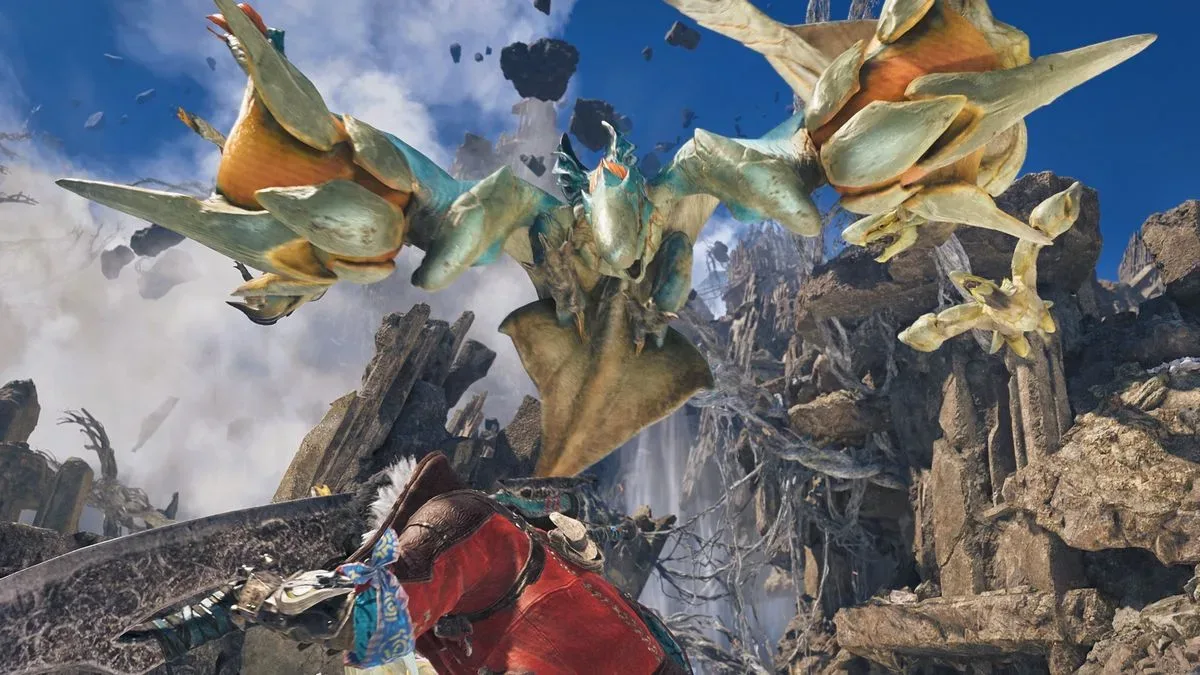
One early hunt centers on Alpha Araketa, a new monster that leads a smaller group of minions. The encounter demonstrates one of the most interesting apparent upgrades in Ascendance: enemies that coordinate their behavior more actively. Rather than functioning as incidental background creatures, Araketa's accompanying monsters contribute directly to the battle's rhythm.
Araketa can fight on the ground and in the air, while its group can rush hunters together or take to the skies for synchronized dive-bomb attacks. That combination turns the encounter into a greater team-coordination challenge. A player must track the alpha, account for the supporting creatures, and avoid becoming exposed while the group changes position. The danger is amplified in Skybound Eyrie, where a poorly timed evasive maneuver can create even more problems.
Learning the monster's patterns remains the heart of the experience. Alpha Araketa has varied attack routines, including a wing-based combo that uses natural gases in its wings to produce a jet-like impact. The creature's mixed aerial and ground attacks make it an encounter that rewards familiarity, with a successful hunt depending on recognizing its rhythm rather than simply forcing damage whenever an opening appears.
That is a promising sign for Ascendance's stated role as a more advanced chapter. Monster Hunter is at its strongest when a difficult monster initially feels overwhelming, then gradually becomes readable as hunters learn its tells, recovery windows, elemental threats, and movement habits. A coordinated pack leader gives the expansion a way to raise the skill ceiling without relying only on bigger health pools or harder-hitting attacks.
Boost Bracers bring super attacks to every weapon
The biggest new gameplay system in Ascendance is the Boost Bracer. Unlocked after entering the expansion's story, the tool lets hunters enter a powered-up state and access a new super attack tailored to their selected weapon. It also grants temporary access to enhanced combos while the boost is active.
Boost Bracers are not available on demand. Attacking monsters fills a meter that can hold up to three charges. Once a charge is ready, a hunter can spend it on a major attack, whether that is an extended combo or a powerful single strike. The system gives squads dramatic opportunities to capitalize when a monster is staggered, trapped, exhausted, or otherwise vulnerable.
In practice, the visual and tactical effect is intentionally explosive. Coordinating several weapon-specific super moves against a downed target makes a fight feel even more energetic, adding a burst of spectacle to the familiar rhythm of exploiting an opening. Yet the meter's limitations mean the mechanic is also a resource-management decision. Using a charge at the wrong moment--or missing the attack entirely--can be especially costly.
That risk may be important for the system's reception. Wilds has faced discussion around whether some of its balancing has been too generous for a series known for careful commitment and preparation. Boost Bracers will likely generate further debate among longtime players, especially because super attacks can make a team's damage phase look extraordinarily powerful. But a missed boosted strike is still a missed opportunity, and building another charge takes time and continued engagement with the monster.
Whether the mechanic ultimately feels balanced will depend on the full campaign's enemy health, openings, damage tuning, and armor progression. Still, the underlying idea has potential: offer players a thrilling new offensive option, but make them earn it and choose their timing carefully. That is a much better fit for Monster Hunter than a no-risk button that can be used whenever trouble arises.
Teostra returns with punishing terrain
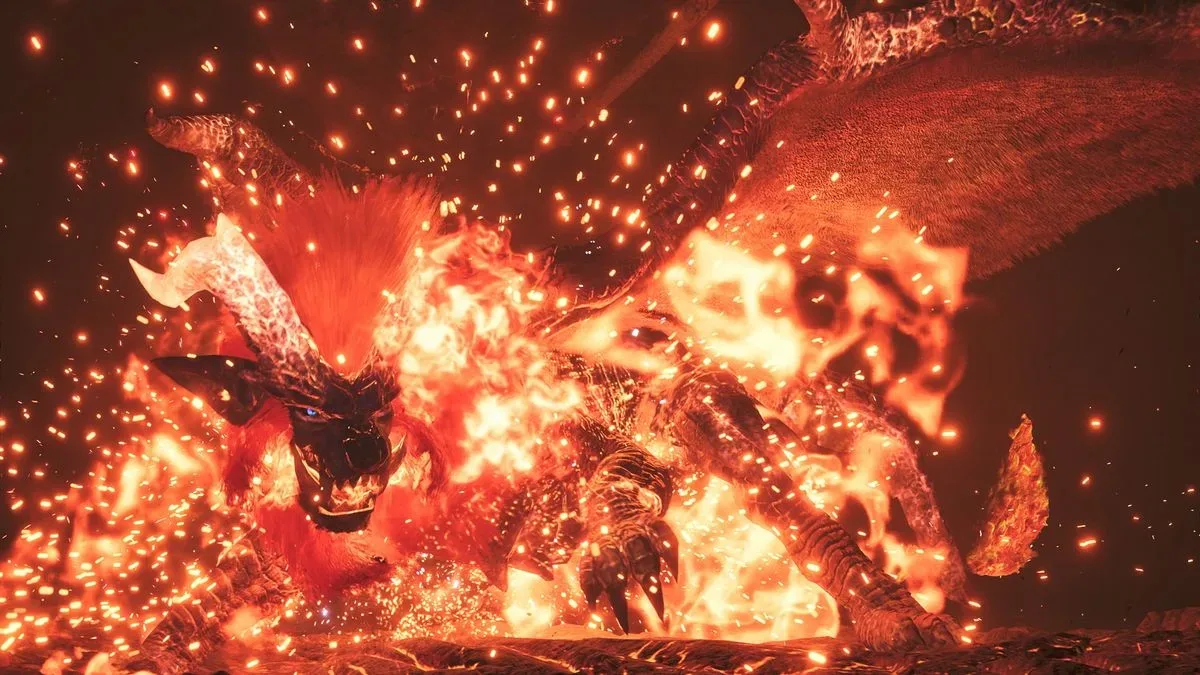
The other showcased hunt brings back Teostra, the fan-favorite elder dragon known for intense fire attacks and punishing physical blows. In Ascendance, Teostra returns in an enhanced form, framing it as one of the expansion's high-level challenges rather than a simple repeat appearance.
The battle is complicated by quicksand in the hunting area, which turns movement into an additional obstacle. Dealing with Teostra's flame pressure while navigating terrain that hinders traversal sounds like exactly the type of layered encounter suited to advanced players. A hunt against an elder dragon is already a demand for awareness; adding environmental restrictions can make panic rolling and careless repositioning much more dangerous.
It is also an encouraging example of Ascendance using returning monsters as more than nostalgia. Teostra's established moveset gives experienced hunters a foundation of knowledge, while the upgraded version and its arena conditions can force them to rethink familiar habits. That balance between recognition and renewed danger is a core part of what makes Monster Hunter's ultimate-rank-style expansions compelling.
A potentially meaningful second wind for Wilds
Monster Hunter Wilds: Ascendance has a substantial challenge ahead. It needs to provide the quantity of content players expect from a major Monster Hunter expansion, while also proving that Wilds' systems can support a longer, more punishing endgame. Based on its early playable hunts, Capcom is approaching that task through enemy coordination, more hazardous arenas, high-pressure returning monsters, and an ambitious new combat layer.
The Skybound Eyrie gives the game a visually distinct setting with terrain that matters. Alpha Araketa suggests the new monster roster will not be content to follow familiar one-on-one patterns. Teostra offers a difficult returning benchmark. And the Boost Bracer could deliver satisfying new weapon expression, provided its power is properly balanced against the increased threats ahead.
For players who stepped away from Wilds after its original story, Ascendance looks positioned as a compelling invitation to pick up the hunt again. It is too early to know how its complete monster list, gear path, and final balance will land, but the expansion's direction is clear. Capcom wants its most ambitious Monster Hunter entry to finish stronger, with harder battles, more meaningful mastery, and a renewed sense that every successful hunt has been earned.
Community
Discussion
Start the conversation.
No comments have been posted yet.