

Nintendo has said it is not considering another price increase for Switch 2, even as the company reports a sharper year-over-year decline in hardware sales and a reduction in operating profit. The update arrives at a crucial point for the console: Switch 2 remains ahead of the original Nintendo Switch on a launch-aligned basis, but its extraordinary debut has made the second year of sales much harder to compare favorably with the first.
For the three months ending September 30, Nintendo recorded operating profit of 73.9 billion yen, or roughly $467 million. That represented a 16% decline from the comparable period, alongside a 15% fall in sales. Switch 2 accounted for 2.67 million units during the quarter, down 41% year over year and lower than the 3.82 million units sold in the April-to-June quarter of the current fiscal year.
Those results have brought renewed attention to the cost of game hardware, the availability of memory components, and the software lineup needed to sustain a console after its launch period. Nintendo President Shuntaro Furukawa has nevertheless indicated that the company has secured sufficient memory to meet its planned Switch 2 volume for the financial year ending March 2027. Nintendo continues to forecast sales of 16.5 million Switch 2 systems across that fiscal year.
No Further Switch 2 Price Change Planned
Nintendo raised the Switch 2 price in September amid rising memory costs, a situation widely described across the technology industry as a RAM supply crunch. That pressure has not been unique to Nintendo. Microsoft and Sony have also increased console pricing as component costs have become more difficult to absorb.
For useful background on this topic, read Nintendo Switch 2 Reaches 26.35 Million Sales Despite Year-Over-Year Decline.
The latest statement matters because a second increase could have made the Switch 2's position during the holiday shopping season considerably more complicated. A console price change is always sensitive, but it can be especially consequential once early adopters have already bought in and the manufacturer is seeking a broader audience. Nintendo's stance suggests it believes the present price can support its sales target without requiring another immediate adjustment.
It does not mean the memory market is no longer a concern. Furukawa's comments instead point to a more limited message: Nintendo believes its current supply position is adequate for the forecast it has already published. The company has not offered a broader promise that component pricing will remain stable indefinitely, and the wider market conditions remain an important factor for every major console manufacturer.
Sales Are Lower, but the Launch Context Is Unusual
Nintendo sold 6.49 million Switch 2 units in the first half of its current financial year, covering April through September 2026. That is below the 10.36 million systems sold during the same six-month span a year earlier. On the surface, it is a substantial drop. Yet the comparison needs context because Switch 2 opened with an exceptionally large launch.
Strong supply at release helped the machine become the fastest-selling console of all time. That created an enormous initial base of demand, while also pulling forward purchases that might ordinarily have occurred later. A second-year slowdown after such a start is not automatically evidence that consumer interest has disappeared; it also reflects the unusually high benchmark the hardware established for itself.
Lifetime Switch 2 sales have now reached 26.35 million units. At the equivalent point in their respective launches--the first six quarters on the market--Switch 2 is still ahead of the original Switch. That comparison is significant because the first Switch ultimately became one of Nintendo's most successful platforms, supported by a long software tail and continued appeal across different types of players.
The immediate question is whether Switch 2 can turn its lead over the original system into sustained momentum rather than simply a historically powerful opening. Hardware is often driven by a mix of price, stock availability, seasonal promotions, and the strength of exclusive games. Nintendo's latest results highlight all of those variables at once.
Software Sales Show Established Series Still Carrying Weight
Nintendo's updated game figures show a number of recent releases making a meaningful contribution. Tomodachi Life: Living the Dream has sold 8.81 million copies, putting it comfortably ahead of the other newly reported titles. Rhythm Heaven Groove has reached 2.89 million units, while Splatoon Raiders has sold 2.42 million.
Mario Kart World, which launched alongside Switch 2 last year, continued to move copies steadily. Nintendo reported another 1.78 million units across the two quarters covered by its first-half results. As a launch-window title, its continued performance is notable: racing games frequently benefit from a growing install base and remain accessible purchases for new system owners.
Other releases also added to the software picture. StarFox, released in June, sold 1.17 million units. Fire Emblem: Fortune's Weave, which arrived in September, sold 1.34 million units. Together, the figures show that Nintendo is not relying on a single series to generate sales, even if the scale of each release differs considerably.
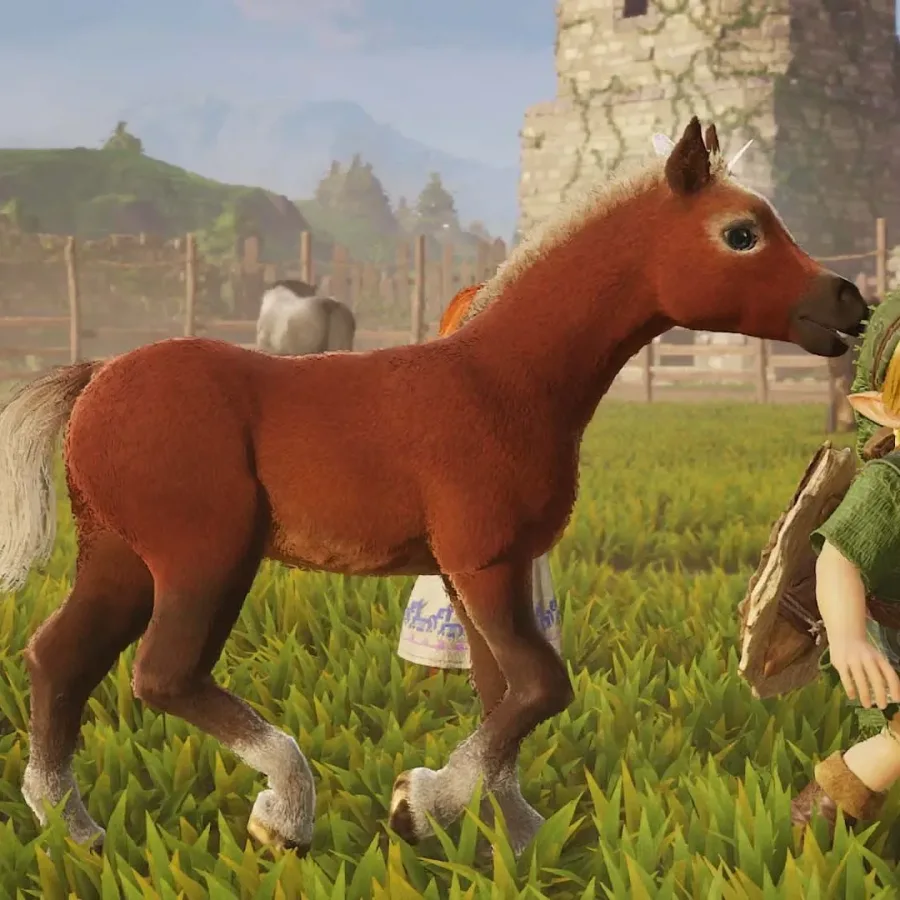
The company has now launched an Ocarina of Time remake, and the game is expected to be one of the most closely watched releases of the holiday period. Its arrival coincides with investor focus on whether Nintendo has a sufficiently prominent game to encourage new Switch 2 purchases at a time when hardware sales have cooled.
A Holiday Test for Nintendo's Release Strategy
Some investors have raised concerns over both memory-related costs and what they view as a thinner slate of major Switch 2 releases this year. Serkan Toto, chief executive of Kantan Games, argued that Ocarina of Time is Nintendo's one truly major release for the current fiscal year, and that more large-scale games will be needed to keep the system's momentum moving after the price rise.
That assessment gets to the heart of Nintendo's near-term challenge. A remake with the stature of Ocarina of Time can be a major event, particularly during the holiday season, but platform holders generally need more than one high-profile game to continually broaden a console's audience. Different genres and franchises reach different customers, and a consistent cadence can also help maintain the perception that a new machine is essential rather than optional.
Nintendo appears positioned to address that issue in 2027. Pokémon Winds and Pokémon Waves are confirmed for next year, and many fans are also hoping Nintendo's next mainline Super Mario game will be part of the company's plans. No announcement of that Mario project has been made, so it remains speculation rather than a confirmed release.
For now, Nintendo is trying to balance confidence with caution. It has reaffirmed a 16.5 million-unit annual hardware target, said current memory supplies are enough to pursue it, and ruled out another Switch 2 price increase. At the same time, the company's reported decline in quarterly hardware sales and profit makes clear that the record-setting launch has given way to a more demanding phase of the console cycle.
The market response was positive in the immediate aftermath of the financial report and the Ocarina of Time remake's release, with Nintendo shares rising 8.13%. Whether that confidence lasts will depend heavily on holiday demand, the ability of the remake and existing software to move systems, and the scale of Nintendo's 2027 release calendar. Switch 2 has built a formidable early lead. The next task is proving that lead can translate into the kind of enduring momentum that defined its predecessor.
Community
Discussion
Start the conversation.
No comments have been posted yet.