

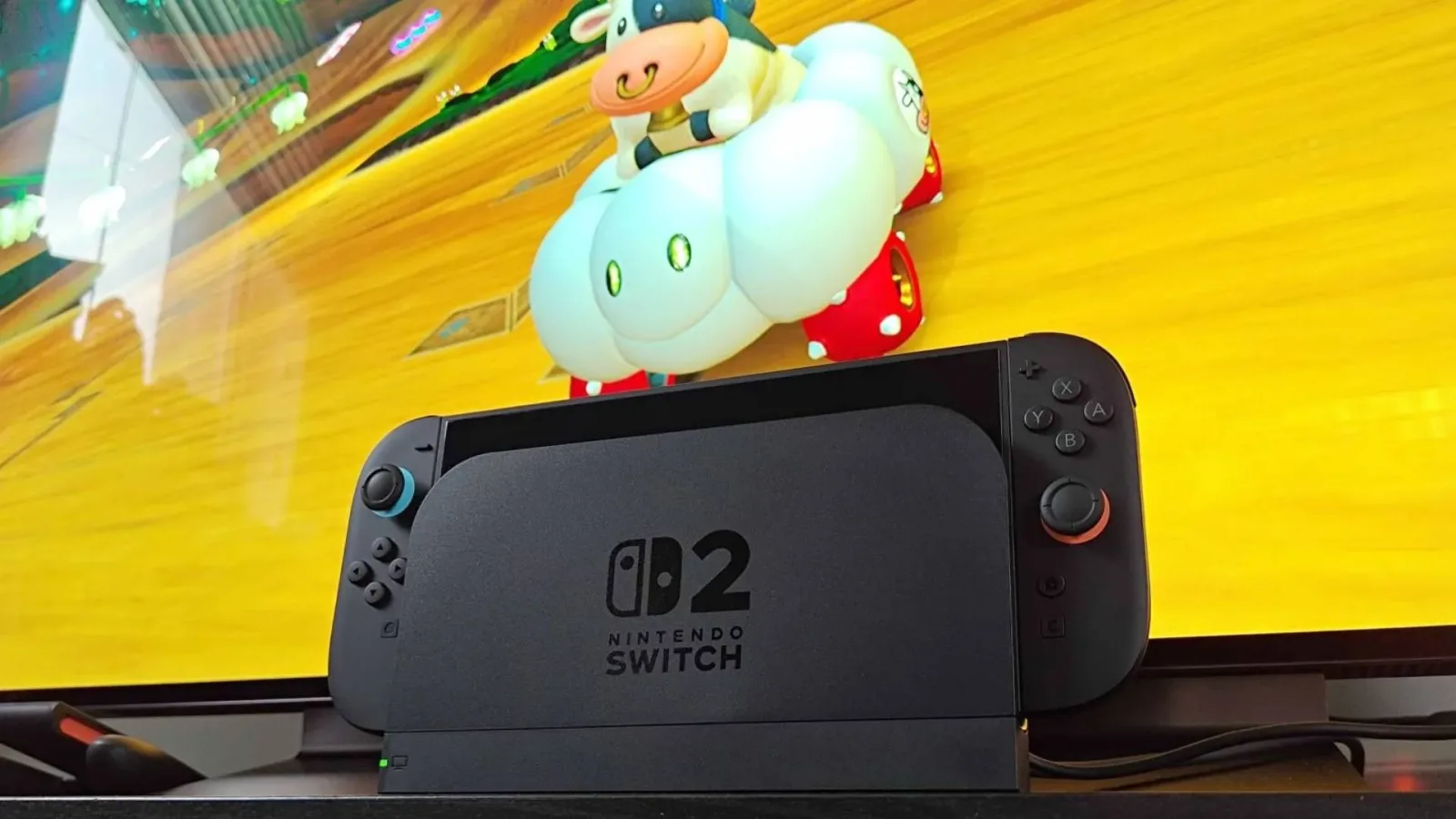
Nintendo Switch 2 has reached 26.35 million systems sold since its launch last June, establishing a formidable early installed base even as the company reports a substantial year-over-year decline in quarterly hardware sales. Nintendo's financial results for the July-to-September 2026 quarter put sales for that three-month period at 6.49 million consoles, compared with 10.36 million in the equivalent period a year earlier.
That represents a 37.4% decline in Switch 2 hardware sales year over year. On its face, that is a dramatic change, but the comparison comes after an unusually explosive launch window. Switch 2's first year saw it become the fastest-selling console of all time, aided by strong demand and, crucially, far better availability than many major console launches have enjoyed.
The more revealing figure may be the cumulative total. With 26.35 million units sold, Switch 2 remains ahead of the pace set by both the original Nintendo Switch and PlayStation 5 at comparable points in their respective lifecycles. Nintendo's newest machine is no longer selling at its launch-quarter peak, but it has still built an audience at a remarkable speed.
A predictable slowdown after an exceptional debut
Console sales almost always cool after launch demand has been satisfied. The 37.4% decline does not mean Nintendo has suddenly lost its audience; rather, it highlights just how enormous the system's earlier sales period was. Selling more than 10 million systems in a single quarter is a difficult benchmark for any platform holder to repeat, especially once the earliest adopters have made their purchases.
For useful background on this topic, read Ocarina of Time remake Midnight Launches Show Physical Gaming Still Has a Crowd.
Switch 2's launch was also shaped by a factor that can define an entire generation's opening year: consumers were able to find the hardware. Supply constraints affected a number of high-profile console launches in recent years, creating a situation where demand existed but could not always be converted into immediate sales. Nintendo's apparent decision to ensure stronger availability before release looks increasingly important in hindsight.
Availability does not eliminate competition or guarantee sustained momentum, but it gives a new console the opportunity to capitalize on its biggest marketing moment. When players can buy the system during its launch period rather than months later, the installed base rises more quickly, and publishers have a larger potential audience for early software.
That foundation is now clear in Nintendo's total. A 26.35 million-unit installed base gives Switch 2 a large audience for first-party releases, third-party games, expansions, and digital content. The quarterly hardware decline therefore needs to be viewed alongside the broader picture: Nintendo has already sold tens of millions of systems in a relatively short time.
How Switch 2 compares with Nintendo Switch and PS5
By the end of its 15th month on the market, the original Nintendo Switch had sold 19.67 million units. PlayStation 5, meanwhile, had sold 19.3 million systems by the end of March 2022, around 16 months after its own launch. Switch 2's 26.35 million total places it well beyond both of those benchmarks.
Those comparisons are not perfectly like-for-like. Every console generation launches into different economic conditions, software schedules, supply circumstances, and competitive environments. The original Switch arrived with a different proposition and spent its early months proving the appeal of its hybrid design. PS5's early years were heavily affected by supply shortages. Switch 2 has had its own release lineup and market conditions.
Still, the numbers show that Nintendo's newer hardware is performing exceptionally well in historical context. A year-over-year drop can coexist with record-setting overall sales. In fact, that combination is often what follows a huge launch: the system's quarterly growth rate normalizes while its lifetime trajectory remains significantly ahead of comparable machines.
Microsoft does not routinely disclose current Xbox hardware sales figures, making a direct official comparison more difficult. Estimates have suggested Xbox Series X and Series S shipments were around 28.3 million units by June 2024. That figure, combined with Switch 2's current total and launch timing, suggests Nintendo's system may also be moving ahead of Microsoft's current-generation hardware pace.
Shipment estimates and consumer sell-through are not identical measurements, so they should be treated cautiously. Even so, the available comparisons reinforce the same central point: Switch 2's early market performance remains extremely strong, despite the latest quarterly decline.
Software sales rise as the audience grows
The clearest sign of a healthy platform may be on the software side. Nintendo said Switch 2 game sales increased 18.8% compared with the same period last year. That growth came while hardware sales were lower, underscoring how a maturing installed base can generate stronger game demand even after the initial rush for consoles begins to fade.
The dynamic is straightforward. There are now far more Switch 2 owners than there were a year ago, and they have a broader selection of games to buy. Early in the system's life, the release slate was comparatively limited, with Mario Kart World and Donkey Kong Bananza among the most visible games around launch. Welcome Tour and Drag x Drive also arrived in that early period, but the platform's library has expanded substantially since then.
That expanding catalog is beginning to show in individual sales results. Splatoon Raiders opened with 2.42 million copies sold, while Fire Emblem Fortune's Weave started with 1.34 million copies. Both results demonstrate the commercial value of Nintendo's established series on a platform that has rapidly assembled a large user base.
Rhythm Heaven Groove also posted a notably strong result, selling 2.89 million copies. The performance is especially striking for a series that has often been viewed as more specialized than Nintendo's biggest blockbuster brands. Its success suggests Switch 2 owners are buying beyond the most obvious launch-window releases and that Nintendo's audience remains receptive to varied genres and familiar franchises returning after long absences.
Software growth matters for more than headline sales. A growing game business helps support publisher investment, keeps players engaged with the platform, and provides Nintendo with opportunities to sustain the system between major hardware revisions. A console that continues to sell games well can remain commercially healthy even after its hardware sales settle into a more typical rhythm.
The challenge is maintaining the next phase of momentum
Nintendo's next task is not to recreate the unprecedented launch period every quarter. It is to convert Switch 2's huge start into durable, multi-year momentum. That means continuing to broaden the software lineup, supporting major franchises, and giving buyers clear reasons to enter the ecosystem after the earliest wave of adopters has already bought in.
The company has already demonstrated the value of a strong release pipeline. Splatoon Raiders, Fire Emblem Fortune's Weave, and Rhythm Heaven Groove give the system a more varied identity than a platform reliant on one or two launch flagships. Nintendo will want that variety to continue, especially as its installed base grows more diverse.
Upcoming high-profile releases can also drive another round of hardware interest, particularly when they are tied to one of Nintendo's most recognizable series. The Legend of Zelda: Ocarina of Time has become one of 2026's most celebrated games, giving Switch 2 a major prestige release as Nintendo looks beyond the initial launch cycle.
For now, the company's financial update presents a balanced but encouraging picture. Switch 2 hardware sales have fallen sharply against an enormous prior-year quarter, yet the console has still reached 26.35 million sales and remains ahead of landmark rivals at similar stages. At the same time, game sales are climbing, and several recent releases have made strong commercial starts.
Nintendo Switch 2 sales have slowed from an extraordinary peak, but the platform's broader trajectory remains one of major success. The next several quarters will show how effectively Nintendo can sustain that lead, but its combination of a large installed base and rising software demand gives it a powerful position heading into the next stage of its lifecycle.
Community
Discussion
Start the conversation.
No comments have been posted yet.