

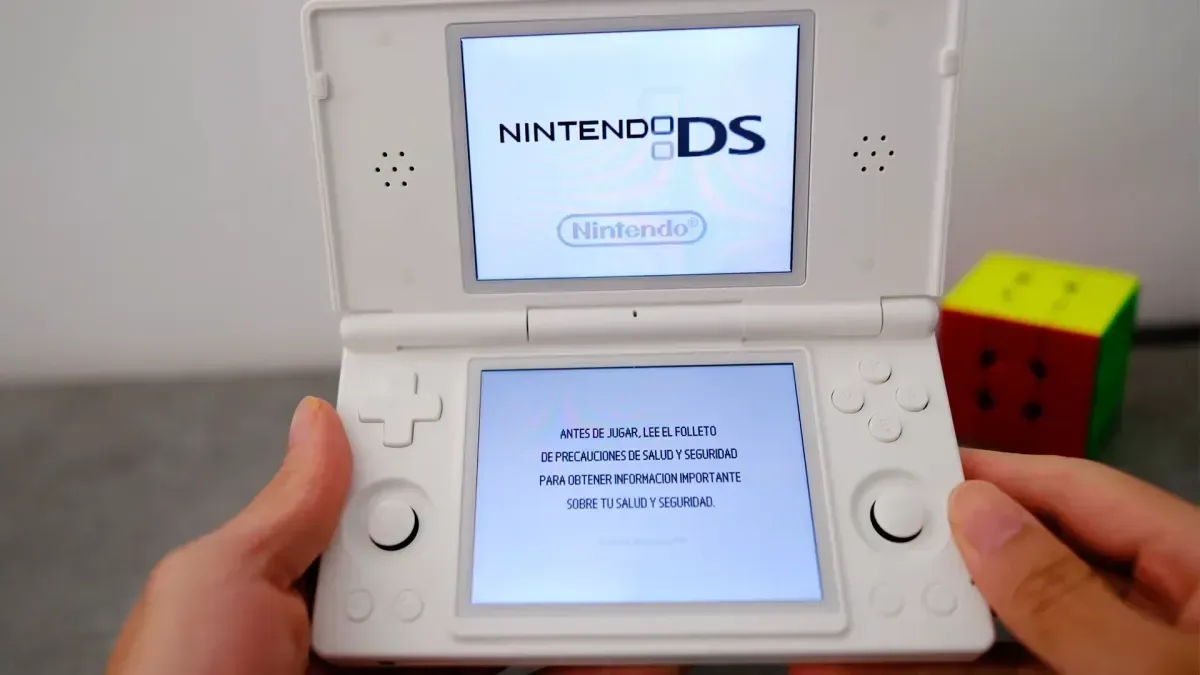
Android handheld owners looking to give their device a distinctly Nintendo DS-era feel may soon have a new option. NitroDeck, the Android launcher created by Mr. Rubik, is preparing an update intended to support dual-screen Android handhelds, with the ANBERNIC RG DS serving as the notable example of the hardware being tested.
The launcher is already available free through the Google Play Store, but its currently announced dual-screen-focused improvements were expected within the next week or two as of September 25, 2026. That timing should still be treated as a target rather than a firm release commitment. The significant part is not merely another retro-themed Android interface: NitroDeck is being adapted around the unusual layout of handhelds that physically resemble Nintendo's classic clamshell systems.
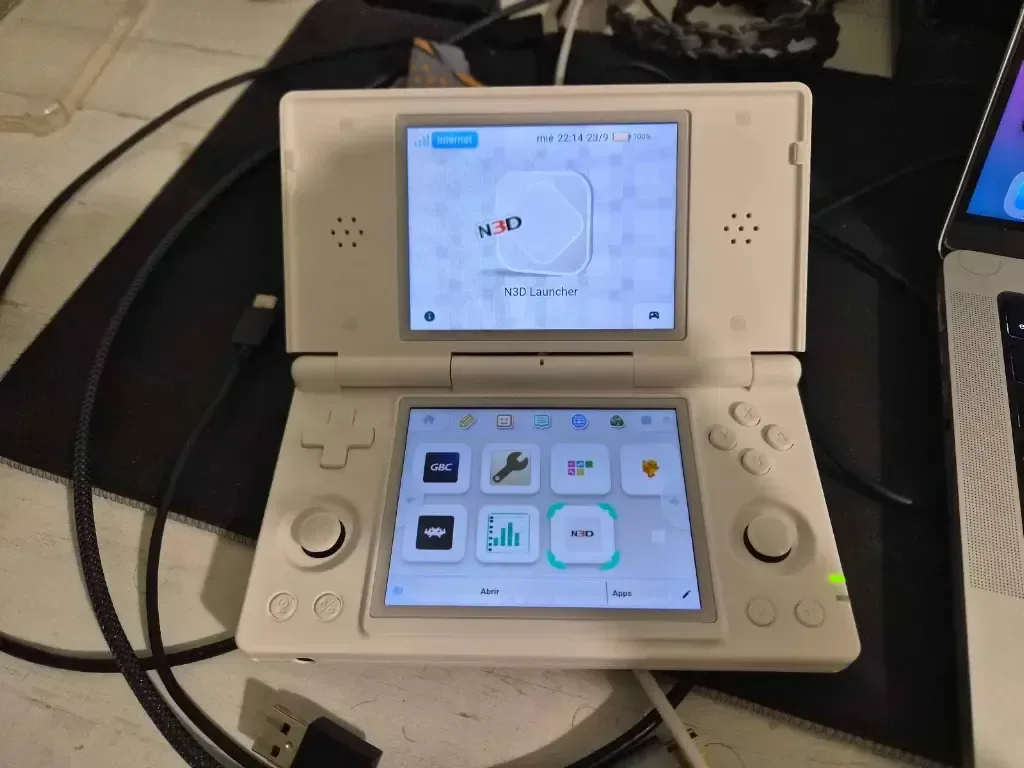
For users of a conventional phone, tablet, or single-screen Android gaming handheld, a launcher can change the appearance and organization of the home screen. On a dual-screen system, it can potentially do much more. The extra display creates an opportunity to split navigation, background visuals, menus, game libraries, and other interface elements across two separate panels in a way that feels closer to the software experience associated with the Nintendo DS and DSi.
A launcher built around the Nintendo DS look
NitroDeck's central idea is straightforward: replace the standard Android home-screen experience with an interface modeled after the visual language of Nintendo's DS family. The project draws from both DS and DSi presentation, including a dual-screen-style layout, menu concepts inspired by the handheld line, and even a startup sequence with a familiar type of boot-up presentation and sound.
For useful background on this topic, read Pokémon Snap VR Port Brings the N64 Photo Safari to Meta Quest 3.
That approach makes NitroDeck more ambitious than a generic retro icon pack or wallpaper collection. Instead of only changing a few cosmetic details, the app aims to turn installed Android applications into a catalog that can be browsed in a controller-friendly way. Users can open apps from a rapid library view, search them alphabetically, and navigate with touch controls, a keyboard, or a connected gamepad.
Mr. Rubik describes NitroDeck as a launcher for people who want a more focused, visual Android home screen that works comfortably with physical controls. That pitch fits portable gaming hardware especially well. Android's default interface is generally built with touchscreen phones in mind, while handheld users often expect a directional pad, analog stick, face buttons, shoulder buttons, and a simple game-console-style menu to work naturally from the moment the device is powered on.
The planned dual-screen update appears intended to extend that philosophy to hardware such as the ANBERNIC RG DS. Of the currently discussed Android handheld designs, the RG DS is among the closest in physical concept to a traditional DS-style device, making it a logical platform for testing how NitroDeck handles two displays at once.
What NitroDeck includes now
While the dual-screen update is the headline feature, NitroDeck already offers a collection of customization and library-management tools. Its feature list includes DS-style and DSi-style launcher interfaces, an installed Android app catalog, local game library support, customizable app art, and options focused on handheld operation.
- DS-style launcher interface
- DSi-style launcher interface
- Catalog browsing for installed Android applications
- Local libraries for DS, DSi, and Game Boy Advance game files
- Custom application icons using images stored locally
- Controller and gamepad-friendly navigation
- Optional notification badges and icon pack support
- Sound and haptic-feedback settings
- Local backup and export features
- An offline-first design with no account requirement, analytics, or tracking
Game support is centered on files stored in folders selected by the user, rather than on a built-in store or streaming service. NitroDeck can integrate local ROM collections and emulators into its cartridge-oriented area, allowing compatible titles to sit alongside the rest of the handheld's organized experience. Users will still need the appropriate emulator setup and are responsible for ensuring that any game files they use are obtained and used lawfully.
The inclusion of Game Boy Advance, DS, and DSi libraries also reinforces that NitroDeck is meant as a retro-gaming companion rather than only a novelty launcher. A handheld owner can theoretically combine Android games, utility apps, emulators, and locally managed libraries behind one cohesive shell. For people who use an Android device mostly for games, that can be more appealing than moving through standard phone-style rows of widgets, app drawers, and notifications.
Why dual-screen support matters
Android emulation and handheld communities already have plenty of frontends, launchers, and skins inspired by older consoles. What sets this project apart is its attempt to closely reproduce the specific feel of a dual-screen Nintendo interface while running on a modern Android device.
On a single display, a DS-themed launcher is primarily an aesthetic choice. On a device with two screens, the theme has a chance to align with the hardware itself. One panel could function as the main selection surface while the other handles a companion view, personal images, secondary options, or visual decoration. The exact final layout and customization behavior have not been fully detailed, so users should wait for the update before assuming every screen arrangement or emulator workflow will be supported.
Still, the prospect is compelling because dual-screen Android hardware has a narrower software ecosystem than standard handhelds. A device can have a unique form factor, but if its interface behaves exactly like that of a phone, the result may feel underused. Software designed around both displays can help justify the hardware's design and make day-to-day browsing feel more intentional.
NitroDeck's alternate home surface is one example of how that could work. The launcher allows users to place their own photos on a secondary home area, suggesting that its two-surface design is not restricted to a single fixed visual template. Combined with custom local images for app icons, it may offer a balance between a faithful retro mood and a more personal handheld setup.
Another retro-styled project from Mr. Rubik
Mr. Rubik has previously created Android launchers and applications inspired by other game systems and software eras, including designs associated with PlayStation 2, PSP, and Wii U interfaces. NitroDeck represents a shift toward a more specialized challenge: designing for two screens at the same time rather than translating a console-inspired menu onto a typical single-panel Android display.
That background helps explain why the launcher emphasizes interface identity as much as utility. These projects are not simply traditional emulator frontends. They aim to make the entire Android environment feel as though it belongs to a different generation of game hardware, from the app-selection experience to sound effects and visual organization.
There is, however, an obvious consideration around how closely a third-party launcher can imitate Nintendo's distinctive user-interface presentation. NitroDeck's DS-inspired visuals, names, startup flavor, and overall structure may raise intellectual-property questions, particularly where the resemblance moves beyond broad retro inspiration. The launcher remains available through Google Play at present, but availability and design details can change over time.
What handheld owners should watch for
The first practical question after the update arrives will be how polished the dual-screen behavior feels in daily use. A convincing visual design is only one part of the job. The launcher will need reliable focus handling, sensible controller navigation, appropriate scaling on both panels, and a clear way to recover if an Android app opens on an unexpected screen. It will also need to accommodate the differences between hardware makers, display resolutions, button mappings, and Android versions.
Compatibility with the ANBERNIC RG DS is the key point currently associated with testing, but it does not automatically confirm support for every future or existing dual-screen Android handheld. Prospective users should check the app's current store listing, update notes, and their device-specific community resources before treating it as a universal solution.
For now, NitroDeck offers a free starting point for Android users who enjoy a DS and DSi-inspired home screen, local game organization, and gamepad-aware controls. The forthcoming update could make it considerably more interesting for owners of dual-screen devices. If the implementation delivers on its concept, the result may be one of the more fitting ways to make an Android clamshell handheld feel like a purpose-built retro portable rather than a phone interface folded in half.
Community
Discussion
Start the conversation.
No comments have been posted yet.