

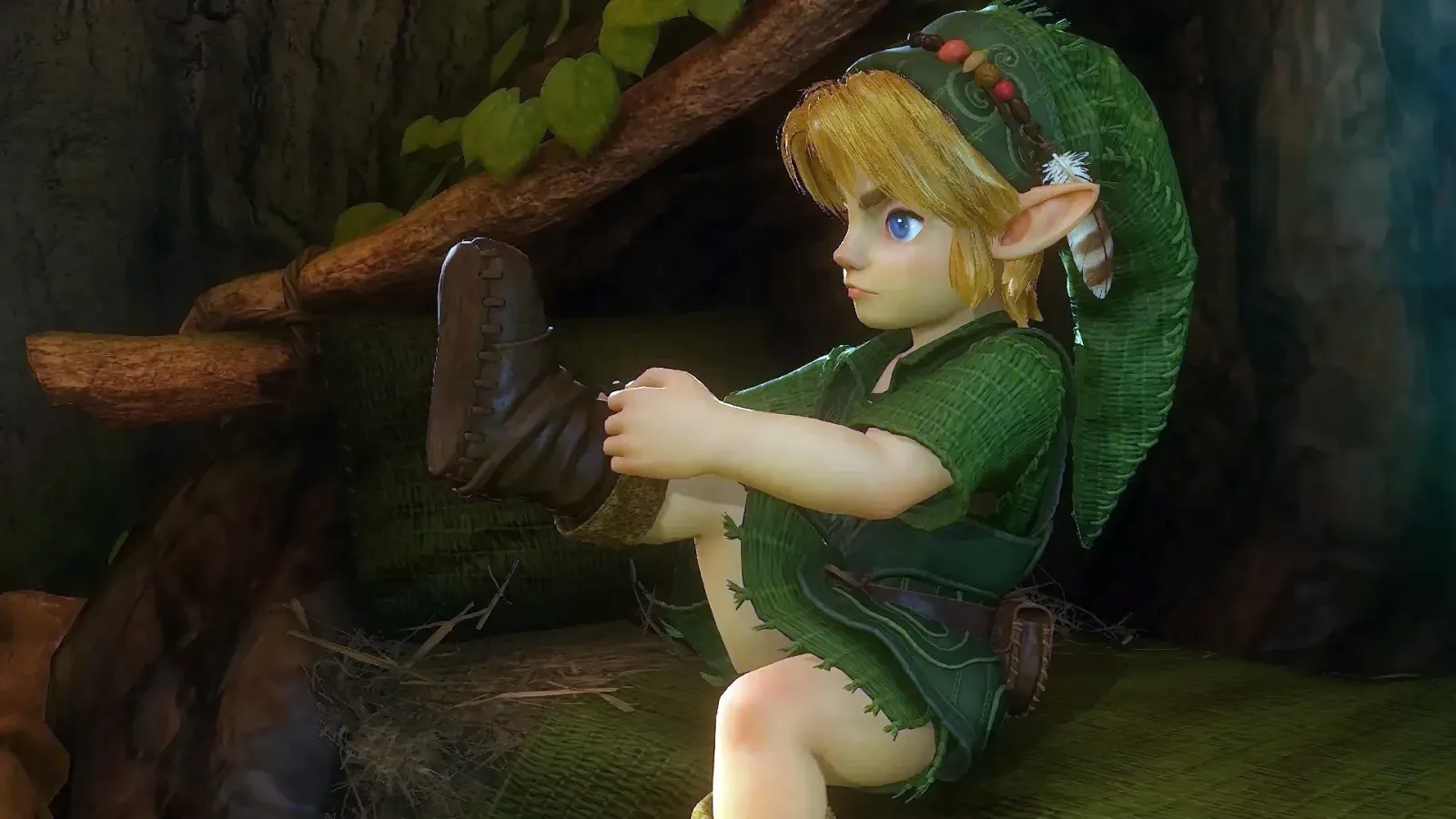
In an era when buying a major game increasingly means pressing a button, waiting for a download bar, and launching it alone at home, the midnight release of The Legend of Zelda: Ocarina of Time remake offered a reminder that the old ritual still has power. Fans turned out in substantial numbers for late-night store openings, gathering not only at Nintendo's Manhattan location but also outside retailers including GameStop and Best Buy.
They were there for a game that could have been purchased digitally through the eShop. Yet that convenience was not the point. The attraction was the physical copy, the chance to pick up the Zelda-themed Switch 2 console, and, most importantly, the opportunity to share a moment of excitement with strangers who cared about the same release.
Photos and videos from the night showed lines already building well before midnight in some locations. One particularly memorable scene involved a group setting up a GameCube and television outside a store, giving people waiting in line something to play while they passed the time. Pizza was ordered for the crowd as well, turning a retail queue into something closer to a small community gathering.
Embedded X/Twitter post
Embedded X/Twitter post
Embedded X/Twitter post
That kind of scene is difficult to replicate through a digital storefront. A midnight unlock can let players begin at the same instant, but it cannot reproduce the chatter of a line, the speculation over what waits inside the box, or the shared anticipation that comes with watching the doors finally open. For many players, those details are as much a part of the launch as the game itself.
For useful background on this topic, read Amazon Pre-Order Delays Frustrate Zelda: Ocarina of Time remake Buyers on Switch 2 Launch Day.
A classic game for a fading tradition
There is an especially fitting quality to Ocarina of Time becoming the game that brought so many people out. The original Nintendo 64 release is approaching its 30th anniversary, and it comes from a period when physical releases were not merely an option. They were the standard way people experienced new games.
For players who grew up with cartridges, discs, manuals, strategy guides, and store displays, a remake of Nintendo's landmark adventure carries nostalgia on multiple levels. It is not only revisiting Hyrule, Link, Zelda, Ganondorf, and the journey across time. It is also revisiting a way of engaging with games that now feels increasingly uncommon.
The crowds demonstrate that physical editions can still mean more than ownership of data. A boxed game offers a tangible marker of an occasion. It can become a shelf item, a collector's piece, a trade-in, a loan to a friend, or simply proof that someone was excited enough to make the trip. The Zelda-themed Switch 2 console added another layer of appeal for collectors and dedicated Nintendo fans, but the lines themselves suggest the event had a broader emotional pull.
People were not forced to gather. Digital purchasing provided a simpler alternative, likely with no waiting and no need to stand outside in the evening. Their decision to show up anyway is precisely what makes the launch notable. It reflects an appetite for game releases as social occasions rather than purely transactional moments.
Midnight launches are about more than the product
For years, major midnight launches were a fixture of gaming culture. Stores would stay open late for huge releases, and players would arrive hours early to secure collector's editions, avoid missing out on a limited allocation, or just be among the first people they knew to hold the game.
Those gatherings could be messy, loud, chilly, and occasionally exhausting. But they also offered a rare public space for enthusiasm. Fans compared pre-order bonuses, discussed favorite entries in a series, debated reviews and theories, and made plans for the first night of play. Even the mundane parts of waiting became memories: fast-food runs, conversations with store employees, or the moment a stack of boxes was wheeled out from the back.
For people living in smaller communities or places where there were few visible gaming spaces, the launch line could be one of the only chances to meet others with the same hobby. That sense of connection mattered long before online communities became the default place for discussion. It continues to matter even now, despite the enormous reach of social media, streaming, voice chat, and multiplayer games.
Online spaces allow fans to communicate constantly, but they do not always replace being in a physical crowd. Standing alongside people who have made the same choice to spend part of the night outside a store creates a particular kind of shared enthusiasm. The GameCube setup and communal pizza at the Ocarina of Time remake launch underline that difference. The wait was not dead time before a purchase; it became part of the event.
Physical media faces a more uncertain future
The enthusiasm surrounding Zelda arrives at a complicated moment for physical games. Sales have steadily moved toward digital storefronts, while publishers and hardware companies have increasingly embraced distribution models that require less shelf space, less retail coordination, and fewer manufacturing costs.
PlayStation is set to end physical game sales in 2028, a major sign of how quickly the landscape is changing. Meanwhile, Grand Theft Auto 6, one of the year's largest releases, is launching with a code in the box rather than a physical game disc. That approach preserves some of the appearance of a retail release, but it changes the practical meaning of buying a boxed game. The plastic case may still be something to display, yet the game itself remains dependent on a download.
There are understandable business reasons for the shift. Digital distribution is immediate, eliminates many production and shipping demands, and makes it easier to sell expansions, updates, and additional content directly to players. For consumers, it can also be convenient. A game can be preloaded, accessed without leaving home, and purchased at any hour.
But convenience has trade-offs. Physical media has traditionally offered a degree of permanence, flexibility, and ownership that digital licenses do not always provide. It can be resold, borrowed, gifted, or preserved without depending on the continued operation of a particular store. Modern patches and online requirements have complicated that picture, but the value of a disc or cartridge remains clear to players who want a collection they can hold.
There is also a cultural cost when physical releases disappear. Retail stores have long acted as meeting places, however briefly, for game communities. Remove the product from the shelf and fewer reasons remain for publishers, retailers, and fans to organize large launch-night moments.
Grand Theft Auto 6 may make the contrast sharper
Grand Theft Auto 6 is expected to have scheduled midnight events when it arrives on November 19. Its scale makes in-person gatherings likely, because few releases generate the same level of broad anticipation. Fans will still have reasons to line up, celebrate, take photos, talk about the series, and mark the start of a major gaming moment together.
Yet a code-in-a-box release creates an unavoidable contrast with the Zelda crowds. Buyers can gather around a physical package while knowing the game itself is not there in the same traditional sense. The box functions as a retail token and collectible object, but not necessarily as the complete, playable release people once expected to take home.
That does not make the gathering meaningless. Community can form around almost anything when enough people are excited. Still, it highlights why the Ocarina of Time remake launch felt so resonant. The midnight line brought together a classic game, physical media, a specialized console, and a longstanding retail tradition at a time when all of those things feel less certain than they once did.
A night worth remembering
The future of physical games may continue to narrow, especially as platform holders and publishers prioritize digital sales. Not every release will justify a midnight opening, and not every player wants to spend hours in a line when a download is available instantly.
But the Zelda launch shows that the format is not yet without meaning. People still value the ceremony of buying a game in person. They still value a boxed copy, a special console, and a crowd that understands why returning to Hyrule is worth staying up for.
For one night, stores became gathering places again. Fans played old games outside, shared food, waited together, and walked away with a new version of a beloved adventure. Whether these large physical launches become rarer in the years ahead or find a renewed place as special-event retail, that is the part worth preserving: games can still bring people together before anyone even turns on a console.
Community
Discussion
Start the conversation.
No comments have been posted yet.