

In a game built around collecting a sprawling cast of unusual creatures, it is easy to assume the biggest fan favorites were designed to become stars from the start. Palworld's rise has made several Pals instantly recognizable, from battle-ready companions to cuddly workers that look deliberately suited to plushies and promotional art. But one of the game's most visible faces was not a creature that John "Bucky" Buckley, Pocketpair's head of communications and publishing, expected to stand out.
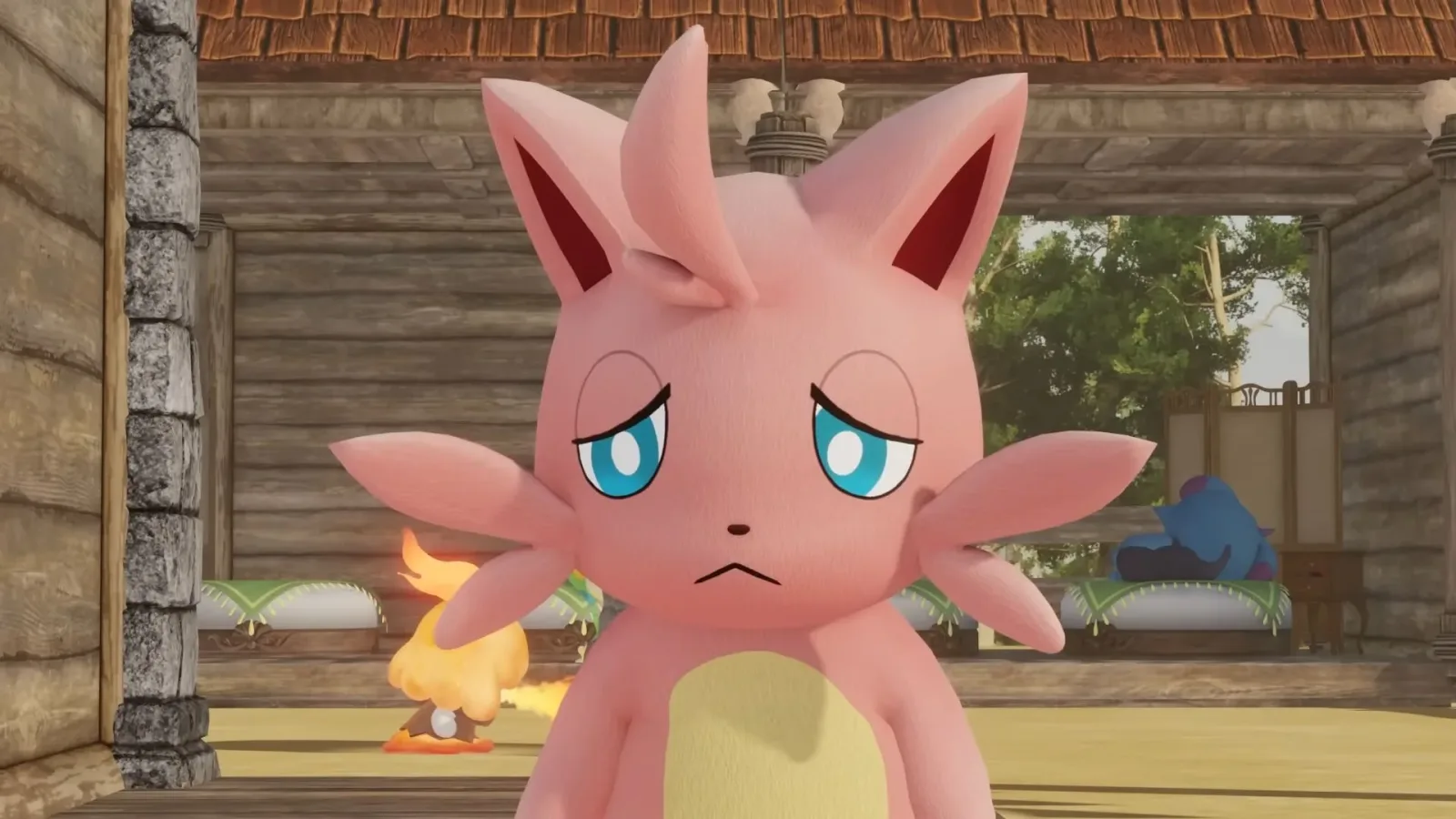
That Pal is Cattiva, the pink feline with a sly expression that players can encounter early in their time on Palpagos Island. Speaking in an interview with Gaming World Interviews, Buckley described the character's popularity as a personal surprise and stressed that he was offering his own view rather than a formal company position. In his estimation, Cattiva was not initially the obvious candidate to become a defining Palworld mascot.
Instead, Buckley expected Cattiva to be one of several familiar early-game creatures that players meet, use, and eventually leave behind as their collections grow. Palworld has a great many Pals, each with different combat uses, work skills, elemental types, looks, and personalities. That scale means even a well-liked early creature can easily be eclipsed by a powerful mount, a rare late-game catch, or an especially striking design.
Cattiva did not follow that path. Buckley said the feline has become effectively ubiquitous in some contexts, particularly in China, and has developed into one of the game's most familiar symbols. Alongside Chillet, Cattiva has become a prominent face associated with Palworld. For Buckley, that status remains a notable example of players embracing a character in a way that cannot always be forecast from inside development.
For useful background on this topic, read Wuthering Waves 3.7 Launches September 30 With New Story, Hsin and Suoming.
An Early-Game Trio With Very Different Outcomes
Buckley framed Cattiva's unexpected rise through the lens of Palworld's opening stretch. Cattiva, Chikipi, and Lamball are among the creatures players are likely to associate with the game's earliest moments after awakening on the beach. They help establish the tone of Palworld's world: approachable, strange, occasionally cute, and always capable of becoming part of the player's survival operation.
Of those three, Lamball was the one Buckley said he had more confidence in. The woolly Pal's appeal is easy to understand. Its soft, sheep-like appearance creates an immediate contrast with the game's more aggressive survival systems and with the comic sight of its creatures being armed or assigned to demanding work. That mixture of innocence and absurdity has become a major part of Palworld's visual identity.
Chikipi and Cattiva seemed less certain to Buckley. He expected them to recede somewhat as the game introduced more creatures. Chikipi, in particular, has a straightforward premise: it is a chicken-like Pal. Buckley suggested that it has, to an extent, settled into the background as players move beyond the earliest encounters.
Cattiva, however, found a far larger audience than anticipated. Its design is not flashy in the conventional sense. It is small, pink, cat-like, and wears a knowing smirk rather than the wide-eyed sweetness of many mascot characters. That expression may be part of the appeal. Cattiva looks as though it has a joke to itself, which gives it a distinct personality even before players spend much time assigning it to a base or taking it into the field.
Why Mascots Cannot Always Be Planned
Games with collectible creatures often have carefully selected flagship characters, but player communities do not always follow a studio's assumed hierarchy. A mascot can emerge because of visual simplicity, meme potential, usefulness in the opening hours, or the way it captures a game's central contradiction. Cattiva checks several of those boxes without necessarily being the kind of Pal that dominates conversations about raw combat strength or endgame strategy.
Its early placement matters. The first creatures players meet can become enduring symbols because they are tied to discovery and to the beginning of a save file. Before players have optimized a base, captured rare Pals, or built elaborate production chains, they are learning the game's rhythms with a small group of accessible companions. Those Pals can become nostalgic landmarks even for players who no longer rely on them.
Cattiva also represents Palworld's unusual ability to make work-oriented creatures memorable. Pals are not merely monsters used in battles; they can be assigned jobs, support survival efforts, and help build a growing settlement. A tiny cat assisting with labor is an image that is both practical within the game and naturally shareable outside it. The character's expression only makes that image more distinctive.
Still, Buckley's comments are a reminder that popularity is not simply a matter of a developer deciding which design deserves attention. Once a game reaches a global audience, fans attach their own meanings to characters. Art, jokes, videos, merchandise interest, favorite-team choices, and regional community trends can all elevate an unexpected creature.
Regional Taste Is Part of Palworld's Story
Buckley specifically pointed to a regional difference in how Pals are received, saying that Cattiva is especially widespread in China. That observation is important because it shows that Palworld's creature popularity is not necessarily uniform around the world. A Pal that serves as a central mascot in one community may not command the same attention elsewhere, while another creature could resonate more strongly in a different region.
For a game with a large and varied roster, those differences are unsurprising. Creature designs can appeal for different reasons across communities: humor, color, familiar animal traits, perceived cuteness, animation, utility, or a character's usefulness in social posts and fan creations. The result is a living popularity map rather than a single global ranking.
Cattiva's success also gives Pocketpair a useful lesson for the future. Not every important character needs to arrive with the expectation that it will headline the game. Some designs may become beloved precisely because they feel like humble, oddball additions to the world. Their appeal develops through repeated player encounters rather than a major narrative introduction or a carefully planned marketing push.
Could More Surprises Be Waiting?
The discussion naturally raises the possibility of Pocketpair revisiting designs that never made it into Palworld. The studio has previously had concepts that were scrapped or left unfinished. Buckley's Cattiva comments suggest that judging a creature solely by an initial internal impression can be risky: a Pal that seems destined to be minor background flavor might become the character players remember most.
That does not mean every unused design should be revived, or that every strange-looking Pal would find an audience. Development priorities, gameplay roles, balance, animation work, and the overall direction of the game all matter. But Cattiva illustrates the value of leaving room for personality and surprise. A design does not have to be conventionally heroic or obviously adorable to become iconic.
Palworld's newer creatures have produced similar unexpected reactions. Buckley noted that enthusiasm for Snock, a creature that players may read as a snail or a slug, caught the development team off guard. That response reinforces the broader point: the community's favorites can come from anywhere in the roster, including designs that might initially appear too peculiar or niche to become widely celebrated.
For players, that unpredictability is part of the fun of a creature-collecting survival game. Every new Pal has the chance to become a favorite for reasons that have little to do with tier lists. One player may value a companion's utility; another may enjoy a bizarre silhouette, an animation, or the simple comedy of seeing a small creature take on an outsized task.
Cattiva's Place in Palworld
Cattiva's emergence as a mascot does not diminish the popularity of Palworld's many other creatures. Lamball remains an immediately recognizable early-game companion, Chillet has earned major visibility, and individual player favorites span the entire roster. What makes Cattiva notable is that its stature was not treated as inevitable by Buckley.
It is a useful snapshot of how a game's identity evolves after players get their hands on it. Developers create the characters and systems, but communities decide which faces become shorthand for their experiences. In Cattiva's case, a Pal that seemed likely to be one small part of the opening hours instead grew into a symbol of the game--one with particularly strong recognition in China.
That makes the pink feline more than an early tutorial-area encounter. Cattiva has become evidence that Palworld's most lasting iconography can come from the places its creators least expect.
Community
Discussion
Start the conversation.
No comments have been posted yet.