

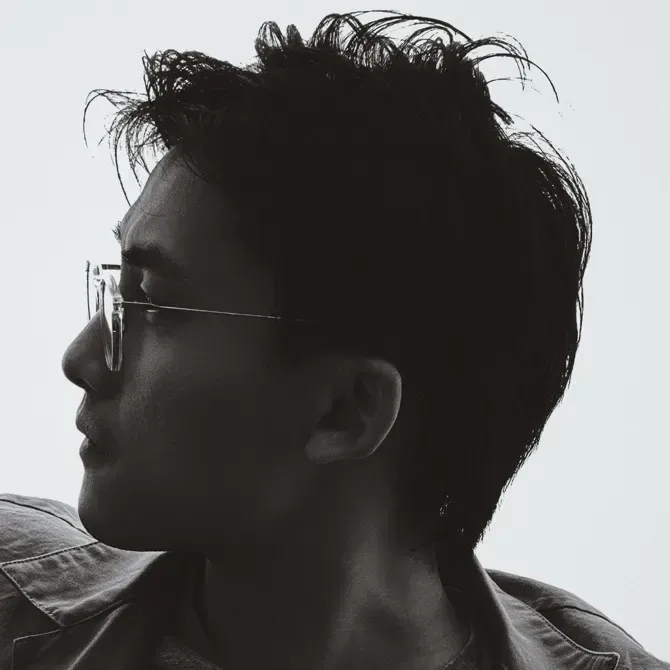
Phantom Blade Zero is built around a visual identity its developers call Kungfu Punk, a meeting point between martial-arts fantasy, dark action, and a modern edge. That mixture is not confined to character designs, combat animation, or environments. Composer Caisheng Bo has approached the game's music with the same willingness to disrupt expectations, using traditional Chinese instruments in unfamiliar dramatic roles while pairing them with contemporary sounds including pop, trap, and metal.
The result is a score that reaches far beyond atmospheric period-piece music. Bo's aim is to present another side of Chinese musical expression: one that can evoke the heritage and tonal character listeners may expect, but can also feel as immediate and metropolitan as Shanghai's neon-lit skyline. The soundtrack is now being released as a four-disc, 81-track collection through Milan Records, giving players and listeners a chance to experience the music outside the game's combat encounters, exploration, and story scenes.
For Bo, though, Phantom Blade Zero is not a project that began during the current production cycle. Its musical roots stretch back roughly 18 years, to the independent game Rainblood 2: City of Flames. At the time, Bo and Soulframe Liang were at very different stages in their lives: one was in high school and the other was in graduate school. That earlier project would eventually develop into the wider Phantom Blade franchise, and many of the melodic ideas heard in Phantom Blade Zero have been carried forward through that long history.
Breaking the expected rules of Chinese instruments
One of the most distinctive parts of Bo's approach is his challenge to the conventional narrative associations tied to traditional instruments. In his view, Chinese musical traditions have developed strong expectations around what particular instruments are supposed to represent. Those meanings can be powerful, but they can also become limiting when audiences instinctively connect a sound with only one familiar kind of scene or emotion.
For useful background on this topic, read Former Rockstar Technical Director Thinks AI Could Push GTA 6's PC Release Closer to Console Launch.
Rather than discard those associations, Phantom Blade Zero creates a tension between old meanings and new ones. Bo describes this as a polarity: an instrument can retain its recognized identity while gaining another, sharply contrasting role in the game's storytelling. It is a compositional idea that lets the soundtrack communicate plot, character, setting, and menace without always relying on the most obvious audiovisual shorthand.
The erhu, the bowed two-string instrument often associated with heroism and personal sorrow, provides a clear example. It continues to accompany heroic action in Phantom Blade Zero, preserving part of its traditional dramatic language. But it also comes to signify manipulation. Bo connects that new role to imagery of red threads descending from above, hauling enemies upward and controlling them. In that context, the erhu does not simply carry the emotion of an individual struggle. It becomes a sound connected to unseen forces exerting control.
The pipa, a four-string lute, receives a similarly expanded identity. It has established associations with femininity and danger on the battlefield. Phantom Blade Zero still uses it around danger and lurking crisis, yet Bo also links it to discordance: an otherworldly space in which time ceases to move normally and space itself becomes distorted. That gives the instrument a role not just in action or suspense, but in making the unreal and destabilized feel audible.
Other instruments are used to deepen the same system of dual meanings. The matouqin and Hoomai, or throat singing, are associated with mandate and righteousness on one side of that divide. On the other, they are meant to suggest megalophobia, the fear of enormous objects. The xun, a clay ocarina traditionally connected to weeping and known for a distinctive performance technique, also accompanies the presence of Mu Tianmiao, a character defined by absolute authority.
These choices make the score more than a backdrop for combat. The instruments help create a vocabulary that listeners gradually learn as the game unfolds. A familiar timbre may arrive with a meaning players think they understand, only for its context to reveal another layer. That can make the soundtrack an active part of the narrative rather than a separate collection of mood pieces placed beneath the action.
An 18-year musical lineage, rebuilt for Phantom Blade Zero
Phantom Blade Zero's score also reflects the unusual continuity of a franchise that began as a much smaller independent project. Bo says the music for the series dates back to Rainblood, and the newer game is largely built from material he has written across the years. Many melodies have survived the journey from the early games to the present.
That does not mean the new score is simply a compilation of older work. The retained themes act as a foundation, while the production's newer concepts give them a changed purpose. The stuttering sound design used in key story moments, along with the new polarity assigned to instruments, are specifically part of Phantom Blade Zero's identity. The score can therefore carry the memory of the series' past while sounding designed for the strange, kinetic world of Kungfu Punk.
The stuttering element is particularly important in scenes involving Zuo Shang and his plans. As the narrative progresses, that interrupted, unstable sound grows more prominent. Bo uses it to suggest the escalation of Zuo Shang's ambition and his increasingly uncontrollable Sha Qi, or killing intent. It is an example of sound design doing narrative work without needing to state that development directly through dialogue.
This combination of recurring melody and evolving texture may be especially meaningful for longtime followers of the franchise. Returning themes can establish a sense of history, while the new arrangements and electronic or genre-blending elements signal that the world has continued to transform. For newcomers, those inherited melodies still function on their own as part of the score's broader emotional architecture.
Music shaped by exploration, then shaping the game in return
Bo's role on Phantom Blade Zero extends beyond composing individual tracks. He describes himself as both the project's music director and composer, a position that involves planning where music begins, what it needs to express, and how it should work across the flow of an area.
During development, the team would send Bo footage of an area after it had reached approximately 60% completion. These were not brief promotional clips or isolated demonstrations. They were lengthy recordings, sometimes around four hours long, showing an entire playthrough of an area. The footage included exploration, hidden routes, combat, treasure discoveries, and other beats a player might encounter while moving through the space.
Bo would divide that material into segments and design the musical plan around each portion. This process gave him a detailed view of the rhythms of a level: the lulls between encounters, the possibility of diversion from the main path, the sudden pressure of battle, and the scale of boss confrontations. It also suggests an effort to make music responsive to a full play experience rather than treating a level as a single location requiring only one loop.
Crucially, the relationship worked in both directions. Once the team received Bo's demo material, it could further adjust maps, combat, and boss fights to align with the music. That kind of iteration can make a battle feel more deliberately staged, ensuring attack patterns, transitions, environmental movement, and musical intensity reinforce one another. Instead of music being added after everything else is locked, the score becomes one of the forces helping define the final pacing.
For an action game, that collaboration can be especially significant. Fast combat requires a reliable sense of momentum, but Phantom Blade Zero's music is also intended to carry symbolism and character information. By integrating the score earlier into the development process, the game has the opportunity to connect spectacle and storytelling in the same sequence: a boss fight can be mechanically demanding while its sound palette communicates threat, authority, manipulation, or a disruption of reality.
From ink-wash expectations to a modern Chinese sound
Bo recognizes that many listeners approach Chinese music through a narrow set of images: ancient villages, temples, mountains, waterfalls, and ink-wash paintings. Those associations are not rejected in Phantom Blade Zero, but they are not allowed to define the full range of the soundtrack either.
The composer's stated goal is to spotlight a contemporary side of Chinese music as well. His comparison is to Shanghai, a place of skyscrapers and vivid neon that remains unmistakably Chinese. That image fits the Kungfu Punk label neatly. Phantom Blade Zero is not attempting to choose between heritage and modernity; it is asking what happens when they collide in a world with both ancient cultural resonance and heightened, stylish fantasy.
Pop, trap, and metal provide part of that modern vocabulary, while Chinese instruments preserve a specific tonal and cultural character. The important point is not merely adding an erhu or pipa on top of a familiar genre framework. Bo's approach is more structural. Those instruments have been assigned narrative meanings, including meanings that challenge their expected use, while the game's changing scenes and mechanics have been built in dialogue with the music.
The 81-track release offers a substantial document of that work. As a standalone listen, it should reveal recurring motifs, shifts in instrumentation, and the experimental stuttering textures that may be less immediately noticeable when players are focused on a difficult encounter or a major story moment. As part of the game, the score's purpose is even broader: to make Phantom Blade Zero's world feel rooted in a long musical history while pushing toward an intentionally bold, modern, and unconventional expression of Chinese-inspired action fantasy.
Community
Discussion
Start the conversation.
No comments have been posted yet.