

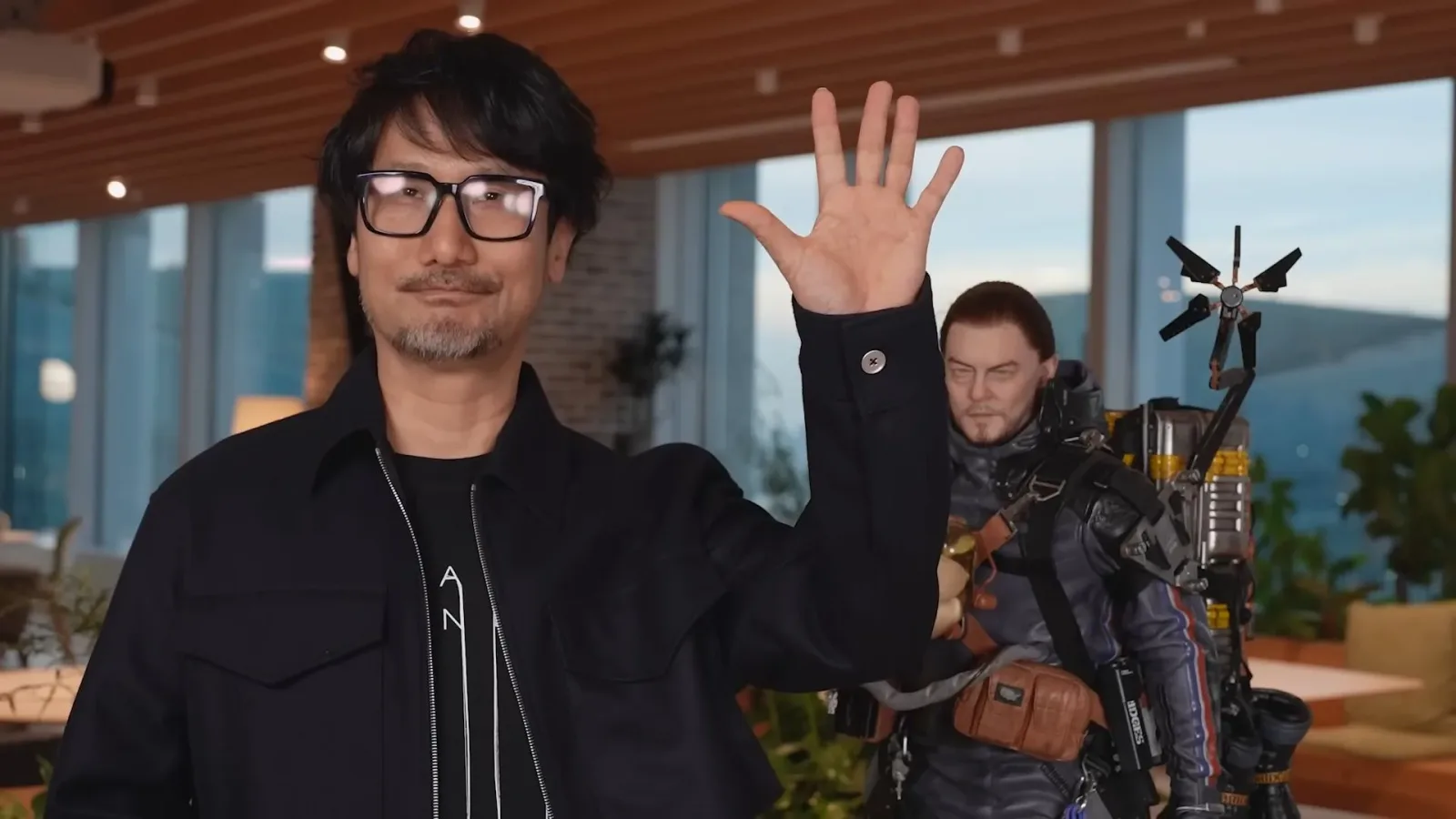
Hideo Kojima's Physint may be expensive, ambitious, and packed with recognizable screen talent, but the widely discussed figure of roughly $400 million does not appear to reflect what Xbox is paying for the project. Several people who have commented on the situation now say the arrangement is substantially cheaper than that headline-grabbing number, although nobody has publicly established the game's precise budget or the full financial terms of the publishing deal.
The clarification matters because Physint has become one of the most closely watched projects in Kojima Productions' lineup. It is being positioned as a return to action and espionage territory associated with Kojima's earlier work, while also arriving amid a surprising change in publishing plans. Sony was originally connected to the project, but Xbox is now publishing it after Sony reportedly moved to cancel the game. That shift led to intense speculation over why the project changed hands, whether its cost played a role, and how much Xbox had committed to secure it.
The $400 Million Number Has Been Repeatedly Challenged
The $400 million estimate gained traction after Christopher Dring said it was the number most commonly being discussed in Tokyo industry circles. Even at the time, that was not presented as confirmed contract information. It was a figure circulating through informal conversation, and the difference between a rumor, an overall production projection, and a publisher's actual financial commitment can be enormous.
Since then, Dring has said he was told Xbox is paying quite a bit less than $400 million. Jason Schreier also weighed in on ResetEra, writing that a person at Xbox with firsthand knowledge of the agreement said the company signed Physint for "significantly less" than that amount. Schreier was careful not to put forward a replacement number, noting that exact figures would require documentation or confirmation from multiple firsthand sources.
For useful background on this topic, read Analyst Calls Xbox Studio Reshuffle a 'Reverse Acquisition' as Activision Takes on Halo.
Jez Corden has separately made a similar claim, saying people with direct knowledge of the contracts told him the actual number is significantly lower than $400 million. With multiple follow-up accounts disputing the original estimate, the clearest conclusion is that the often-repeated figure should not be treated as settled fact.
That does not mean Physint will be a modestly funded production. It only means there is no solid basis, at least publicly, for saying Xbox is committing close to $400 million. The project's development costs, marketing costs, rights arrangements, possible performance incentives, and any broader partnership terms could all be structured separately. A single rumored total may not cleanly describe any of those categories.
Why the Budget Question Became So Prominent
The financial discussion grew after reporting suggested Physint had been heading well over budget before its publishing situation changed. Kojima Productions pushed back against that reporting in a statement, stressing that none of the claims in question came from official or on-the-record sources and urging fans to approach the details skeptically.
That response is important context for every budget claim surrounding the game. Large-scale game development is unusually opaque. Publishers rarely reveal development budgets, and even when a broad cost estimate reaches the public, it may refer to a preliminary plan rather than final spending. A project can also have a high proposed ceiling without its publisher agreeing to spend that entire amount.
Physint's unusual publishing journey makes the picture even harder to read from the outside. Sony's reported decision to abandon the project raised questions that have not been fully answered. Cost concerns have been mentioned as one possible factor, but they cannot be treated as a complete explanation without detailed information from the companies involved. Corporate strategy, production timelines, portfolio planning, contractual conditions, and internal priorities can all determine whether a publisher continues supporting a game.
Xbox's decision to take over publishing has therefore been interpreted in different ways. For some, it signals confidence in Kojima Productions and its ability to create an event-level release. For others, it reflects Xbox's interest in securing distinctive projects during a period of restructuring and evolving first-party strategy. Both interpretations may contain some truth, but neither reveals the actual accounting behind the deal.
An Ambitious Action Project Is Unlikely to Be Cheap
Even if the $400 million talk is inaccurate, Physint still has several traits associated with a costly modern production. Kojima's games are known for elaborate cinematic presentation, extensive performance capture, dense technical work, major marketing expectations, and creative concepts that do not always fit easily into conventional genre categories. The phrase "significantly less" leaves a vast range of possible budgets open.
The cast alone signals the project's intended scale. Bill Skarsgård, known for John Wick: Chapter 4, has been cast as Physint's protagonist. The game also includes Charlee Fraser, Don Lee, and Minami Hamabe. Their involvement does not reveal what any individual contract costs, but high-profile performers generally reinforce the expectation that Physint is aiming for a prestige, internationally marketed production rather than a smaller experimental release.
Kojima's public framing has also set expectations high. He has said Xbox had never seen anything like Physint. That is a notable statement from a creator whose work frequently blends familiar action-game structures with film-like direction, celebrity performances, unconventional storytelling, and technical experimentation. Xbox had previously been willing to hear the pitch for Kojima's other project, OD, when other publishers apparently regarded the concept as too unusual or "crazy."
That willingness to pursue unusual work is likely central to the partnership. In an industry often driven by sequels and established formulas, a Kojima-led original carries obvious commercial uncertainty. Yet it also offers something major publishers routinely seek: a project with immediate name recognition, a clear creative identity, and the ability to generate attention well before gameplay details are fully shown.
Budget Estimates Do Not Tell the Whole Story
It is tempting to reduce the situation to a single number, especially when a figure as dramatic as $400 million enters the conversation. But funding a game can involve far more than paying a studio's development bills. Publishing agreements may include milestones, marketing commitments, distribution rights, intellectual-property ownership, bonuses, technical support, and long-term options. The amount a publisher pays to sign a game can be different from the amount ultimately spent on development and promotion.
There is also a distinction between a game's total lifetime cost and the amount one partner assumes. If Physint's deal has changed from Sony to Xbox, the terms may include work already completed, assets or technology developed under earlier agreements, obligations that transferred between parties, or expenses that remain with Kojima Productions. None of those details has been publicly confirmed, so assigning a definitive value to the project would be premature.
For Xbox, the issue is especially sensitive because the company is balancing blockbuster ambitions with scrutiny over spending. Acquiring a high-profile Kojima project gives Xbox a valuable exclusive publishing association and strengthens its relationship with one of gaming's most recognizable auteurs. At the same time, the company will be judged on whether that investment produces a game that can meet the huge expectations now surrounding it.
For Kojima Productions, the new arrangement appears to secure the future of Physint after its reported cancellation risk. That stability may be more meaningful than any rumor about a budget ceiling. The studio can continue developing a project that has already attracted a major cast and substantial public interest, while Xbox adds another distinctive game to its portfolio.
What Remains Unknown About Physint
Despite the attention around the deal, key questions remain unanswered. No confirmed budget has been announced. No release date has been revealed. The complete platform plan has not been detailed, and there is no public breakdown of Xbox's rights, Sony's former role, or the reasons the project nearly stopped moving forward.
It is also too early to know exactly how closely Physint will resemble the stealth-action legacy with which Kojima is most associated. Descriptions have encouraged comparisons to that genre, but the creator's history suggests that any comparison should be made carefully. Kojima Productions' projects often begin from a recognizable premise before taking unexpected creative turns.
For now, the most responsible reading of the budget reports is straightforward: the $400 million claim has been challenged by several people citing direct knowledge, and no verified replacement figure has emerged. Physint is still likely to demand a substantial investment, particularly given its apparent scope and cast. But the evidence currently available does not support treating $400 million as the confirmed price of Xbox's deal.
As development continues, official information from Xbox or Kojima Productions will be far more meaningful than another round of industry estimates. Until then, Physint remains a major project defined as much by its mystery as by its ambition: a Kojima action game with Hollywood performers, a new publishing home, and a budget story that is clearly more complicated than one viral number.
Community
Discussion
Start the conversation.
No comments have been posted yet.