

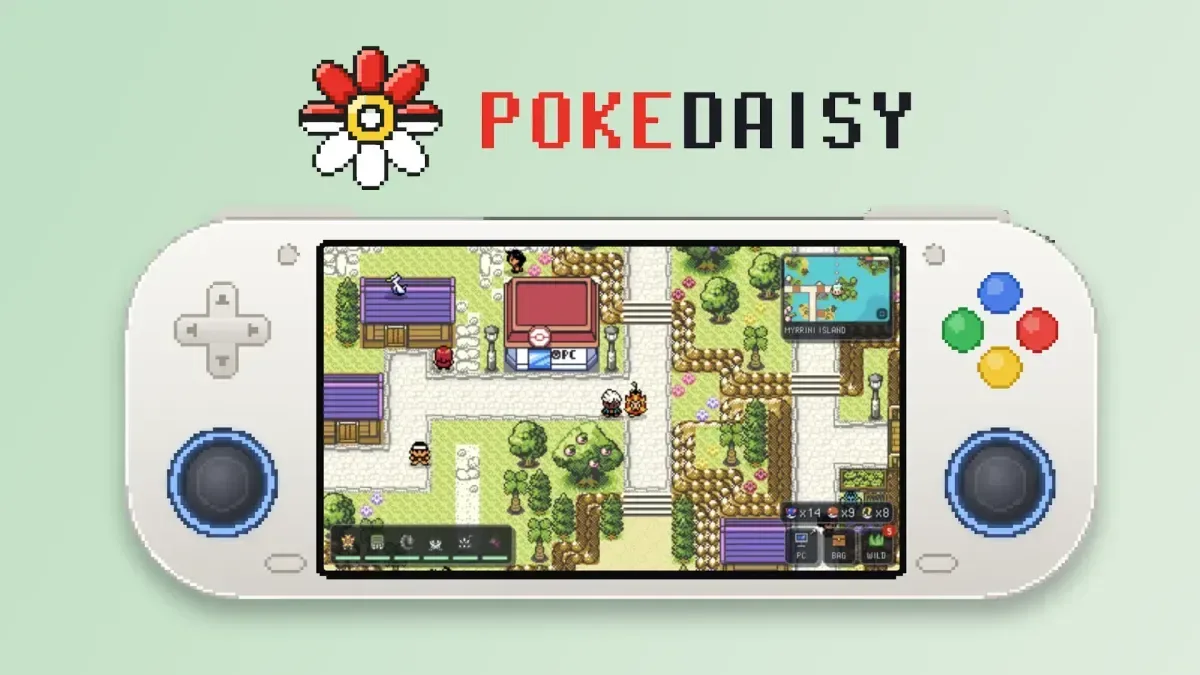
Classic Pokémon games remain remarkably playable, but returning to Game Boy, Game Boy Color, Game Boy Advance, and Nintendo DS adventures can still mean living with their era-specific limitations. Small maps, limited inventory visibility, cumbersome box management, and a lack of in-game reminders all make the older titles feel less convenient than their modern successors. ROM hacks can expand those worlds dramatically, but they can also make it harder to keep track of new routes, altered encounters, and unfamiliar battle challenges.
PokéDaisy is designed to bridge that gap without changing the games themselves. The free, open-source companion application runs alongside supported Pokémon titles and reads information from play sessions in real time. Instead of functioning as a cheat tool or a replacement for the game, it aims to put useful reference material, trackers, maps, and contextual game data within immediate reach.
Developed by lidor30, PokéDaisy has reportedly already passed 100,000 downloads. It does not require an account, contains no advertising, and does not lock features behind payment. Its core purpose is straightforward: make retro Pokémon playthroughs easier to manage while retaining the look, flow, and challenge of the original games.
A second-screen companion for retro Pokémon adventures
PokéDaisy supports Pokémon games from the Game Boy through Nintendo DS generations when they are played using the app's mGBA and melonDS emulator cores. The application is built for Android handhelds and phones, while support also extends to Linux, Steam Deck, and several other handheld operating systems.
For useful background on this topic, read Flashback: 25th Anniversary Edition Returns to Amiga With Repainted AGA and RTG Versions.
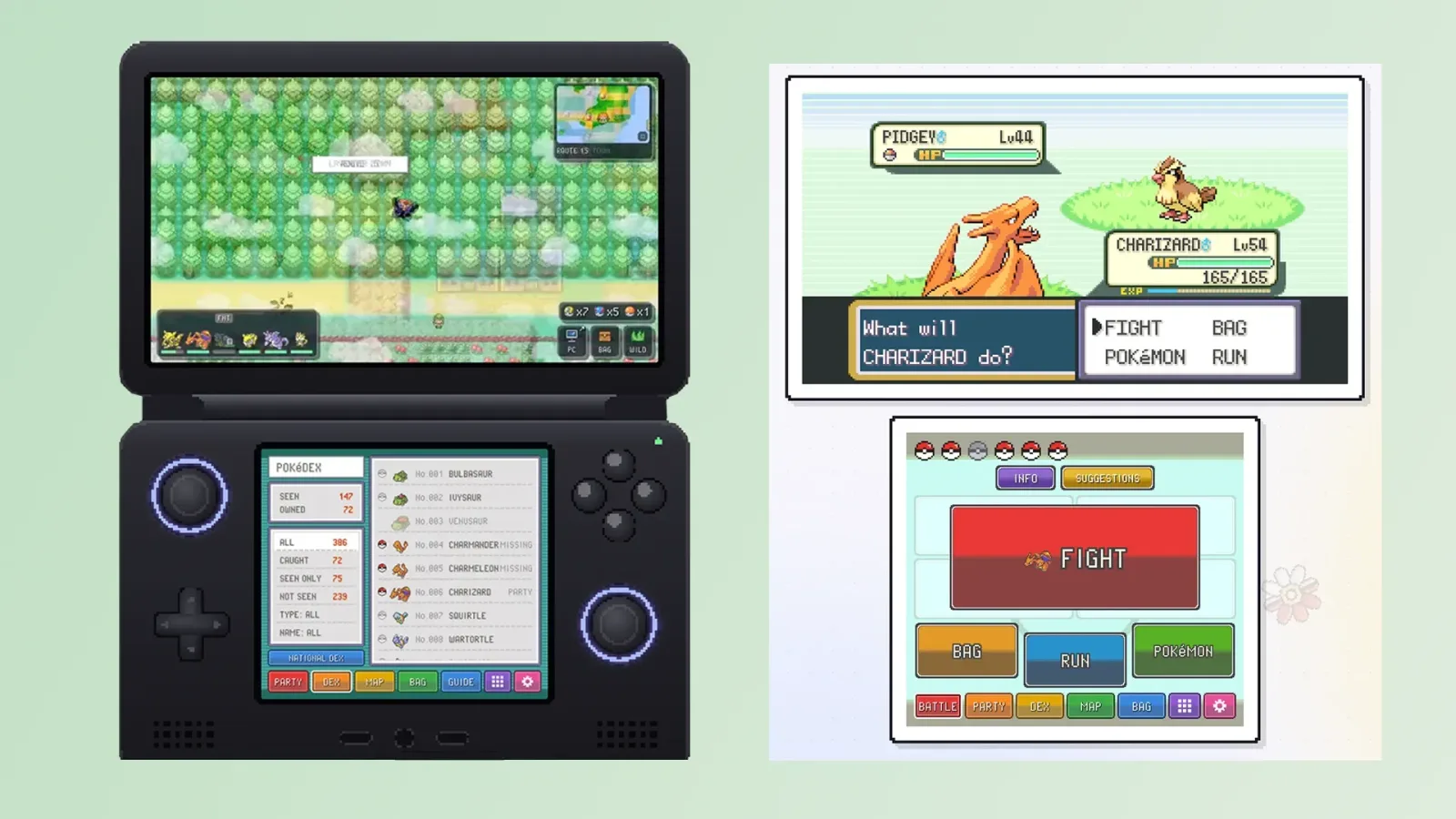
The way it presents information changes depending on the hardware. On a dual-screen Android handheld, including devices such as the AYN Thor, PokéDaisy can occupy the extra display. That setup makes it resemble a dedicated digital strategy guide: the game remains on one screen, while maps, team details, and other tools stay visible on the other.
Single-screen users are not left out. On devices without a second display, the companion can appear as an overlay window or side panel on top of the game. This is a practical approach for phone users and conventional handhelds, since players can check what they need without continually leaving their session to search through a browser, handwritten notes, or a separate guide.
For a series built around collecting information as much as collecting creatures, that live companion approach has obvious appeal. The older Pokémon games often expect players to remember a substantial amount of detail: party conditions, item supplies, route layouts, move coverage, PC storage, and the long-term goals of a run. PokéDaisy brings much of that material together in a single interface.
Party, bag, map, and PC information in one place
At its foundation, PokéDaisy provides quick access to the kinds of screens players frequently need during a Pokémon journey. Its tools include party information, bag details, a map, Pokédex functions, hints, and PC box access. That could be especially useful in games where navigating menus is slower than modern players may remember, or where checking storage requires travelling to a Pokémon Center.
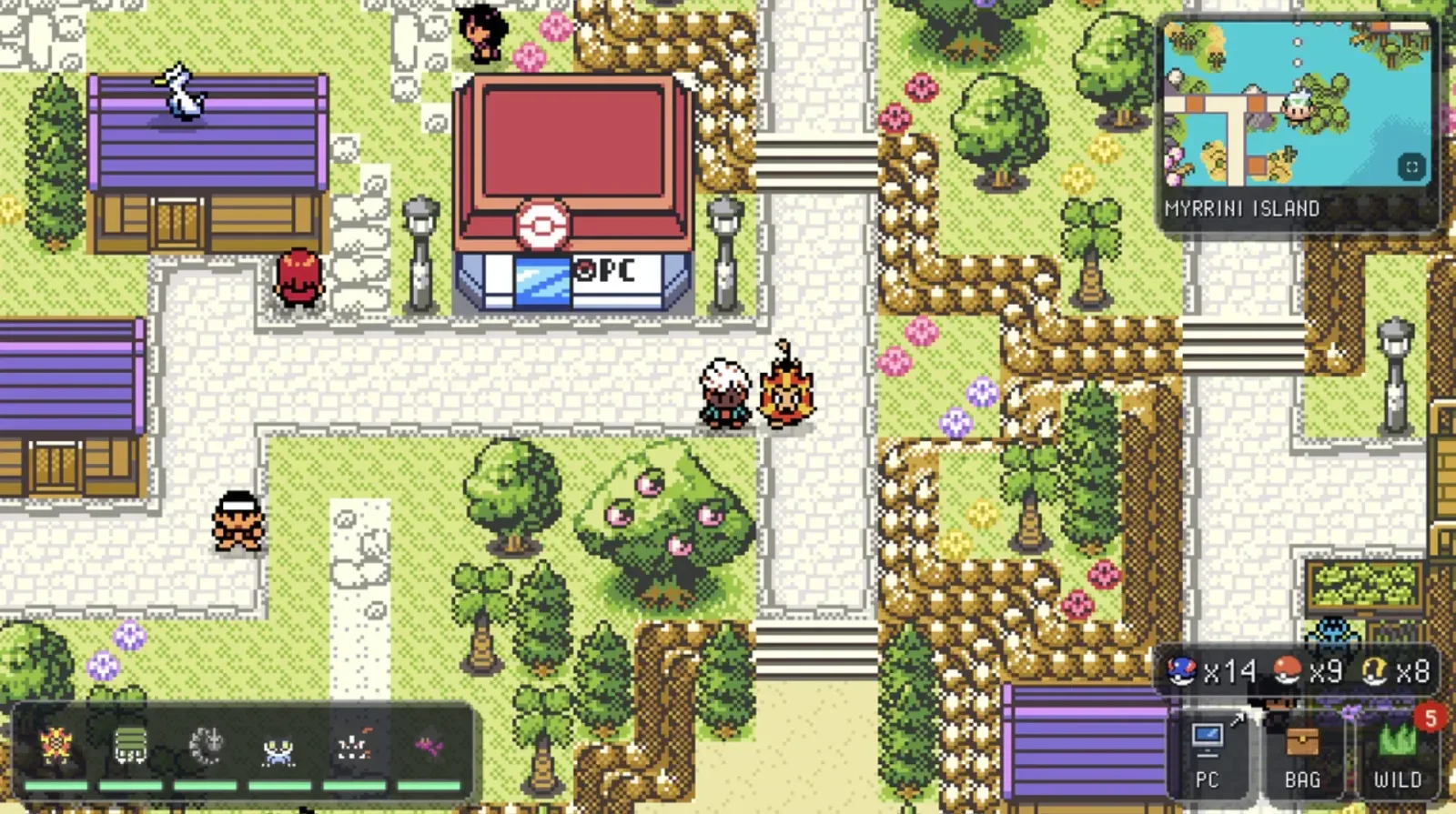
The map feature is among the more ambitious parts of the package. PokéDaisy can present a widescreen overworld map that extends beyond the original game's visible boundaries, normalizing the edges around the familiar map art. Rather than simply showing the constrained in-game view, it gives players a broader sense of the region and their location within it.
That functionality is not limited to official Pokémon releases. The app can also apply the wider map presentation to ROM hacks, including Pokémon Lazarus. ROM hacks are often built for players who know the official games well enough to want something more demanding or surprising, so a companion that can still provide orientation without requiring constant outside research could be particularly valuable.
The app's Pokédex and hints tools also fit the same philosophy. A player can keep a run moving while having reference information close at hand, rather than interrupting the experience each time an encounter, evolution requirement, or route question comes up. For long-form RPG playthroughs, reducing those small interruptions can make a major difference.
Tools for Nuzlockes and tougher playthroughs
PokéDaisy is not only focused on convenience. It also includes dedicated features for challenge-run players, with a Nuzlocke tracker among its listed tools. Nuzlocke rules vary between players, but they commonly involve limiting captures, treating fainted Pokémon as permanently unavailable, and imposing additional restrictions that make every battle matter.
Those runs can become difficult to organize, particularly across large games or lengthy ROM hacks. A tracker built directly into the companion environment can help players monitor the state of their team and their progression without relying entirely on manual spreadsheets or notes. It is a small but meaningful addition for a community that often documents every major decision in a playthrough.
Battle matchup support is another notable feature. PokéDaisy can show matchup information and suggest moves and Pokémon for the current situation. While players seeking a completely blind or self-directed challenge may prefer to ignore that guidance, others will likely appreciate having optional tactical help available during difficult encounters.
The key distinction is that the app is positioned as a companion layer rather than a means to bypass a game's systems. The original battle mechanics, world exploration, and progression remain central. Players can decide how much information they want on screen and whether the assistance suits the particular kind of run they are attempting.
Widescreen maps, desktop controls, and Free Flight
PokéDaisy also includes an on-screen HUD for PC users. This can provide shortcuts for features such as Fly, Repel, save states, and fast-forward. Each of those options addresses a familiar part of replaying older Pokémon games. Repels are useful but repeatedly selecting them from menus can be tedious, while fast-forward and save states are among the most commonly used emulator conveniences for players revisiting long RPGs.
Fly shortcuts can similarly reduce menu friction after a region has opened up. The result is a setup that feels more tailored to repeat playthroughs, randomizers, challenge runs, and ROM hacks, all of which can involve more backtracking and more experimentation than a first-time trip through an official cartridge release.
Perhaps the app's most unusual feature is called Free Flight. This lets players fly around an entire region from an elevated viewpoint, evoking the freedom of aerial travel in a large online world rather than the traditional point-to-point Fly system of older Pokémon games. It is an especially striking contrast with the tightly framed maps of the Game Boy era, offering a new way to appreciate the scale and layout of familiar regions.
PokéDaisy also works with RetroAchievements and supports popular emulator shaders, giving users additional ways to shape the presentation and goals of their playthroughs. RetroAchievements integration may be particularly welcome for players who enjoy pursuing challenges beyond the objectives originally built into a game, while shader compatibility helps preserve or customize the visual character of older titles.
Support for official games and ROM hacks
At present, PokéDaisy supports a total of 64 Pokémon games and 42 popular ROM hacks. That is a broad catalogue for a project intended to interpret game data in real time, especially considering how extensively ROM hacks can modify maps, encounters, story events, and other underlying game elements.
Support for ROM hacks is one of the application's strongest selling points. The Pokémon fan-game and hack scene has kept classic generations active for years, producing redesigned regions, new narratives, altered difficulty curves, expanded creature selections, and entirely new systems. Yet these projects can be less standardized than official releases, making compatible reference tools harder to find. PokéDaisy's growing compatibility list helps make those experiences feel less isolated from modern quality-of-life expectations.
Players should still be mindful of the legal and practical boundaries of emulation. PokéDaisy is intended to run users' own ROM files through its supported emulator cores. The app's availability does not change the status of game files, and players should ensure they are using software and game data in accordance with applicable rights and local rules.
Available now, with more platforms teased
PokéDaisy is available to download now at no cost for Android, Linux, Steam Deck, and a range of other handheld-focused operating systems. The project has also teased versions for Nintendo 3DS, Windows, and iOS as coming "soon," though no release date has been announced for those versions.
For players who love the structure and charm of classic Pokémon games but want less menu friction and better access to information, PokéDaisy offers a compelling middle ground. It does not attempt to overwrite the retro experience. Instead, it wraps practical modern tools around it: live data, a broader view of the world, challenge tracking, customizable presentation, and optional help when a difficult battle or unfamiliar ROM hack calls for it.
With support spanning dozens of games and hacks, the app could become a particularly useful companion for retro handheld owners, Steam Deck users, and anyone building a more comfortable way to revisit Pokémon's older generations.
Community
Discussion
Start the conversation.
No comments have been posted yet.