

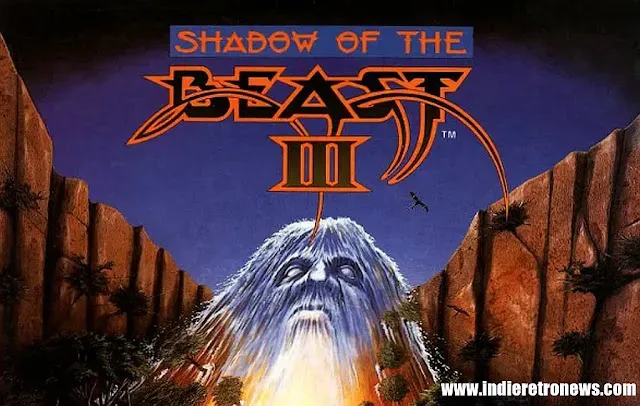
Shadow of the Beast III, the final entry in Psygnosis' famously atmospheric action-adventure trilogy, has received an unofficial conversion for the Sega Mega Drive. The project, created by solo developer juicelink, is now described as a full game that can be played through to its ending on original Mega Drive hardware.
That is a notable moment for a series with an unusual history on Sega's 16-bit system. Mega Drive owners received the first two Shadow of the Beast games during the original era, but the third installment never arrived on the platform. The final chapter instead remained associated with its 1992 Amiga release, leaving the Mega Drive library with an incomplete version of the trilogy for more than three decades.
Juicelink's project aims to fill that gap without using an Amiga emulator. It is a native recreation intended to run on the Mega Drive itself, making it a different proposition from simply loading the original game through emulation on modern or modified hardware. For collectors, homebrew fans, and players who have long associated the series with Sega's console, the conversion offers the chance to experience all three chapters on the same machine.
From a forest demo to a complete game
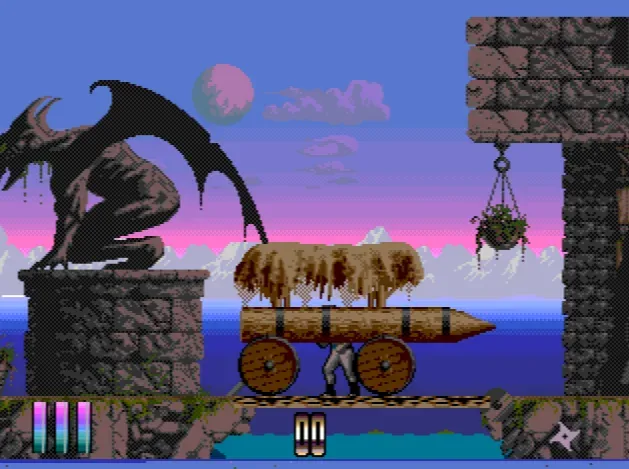
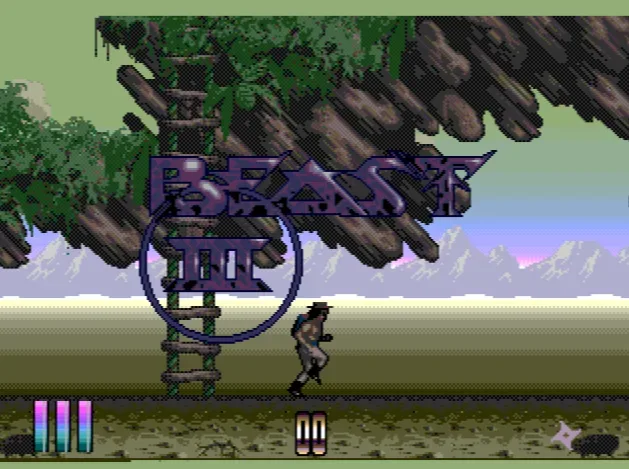
The effort reportedly began as a far smaller proof of concept. Its early form focused on the opening forest stage, including enemies and a boss encounter. That kind of vertical slice is a familiar starting point for retro conversion projects: it demonstrates that a game's signature visual style, mechanics, and technical demands can be adapted before the far larger work of completing every area, event, enemy, and ending begins.
For useful background on this topic, read Flashback: 25th Anniversary Edition Returns to Amiga With Repainted AGA and RTG Versions.
In this case, the concept grew substantially. Juicelink has confirmed that the complete game has now been converted and is playable from the opening sequence through to the conclusion. The developer has also said that Claude provided assistance during the production process, though this remains a solo-developed project.
Completing a conversion of this scale is especially significant because Shadow of the Beast III was never simply a straightforward action game built around a small collection of stages. Its identity came from a mixture of combat, exploration, environmental progression, and puzzles. Recreating it for a different 16-bit architecture means addressing far more than a handful of backgrounds or character sprites. A complete version needs to preserve the flow between locations, the game logic behind obstacles and progression, enemy behavior, boss encounters, and the systems that allow players to reach the ending.
The missing third chapter on Sega hardware
The original Shadow of the Beast became one of the Amiga's most recognizable games through its striking art direction and otherworldly atmosphere. Its vast landscapes, alien creatures, and dark fantasy imagery gave it a visual profile that remained memorable well beyond the period in which it was released. The series also developed a reputation for difficult combat and, at times, opaque progression.
Sega's Mega Drive was a natural home for the earlier games, even if adaptations from the Amiga had to contend with differences in hardware and presentation. Yet the absence of the third entry created a curious historical footnote. A player could begin the story on Mega Drive, continue it with the second game, and then have no official way to see the trilogy's final chapter on the same platform.
This conversion does not turn that history into an official release, nor is it being presented as a recovered Sega project. It is an unofficial fan-made release. Still, it directly addresses the longstanding omission by giving the console a native version of the game it missed in the 16-bit era.
That distinction matters. Preservation and fan-development communities often keep older games accessible through emulation, archival work, translation patches, prototypes, and new hardware releases. A native port or conversion is another form of that work: it asks what a game might have looked and felt like had it actually been brought to another contemporary machine. For Mega Drive enthusiasts, this is particularly appealing because the result is designed around the original hardware rather than merely displayed on it through an emulator.
New features tackle the original game's harsher edges
Juicelink has not limited the project to a strict one-for-one recreation. The Mega Drive conversion adds features intended to make the game's difficult and occasionally bewildering structure more manageable.
One of the biggest additions is a notification system that tells players when a puzzle remains unsolved. The original 1992 version could leave players uncertain about what they had missed or whether they had taken the wrong route. In a game designed around exploration and conditional progression, that uncertainty can quickly turn into frustration, particularly when the player has already spent considerable time navigating hostile areas.
The conversion also includes an option to restart from checkpoints. That is a meaningful quality-of-life improvement for a game from an era in which repeated failure often meant replaying lengthy stretches. Checkpoints can preserve the challenge of difficult combat and navigation while reducing the need to repeat solved sections merely to return to a troublesome puzzle or enemy encounter.
These changes give the project an interesting balance. On one hand, it seeks to capture the atmosphere and design of the Amiga original. On the other, it acknowledges that some parts of the original experience were rough enough to benefit from modern-minded usability improvements. Rather than changing the game's core identity, the added guidance and restart option appear aimed at helping players engage with its intended challenges instead of becoming stranded by incomplete information or excessive repetition.
- Native Mega Drive operation: the conversion is built to run on actual Sega Mega Drive hardware rather than through an Amiga emulator.
- Complete campaign: the project has expanded beyond its initial forest-level demonstration and can now be played to the ending.
- Puzzle notifications: players can be alerted when a required puzzle has not yet been resolved.
- Checkpoint restarts: an added restart option reduces the punishment of failure and long retries.
- Community feedback: juicelink is actively inviting players to report their experiences and any remaining issues.
A substantial technical and design undertaking
Converting a game between two 16-bit platforms is not simply a matter of copying assets. The Amiga and Mega Drive have very different technical strengths, and any native adaptation needs to work within the target hardware's memory, graphics, sound, processing, and cartridge-based constraints. Even when a game looks broadly similar at a glance, the systems supporting its art, animation, scrolling, audio, and logic may need to be rebuilt or heavily rethought.
The challenge is even greater for a title remembered for its audiovisual personality. Shadow of the Beast III is part of a franchise where mood is inseparable from the experience. Strange environments, dramatic creature designs, and an oppressive fantasy tone are central to why the games still draw interest. A successful Mega Drive conversion therefore has to do more than let the player move through the right rooms; it needs to evoke the distinctive character that made the Amiga game worth revisiting.
Juicelink's stated goal appears to be faithful in that sense. The project is not described as a remake that radically modernizes the game or rebuilds it around contemporary conventions. Instead, it brings the original's spirit to the platform that missed it, while making measured adjustments to reduce some of the most notorious points of friction.
Feedback will shape the next stage
Although the conversion is complete enough to play from start to finish, juicelink has cautioned that minor bugs may remain. That is unsurprising for an independent release of this complexity, particularly one intended to function on original hardware. The developer is welcoming feedback from the retro gaming community, creating an opportunity for players to identify edge cases, progression issues, technical glitches, or other details that may need further refinement.
Community testing is often essential for projects like this. A single developer can test a large amount of content, but players approach games in unexpected ways. They may attempt unusual routes, experiment with items in unanticipated orders, use different hardware setups, or discover situations that are difficult to reproduce without a broad testing audience. For a puzzle-driven game with multiple environments and potentially confusing progression, that wider pool of experience can be especially valuable.
It also means the conversion should be viewed as an active retro-development project rather than a static historical curiosity. Its core milestone has been reached: the previously absent Mega Drive version of Shadow of the Beast III now exists as a complete, native experience. But reports from players may still help polish the release further.
A satisfying conclusion for Mega Drive fans
There is something fitting about the trilogy finally becoming whole on Sega hardware so long after its original run. The Mega Drive received two games that helped establish the series' console presence, while its final chapter remained absent through the life of the system and far beyond it. Now, an unofficial conversion has supplied the missing piece.
For retro players, the appeal is not only the ability to check another classic off a list. It is the chance to experience a complete three-game arc within the ecosystem where many fans first encountered the franchise. The added puzzle prompts and checkpoint restart option may also make the third game less forbidding for newcomers who admire its style but are wary of early-1990s design habits.
Shadow of the Beast III on Mega Drive is not an official lost release, but it is a substantial accomplishment for the homebrew scene. More than 30 years after the trilogy was left unfinished on Sega's 16-bit console, juicelink's native conversion gives fans a new way to explore its dark, demanding final chapter--this time on the hardware where many felt it belonged.
Community
Discussion
Start the conversation.
No comments have been posted yet.