

Major spoilers for the ending of Zach Cregger's Resident Evil follow.
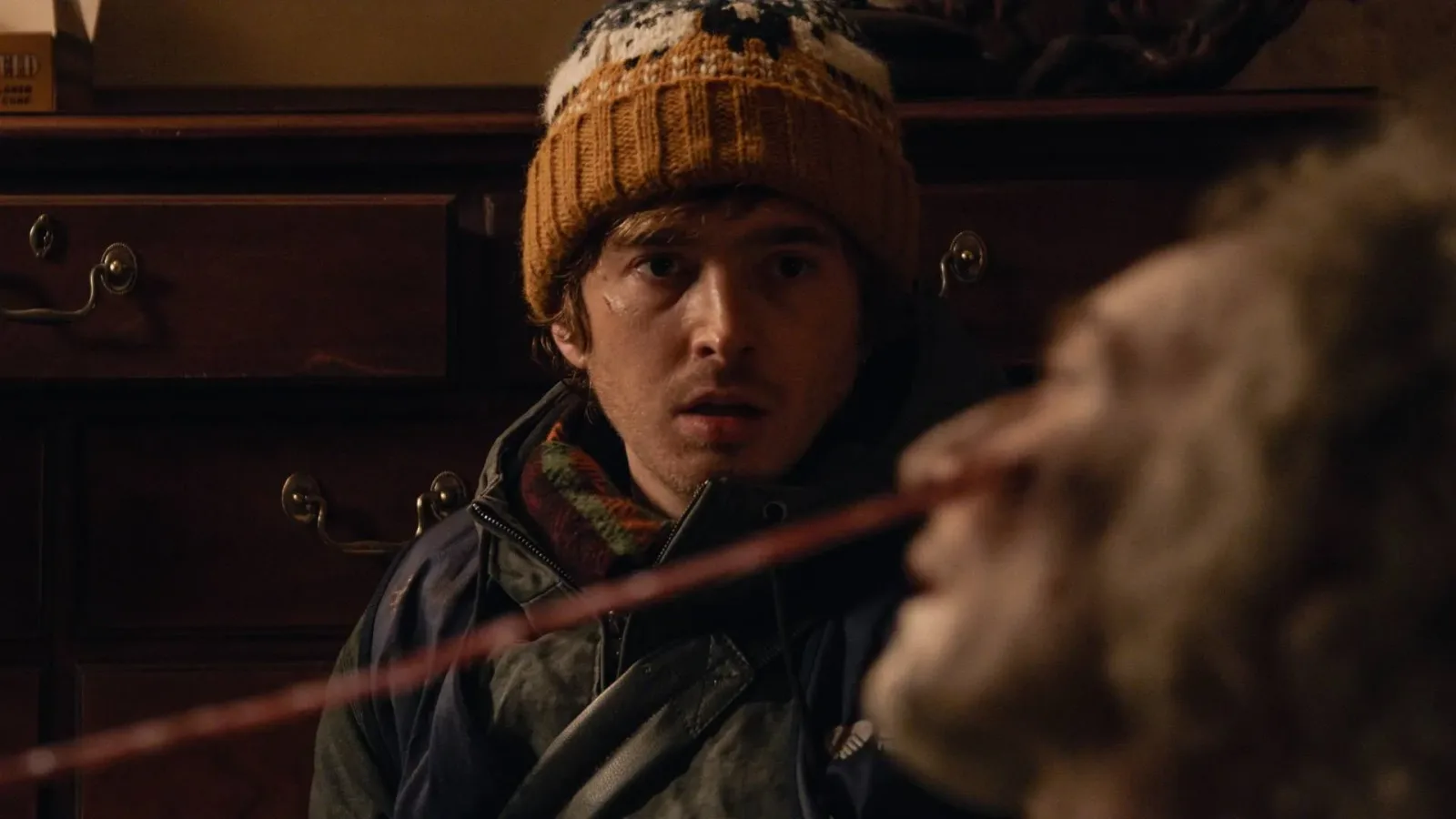
Zach Cregger's Resident Evil puts its central survivor, Bryan, through a merciless trip across an outbreak-ravaged Raccoon City. Played by Austin Abrams, the unlucky courier is chased, battered, and pushed from one undead nightmare to another before suffering what appears to be the most conclusive setback imaginable: a bite from an infected child.
In the world of Resident Evil, a bite is not merely another injury to overcome. It is a countdown. The series has long built much of its horror around that awful certainty, whether it is depicted through shambling zombies, accelerating mutations, or the increasingly desperate efforts of characters trying to reach a treatment before there is nothing human left to save. Cregger's film leans into that expectation, using Bryan's infection to turn the closing stretch into a race against both time and biological disaster.
But the film did not always end with even the sliver of hope audiences now see. Cregger has revealed that an earlier version of the conclusion was considerably bleaker, with Bryan's transformation having advanced so far that the possibility of saving him was effectively gone. The more suspenseful final version came from footage the filmmaker had captured as a backup: a small but vital detail involving a scientist and a syringe.
For useful background on this topic, read Silent Hill: Townfall Review -- A Terrifying Slow Burn With Few Places to Hide.
A different kind of final act for Bryan
By the finale, Bryan reaches an Umbrella Corporation laboratory while the company attempts to find a cure for the zombie outbreak. His journey there is especially grim because viewers know what he is fighting against. The infection is progressing, and the prospect of a last-minute medical answer is not presented as a guaranteed rescue. It is the kind of hope Resident Evil regularly turns into tragedy.
Bryan ultimately changes into a grotesque B.O.W., a bio-organic weapon design familiar to people who know the games. The mutation is not simply a conventional zombie transformation. It signals that the infection has become something larger, stranger, and far more dangerous. The film's body horror pushes Bryan away from the frightened courier viewers followed through Raccoon City and toward a creature Umbrella itself struggles to contain.
In Cregger's original conception, that change would have represented the end of Bryan as a person. Speaking with Collider, the director said that Bryan's humanity had completely disappeared by the time the laboratory scene unfolded. Umbrella's researchers were still attempting to administer a cure, but the dramatic focus was no longer on whether they could save him. Bryan had become an unstoppable threat, and the remaining action concerned the violence that followed.
That version had a brutally direct shape. A scientist would pull out the needle, Bryan would seize the woman's face, the needle would fall and break, and the film would proceed with the transformed Bryan killing the scientist. It was a conclusion built around finality: the cure had failed, the man was gone, and survival had given way to carnage.
As Cregger put it, the reaction to that structure made clear that viewers could feel the story was effectively finished once the needle shattered. The stakes had changed from a plea to save Bryan into a simpler desire to see the monster eliminated. There may still have been danger, gore, and spectacle, but the emotional tension had already been resolved in the harshest possible way.
The contingency shot that became essential
Cregger recognized that issue during production and filmed an alternate possibility. Rather than treating the syringe as immediately lost, he shot a moment in which the scientist puts the needle into a pocket. At the time, it was not the intended centerpiece of the ending. It was a precaution, filmed because the director suspected he might need another option in the edit.
That instinct proved crucial. The extra footage allowed the finale to retain the possibility that the cure might still reach Bryan. Even as he mutates, even as the situation appears irretrievable, there is still an objective beyond merely killing the monster in the lab. Someone may yet be able to recover the treatment and use it before the last trace of Bryan disappears.
The difference may sound minor on paper: a needle breaks in one cut of the story, while it survives in another. In practice, it changes the audience's relationship to the entire climax. The earlier version closes a door. The revised one leaves it barely open, maintaining uncertainty as the violence escalates.
Cregger described the revised approach as one that sustains the stakes until the end. Instead of the audience moving on to a straightforward "kill them all" mentality, it can continue hoping that Bryan will be saved. That is an important distinction in a creature feature, especially one rooted in a franchise where infections and mutations often make redemption seem impossible.
The choice also gives the film a more emotionally complicated final note. Bryan is no longer simply a protagonist trying to escape an infected city, nor solely a monster for the other characters to defeat. He exists in the frightening space between those identities. The cure remains a physical object with enormous narrative weight, and every second it stays available makes Bryan's fate more painful and more suspenseful.
Why Resident Evil benefits from uncertainty
Resident Evil has always balanced action, science-fiction conspiracy, survival horror, and grotesque transformation. Across games, films, and other adaptations, Umbrella's experiments frequently create situations where human beings become weapons or monsters while friends and allies are forced to decide whether there is any chance of bringing them back. Cregger's ending change places Bryan directly inside that tradition.
It also uses one of the series' oldest emotional tools: uncertainty around a cure. A treatment can be a salvation, a false promise, an Umbrella-controlled asset, or an object that arrives seconds too late. The fact that the needle remains in play lets the film draw power from all of those possibilities without prematurely committing to only one.
For viewers familiar with Resident Evil's broader mythology, Bryan's B.O.W. transformation adds another layer. The term carries specific implications within the franchise, pointing to engineered monstrosities rather than a simple undead infection. That makes Bryan's fate feel connected to Umbrella's larger legacy of experimentation and exploitation. The laboratory is not only a location where an antidote might be found; it is also an extension of the system that helped make such horrors possible.
For viewers coming to the film primarily as horror, the altered ending has a more immediate benefit. It preserves the human center of the story. Bryan has endured the outbreak as a vulnerable, increasingly desperate figure, so allowing the final sequence to keep his possible rescue alive prevents the climax from becoming emotionally detached from his ordeal.
Cregger's horror instincts in the editing room
Cregger's decision illustrates how much a horror ending can evolve after the script is written. Production planning often requires filmmakers to make firm choices about plot, character, and effects work, yet scenes can take on different meanings once performances, pacing, and audience reactions are considered together. Capturing one additional shot can create options that were not obvious on the page.
Here, the contingency was particularly valuable because it did not require the story to abandon its darkest imagery. Bryan still reaches a horrifying stage of mutation. Umbrella's lab remains a place of tension rather than safety. The film does not soften the threat or promise an uncomplicated happy ending. Instead, it rearranges the dramatic information so the possibility of survival remains active for longer.
That balance aligns with Cregger's established horror sensibility. His work is willing to take characters into deeply uncomfortable territory, but it also understands that fear becomes more effective when the audience is invested in an outcome. A monster can be shocking; a monster who might still be someone worth saving is more disturbing.
The director acknowledged that the original structure was a misstep because it did not adequately emphasize Bryan's desperation for a cure. Reorganizing the chain of events gave that desperation a clearer purpose. The audience is not just waiting for an inevitable mutation to happen. It is waiting to learn whether Bryan can outrun it, medically or otherwise.
A hopeful ending, without certainty
Calling the final version hopeful does not mean it turns Resident Evil into a comforting story. The film still ends in the shadow of Umbrella, mutation, and the devastating cost of the outbreak. Bryan's condition is horrifying, and the cure is not presented as a clean answer that erases everything he has suffered.
What Cregger's Plan B supplies is hope as suspense. The needle in the scientist's pocket becomes a final thread connecting Bryan's monstrous state to the person he was. It asks the audience to keep caring even after the body before them appears almost unrecognizable.
That is why the retained footage matters so much. It does not merely revise an action beat or extend a chase. It changes the purpose of the climax, allowing Resident Evil to end with a desperate wish to save Bryan rather than an acceptance that he is already beyond reach.
Resident Evil is now playing in cinemas.
Community
Discussion
Start the conversation.
No comments have been posted yet.