

Warning: This article discusses monster and ending details from Zach Cregger's Resident Evil film.
One of the most unsettling creatures in Zach Cregger's Resident Evil movie has become a major talking point among horror fans, and fresh behind-the-scenes footage has revealed an unexpectedly physical foundation beneath its digital exterior. The monster informally nicknamed the "Katamari Monster" by viewers may be a computer-generated creation in the finished film, but its disturbing, rolling movement was developed through a tightly coordinated stunt performance involving several people strapped together.
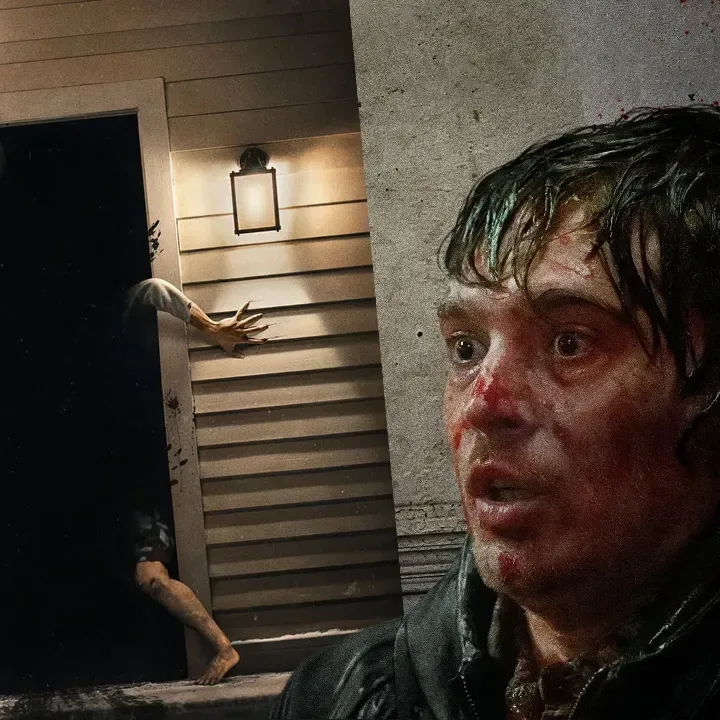
The footage was shared by Jakub Hudlicky, a performer working with Movement Production in the Czech Republic. It shows Hudlicky and fellow stunt performers wearing connected vests as they cross a soundstage in a tangled cluster. Their task was to determine how a creature composed of multiple infected bodies, limbs, and reaching appendages could convincingly move through Raccoon City while pursuing Bryan.
Embedded Instagram post
It is an eye-catching look at a process audiences rarely get to see. The final monster is built and assembled with visual effects, but the performers' work supplied the essential behavior behind it: the awkward collective momentum, the uneven propulsion from arms and legs, and the sense that the mass is not simply rolling like a wheel but fighting to move as a pile of living bodies.
For useful background on this topic, read Food Devils Moves Up to November 3 After Ocarina of Time remake Lands on Its Original Date.
Why fans call it the Katamari Monster
The nickname is a playful reference to the Katamari games, whose central mechanic involves rolling an adhesive ball through environments and collecting objects until it becomes an enormous sphere. In Cregger's take on Resident Evil, the comparison comes from a far more grotesque place.
The creature's mutation involves tentacle-like organisms that reach toward other infected bodies and draw them into an expanding, mobile collection of human forms. Arms and legs accumulate into a rolling mass that travels through the city, creating an image that is at once absurd, inventive, and deeply unpleasant. For longtime Resident Evil fans, that mixture of body horror and bizarre biological escalation fits naturally alongside the series' history of memorable mutations.
The film's version is nevertheless a newly devised creature rather than a direct recreation of one familiar game enemy. That distinction has helped fuel conversation around it. The monster carries the franchise's interest in outlandish infection-driven transformations, yet it also reflects the film's own visual identity and willingness to push its infected threats into especially nightmarish territory.
What the stunt footage makes clear is that the production did not approach the mutation merely as a visual-effects problem. Before artists could turn the creature into a finished digital character, the team needed a practical answer to a basic but difficult question: if several bodies were fused into a rolling, aggressive mass, how would it actually chase someone?
A practical performance beneath the CGI
Hudlicky explained that the recorded stunt material does not appear directly in the completed movie. Instead, it served as movement reference, with the CGI creature mimicking the locomotion worked out by the performers. That means the finished monster is not simply a capture of the stunt team with a digital skin layered on top. Rather, their physical experiment informed the animation and behavior that viewers see on screen.
The distinction matters because movement is often what gives a monster its identity. A creature can have a striking silhouette, detailed textures, and elaborate anatomy, but it will not feel convincing if its motion lacks weight or intention. The stunt group's linked movement gave the visual-effects team a real-world starting point for how the individual bodies might shift, push, stumble, and collectively drive the mutation forward.
In the clips, the performers are not moving with clean synchronization. That lack of perfect unity is precisely what makes the exercise useful. A mass of infected bodies should not glide like a polished machine. It should appear unstable, chaotic, and difficult to predict, even while it maintains enough forward momentum to remain a threat. The group's physical limitations become a creative tool, helping sell the unnerving idea that the monster is made from people forced into one unnatural shape.
Hudlicky said the footage was filmed in July 2025, when the team came together to solve the creature's method of movement for its Raccoon City chase. The practical rehearsal offers a glimpse of the collaborative chain behind a modern horror set: performers establish a physical language, stunt and movement specialists refine it, and digital artists use that work to create the final on-screen organism.
That approach also reinforces why the monster has connected with audiences. It may look impossible, but its motion retains traces of human anatomy. Viewers can recognize the way hands pull against the floor and limbs create uneven force, even if those movements have been transformed into something far beyond any real human ability. The result feels less like an abstract visual-effects object and more like a terrible collection of bodies trying to function as one.
Resident Evil's long history of creature experimentation
Monsters have always been central to Resident Evil, from the shambling undead of its earliest entries to the increasingly elaborate bioweapons and mutated bosses that followed. The series has repeatedly treated infection as an engine for both horror and escalation. A threat may begin with a bite, a virus, or a laboratory accident, but it often ends with a transformation that turns recognizable anatomy into something monstrous.
The Katamari Monster continues that tradition while taking advantage of cinema's ability to linger on a creature in motion. Video games can make players confront a monster through combat encounters and limited resources. A film can instead focus on the spectacle of a creature entering a space, changing the rhythm of a chase, and making an environment itself feel unsafe.
The stunt reference work is especially fitting for a franchise so concerned with bodies under pressure. The Resident Evil games have often communicated danger through animation: the stagger of a zombie, the sudden speed of a licker, or the imposing advance of a Tyrant. Cregger's movie applies a similar principle to its new mutation. The creature's most memorable quality is not only what it looks like, but the strange, body-driven way it gets from one place to another.
An ending shaped by a backup plan
The viral stunt footage is the latest behind-the-scenes detail to draw attention since the film arrived in theaters. Cregger has also discussed the movie's ending, revealing that the final sequence was not the conclusion he originally wrote. He characterized the version used in the finished film as a contingency plan filmed to maintain tension all the way to the end.
That change altered the emotional direction of the finale. As Cregger described it, the approach moved away from a more ruthless "kill them all" impulse toward an ending centered on saving a character. Even without knowing every version considered during production, that explanation suggests how the movie's final stakes were shaped not only in the script but through filmmaking decisions made to preserve suspense and urgency.
Such revisions are hardly unusual in genre filmmaking, where editing, reshoots, alternate sequences, and audience expectations can all influence the final form of a story. In this case, the director's comments provide additional context for a film that has generated considerable discussion among game fans and horror audiences alike.
A successful new chapter for the franchise on film
Resident Evil has been a major success, earning mostly positive reviews and becoming the most successful film adaptation of Capcom's flagship horror game franchise. That achievement is notable for a property that has spent decades shifting between survival horror, action spectacle, remakes, multiplayer experiments, animated features, and live-action adaptations.
The new movie's reception appears to reflect an appreciation for its straightforward survival-horror framework as well as Cregger's specific sensibilities. The Katamari Monster is a useful example of that balance. It has the heightened mutation logic audiences expect from Resident Evil, but it is presented with a level of physical discomfort and inventive motion that helps it stand apart from a routine digital creature.
For fans, the new footage is likely to make repeat viewings of the chase feel different. Knowing that several stunt performers physically tested the movement adds another layer to the scene. What initially seems like a purely CG nightmare was, in part, born from people trying to coordinate their bodies while tethered together across a soundstage.
It is also a reminder that visual effects and practical performance are not competing approaches. The most effective modern creature work often combines both. Digital tools can create anatomy that cannot exist in reality, while stunt performers can supply the weight, rhythm, and unpredictable imperfection that make impossible things feel alive. In the case of Resident Evil's rolling mass of infected bodies, that collaboration helped turn a wild mutation concept into one of the film's most talked-about horrors.
Community
Discussion
Start the conversation.
No comments have been posted yet.