

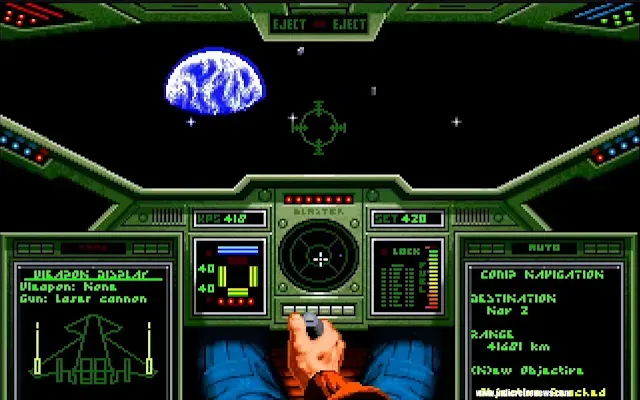
Classic Amiga games are receiving a fresh kind of upgrade: not remakes, not ports, and not visual overhauls, but carefully reworked versions designed to run more smoothly on the powerful hardware expansions that many enthusiasts use today. Developer Vesuri has been releasing enhanced frame-rate patches for a growing selection of games, combining AI tools with detailed technical knowledge of the Amiga's architecture and the established WHDLoad ecosystem.
The goal is straightforward, even if the work behind it is anything but. A large portion of Amiga software was made for the hardware expectations of the late 1980s and early 1990s. Players who later added accelerators, Fast RAM and more capable processors could find that old games did not automatically become better experiences. In some cases, a title would still render at its original cadence, show awkward timing differences, or expose bugs that were less apparent on the systems for which it was initially designed.
Vesuri's patches are intended to address that disconnect. Rather than simply pushing old code to run as fast as possible, the enhanced versions seek to improve rendering while preserving consistent gameplay speed. That distinction matters. If graphics update more frequently but physics, controls, enemy behaviour or animations become erratic, faster hardware can actually make an older game feel worse. The patch work therefore concentrates on timing, input response, simulation behaviour and game-specific fixes alongside increased frame rates.
Making accelerator hardware count
The Amiga scene has long embraced hardware upgrades. Accelerator cards such as the Apollo 1240 for the Amiga 1200 gave owners substantially more processing power than the original machines shipped with. Yet many commercial games were never built to take meaningful advantage of those additions. They were designed around tightly constrained CPUs, memory configurations and custom-chip behaviour, and their programmers understandably focused on getting the best possible performance from contemporary standard systems.
For useful background on this topic, read The Legend of Zelda: Ocarina of Time Beginner's Guide: 10 Smart Habits for Hyrule.
That leaves an unusual situation for modern retro players. A heavily upgraded Amiga can have far more capability than the original game expects, while the game itself remains limited by its original code paths. Faster processors alone do not necessarily fix capped animation, uneven motion, tearing, timing tied to rendering, or edge-case compatibility trouble.
Vesuri's work is aimed at those exact limitations. Drawing on experience from the Amiga demo scene, the developer has been investigating ways to update the software layer so that accelerated machines can offer smoother play without abandoning the behaviour that made the originals recognizable. The effort also demonstrates that preservation does not have to mean leaving every historical technical constraint untouched. For players with suitable systems, these patches provide an optional way to experience familiar games with fewer compromises.
Stunt Car Racer helped establish the approach
A key early result was an optimized version of Stunt Car Racer that reached 50 frames per second. That project was achieved through intensive manual programming, illustrating both the potential of the hardware and the scale of the task. Improving a game at this level is not merely a case of changing a setting or removing a frame cap. Rendering, game logic and the machine's display behaviour can be deeply intertwined.
Recent advances in AI have made it more practical to apply similar investigative and optimization work across additional games. AI is being used as an aid rather than a replacement for platform-specific expertise. The Amiga's custom hardware, old executable formats and title-by-title quirks still demand human understanding. In this context, the technology can help speed up analysis and iteration, while the final patches remain rooted in a close reading of how each game operates.
That blend is particularly important for retro software. Older titles often contain unusual assumptions, hand-tuned routines and behaviour that can be difficult to infer without testing on real configurations. A patch that makes one sequence faster may accidentally change collisions, control response, replay data or audiovisual synchronization elsewhere. Vesuri's release notes reflect that reality: the improvements are accompanied by numerous targeted corrections rather than a single blanket performance switch.
WHDLoad integration keeps the process familiar
The enhanced releases build on WHDLoad infrastructure created and maintained by long-standing Amiga community contributors including JOTD, Psygore, StingRay and CFou!. WHDLoad is central to how many players run installed games from hard drives or CompactFlash-based setups, and its slave files handle the title-specific work needed to launch software reliably outside its original floppy-disk environment.
Vesuri's approach is designed to avoid disrupting the existing maintainers' upstream projects. Players can generally update an installation by replacing the relevant slave file rather than rebuilding their entire setup. That is a practical choice for a community where installed game collections may have been curated over many years.
The enhanced mode is commonly enabled in supplied game icons through the CUSTOM2=1 setting. Crucially, the original mode remains available. Players who prefer the unmodified behaviour, need maximum compatibility, or simply want to compare versions can disable the enhanced option from WHDLoad startup settings. This makes the work an enhancement path rather than an attempt to overwrite the original experience.
What the patches are changing
The current patch notes describe a broad mix of performance and bug-fix work across several games. In one space-combat-oriented update, the enhancements include optional smoother flight, camera movement and ship effects, along with more consistent game speed on faster processors. Cinematic sequences have been retimed across intros, briefings, launches, landings, deaths and funeral scenes. Projectile visuals and asteroid or mine hit detection have also been improved, while waypoint markers are now intended to remain visible in front of nebulae in all English modes.
That same update includes more responsive room controls with a deliberately limited cursor speed. For the disk edition, arithmetic and collision work has been accelerated in every mode, including on the Amiga 500, without altering the game's behaviour. This is a useful example of the project's broader ambition: some fixes are directed at high-end expanded machines, but others can benefit more conventional configurations too.
Another set of notes focuses on an enhanced frame-rate mode with faster, tear-free rendering and full ground detail on Fast RAM-equipped Amigas. It also addresses aiming, bombing, bullet hits, AI and timing when the enhanced mode is active. Mouse sensitivity can be adjusted through 1x, 2x, 4x and 8x options, with 2x as the default. Recording and playback have been improved to support 128-second recordings, while repeating explosion and splash sounds have been fixed.
Vehicle and racing games are another clear beneficiary of the work. One update promises smoother, v-synced play on Fast RAM machines, consistent simulation speed and less visible steering lag. It fixes flickering bikes in the distance and in mirrors, as well as vertical jumps seen on hills. Joystick steering recentering and keyboard or CD32 pause handling have been corrected, while a loading crash affecting uncached 68030 systems has been addressed. The game border is blanked during play on ECS and AGA hardware, and the installer has been adjusted so cancelling a replacement will preserve an existing installation.
A further driving-focused patch tackles sideways jumps in the road and scenery, including those occurring through bends. It restores steering response in turns, prevents nearby vehicles from vanishing before collisions, corrects an over-revving rev counter needle, and fixes repeated drum hits in an opening music sequence. Its optional enhanced mode is intended to provide smoother movement in the scenery and traffic while maintaining more dependable race timing and average-speed scoring.
Preserving choices, including old replays
Stunt Car Racer continues to receive especially substantial attention. Its enhanced implementation includes CPU-specific rendering improvements controlled through a single enhanced frame-rate option. The patch aims to keep race timing and overall game speed correct regardless of rendering speed, an essential consideration for a game where split-second driving inputs and jumps define the experience.
There is also an experimental A4000 simulation mode for smoother and more responsive driving on faster PAL Amigas. It is selected by default on 68040 and 68060 systems, with automatic defaults and saved preferences for the simulation mode. Replay saving and playback are supported for the A4000 option, while original replay files can still be used. Players should note, however, that older A4000 replays are not compatible with the newer implementation; the revised jumps are described as being closer to the A2500 version.
Those details underline a sensible preservation-minded philosophy. The patches do not pretend that every technical change is invisible or universally interchangeable with historical data. Where new enhanced movie saves require the enhanced slave, that requirement is stated, while original movie files remain loadable. Compatibility is treated as something to document and manage, not assume.
A promising direction for Amiga restoration
For Amiga fans, these releases represent more than a collection of isolated fixes. They offer a model for how classic games can be maintained for enthusiast hardware without demanding a wholesale conversion or a new commercial edition. Enhanced frame rates are the headline feature, but the more significant outcome may be the cumulative attention paid to controls, simulation consistency, sound bugs, installation behaviour and replay support.
As Vesuri continues to publish updated slave files, the library of supported games may give accelerator owners more reasons to revisit systems that once felt underused by their software. The original modes remain there for those who want them. For everyone else, the prospect is simple: classic Amiga games that retain their identity while finally making fuller use of the machines running them.
Community
Discussion
Start the conversation.
No comments have been posted yet.