

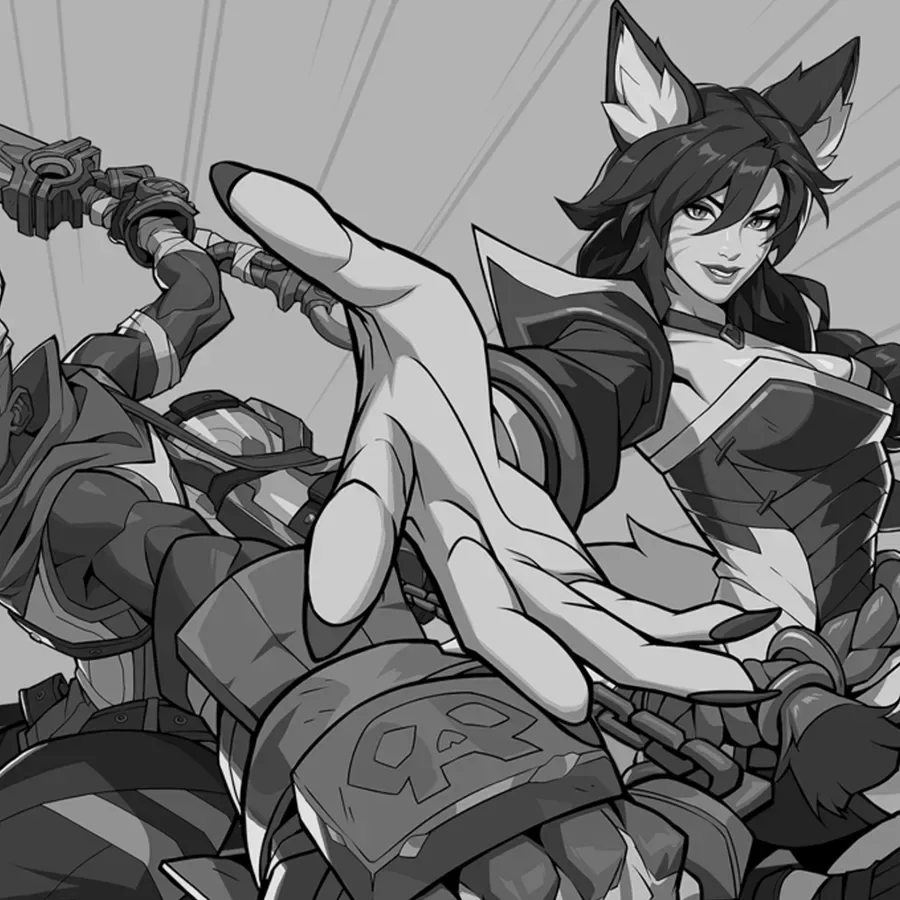
Riot Games' fighting game 2XKO was operating under an exceptionally demanding definition of success. Marc Merrill, Riot's co-founder, co-chairman, and chief product officer, has said the game would have needed monthly active player totals in the high hundreds of thousands, and perhaps even the millions, for its ongoing support to make financial sense.
The estimate offers an unusually direct look at the expectations attached to Riot's long-running League of Legends-based tag fighter. It also helps explain why the company decided to stop producing further content updates after December 2026, despite the work completed by the development team and the audience the game did manage to reach. Online play is expected to remain available, but 2XKO's planned long-term live-service future is ending.
Merrill discussed the project's trajectory during an appearance on The Lemonade Stand, addressing a development cycle that began years before the game was publicly known as 2XKO. While he emphasized that the team made a visually impressive game and that some players connected with it, he also accepted that the audience ultimately did not grow to a level that could sustain the project's costs and ambitions.
For fans of fighting games, the scale of the target has prompted an immediate and understandable debate. The genre has dedicated communities, strong tournament scenes, and major individual successes, but it generally does not operate at the same player-volume level as globally dominant multiplayer games. Riot's experience with League of Legends, one of the industry's most enduring live-service games, may have set a standard that was extremely difficult for a one-on-one competitive fighter to meet.
For useful background on this topic, read Escape From Playtime Open Beta Is Live Ahead of October Steam Early Access.
A Live-Service Plan That Required Enormous Scale
2XKO was not conceived as a conventional boxed fighting game with a finite development roadmap. It was intended to support a continuing, long-tail model, which means recurring content, ongoing operations, and sustained player engagement were central to its business case. That approach can be a natural fit for competitive games, particularly when they are built around online play and regular character additions. It can also create major pressure when the project's budget and support structure demand a huge active population.
Merrill characterized the required audience as "high hundreds of thousands, if not millions" of monthly active users. He did not provide a precise threshold, nor did he break down the game's costs, revenue, or player numbers. Even so, the broad range is striking because it places 2XKO's required performance far above what many players would normally associate with a successful fighting game.
That gap is the heart of the community response. Players have pointed out that fighting games can have passionate, durable audiences without approaching the monthly scale expected of enormous multiplayer ecosystems. A title can maintain competitive events, sell downloadable content, and remain culturally important while serving a much narrower audience than the figures Merrill described.
The comparison is not perfectly simple, however. A game's needs depend on much more than player count. Development staffing, marketing investment, server costs, monetization, licensing, the frequency of updates, and internal financial targets can all alter what qualifies as sustainable. Merrill's remarks specifically concern the cost structure and strategy Riot had put around 2XKO, rather than establishing a universal player requirement for every game in the genre.
Street Fighter 6 Changed the Competitive Landscape
Merrill also identified timing as a significant issue. Riot had begun work on 2XKO roughly eight years before the arrival of Street Fighter 6 in 2023, he said, and the eventual launch of Capcom's game disrupted Riot's hopes of making a major impact in the space.
His argument was not that Street Fighter 6 unexpectedly existed, but that 2XKO's extended development meant Riot missed what it saw as a more favorable opportunity. In Merrill's view, launching years earlier could have given the game a better chance to help reshape the fighting game community and establish a stronger position before Street Fighter 6 became the market's central force.
Street Fighter 6 arrived with substantial momentum, a modern online infrastructure, broad mainstream visibility, and renewed enthusiasm after Street Fighter V's later recovery. It has remained a major benchmark for the genre. Public Steam activity provides only one slice of its total audience, especially because PlayStation player statistics are not shared in the same manner, but its average monthly Steam population is often around 16,000 to 20,000 users. Those numbers are vastly lower than the audience Merrill said 2XKO needed, while still representing a major fighting game's ongoing PC presence.
That contrast has sharpened questions over whether Riot's target could ever have been realistic. Steam data does not represent console players, users on other PC storefronts, purchases, spending, or engagement beyond a single platform, so it cannot on its own determine a game's health. Still, the comparison illustrates the unusually high bar placed in front of 2XKO. Reaching millions of monthly players would be a historic achievement for a fighting game, not merely a healthy result.
Internal Alignment Problems Added to the Delay
Competition was only part of Merrill's explanation. He said Riot lacked internal alignment around the strategy for 2XKO, creating managerial fracturing and confusion within the team. That is a meaningful admission for a project that spent many years in development and was expected to expand Riot's presence beyond its existing flagship genres.
Long development cycles can magnify every strategic disagreement. A team may be trying to resolve gameplay systems, competitive features, accessibility, monetization, content cadence, release plans, and the relationship between a game and its established intellectual property at the same time. In 2XKO's case, the extended path also made public expectations harder to manage.
The project was revealed to the public as Project L in 2019, although reports and speculation about a League of Legends fighting game existed before that announcement. Its eventual transition through a closed beta and into extended early access created a release process that some fans found hard to follow. The long wait diminished some of the excitement that had built around the initial reveal, especially as competing games reached the market with clearer launch plans and more immediately available content.
Merrill nevertheless praised the people who worked on the game. His comments make a distinction between the quality and effort of the development team and the commercial outcome Riot required. In other words, the decision to end active development was not framed as a claim that the team failed to create a worthwhile fighter. It was framed as an acknowledgment that the project's live-service model did not attract enough players to justify continued investment.
Refunds and a Shift to a More Permanent Version
Riot's response was to issue full refunds to players and pivot away from ongoing content support. Merrill described the intention as giving the community a version of the game that can continue to be played for years, more like a traditional boxed product than an actively expanding service.
That does not erase the disappointment for players who expected 2XKO to grow through new fighters, balance updates, seasonal plans, or other long-term additions. Fighting games are often transformed by post-launch support, and a tag fighter based on League of Legends has an enormous pool of characters that could have supported years of roster expansion. The end of active development means that potential will not be realized under Riot's original plan.
At the same time, keeping online functionality available gives existing players a reason to continue building communities around the game. Local competition, online sets, matchup learning, and player-run events can persist after formal development ends. Whether 2XKO develops that kind of enduring afterlife will depend on its player base and the condition of its online experience after the final updates arrive.
What 2XKO's Outcome Means for Fighting Games
The situation highlights a broader tension within modern fighting games. Publishers increasingly want recurring engagement and revenue, while players often welcome continued characters, patches, and competitive support. But the scale needed to fund a high-cost live-service plan may not align with the audience a fighting game can reasonably expect to attract.
Riot's conclusion appears to be that 2XKO was built for a level of reach it could not achieve. Merrill took responsibility for that outcome, saying the company had no one else to blame. His comments suggest that delays, strategic uncertainty, and market timing all contributed, while the game's core challenge was the mismatch between its ambitions and the number of players who arrived.
For the fighting game community, 2XKO remains a notable case: a polished, high-profile project tied to one of gaming's biggest universes, built by a company with extensive live-service experience, yet unable to meet the unusually high threshold set for its continuation. Its online future may still give it a lasting place among players, but its active development story is now a cautionary example of how difficult it is to combine blockbuster-scale expectations with a genre that succeeds on very different terms.
Community
Discussion
Start the conversation.
No comments have been posted yet.