

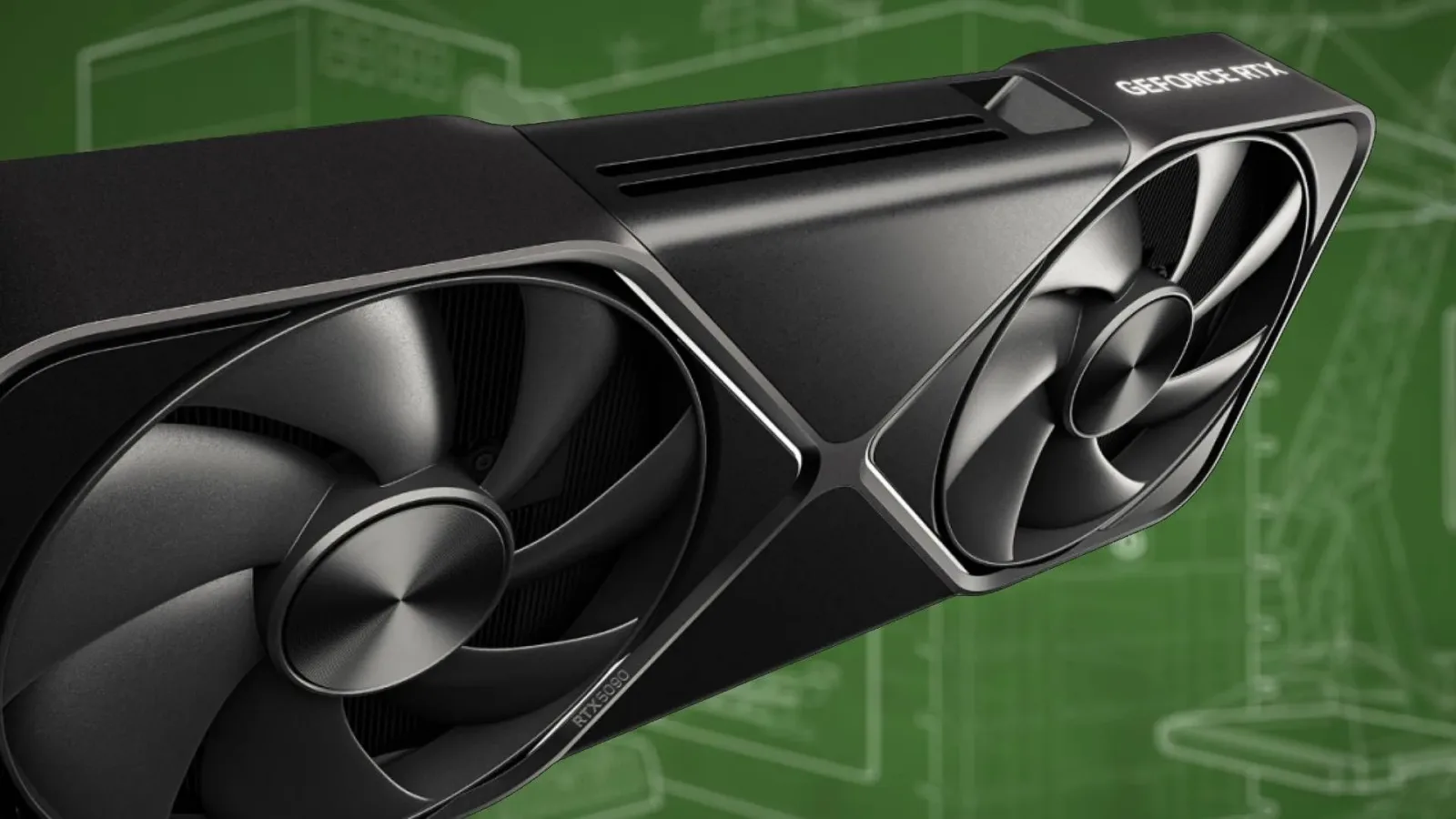
Nvidia still presents the GeForce RTX 5090 as a product built to deliver major advances for gamers and creators. On paper, that description is not wrong: it is a GeForce card, it is sold through familiar board partners including MSI and Gigabyte, and it is capable of powering extremely demanding PC games. In practice, however, the conditions surrounding the flagship GPU are making that label feel increasingly detached from the experience of buying one for a home gaming rig.
Images shared by HKEPC show pallets of GeForce RTX 5090 cards being prepared for AI server use. The sight is striking not because AI companies using powerful GPUs is a new development, but because these are apparently mainstream RTX 5090 boards rather than Nvidia's separate professional workstation products. They are the same class of cards that a PC enthusiast might search for at a major retailer, only redirected at volume toward companies building compute infrastructure.
For anyone hoping to assemble a no-compromise 4K gaming PC, that distinction matters. A graphics card designed and marketed for the consumer space is competing in a market where it may be far more valuable as part of an AI server than as the centerpiece of one person's gaming setup. When buyers can acquire cards by the pallet and put them to revenue-generating work, individual players are inevitably at a disadvantage.
Embedded X/Twitter post
A $1,999 card in a very different market
The RTX 5090 launched with a suggested price of $1,999, already placing it well outside the normal range for most PC gaming budgets. Yet listed prices have risen dramatically, with examples exceeding $5,000. That kind of cost is enough to deter even enthusiasts who traditionally spend heavily to chase the best available performance. It also changes the meaning of a flagship gaming graphics card. At that point, the product may technically play games exceptionally well, but it no longer feels realistically aimed at the people playing them.
For useful background on this topic, read Command an Army Codes for September 2026: All Active Gem Rewards.
AI builders have a much different calculation to make. Nvidia's RTX 6000 Pro workstation GPU carries a $16,000 price tag, while offering substantially more memory at 96GB of VRAM. But organizations assembling AI systems may not always require that much capacity per GPU. For workloads that can operate within 32GB, the RTX 5090 can look like a comparatively inexpensive option even at heavily inflated retail prices.
That creates a powerful incentive to absorb GeForce supply. A $5,000 RTX 5090 may be irrational for somebody seeking higher frame rates in a few games, but it can remain an acceptable expense for a company trying to expand AI capacity quickly. The end result is a mismatch between the consumer market Nvidia's branding suggests and the commercial demand influencing where the cards actually go.
Gaming is not the only priority for modern GPUs
The situation also reflects Nvidia's broader transformation. Gaming remains a major part of the company's identity and product lineup, but artificial intelligence and high-performance computing have become central to its public ambitions. The same core strengths that make a GPU fast in games--parallel processing power, memory bandwidth, advanced software support and scalable compute capability--also make it attractive for AI workloads.
That overlap is difficult to separate. Features such as DLSS 5 are positioned as important advances for gaming, helping games use AI-assisted rendering techniques to improve performance and image quality. But the larger architecture and software ecosystem supporting those features also reinforce Nvidia's expertise in accelerated computing. There is no straightforward way to make a premium consumer GPU excellent at gaming while making it unappealing to every business interested in AI processing.
More importantly, Nvidia has little obvious reason to deliberately reduce AI capability on its fastest GeForce cards. The company's professional products still offer advantages in memory capacity, enterprise support and other workstation-oriented considerations. Yet as long as a less expensive GeForce option can do enough for a server builder's needs, it remains an attractive alternative. The RTX 5090's appeal outside gaming is not a side effect that can be ignored; it is part of what makes the hardware so desirable.
The crypto comparison is understandable, but the challenge is different
PC players have seen a version of this story before. During the cryptocurrency boom around 2021, miners consumed huge quantities of graphics cards and made already difficult upgrades even more frustrating. Nvidia attempted to address that period with Lite Hash Rate versions of certain RTX 30-series cards, reducing their cryptocurrency mining performance. The effort was imperfect, but it at least acknowledged that a gaming product was being diverted by a competing use case.
AI demand is a more complicated problem. Mining performance could be targeted through a specific limitation related to hashing. AI workloads are far broader, and many of the GPU capabilities that benefit them are fundamental to modern graphics hardware. Artificially restricting those capabilities could affect creative applications, research work, software development and potentially gaming-adjacent features as well. It would also run against Nvidia's position as a major AI computing company.
That does not make the result less frustrating for consumers. It does mean the old playbook is unlikely to return in a direct form. There is no clear "AI limiter" equivalent waiting to restore RTX 5090 availability for gamers, especially when demand comes from organizations with much larger budgets and a business case for acquiring hardware at scale.
The pressure may not stop at the flagship
The RTX 5090 is the most visible example because it is the fastest and most expensive GeForce model, but the concern does not end there. AI server builders do not necessarily need the absolute top card for every deployment. The GeForce RTX 5080 can also be useful when buyers are looking to add compute density without paying for a workstation GPU, potentially putting pressure on another tier that high-end gaming customers would normally consider.
That narrows the practical choices for players who want a premium system without crossing into extreme spending. The RTX 5070 Ti and cards below it may become the more financially plausible options, but even those products are expensive. Paying more than $1,000 for a graphics card that sits below the flagship end of a generation makes 4K PC gaming feel less like an aspirational hobby and more like a luxury category.
There is a difference between a high-end GPU being costly because it is technologically advanced and being costly because it is being chased by an entirely separate industry. Gamers can understand paying for cutting-edge silicon, advanced cooling, and performance that drives demanding displays. It is harder to accept pricing and stock shortages shaped by data-center demand that individual buyers cannot realistically compete with.
What this could mean for PC gaming ownership
The longer this divide persists, the more it strengthens the appeal of alternatives that do not require buying top-tier local hardware. Cloud gaming services, including GeForce Now, already offer access to powerful systems without requiring subscribers to own the GPU inside them. Xbox Game Pass and similar subscription ecosystems further normalize the idea that access can matter more than permanent ownership.
Those services can be useful, especially for players without the space, money, or technical interest needed to build a powerful desktop. But they are not complete substitutes for local hardware. Streaming depends on internet quality, service availability and the games supported by a particular platform. Buying a PC and running a game locally gives players more control over settings, mods, offline play and the lifespan of their libraries.
When physical components become difficult to obtain, that control can start to look like a premium privilege. The concern is not simply that the RTX 5090 is too expensive. It is that high-end gaming may be pushed toward a future where the best experience is commonly rented from remotely operated hardware, while owning the machinery capable of delivering it becomes increasingly rare.
There is still value beyond the newest hardware
For now, PC players do not need to treat the RTX 5090 as the only route to enjoyable gaming. The vast majority of games do not require a flagship GPU, and older hardware can still produce excellent results with sensible settings, lower resolutions, upscaling options, and a willingness to prioritize gameplay over maximum visual settings.
It is also an opportune moment to appreciate older systems and lower-spec classics. Retro consoles, PS2-era libraries, indie games and well-optimized PC titles offer thousands of hours of entertainment without demanding an AI-grade graphics card budget. That is not a solution to the supply and pricing problem, but it is a reminder that games do not lose their value simply because the current hardware race becomes unreasonable.
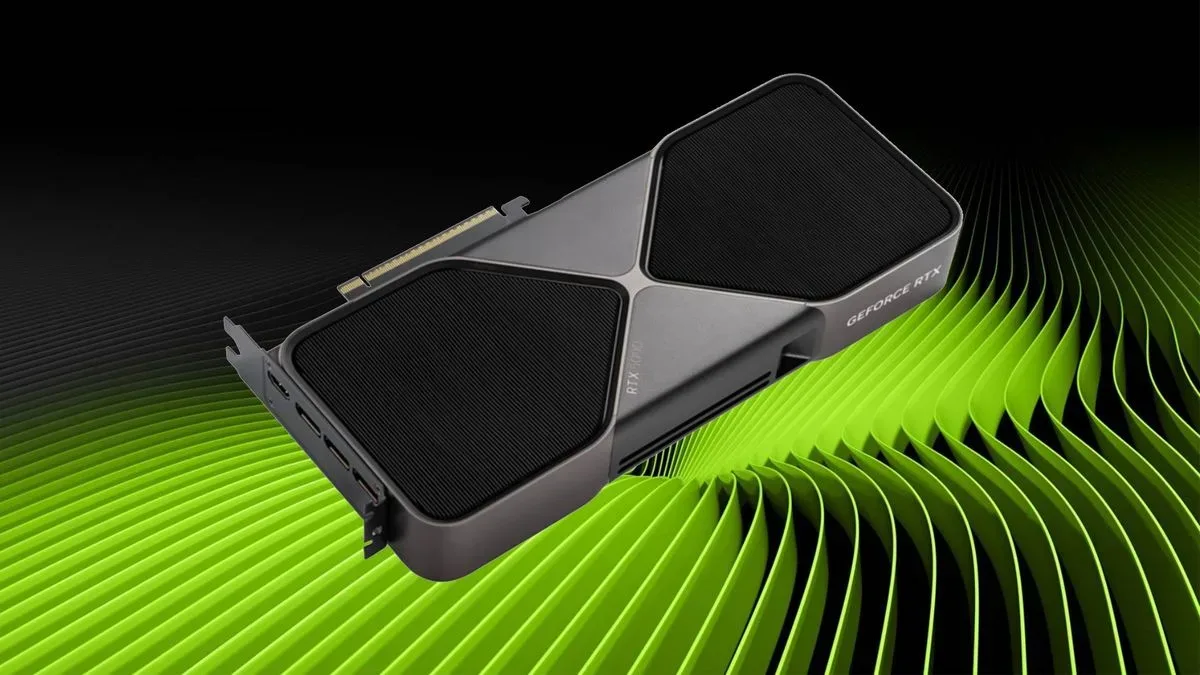
The RTX 5090 remains a GeForce GPU in name and design, and it is unquestionably capable of extraordinary gaming performance. Yet the pallet-scale AI deployments and prices above $5,000 show why many players may no longer see it as a gaming product in any meaningful consumer sense. Until supply, pricing, or market priorities shift, the most powerful GeForce hardware may be designed with gamers in mind while increasingly ending up somewhere else entirely.
Community
Discussion
Start the conversation.
No comments have been posted yet.