

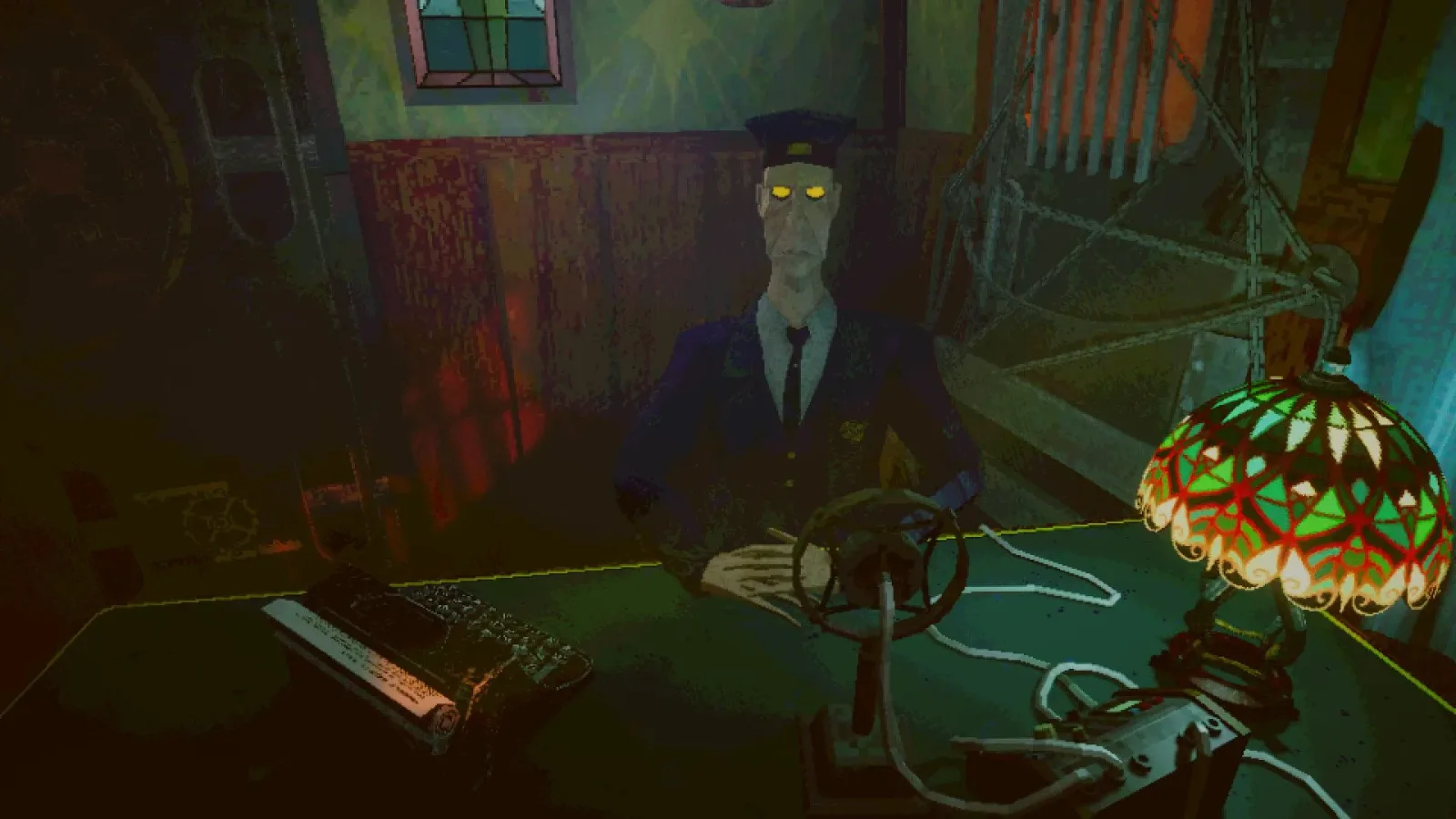
Dreadline Express is not using deckbuilding as a route to familiar card-battle routines. Its cards are pieces of understanding: facts about the player character, their family, the train, its inhabitants, and the unsettling world beyond its windows. Those facts are then placed into a hand and used to change what can be said, understood, or accessed while exploring a train that may be carrying humanity's final survivors.
The PC game comes from Czech solo developer Dave Konecny and is scheduled for October 2026, though a precise release day has not been announced. It describes itself as a psychological-horror "Metroidbrainia," a label that points to a design built around discovery and mental connections rather than conventional power-ups. Players will revisit spaces, test new combinations of knowledge, and use their growing card collection to find routes through dialogue, locked obstacles, and the train's wider mystery.
It is a strange premise with an equally unusual mechanical hook. Dreadline Express has the broad structure of a narrative adventure, but it makes the process of asking the right question or recognizing the significance of an object feel like assembling a playable hand. The result looks less like a deckbuilder about winning fights and more like a game where knowledge itself becomes the inventory, the keyring, and the language of investigation.
A train with nowhere safe to go
The game begins with the protagonist waking aboard a gloomy train with only limited memories of their past. Interacting with the cabin and its objects gradually provides fragments of context, helping establish both the character's own history and the circumstances that have left this vehicle as the last human train in existence.
For useful background on this topic, read RTX 5090 Demand From AI Server Builders Is Pushing Gaming Further Down the Queue.
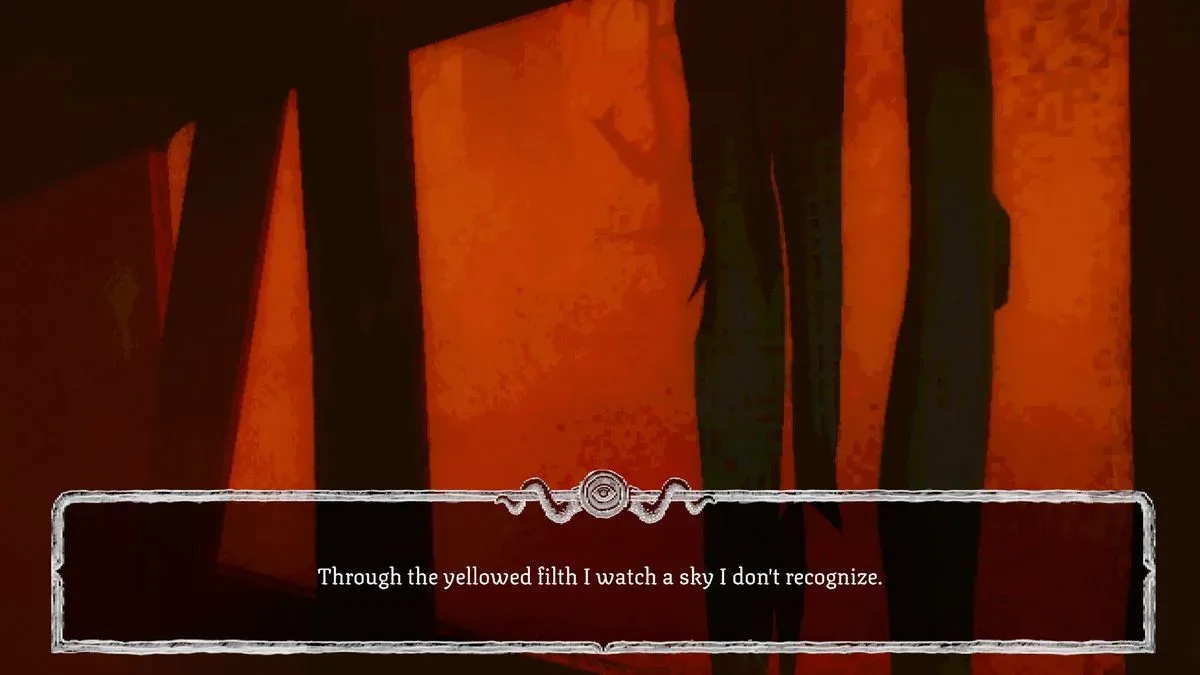
Outside, the setting is no less alarming. Black tentacles twist beneath a broken-looking sky, visible through the train windows as the carriage continues on its course. Dreadline Express frames the train as both refuge and prison: it carries people away from an incomprehensible world, yet nobody aboard appears to have a clear or comforting answer about where it is headed.
Early in the journey, the Train Conductor calls upon the player character to make a terrible decision. The train allegedly cannot continue without a sacrifice. If no one is offered up, everyone on board will die. The player is told to assess the other passengers and identify a suitable victim, placing the game's personal stories under immediate moral pressure.
That setup means conversations are not merely flavor. Helping one person may contribute to another passenger's death, and the player's interest in particular characters can influence the direction of the narrative. Dreadline Express appears determined to make curiosity consequential: learning more about a traveler may invite empathy, suspicion, or a cold calculation about who should survive.
Cards as memories, clues, and conversational tools
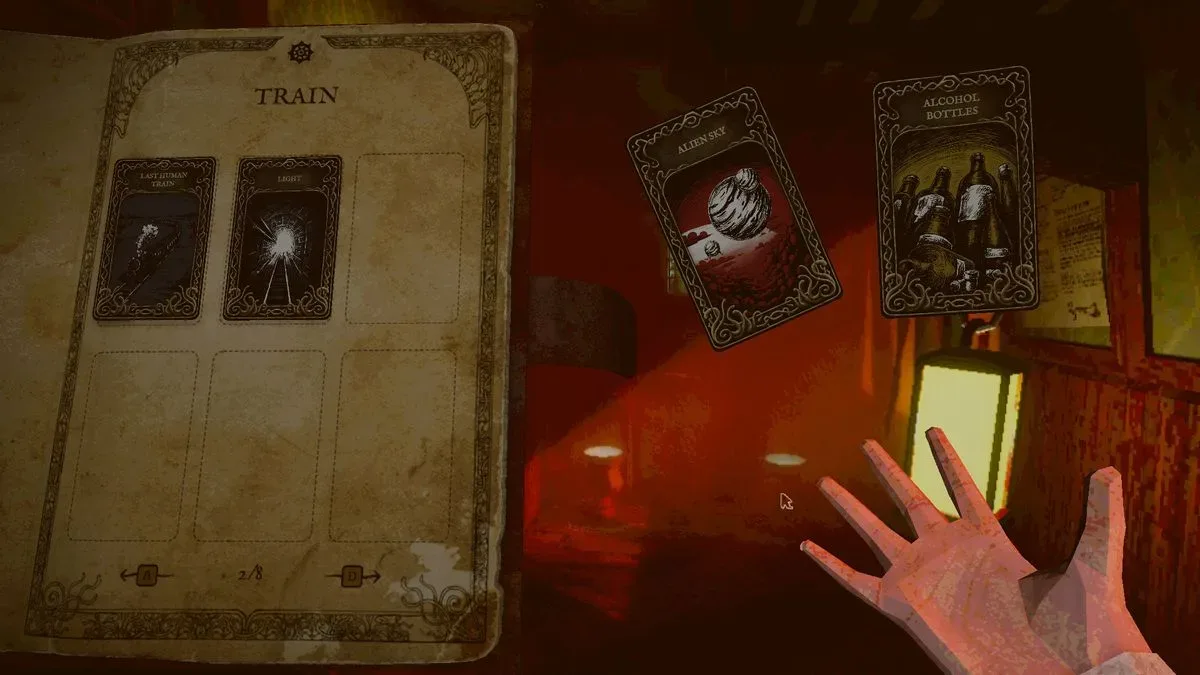
Cards in Dreadline Express represent knowledge gained from observation and interaction. Each one is added to a card album divided into topics, creating an organized record of what the player has learned. Rather than drawing a random combat hand and hoping for the right attack, players can swap cards into their active hand whenever they want and experiment with the combination needed for a situation.
This gives each card a potentially broad purpose. A card connected to the protagonist's identity can establish the basic social footing needed to speak with somebody. Family-related knowledge may unlock a more personal appeal. Information about the train, a cult, or another passenger could expose a new topic, clarify a previously cryptic object, or satisfy a dialogue requirement.
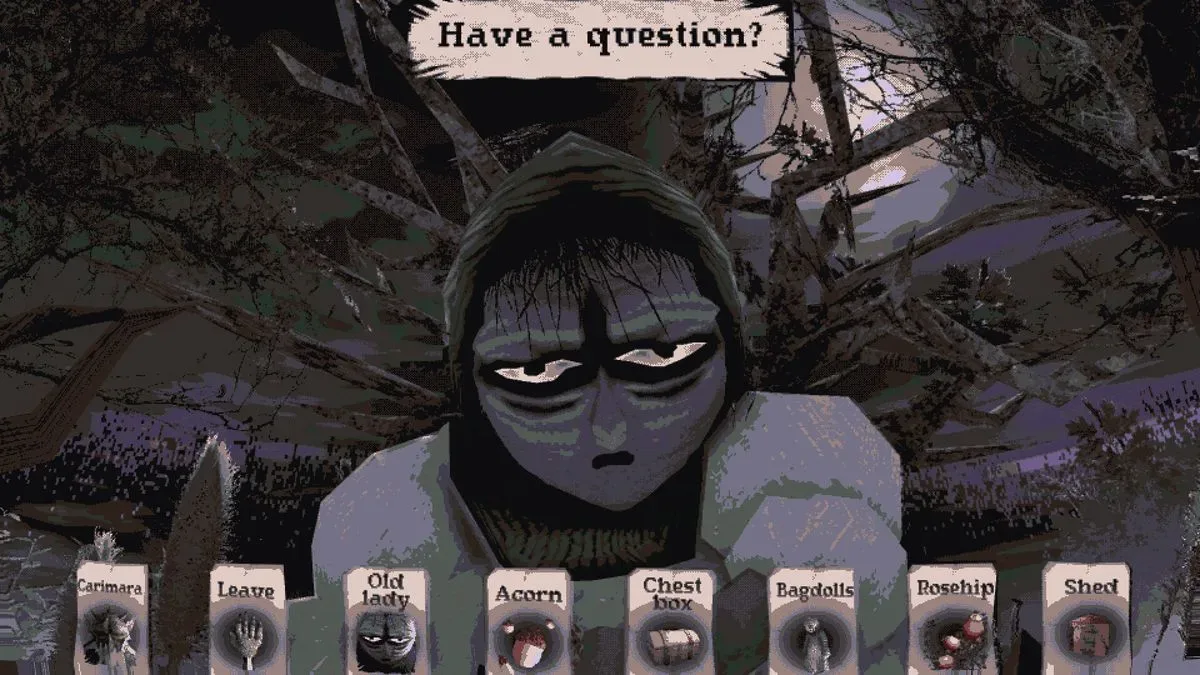
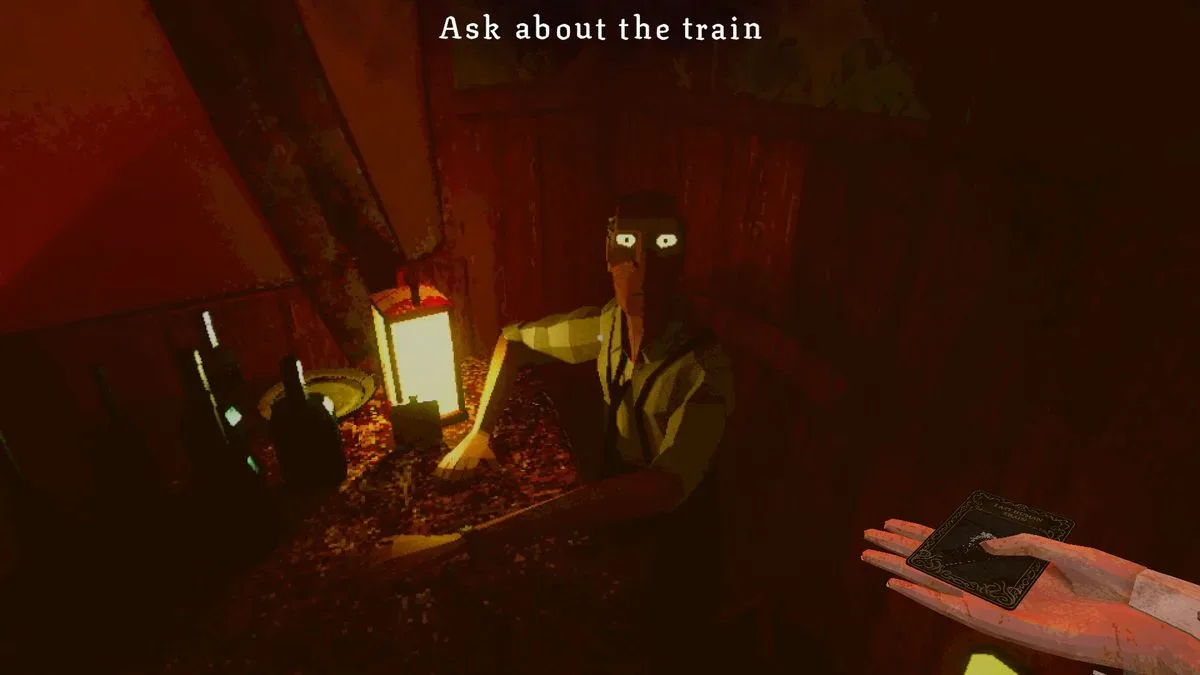
One demonstrated interaction involves an NPC with striking yellow eyes who objects to speaking with someone who has not even introduced themselves. Equipping and playing the personal card before initiating the conversation allows the exchange to proceed. That successful interaction can lead to another discovery, which is then added to the collection and may become useful elsewhere.
Dialogue cues help point toward productive experiments. Text above characters can indicate possibilities such as telling someone about the player's family or asking about the cult. These prompts do not turn the process into a simple list of dialogue choices; instead, they signal that a particular line of inquiry may be available if the appropriate cards are in hand. The player still needs to obtain the relevant knowledge and decide which leads are worth pursuing.
That system makes Dreadline Express feel like it is treating dialogue as a puzzle space. A locked door and a guarded personal conversation can demand the same sort of thinking: inspect the environment, uncover a missing piece of information, bring it into the correct context, and see what changes. The act of backtracking is therefore not only about returning with a physical item. It is about returning with a new understanding.
A Metroidvania built around thought
The "Metroidbrainia" label has become useful shorthand for games where progression depends on what the player learns. In Dreadline Express, that concept is literalized through the card album. New discoveries become visible, collectible pieces of a system that governs access to the game's conversations and obstacles.
The comparison to a Metroidvania fits because the train is designed around revisiting and recontextualizing. Players may encounter items that cannot yet be understood, doors that cannot yet be opened, and passengers who cannot yet be approached in the right way. The answer is not necessarily a weapon, double jump, or key. It may be a fact discovered in another compartment, an insight found in a character's story, or a new pairing of cards that reframes an old encounter.
This framework also makes the deckbuilding element more deliberate than luck-driven. Since cards can be exchanged in and out of the hand freely, the focus is on testing theories. A player can look at a character's hint, adjust their hand, try a relevant subject, and follow the resulting narrative thread. The game's central loop appears to be one of observation, hypothesis, and revelation.
It is an approach that could create meaningful differences between playthroughs. Players may focus on different passengers, chase alternate lines of investigation, and make different decisions while navigating the demand for a sacrifice. With card combinations opening distinct avenues through the story, the full journey is unlikely to unfold identically for every player.
Cozy reading by candlelight, with horror outside the window
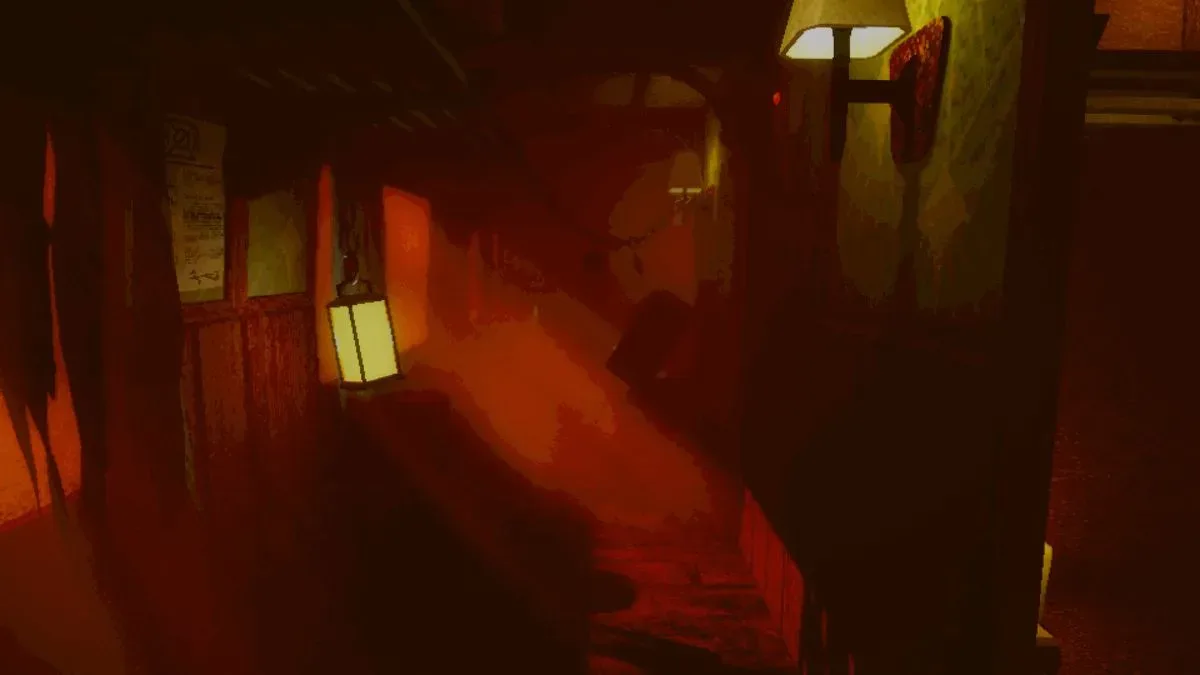
For all its grim subject matter, Dreadline Express carries an unexpectedly intimate atmosphere. The train's narrow corridors are dim and claustrophobic, with lanterns casting orange-yellow light while the environment flickers around the player. Bright bursts of color cut through the gloom, heightening the unease without abandoning the sensation of being enclosed in an old-fashioned, almost bookish space.
There is no voice acting in the showcased material. Conversations and descriptions are presented as text, inviting players to slow down and read through the card album, dialogue exchanges, and object details. That choice gives the experience a curious sense of comfort despite the nightmare imagery. Sorting through information can resemble studying a worn volume by warm lamplight, even while the story asks who among a group of vulnerable people should be condemned.
This contrast may be one of Dreadline Express's most promising qualities. Horror games often rely on frantic danger and immediate threat, but this one seems more interested in sustained dread. The player is given time to examine a clue, consider a passenger's motives, and flip through newly acquired knowledge. The discomfort comes from what those discoveries might imply and what the player may be required to do with them.
An October 2026 mystery worth watching
Dreadline Express has a difficult balancing act ahead. Its card mechanics need to be clear enough that experimentation feels rewarding rather than opaque, while its branching story needs to make player choices feel substantial without making the investigation impossible to follow. The horror premise also needs to support the narrative rather than simply decorate it with tentacles and darkness.
But the pieces revealed so far are compelling. A deckbuilding game without combat is already an intriguing starting point. Tying that deck to personal history, social encounters, environmental puzzles, and life-or-death decisions gives the idea real narrative weight. The train setting is particularly well suited to the structure: a confined collection of compartments and strangers, each potentially hiding a clue, a route forward, or a reason to fear them.
With its PC launch planned for October 2026, Dreadline Express looks positioned as a horror mystery for players who enjoy studying systems as much as surviving scares. It is a game about choosing a hand, but the hand is made of what the player knows--and on this train, knowledge may determine not only where the journey goes, but who gets to remain aboard.
Community
Discussion
Start the conversation.
No comments have been posted yet.