

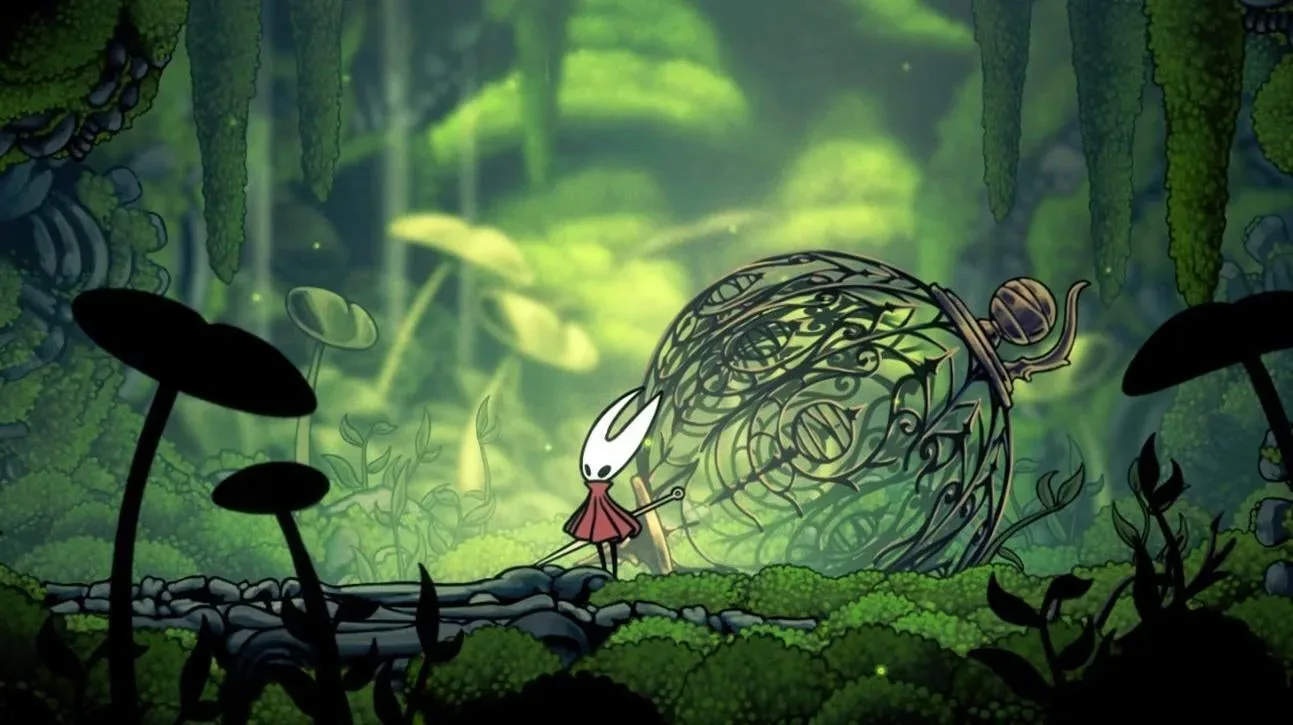
Hollow Knight: Silksong may be a success story for Team Cherry and players looking for a substantial game at a modest price, but its $20 launch price has also become a complicated benchmark for the wider indie market. For studios making metroidvanias, roguelikes, and other games that compete for the same audience on Steam, the decision has intensified an old and difficult question: how much can a smaller developer reasonably charge when one of the genre's biggest names is offering so much for comparatively little?
Pricing specialist Cassia Curran has voiced frustration with the number Team Cherry chose. In comments given during an interview about game pricing, Curran said that Hollow Knight "kind of annoyed" her, explaining that she had hoped the sequel would cost more. In her view, a $24.99 price point could have made a meaningful difference for studios creating games in a similar space.
The concern is not that Silksong is poor value. Quite the opposite: its value proposition is precisely why the price has become so influential. Team Cherry reportedly raised the price only $5 from the original Hollow Knight, which debuted at $15 in 2017. That comparatively small increase came despite a roughly seven-year production cycle, higher production values, and a single-player campaign said to run about 30 hours. As one of Steam's most popular games in 2025 and a game-of-the-year contender alongside much larger productions, Silksong has the visibility to reshape customer expectations far beyond its own sales.
A benchmark that is hard to match
Players often evaluate prices through direct comparisons rather than through a studio's budgets, staffing levels, development timelines, or financial needs. When a shopper sees a $20 game with a recognizable name, lavishly made environments, lengthy exploration, and extensive replay value, another $25 or $30 metroidvania can immediately face tougher questions. Does it look as polished? Is it as big? Does it have as much content? And, perhaps unfairly, why does it cost more?
For useful background on this topic, read Star Wars: Galactic Racer update Expands Online Parties to Six Players.
Those comparisons are especially punishing because the studios involved may be operating under very different conditions. A team's previous success can provide resources, an established audience, and flexibility that a newer developer simply does not have. A price that makes sense for one project may be impossible for another project to sustain. Yet Steam customers generally encounter products side by side, with their listed price, screenshots, trailers, tags, user reviews, and sale history all visible in the same storefront.
Curran maintains a tool intended to help developers examine successful pricing models on Valve's platform. Her approach emphasizes comparing a game with its closest market rivals. That process can expose a difficult commercial reality: if a developer cannot explain why its own roguelike, metroidvania, or other genre entry merits a higher price than the most successful competing games, the market may resist the increase. The strongest rivals can effectively establish a ceiling, even when their own pricing is unusually low for the amount of work involved.
That ceiling is not a formal rule, and players do sometimes pay a premium for a distinctive art style, a trusted developer, major technical ambition, a popular license, or a clearly differentiated design. But indies do not always have those advantages. For games with similar visual presentation, similar genre labels, and similarly sized teams, a low-priced hit can become the comparison customers return to again and again.
Downward pressure across crowded genres
Curran described substantial downward pricing pressure, particularly amid the rise of what she called "friendslop," a term commonly used for the growing wave of inexpensive, social, streamer-friendly games. These releases can be designed around quick group play and online attention, and their pricing can further condition audiences to expect low barriers to entry. The effect does not stay neatly contained within one type of game. A customer with a limited entertainment budget may compare a cooperative viral sensation, a long single-player adventure, and a niche retro-inspired title even if they offer entirely different experiences.
Steam's enormous volume of releases compounds the issue. Thousands of games arrive on the store every year, making visibility a serious hurdle before price is even considered. A game that launches at a higher figure may need to communicate its value instantly, because many potential buyers will move on rather than spend time learning why it costs more than neighboring releases. Discounts can help over time, but relying on steep sales shortly after launch can carry its own risks, including weaker revenue per sale and the expectation that a game will soon be cheaper.
For smaller teams, this is a balancing act rather than a simple race to the bottom. A low launch price can encourage impulse purchases, build a larger player base, and create positive word of mouth. It may also be a deliberate strategy for a studio that wants a game to reach the broadest possible audience. But the same decision can leave less money available to cover development, support, localization, ports, updates, or future projects. The challenge is that consumers may see only the sticker price, while developers have to account for every cost behind it.
Recent releases show the risk of asking more
Recent retro-styled releases illustrate how sensitive Steam audiences can be to a game's price. Tribute Games' Scott Pilgrim EX, a pixel-art beat-'em-up inspired by River City Ransom, launched at $30. Despite being generally well regarded as a modern homage to that style of action game, the price drew objections from some Steam users and its platform sales struggled.
The response was a reminder that a beloved property or positive reception does not automatically settle the pricing debate. Pixel art can be artistically demanding and can require an enormous amount of skilled work, but a portion of the audience still associates the aesthetic with smaller and cheaper games. That assumption can put retro projects in a particularly awkward position: they must persuade buyers that visual simplicity is an intentional style, not evidence that the game should be priced beneath its peers.
Months later, Yacht Club Games released Mina the Hollower, another retro-flavored adventure, at $20. That lower price appeared to find a more favorable response. It does not prove that $20 is the ideal number for every pixel-art adventure, nor does it reveal every factor behind each game's commercial performance. Marketing, brand recognition, timing, genre appeal, reviews, and the quality of the final product all matter. Still, the contrasting examples show why studios are watching prominent prices so closely.
AI concerns make differentiation even harder
Pricing pressure is arriving alongside another concern for developers: the proliferation of low-effort releases and games made or accelerated with generative AI tools. Curran's broader warning is that a storefront already crowded with new titles could become still harder to navigate if creators can rapidly produce lookalike projects. A legitimate independent game may have taken years of experimentation, art production, engineering, testing, and refinement. A superficially similar rival may be assembled far more quickly, then placed in front of the same customers at a lower price.
The threat is not only direct imitation. When shoppers feel overwhelmed by an endless flow of difficult-to-distinguish games, they may become more cautious about buying anything unfamiliar. That makes brand recognition and early visibility more important, while making price comparisons more ruthless. It can also make it harder for buyers to identify which releases represent carefully made original work and which do not.
That anxiety has already contributed to some studios stepping away from open playtests and free Steam demos. Demos have traditionally been a valuable way to gather feedback, build community interest, and prove that a game plays well. But revealing a concept early can also give opportunistic competitors time to copy its visible ideas and ship a rival quickly. Developers are therefore forced to weigh the promotional benefit of showing work early against the risk of exposing it in an increasingly crowded market.
Silksong's value is both a win and a warning
None of this means Team Cherry was wrong to price Hollow Knight: Silksong at $20. For players, an ambitious and lengthy game at that price is plainly appealing. A lower price can broaden access, generate goodwill, and help a game reach an audience that might hesitate at $30 or more. Silksong's success demonstrates that strategy can work spectacularly well when paired with enormous anticipation and a product that audiences see as exceptional.
But an individual studio's consumer-friendly decision can still have wider consequences. For independent developers without the same history, audience, or financial cushion, matching that price may be difficult. Charging more may be commercially necessary, yet explaining that necessity to an audience conditioned by high-value outliers is becoming harder.
Silksong has not created Steam's pricing problems on its own. The store was already dense with competition, customer expectations were already sensitive, and new AI-related concerns were already emerging. What the game has done is provide an unusually visible example of a major genre release offering a great deal at $20. For indie teams planning their next project, that is a remarkable achievement to admire--and a formidable price tag to compete against.
Community
Discussion
Start the conversation.
No comments have been posted yet.