

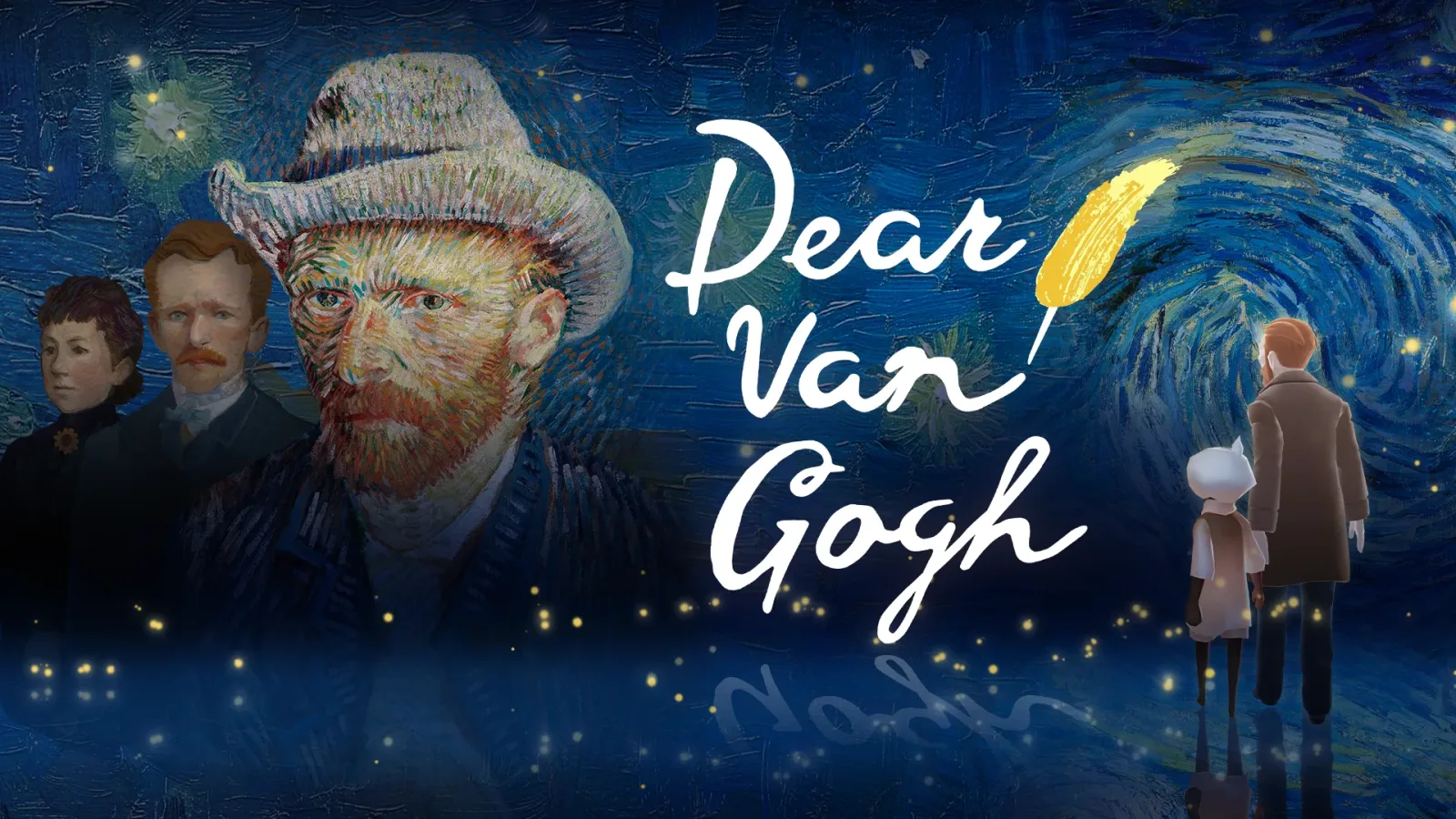
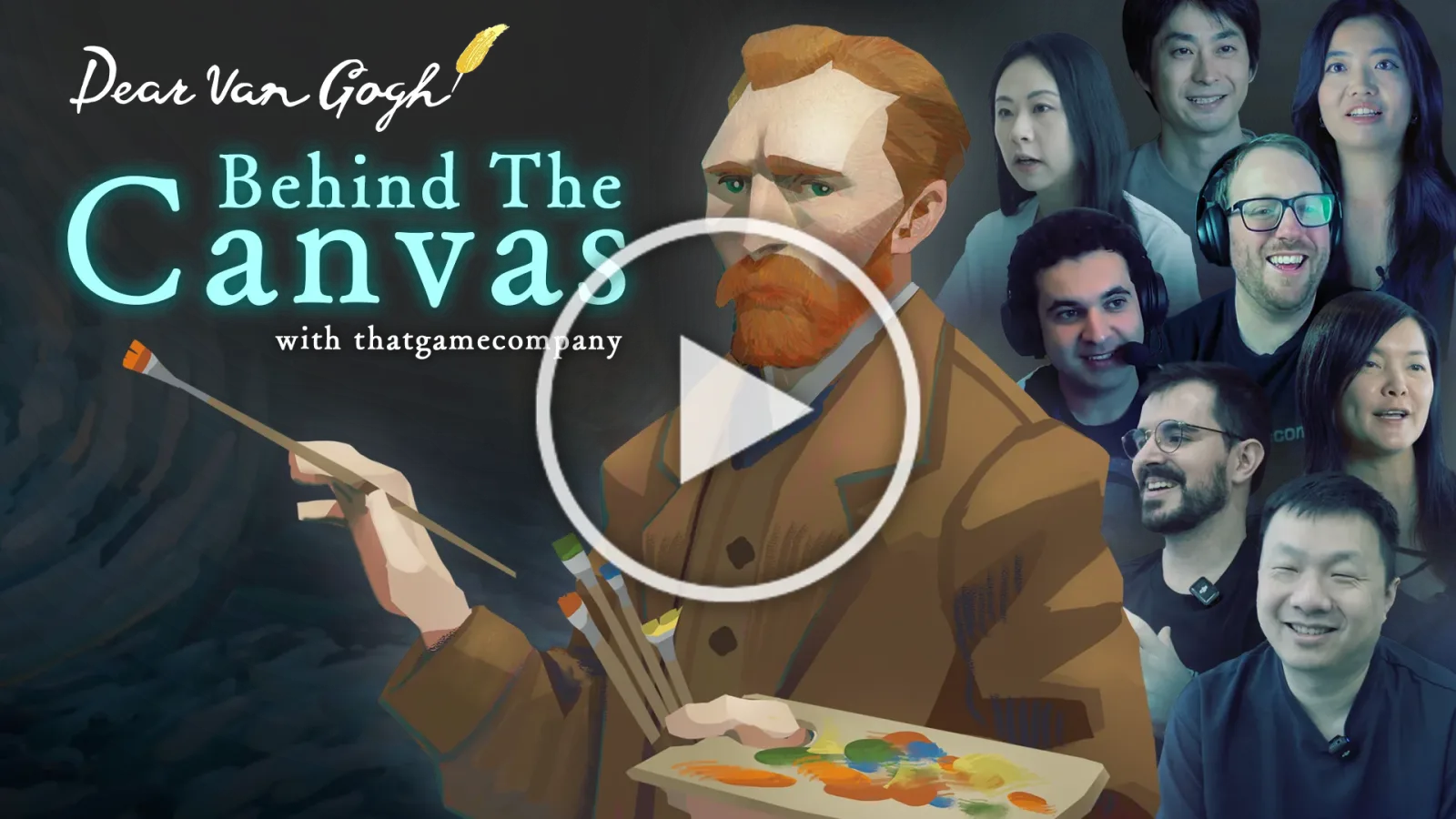
thatgamecompany has released a new behind-the-scenes video focused on Dear Van Gogh, the interactive standalone experience available within Sky: Children of the Light. Running for roughly five minutes, the feature offers a closer look at the creative process behind a project that turns the visual language associated with Vincent van Gogh into a space players can move through, explore and share with others.
The video examines several sides of the production, including art direction, music, player movement and game design. It also outlines the research that helped shape the experience's emotional foundation. Rather than approaching Van Gogh only as a celebrated painter, the team drew from the correspondence between Vincent, his brother Theo and Theo's wife Johanna. Those letters helped guide a story centered on family, care, commitment and the people who supported an artist through difficult periods of his life.
Dear Van Gogh launched on July 17 as an experience inside Sky: Children of the Light. The broader game is free to play on iOS, Android, PC through Steam, PlayStation and Nintendo Switch.
From famous paintings to explorable 3D spaces
Van Gogh's paintings have a visual identity that is immediately recognizable even to people who do not know individual works by name. Thick, expressive marks, intense color, swirling skies and landscapes that seem to pulse with motion have made his work an enduring point of reference throughout art, film and games. Translating that sensibility to an interactive 3D setting, however, involves more than applying brushstroke-like textures to a conventional game environment.
For useful background on this topic, read Infinity: HexaDome Tactics Brings Deterministic Arena Strategy to Steam.
The new video details how the team sought to interpret Van Gogh's approach in worlds built for players to inhabit. That distinction matters. A painting controls the viewer's position, framing and pace, while a game must account for movement, camera angles, interaction and the presence of other players. In a social game such as Sky, a space also needs to preserve its mood when people arrive together, drift apart or choose to linger in silence.
The development work behind Dear Van Gogh therefore reaches beyond visual imitation. The project's art direction, music and movement systems were designed to support an interpretation of the painter's world rather than a static gallery of familiar images. The result is intended as a journey that players can experience directly, with the game's own language of flight, exploration and shared presence shaping how the tribute is encountered.
That approach fits Sky: Children of the Light, which has built its identity around calm social interaction and atmospheric exploration. Its players communicate in ways that often prioritize gestures, companionship and cooperation over traditional competitive play. A Van Gogh-focused experience inside that framework has the opportunity to make an art-inspired setting feel less like an exhibit and more like a place for reflection.
For another perspective on this story, read Sky: Children of the Light's Dear Van Gogh Video Explains How a Painter's World Became a 3D Journey.
The letters behind the story
One of the most important themes highlighted in the video is the relationship between Vincent van Gogh and his family. The team was inspired by the letters exchanged among Vincent, Theo and Johanna, using that material to frame a tale about familial bonds and sustained dedication. This is an especially significant choice because Van Gogh's public image is often narrowed to his paintings and personal suffering, leaving little room for the relationships that influenced and supported his work.
Jenova Chen, CEO and creative director of thatgamecompany, described an immediate emotional response to reading the correspondence. He said the letters brought attention to a painter's story that also recognizes "unconditional, unsung heroes." The idea points directly to the people around Vincent whose encouragement and efforts mattered, even if they are less widely remembered than the artist himself.
"Reading the letters [between Vincent and Theo], I immediately started to cry to hear a story about a painter that focuses on these unconditional, unsung heroes," Chen said.
The inclusion of Johanna is also notable. Theo's wife played a crucial role in preserving, organizing and promoting Vincent's body of work after the deaths of both brothers. A project exploring Van Gogh's legacy through relationships has room to recognize that artistic history is not made by one person in isolation. It can also be sustained by relatives, friends, advocates and caretakers whose labor determines what survives and how it is remembered.
For an interactive work in Sky, that theme naturally intersects with the game's emphasis on connection. Players commonly travel in groups, guide one another through areas and form temporary or lasting bonds through small acts of assistance. While Dear Van Gogh is rooted in a specific historical figure, its focus on support and companionship aligns with the social values already embedded in the wider game.
Addressing a life marked by hardship
The behind-the-scenes feature also addresses the challenge of engaging with Vincent van Gogh's mental illness and untimely death while still celebrating his art. It is a difficult balance for any creative adaptation. Van Gogh's struggles are frequently treated as shorthand for a romanticized image of the tortured genius, an approach that can flatten both the person and the wider network of people in his life.
thatgamecompany's stated goal was not to ignore those painful parts of his history, but to navigate them alongside the beauty, persistence and humanity found in his art and letters. The project's family-centered framing provides a way to acknowledge hardship without making it the sole lens through which players are asked to understand Van Gogh.
This perspective may be particularly valuable in an experience built around participation instead of passive observation. Players are not simply reading a summary of an artist's life beside a painting. They are moving through an interpretation shaped by color, sound, space and the company of others. That format can encourage emotional engagement, but it also raises the responsibility to handle real experiences with care. The new video positions that responsibility as part of the team's design work, not as something separate from it.
Chen also spoke about the possibility of games helping younger audiences reconnect with significant artists. "It was tremendous to see how our game can actually influence other younger generations to rediscover one of the greatest artists in the world," he said. In that sense, Dear Van Gogh is not only an artistic tribute; it is also an effort to make cultural history approachable through an interactive medium.
A standalone stop within Sky's ongoing world
Dear Van Gogh arrived on July 17 as a standalone experience inside Sky: Children of the Light, giving players a dedicated destination rather than merely a small visual reference or limited cosmetic crossover. Its release adds another example of how live, evolving games can host focused creative works that sit alongside their larger ongoing worlds.
Sky first released in July 2019 and has since exceeded 300 million downloads. Its scale gives projects such as Dear Van Gogh the potential to reach an audience that may not seek out art history through museums, books or classroom study. At the same time, the experience can offer established players something that builds on the game's familiar emotional vocabulary without requiring it to abandon its own identity.
The project's availability across mobile devices, PC, PlayStation and Nintendo Switch also makes its audience unusually broad for an interactive art experience. Players can enter through the platforms where they already play Sky, whether that means a phone, a console or Steam on PC. No separate release has been announced beyond its place within the free-to-play game.
Why the making-of video matters
Behind-the-scenes videos can often be promotional extras, but this one is especially useful because the nature of Dear Van Gogh is interpretive. It is not trying to reproduce a painting in a single fixed form. It is translating a painter's style, personal history and legacy into systems that require players to move, look, listen and connect. Explaining those choices gives the experience context that may not be obvious from its imagery alone.
It also reinforces a broader point about games as a medium for cultural interpretation. Interactive projects can introduce audiences to art, literature and history, but their strongest work generally comes from engaging with the material's complexity instead of using famous names as decoration. By foregrounding Van Gogh's letters, his relationships and the care taken around his mental health, the team's account suggests that Dear Van Gogh aims for a fuller view of the artist than a collection of recognizable visual motifs.
For players already traveling through the world of Sky: Children of the Light, the new video offers a window into how that vision was assembled. For those unfamiliar with the game, it presents Dear Van Gogh as an example of a social interactive experience using game design to revisit a familiar artist from a more personal angle. The standalone journey is available now within Sky on iOS, Android, Steam, PlayStation and Nintendo Switch.
Community
Discussion
Start the conversation.
No comments have been posted yet.