

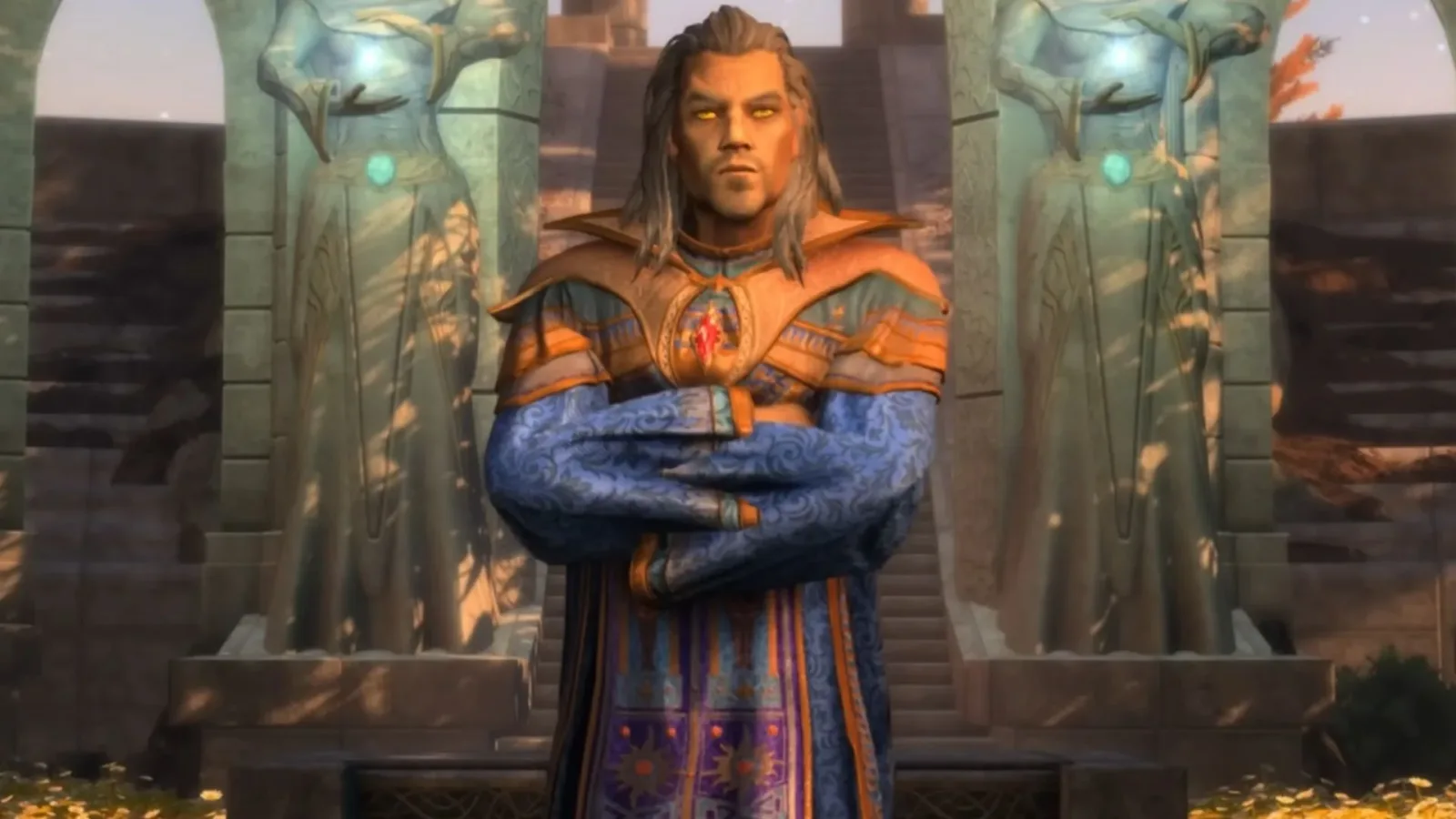
Skyblivion, the enormous volunteer-made project rebuilding The Elder Scrolls IV: Oblivion within The Elder Scrolls V: Skyrim, is facing a new obstacle as it moves through its long-awaited final stretch. Project lead Rebelzize has publicly addressed a dispute with a former volunteer contributor, saying the situation has escalated into legal threats and a potential damages claim exceeding EUR30,000.
The development team says it has already removed the former contributor's code and rebuilt the affected system from the ground up. However, the matter remains unresolved, and Skyblivion is now asking for assistance from people with expertise in intellectual-property and GDPR law. With no current release date announced, the conflict adds another layer of uncertainty to one of PC modding's most ambitious and closely watched fan efforts.
A dispute over continued use and maintenance
In a video and accompanying explanation, Rebelzize said the disagreement began after the volunteer left Skyblivion. The team subsequently discussed whether and how the project could continue using and maintaining work the contributor had created while part of the wider volunteer group.
The core issue, as described by Rebelzize, concerns the team's decompilation of elements of that work. Skyblivion says it took that step because access to the original source-code repository had been revoked, leaving the remaining developers needing a way to preserve functionality and correct problems in systems already integrated into the mod.
For useful background on this topic, read Estella Updates Steam Demo With New Songs and 32-Player Multiplayer Preview.
Decompilation, broadly speaking, can involve examining compiled software in order to understand how it works. In a major mod with many interconnected features, a lost or inaccessible code repository can be a serious maintenance problem. A team may be unable to identify bugs, make compatible changes elsewhere, or keep a feature operational without understanding the code that is already present.
That technical concern sits at the center of the Skyblivion team's account. The former contributor objected to the decompilation, while the project maintains it was necessary for maintenance after repository access was withdrawn. As with any dispute involving code ownership, permissions, privacy, and volunteer contributions, the exact legal implications can depend heavily on the agreements in place, the jurisdictions involved, and the specific material at issue.
Skyblivion says it removed the disputed work
Rather than continue using the contributor's work while the disagreement intensified, Skyblivion says it opted to remove that code entirely. The team says it then rebuilt and improved the associated system independently, framing the decision as an attempt to protect the project's volunteers and provide a clean break.
That is an important distinction for a project of Skyblivion's scale. It is not a small cosmetic mod maintained by one or two people; it is a years-long conversion effort involving a large number of people working across environments, quests, assets, gameplay systems, voice work, world design, quality assurance, and technical support. Replacing an integrated feature can mean more than writing new code. It can require testing it against other mechanics, revising documentation, fixing new edge cases, and making sure it functions properly throughout a vast game world.
Rebelzize characterized the situation as running against the collaborative ethos that allows volunteer projects to exist. The team's position is that a contributor should not be able to disrupt a massive shared undertaking by departing and then preventing maintenance of work that had already become part of it. At the same time, the disagreement illustrates why long-running mod projects can encounter difficult questions about individual contributions, access controls, authorship, and what happens when volunteers leave.
Personal-data requests raised further concern
Skyblivion says the former volunteer later issued legal threats that included demands for the real names and home addresses of several other people on the team. Rebelzize said the group would not hand over that information, particularly because it does not personally know the individual making the request.
The team has described those demands as disproportionate. In its public statement, it also said the threats continued even after the contributor's work had been removed from the project. The former volunteer was not named publicly, with Rebelzize explicitly saying that the team did not want to encourage harassment or an online pile-on.
That restraint matters in a community dispute where public attention can quickly turn into targeted abuse. Fans may have strong feelings about delays to a project they have followed for years, but the people involved are volunteers and private individuals. The team's decision not to identify the former contributor leaves many details unavailable to the public, and the contributor's own account of the dispute was not included in the statement. Until more information emerges through a formal legal process or direct public response, the matter remains a one-sided description from Skyblivion's leadership.
GDPR considerations may be especially relevant to the alleged requests for names and home addresses. The EU's General Data Protection Regulation governs the collection and handling of personal data, although its application to any particular disclosure request is fact-specific. Skyblivion is seeking specialist guidance rather than presenting a final legal conclusion of its own.
A EUR30,000-plus claim and a call for legal expertise
According to Rebelzize, the former volunteer is pursuing damages of more than EUR30,000. No court ruling, filed judgment, or final claim outcome has been detailed publicly in the team's update. The figure should therefore be understood as part of the ongoing dispute rather than an established award or confirmed liability.
For a volunteer project, even the prospect of that kind of claim can be daunting. The financial pressure is only one aspect: legal correspondence, document preservation, access-control records, contribution histories, and questions surrounding code provenance can all consume time and energy that would otherwise go toward development. It may also place added stress on volunteers who joined a fan project expecting to work creatively rather than navigate legal disputes.
Skyblivion has asked people with relevant knowledge of IP and GDPR law to get in touch through its official channels. That appeal suggests the team is looking to make sure its response is properly informed before the matter progresses further. It also underlines the increasingly professional challenges faced by fan projects that grow large enough to attract significant attention, build complex software, and rely on contributions from many different people over more than a decade.
Why the dispute matters for Skyblivion's future
Skyblivion has been in development for roughly 14 years and aims to let players experience the world of Oblivion through the technology and framework of Skyrim. It is a total-conversion-style mod rather than a conventional commercial remake, with the team recreating Cyrodiil, its quests, environments, dungeons, assets, and systems for Bethesda's later Elder Scrolls engine.
The project has repeatedly demonstrated substantial progress, generating anticipation among players who want to revisit Oblivion with a newer visual foundation and a modernized technical base. Last year, expectations were building that a release might be approaching. That momentum makes the new legal complication especially frustrating for fans, even if the team has not said that work has stopped.
There is no new launch window in the update, and it would be premature to assume that the dispute necessarily means a major delay. Skyblivion has said it rebuilt the relevant system, which may limit the direct technical effect of removing the contested contribution. But legal issues do not always follow a predictable development schedule, and the team has not offered a timetable for resolving the matter.
For now, the clearest takeaway is that Skyblivion remains an active project dealing with a serious internal fallout from a former contributor's departure. Its leaders say the disputed code is gone, replacement work has been completed, and legal help is being sought. Whether those steps will be enough to end the threatened action--and whether the situation affects the mod's eventual release plans--remains to be seen.
A broader lesson for ambitious mod teams
The situation is a reminder that passion projects benefit from clear structures even when everyone involved is volunteering. Source-code access, archival backups, contribution licenses, project governance, offboarding procedures, and privacy policies may sound like administrative concerns, but they can become critical when a contributor leaves or a disagreement emerges.
Modding thrives on collaboration, experimentation, and the willingness of enthusiasts to donate extraordinary amounts of time. Skyblivion is a prominent example of what that energy can achieve. Yet the same openness that makes such work possible can leave teams vulnerable if responsibilities and rights are not clearly documented from the start.
As the legal dispute develops, Skyblivion's community will be watching for clarity on its practical consequences. The team has emphasized its intention to safeguard volunteers and continue the project without the disputed work. For players awaiting a return to Cyrodiil, the hope will be that the rebuild and legal guidance allow development to continue without derailing a fan undertaking that has already endured for more than a decade.
Community
Discussion
Start the conversation.
No comments have been posted yet.