

Songs of Glimmerwick presents a particularly inviting version of magical education: one where arriving late to class is apparently never a disaster, where a flute matters more than a wand, and where an afternoon spent raising flowers or catching fish can feel just as worthwhile as pursuing the larger mystery. From the developer behind Eastshade, the game trades that earlier title's painterly island exploration for a fantasy-school setting, while retaining an interest in letting players discover a world at their own pace.
Its central appeal comes from the tension between structure and freedom. There is a school calendar, classes to attend, letters that announce upcoming events, and a plot that keeps moving as days pass. Yet the spaces between those obligations are strikingly open. The player can garden, brew potions, meet townspeople, explore the island, investigate strange landmarks, fish, or simply let the day go by. The game's schedule continues, but it does not seem interested in scolding players for choosing the quieter parts of campus life.
That makes Glimmerwick feel less like a game about optimizing a routine and more like one about settling into an unfamiliar place. It is a story-driven life sim, certainly, but one with enough room for aimlessness that the school can become a place to inhabit rather than merely a hub full of objectives.
A new student with a flute instead of a wand
The protagonist arrives on the island by boat without much of a plan, only to discover that their name is already listed among the students at the Etchery. The welcome is unusually generous: a local flutemaker provides the essential instrument, while nearby villagers help supply a uniform and school materials. It is the sort of sudden, storybook transition that suits a magical academy, though the game's premise has more beneath it than simple wish fulfillment.
For useful background on this topic, read The Standout Games of 2026 So Far: 36 Essential Picks Across Every Genre.
The player character has fled a rigid, fundamentalist environment and found themselves in a setting that appears to offer a very different way of living. The larger story seems interested in questions of zealotry, social rules, collective decision-making, and who gets to decide what a community should be. That thematic direction gives the otherwise gentle routine some weight.
There is a potential limitation in how the protagonist is framed. They are customizable and relatively neutral, which makes room for player projection, but their background sounds specific enough to invite more direct characterization. A person who has escaped an oppressive system and unexpectedly reached a more open magical community is inherently compelling. The game's premise raises the hope that it will continue exploring that history rather than leaving it as broad context for an avatar.
Every major skill has a musical pulse
The most distinctive idea in Songs of Glimmerwick is its music-based magic. Spells are learned by playing brief rhythm charts on the flute. Meeting a basic score threshold lets the player learn and cast a spell without needing to perform its complete chart every time. Stronger performances, however, improve the spell's effectiveness, giving the rhythm mechanic a reason to remain relevant after the initial lesson.
So far, much of that magic is practical. The player can enchant tools such as the hoe, pick, and axe to help clear brush and manage work around the garden. That makes spellcasting feel integrated into the everyday rhythms of farm-sim life rather than restricted to dramatic combat encounters. It also leaves room for future discoveries, especially around the many unusual locations around the school grounds that plainly seem to have magical purposes.
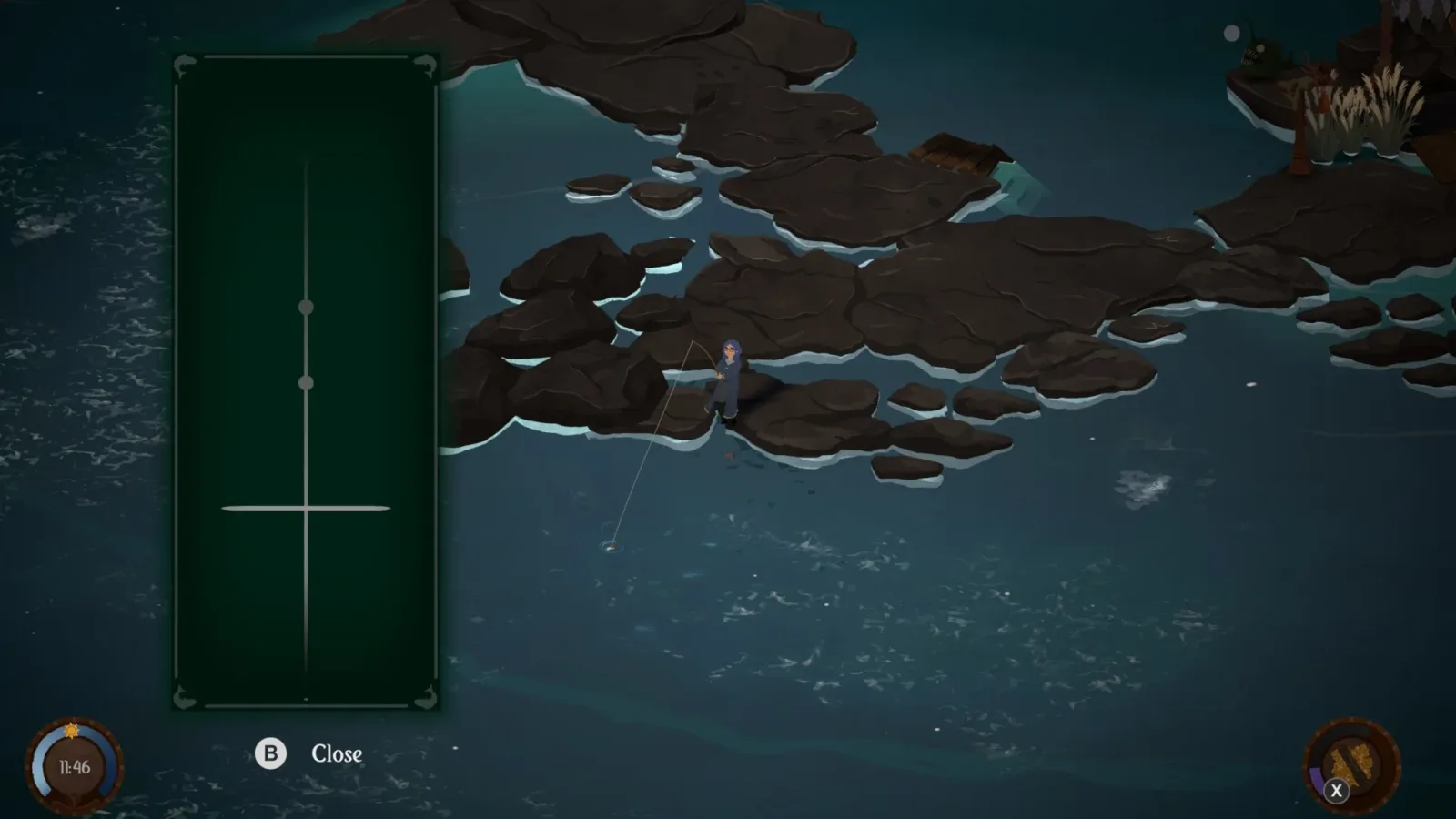
Other activities follow the same musical philosophy. Potion making takes the form of an ingredient-sorting activity, with better play resulting in more effective potions. Fishing is also built around rhythm, and individual fish appear to have their own melodies. It is an elegant fit for a game where magical study revolves around songs: even a familiar life-sim pastime becomes an extension of the setting's identity rather than a detached minigame.
That cohesion matters. Farming, fishing, crafting, and gathering can sometimes feel like expected genre obligations. Here, the shared emphasis on music helps turn them into parts of a single fantasy. The player is not merely collecting materials because every game needs resources; they are gradually learning how this island's magic works and applying it to daily problems.
Gardening supports both routine and discovery
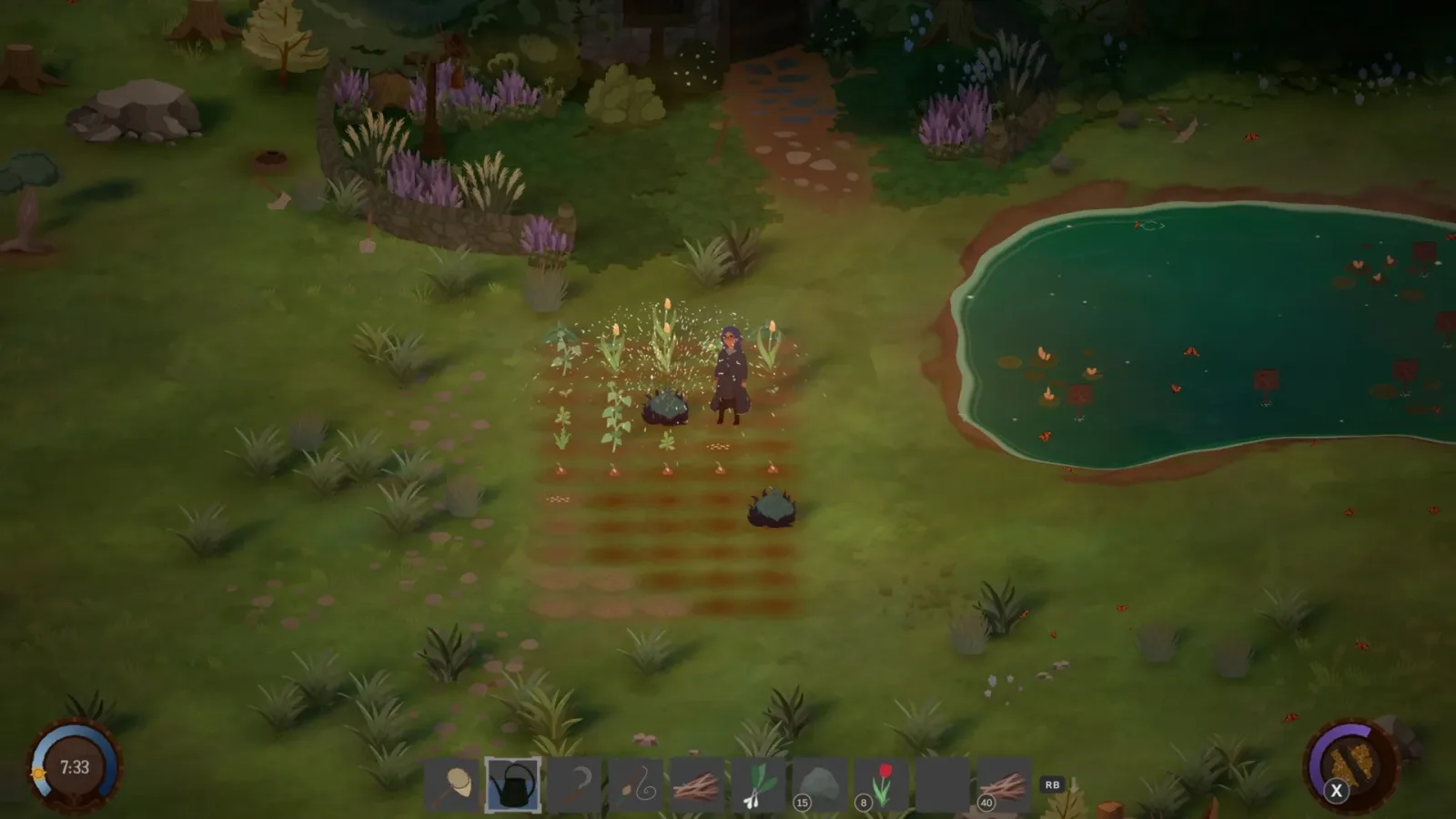
The campus garden is a major piece of that routine. Initially in poor condition, it becomes a long-term responsibility for the player, who can grow herbs such as basil and marjoram, cultivate several kinds of flowers, and even raise cranberries in a pond. Some harvests can be sold, while others are useful as potion components. Since people around town and at the school regularly need help with potions, tending the garden does more than generate money. It feeds into a network of small favors and discoveries.
A typical chain of events illustrates how naturally the game's systems can overlap. A cursed mill needs to be restored. Solving that issue requires a song that must be learned in the mountains. Reaching the mountains may mean getting past a massive tree root. A classmate has created a potion capable of reversing plant growth, but making it demands a particular flower. The required seeds can be planted, but the flowers need days to bloom. While waiting, the player might go fishing, play a tabletop campaign, investigate another path, or deal with school life.
There is no sense that the game demands this sequence be rushed. The obstacle is not just a locked door with a highlighted key on the other side. It becomes an excuse to engage with planting, conversations, shops, local geography, and experimentation. Even an errand involving a blueberry pastry for a ferry operator can become part of the island's peculiar social fabric.
A world without loud quest markers
One of Glimmerwick's most appealing choices is its resistance to constant direction. Characters do not stand around with oversized task indicators hovering above them. Conversations may lead to useful information, a favor, or nothing immediately actionable. Shops, side paths, and odd residents encourage curiosity without promising that every interaction will produce an efficiently tracked reward.
This design will not suit everyone. Players who want certainty that they have seen every event may find the lack of insistent signposting uncomfortable. It is not yet clear whether someone can reach the end of their school time without discovering every optional thread. For some, that possibility will feel like a reason to keep notes and investigate every corner. For others, it could create anxiety about overlooking content.
But the absence of an aggressive task list has another effect: it lowers the pressure to treat the island like a set of chores. If an interesting thread is missed, the game does not constantly wave that omission in front of the player. A day of growing flowers and listening for fish melodies can be enough. In a genre often built around maximizing each minute, that is a quietly radical attitude.
The main story still moves forward as calendar pages turn, including scheduled classes and unsettling events such as pamphlets appearing around the halls advocating the destruction of the forest. Yet class time pauses and waits for the player rather than punishing them for taking the scenic route. The rhythm is deliberately relaxed: the narrative has momentum, but the player's immediate attention remains their own.
A beautiful school that may need stronger personalities
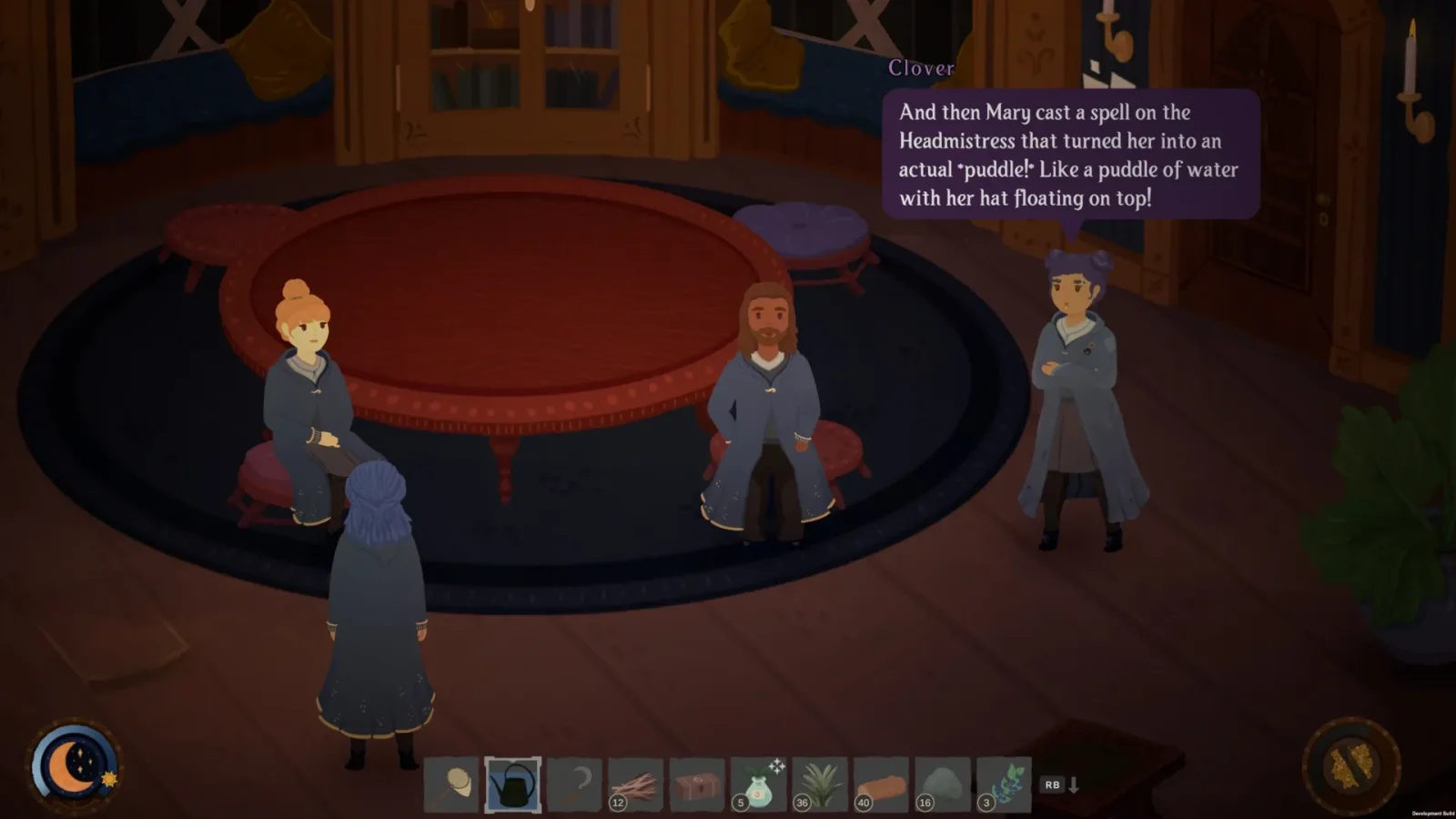
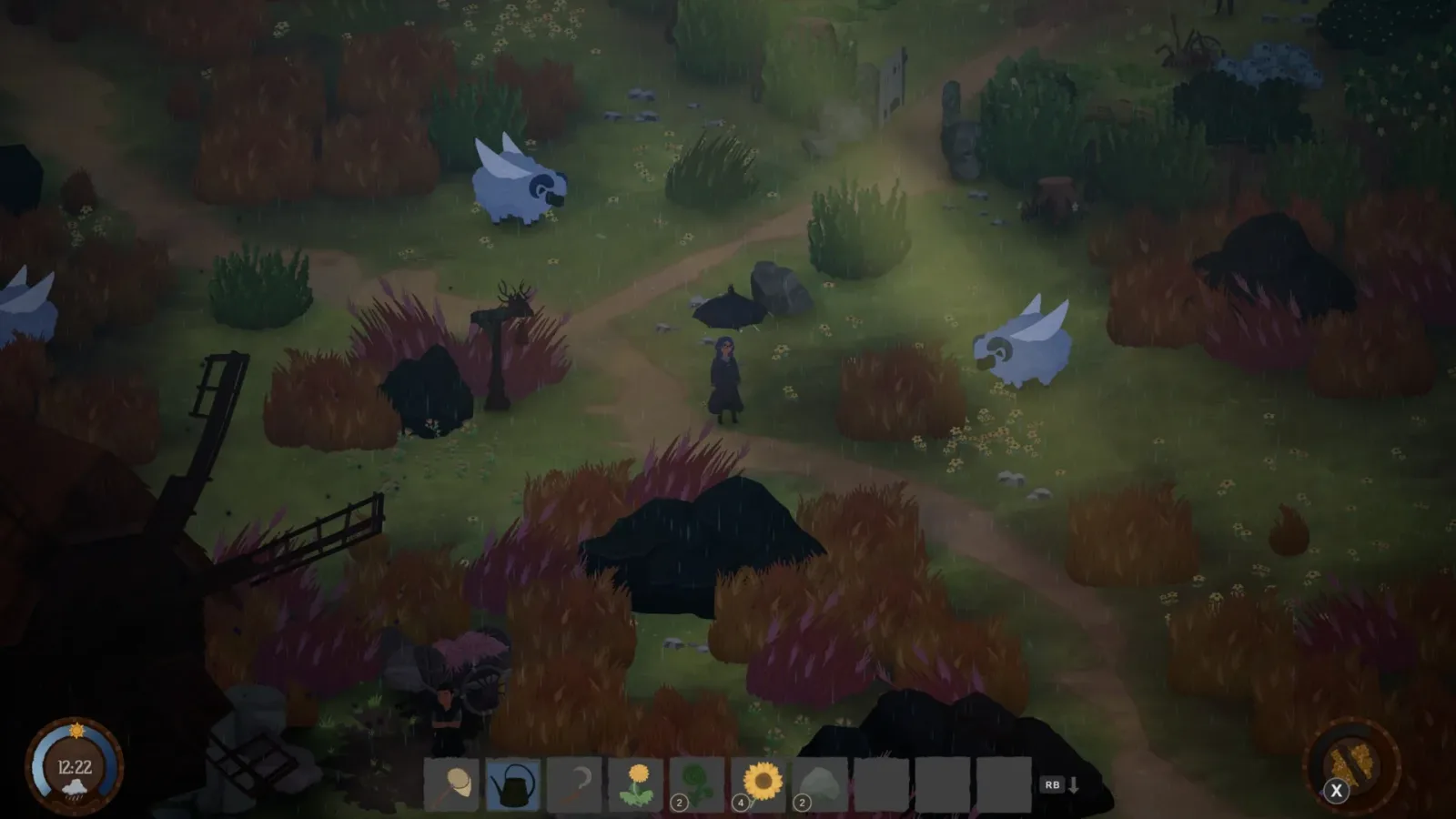
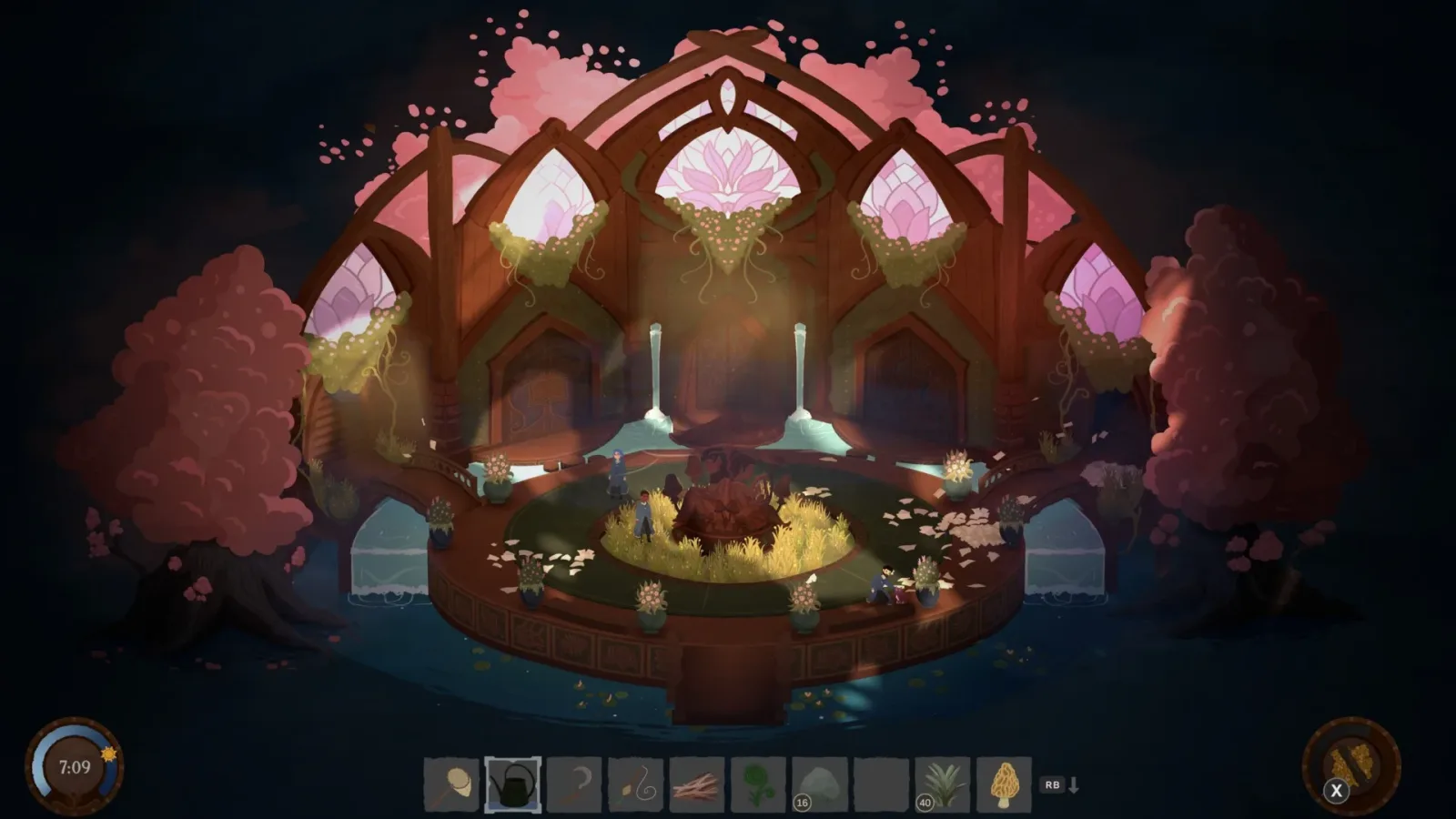
Visually, the game's world is a clear strength. Like Eastshade, it emphasizes an attractive fantasy landscape and an island worth learning piece by piece. The camera is pulled back to show that scenery, though this comes with a tradeoff: it can make characters harder to identify at a glance, especially when many students wear similar uniforms.
That visual distance may contribute to a cast that, at least early on, does not always leave a powerful impression. There are exceptions. A fish person enthusiastically experiencing life on land, including kimchi, has an immediately memorable premise. A roommate who destroys a fireplace on the first day and expects someone else to solve the problem has a more irritating kind of distinction. Still, many of the school's principal figures may need more development if the Etchery is to feel as emotionally vivid as its landscape looks.
The academy itself also initially seems modest for a supposedly premier institution of magic. Of course, magical schools are rarely as small as they first appear. Hidden spaces, inaccessible routes, and mysterious landmarks suggest there is more waiting to be uncovered.
The pleasure of being late, safely
Songs of Glimmerwick's best quality may be its faith that players can create their own relationship with its world. It has a plot, coursework, magical techniques, cultivation systems, and plenty of mysteries. But it also makes room for a player to spend a day in the woods, pick mushrooms, improve a garden, or play the flute without feeling that they have failed to play correctly.
That approach echoes the sense of place that made Eastshade memorable, even though the two games pursue different fantasies. This is not simply an exploration game set on an island. It is a magical-school life sim with routines and responsibilities. Yet it understands that the charm of such a school is not just earning spells or advancing the semester. It is having the time to wander between obligations and discover what kind of student, gardener, potion maker, or fisher the player wants to be.
Community
Discussion
Start the conversation.
No comments have been posted yet.