

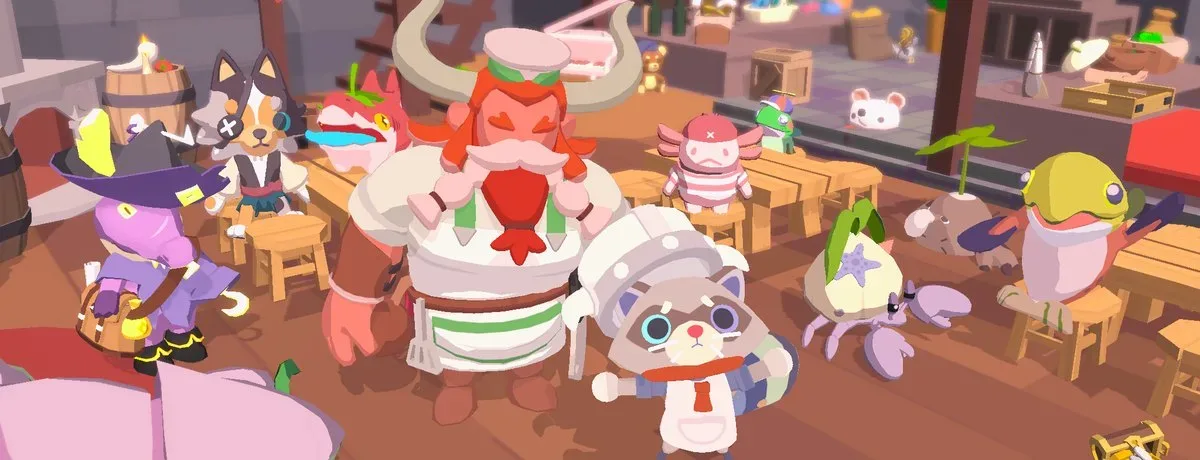
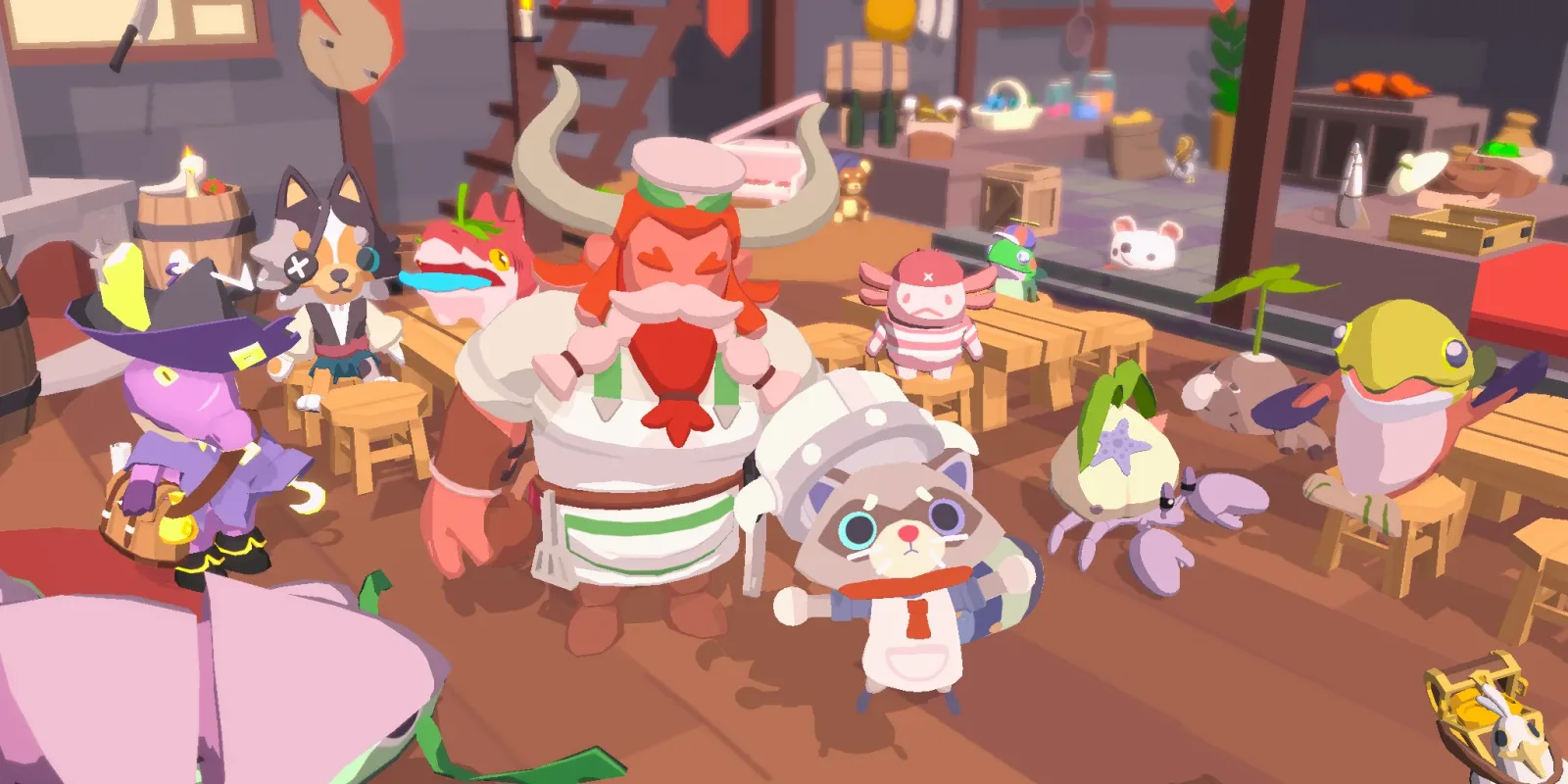
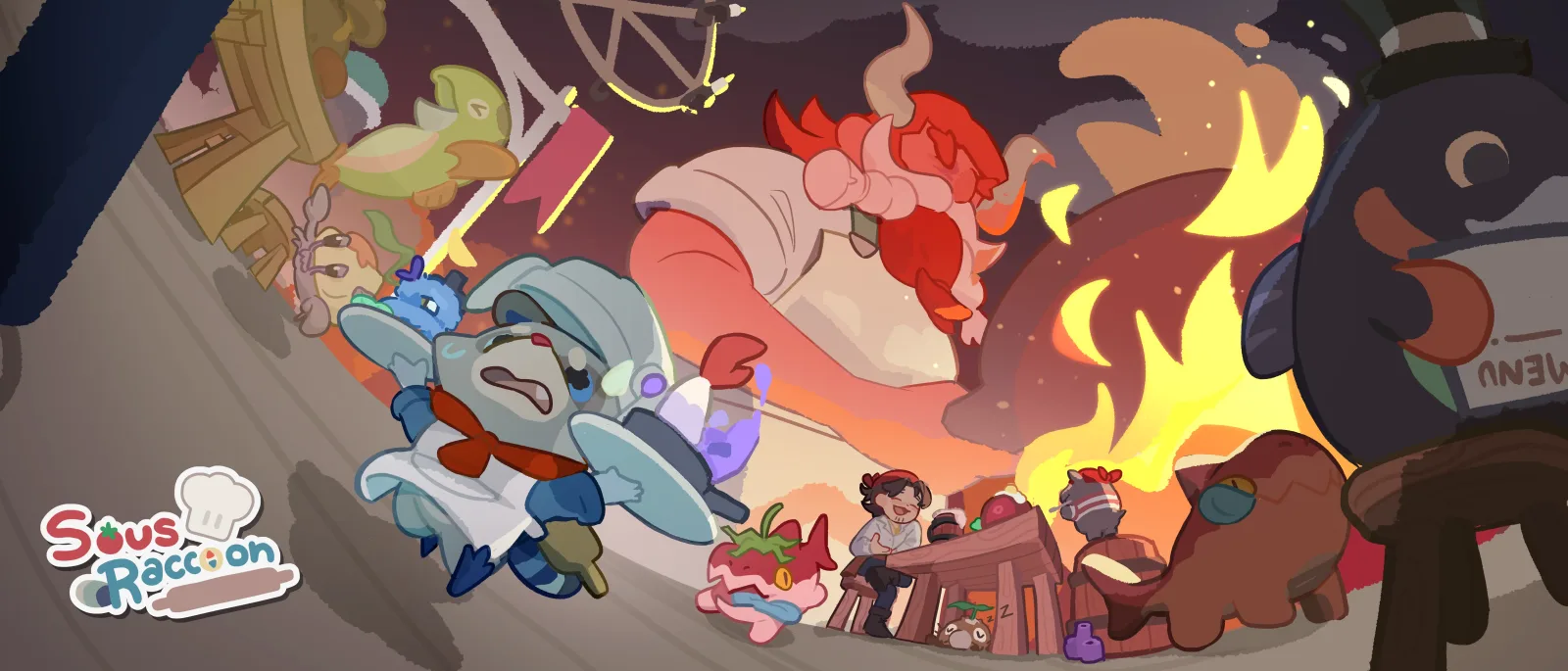
Sous Raccoon has officially left Early Access and launched in version 1.0 on Steam. The cooking roguelite from Novice Flow puts players in the paws of Elmo, a raccoon thief who has traded a life of stealing for a far more immediately dangerous job: serving as sous chef for a boss with a notably short fuse.
The full release expands the game with a new Endless Mode, a previously concealed final boss, a social lobby bar containing three competitive minigames, 13 additional character skins, personal player rooms, and further work on online co-op and controller support. The core premise remains delightfully unruly: prepare meals, fulfil customer orders, fight off monsters and somehow make it to the end of the shift before the kitchen's many overlapping disasters become too much to manage.
With the 1.0 update, Sous Raccoon is presenting a more complete version of its co-op kitchen chaos, including support for as many as four players online. That means a restaurant shift can be divided among a full crew of raccoons, with players choosing how to distribute cooking, serving and monster-fighting duties. It also means there are considerably more opportunities for plans to collapse at precisely the worst possible moment.
Endless Mode Turns Every Shift Into a Score Chase
One of the headline additions in version 1.0 is Endless Mode. Rather than moving toward a conventional finish line, this mode asks players to keep the restaurant operating for as long as possible. The escalating structure is built around increasing pressure: every passing day brings more customers into the restaurant as well as more monsters to contend with.
For useful background on this topic, read Slumber Realm Fan Art Contest Will Put Four Player Creations Inside the Game.
That combination should make Endless Mode a natural fit for players who enjoy pursuing efficient strategies under stress. A successful run is not simply about preparing a single difficult order. Players must maintain control as demands stack up, threats become harder to ignore and the kitchen's workflow is tested over a longer period. When a run finally comes to an end, the game provides a score summary and places the result on Steam leaderboards.
The leaderboard component gives the mode a clear competitive angle, whether players are looking to improve their own best score or compare their performance with the wider community. It is also an extension of the roguelite framework at the center of Sous Raccoon. Each run changes the restaurant, the upgrades available to the team and the type of chaos arriving through the door, so surviving longer is not only a matter of memorising a fixed layout or routine.
Instead, teams will need to react to changing conditions while deciding where their attention is most valuable. One player may be trying to keep dishes moving, another may be handling customers, and somebody else may be forced to deal with monsters before they overrun the restaurant. The pressure of deciding which emergency takes priority is likely to be as important as culinary speed.
A Final Boss Awaits at Stage 4
Version 1.0 also unveils the game's final boss. The encounter had been kept out of sight during the Early Access period, and it now appears at Stage 4. Novice Flow has not detailed the nature of the confrontation, preserving some surprise for players reaching that point in a run.
Its arrival is nevertheless significant for the full launch. A final boss gives the game's staged progression a defined late-game challenge, offering a target beyond merely enduring another shift. In a title where cooking and combat are intertwined, players will have to see how the skills developed during ordinary service translate when the game presents a larger threat.
The boss also complements Endless Mode by giving Sous Raccoon two distinct ways to measure success. Stage 4 provides a climactic obstacle within the standard progression, while Endless Mode is designed around longevity and high-score survival. Players who want an endpoint can pursue the boss, while those interested in extending a run can test just how long their kitchen operation can remain functional.
The Lobby Bar Adds Minigames for Solo and Co-Op Sessions
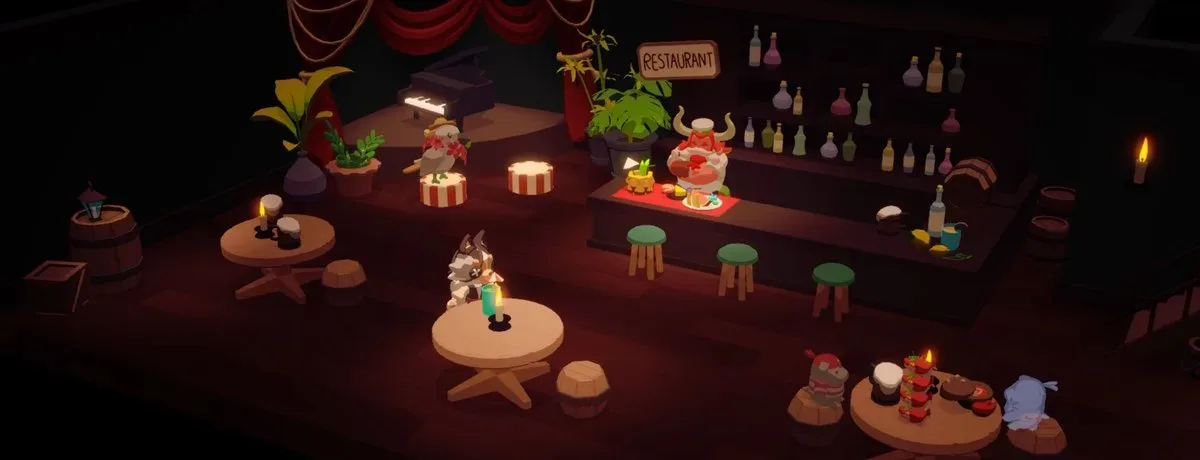
Outside the restaurant itself, the 1.0 release introduces a new lobby bar. This area includes three minigames: Mix Food, Tower Stack and Barrel Blast. Each one comes with its own leaderboard, making the bar more than a simple waiting area between runs.
The minigames can be played alone or in co-op. That makes them useful both for players dropping in by themselves and for groups gathering before they return to the main kitchen. While the restaurant mode asks teams to coordinate amid order queues and hostile monsters, the bar activities appear to provide a separate space for lighter competition and score chasing.
Dedicated leaderboards for all three games should give players another reason to revisit them, especially if a group wants a brief contest without committing to a full roguelite run. The addition also helps the lobby feel like a playable location rather than a purely functional menu space. For a game built around the personality of a raccoon restaurant crew, a bar full of small diversions is an appropriately mischievous fit.
More Skins, Personal Rooms and a Shifting Soundtrack
Players have more ways to customize their raccoons in the 1.0 update. Thirteen new skins have been added, bringing the total number of available skins to 21. Some of those unlocks are connected to Steam Achievements, giving achievement-focused players additional cosmetic goals alongside progression and leaderboard placements.
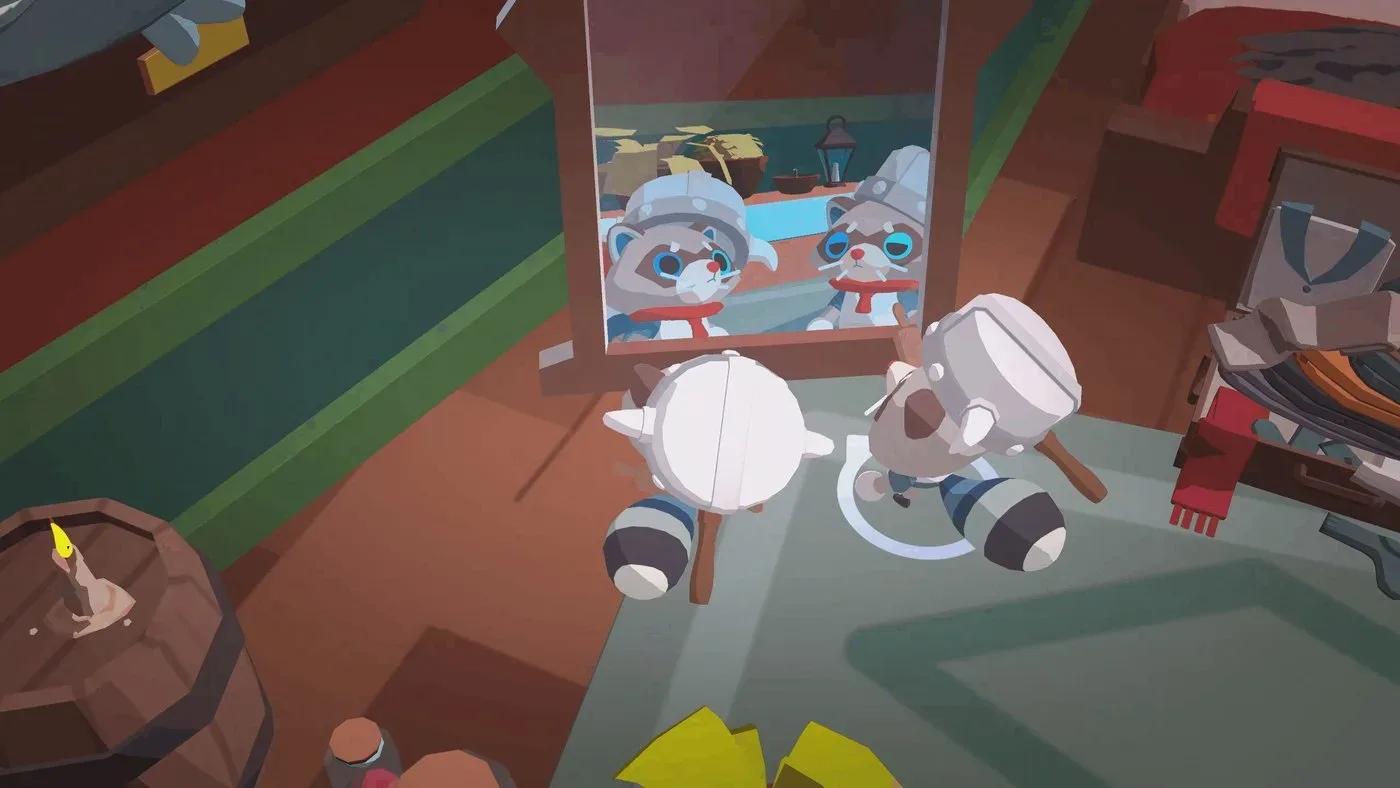
Another new feature is the addition of player rooms. These rooms allow players to purchase furniture and preview different styles and colours. Importantly for online groups, each co-op participant maintains their own room. This keeps personal customization individual even when the main game experience is shared with other players.
Personal spaces can be particularly welcome in a co-op game where much of the action is necessarily collective. The kitchen requires compromise, fast communication and shared responsibility; a player room offers a contrasting area where a raccoon can establish its own look. The furniture and visual-preview options give progression a cosmetic outlet without changing the frantic nature of the restaurant itself.
The release also adds a new soundtrack designed to shift between stages. Music that changes with progression can help distinguish each part of a run and reinforce the sense that the restaurant is moving into more dangerous territory. Since Sous Raccoon mixes cute animal characters with increasingly stressful kitchen survival, the stage-based soundtrack may be a useful part of selling those changes in intensity.
Online Co-Op and Controller Features Receive Further Attention
Online co-op for up to four players is a major part of the full release package. Four raccoons can work in the same kitchen, splitting tasks in whatever way seems most sensible at the time. In practice, that may mean assigning clear roles, constantly adapting to sudden trouble, or discovering that every player has independently decided somebody else was dealing with the monsters.
The 1.0 update includes a new co-op tutorial, which should help groups get familiar with the game's collaborative demands. That is an important addition in a game where the appeal comes partly from coordinated mayhem: newcomers need to understand the basics before the kitchen has become too crowded to think clearly.
Controller and interface polish is also part of the release. The update includes D-pad and stick menu navigation, along with Steam On-Screen Keyboard support. These refinements are accompanied by multiple fixes accumulated during Early Access. They may not be as flashy as a boss fight or a new mode, but they matter to the overall experience, especially for players using controllers or joining an online session with friends.
Early Access has allowed Sous Raccoon to build toward this broader package, and the 1.0 version brings together features aimed at several kinds of players: solo runners looking for leaderboard scores, groups wanting a four-player kitchen challenge, completionists collecting cosmetics, and players who simply want to spend time competing in the lobby bar.
A Raccoon Roguelite Built Around Kitchen Pressure
At its heart, Sous Raccoon is about managing the collision between hospitality work and monster survival. Elmo's new role as a sous chef is hardly a quiet career change. Every shift demands that players cook orders and serve customers while keeping hostile creatures under control long enough to finish the job.
The roguelite structure ensures that no two restaurant runs unfold in exactly the same way. Restaurant conditions, upgrades and incoming problems change from run to run, making adaptability central to success. The version 1.0 additions deepen that formula instead of replacing it: Endless Mode stretches the pressure indefinitely, the final boss provides a hidden capstone at Stage 4, and co-op gives up to four players the chance to turn a demanding kitchen into a collective rescue operation.
Sous Raccoon 1.0 is available now on Steam. For players eager for a cooking game where the biggest service problem may be a monster rather than a missing ingredient, the full release brings more reasons to don an apron, enter the kitchen and hope the raccoon team can survive another day.

Community
Discussion
Start the conversation.
No comments have been posted yet.