

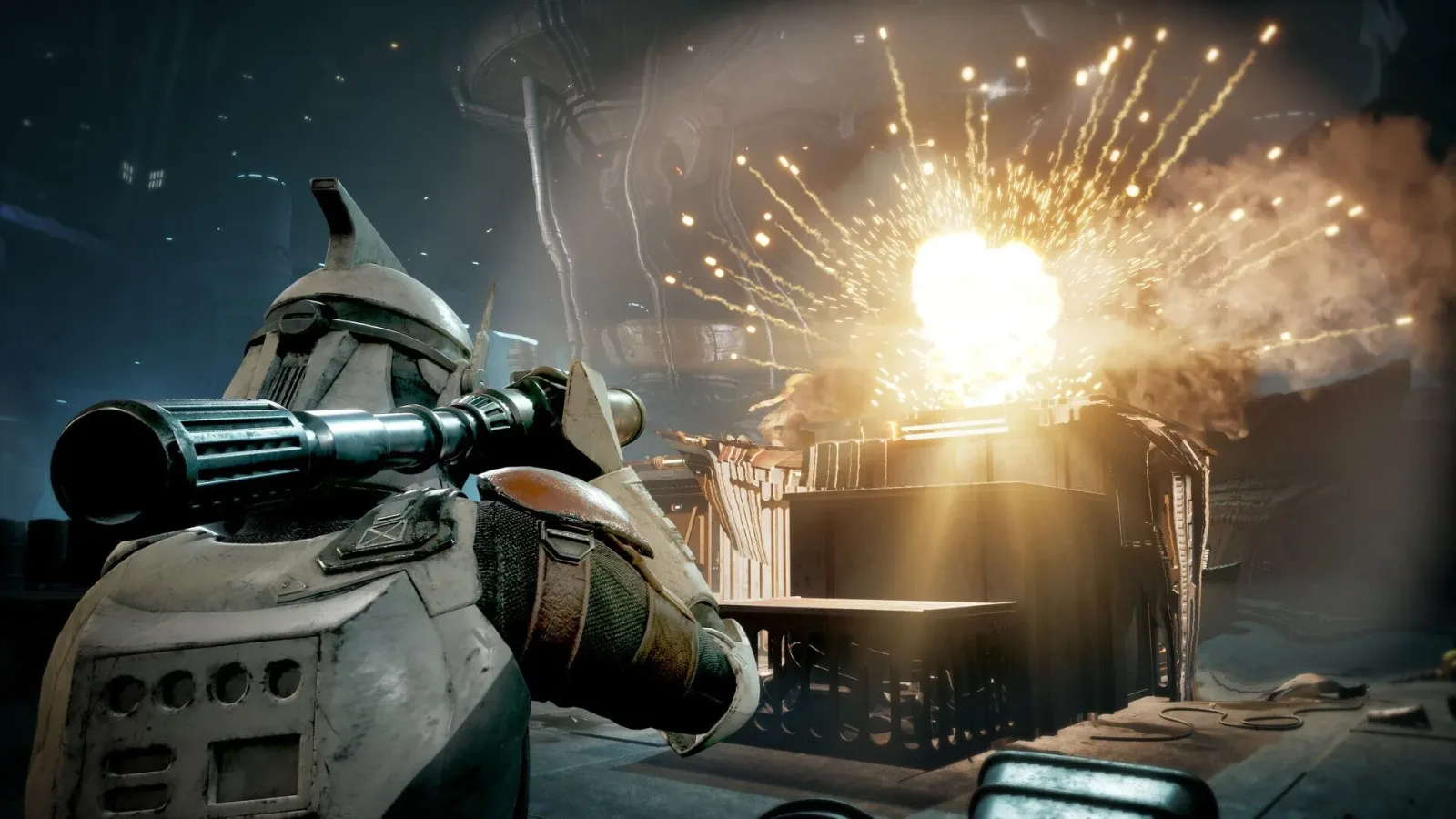
Star Wars Zero Company asks players to make the kind of difficult personnel decisions that turn-based tactics games are built around. Its operators can die permanently, and that prospect naturally encourages a cautious approach: preserve every squadmate, protect every recruit, and try to extract a full team from each battlefield. In practice, however, treating every operator as equally irreplaceable can make the campaign far more stressful than it needs to be.
There is a more practical way to approach Zero Company's losses. The game's custom operators are inexpensive, readily replaced, and surprisingly capable, which makes them ideal for the most dangerous assignments. Sending newer recruits into punishing secondary operations, using them to buy time during an objective rush, or leaving them behind during a desperate evacuation can preserve the authored members of the squad for the missions where they matter most.
It is an unsentimental strategy, but it suits both the mechanics and the tone of a Star Wars story focused on a scrappy military unit. Once players stop assuming that every deployment needs a flawless outcome, permadeath becomes less of a looming punishment and more of a resource-management tool.
Not Every Operator Carries the Same Stakes
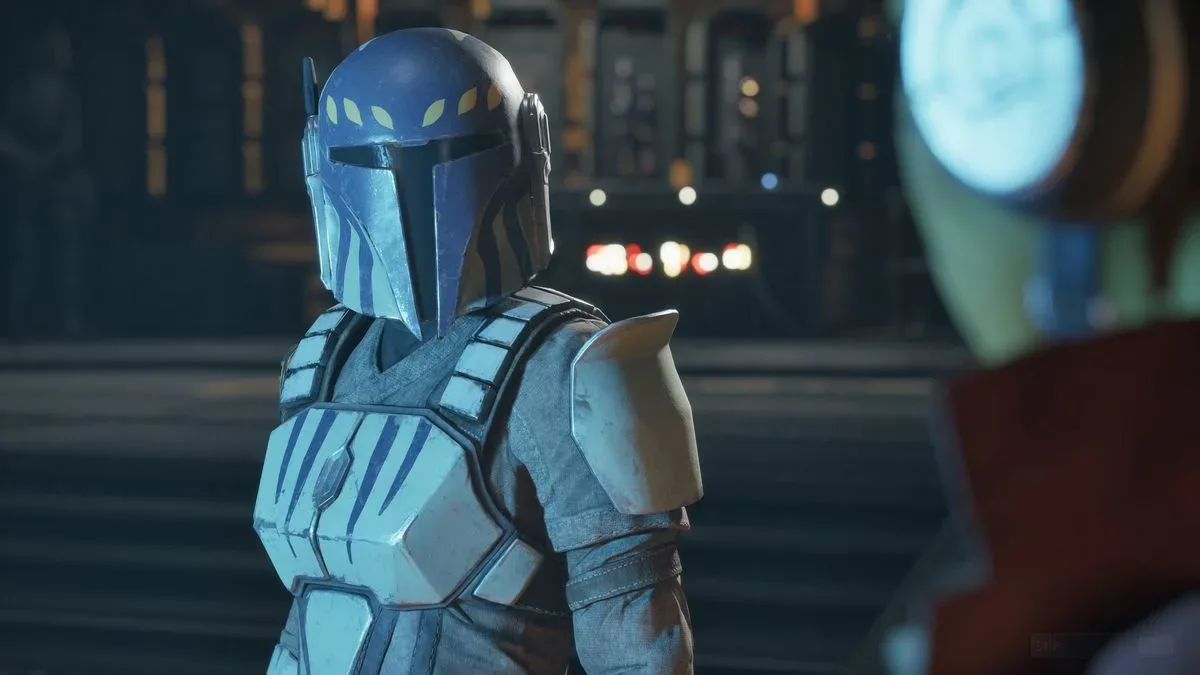
Zero Company allows players to build a squad around authored characters, but relying exclusively on those established members creates an obvious problem. Their loss is more painful because of their narrative presence, their distinctive abilities, and the time spent developing them. Some have especially potent passive effects that can shape an entire build. Jae, for example, can become a sharpshooter with a perk that enables one execution per turn.
For useful background on this topic, read Blizzard Says Battle.net Additions Are a Curated Strategy, Not a Steam-Style Store Expansion.
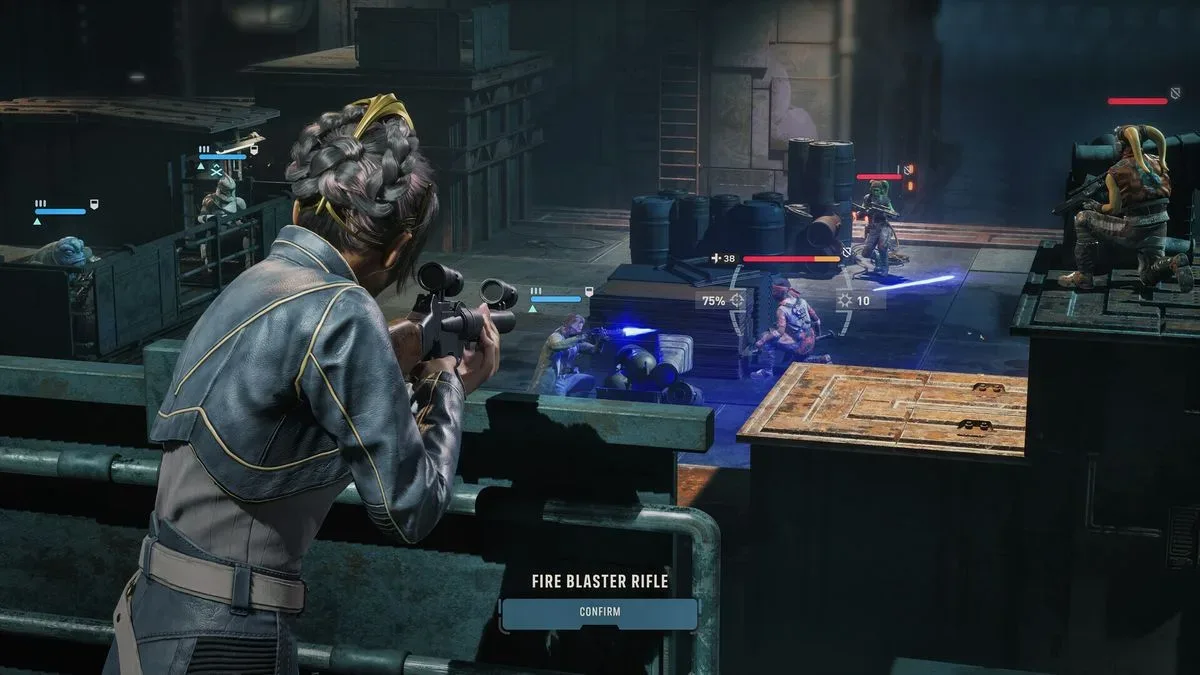
That does not mean custom operators are weak substitutes. They may lack some of the extravagant individual passives available to the authored cast, but their class skill trees remain broadly comparable. More importantly, incoming recruits match the group's level. A fresh operator is therefore not condemned to lag behind the rest of the roster just because they joined later in the campaign.
That scaling changes the equation considerably. In many tactics games, losing a veteran can mean replacing them with someone drastically underpowered, then carrying that new character through safer encounters until they are useful. Zero Company is considerably more forgiving. New personnel arrive ready to contribute, and their perk, or focus, points can be reset without penalty. Players are encouraged to experiment with different roles instead of treating every build choice as permanent.
Recruitment itself is also unusually lenient. Players can refresh the available selection of custom operators repeatedly at no cost, or create recruits themselves. Compared with items found through the Black Market, personnel are not a particularly costly commodity. That does not make their deaths meaningless, especially when they have fought alongside the squad and received their share of dialogue, but it does establish a hierarchy of risk that the player can use.
The Campaign Does Not Demand That Players Do Everything
Part of the pressure surrounding permadeath comes from the instinct to clear every available mission and maximize every possible reward. Zero Company's larger structure pushes against that tendency. Its cycle system creates momentum and friction, meaning a single run is not intended to encompass every piece of content the game can offer.
The result is a campaign that is less about exhaustive completion and more about prioritization. Players will not spend endless hours grinding secondary encounters alongside the main narrative, as can happen in some of the genre's largest games. A seemingly generic attack on a Separatist base can still turn dangerous, while also offering substantial rewards. There is little reason to save every custom recruit for one hypothetical perfect assignment when difficult situations can emerge across the mission board.
That is where the expendable-operator mindset becomes useful. Custom soldiers should not merely be treated as benchwarmers waiting for a safe opportunity. They can be given a real purpose: filling out the team for high-risk operations, absorbing pressure while more valuable specialists complete their work, and making hard choices possible when a mission begins to collapse.
This does not mean every recruit should be thrown away carelessly. They remain functional squad members with viable skill trees, and the game gives them enough personality through combat dialogue to make them feel like part of the crew. The key is acknowledging that a custom operator can be a calculated loss in a way that the game's most important named characters usually should not be.
Rescue and Sabotage Missions Make Sacrifice a Tactical Option
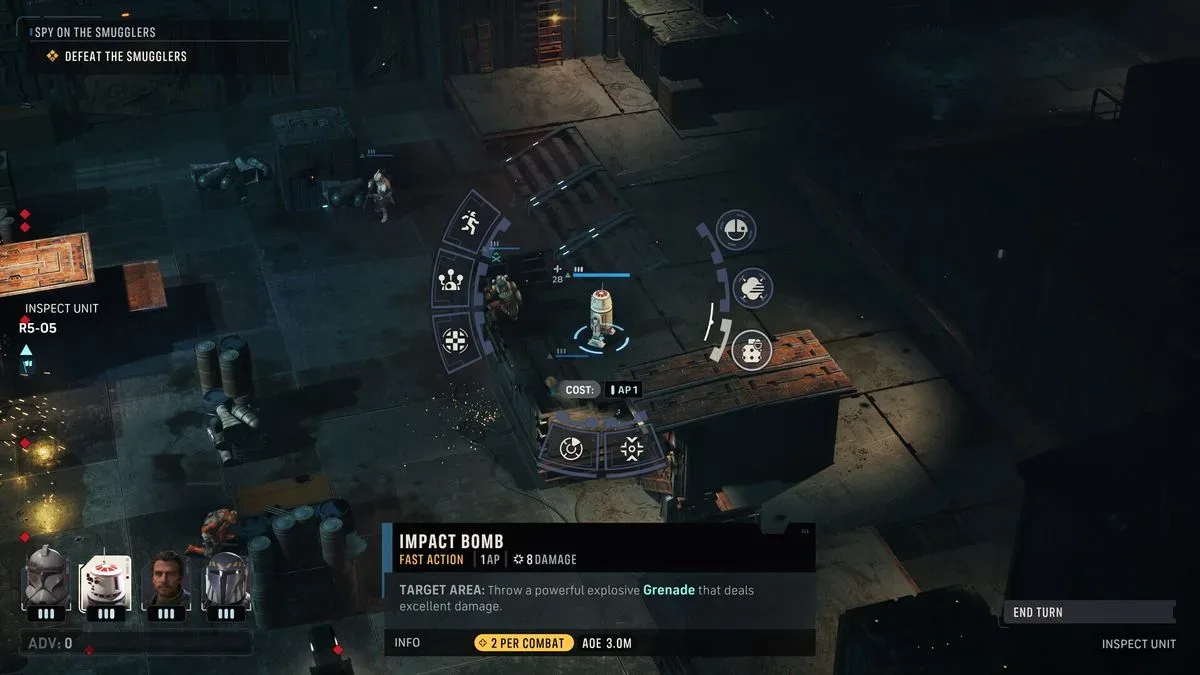
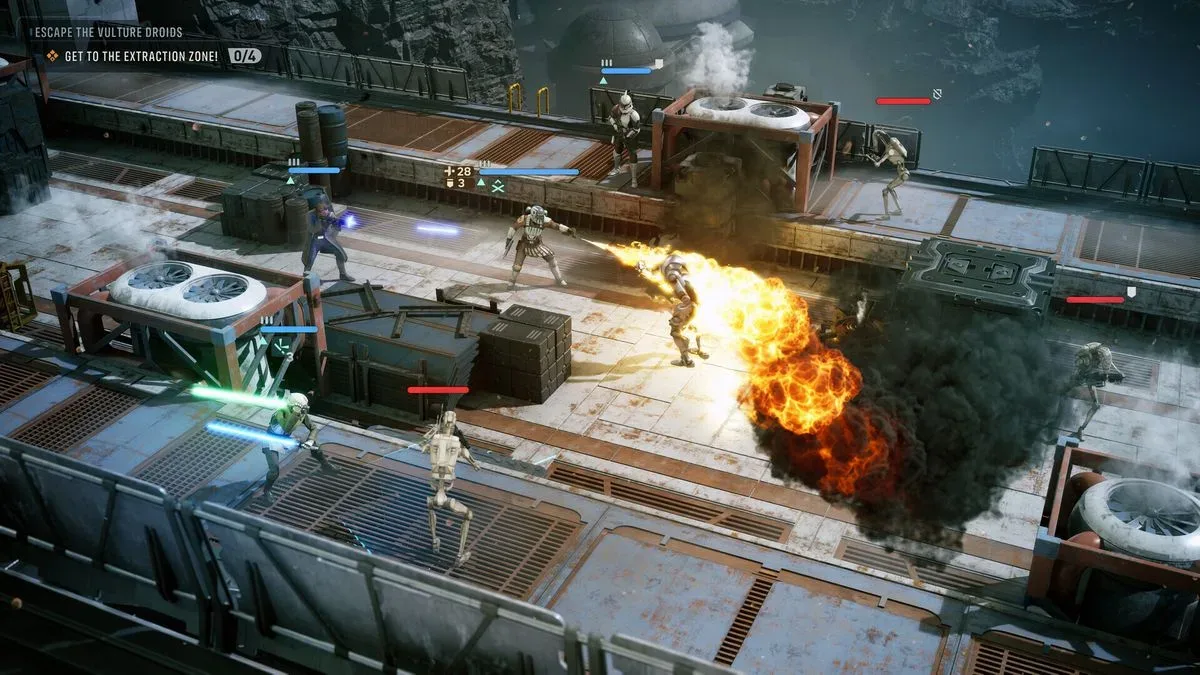
The value of that approach becomes especially clear in rescue and sabotage missions. These assignments can be among the more frustrating mission types because they impose strict turn limits. The squad may need to cross a map quickly to reach a threatened person, recover an astromech droid, or destroy a crucial object, all while fighting through repeated enemy waves.
Operators cannot simply sprint across the battlefield without consequence. Movement, combat, positioning, and limited actions all have to be balanced from turn to turn. The squad can find itself caught between an urgent timer and the need to survive increasingly heavy resistance. Even after the central objective is completed, the work may not be over: an evacuation zone can be a long distance away, with hostile droids continuing to pour into the battlefield.
Under those conditions, a newer hire can become the difference between success and failure. One operator can push forward to trigger or secure an objective, drawing attention and buying the rest of the squad the turns it needs. That operative may not survive the attempt, but a completed rescue or sabotage mission can still be worth the cost--particularly when the alternative is exposing the team's most valuable members to the same danger.
It is a harsh calculation, yet it is also a tactical one. The recruit is not useless cannon fodder; they are being assigned a role that the rest of the team may be too important to perform. Zero Company's flexible recruitment and level-matched replacements mean the campaign has systems in place to support exactly this sort of decision.
Extraction Is Not Always a Full-Team Escape
The most important reminder of Zero Company's priorities may come during evacuation. A familiar post-objective scenario involves the squad being overwhelmed after the main task is done. Droids continue arriving, positions become untenable, and the desperation comes not from failing the mission's objective but from trying to get every last operator to safety.
In these moments, players should pay close attention to the extraction option. It is possible to leave without every squad member standing in the evacuation zone. If the battlefield has become disastrous, valuable operators can use their action points to escape while others remain behind.
This is the point where the impulse to save everyone can actively undermine a successful run. Keeping an irreplaceable specialist, or the game's only Jedi, in danger to rescue a more replaceable operator may turn a difficult retreat into a catastrophic one. Choosing extraction with survivors rather than waiting for a perfect evacuation is often the wiser move.
That choice does not eliminate the danger to key characters. A player can still lose them by taking on too much, making poor tactical calls, or encountering peril during their own important missions. Permadeath remains real. But using the roster strategically reduces unnecessary exposure and allows the player to concentrate protection where it is most valuable.
A Rogue One-Style View of the Squad
This cold-blooded style of squad management is unexpectedly fitting for Zero Company's Star Wars setting. Stories such as Rogue One, The Clone Wars, and The Bad Batch have often emphasized soldiers, sacrifices, and people fighting as part of a cause much larger than themselves. Camaraderie is important in those stories, but it exists alongside loss.
Zero Company reflects that tension. Custom operators can speak up and feel present within the unit, rather than functioning as silent pieces on a tactical board. Their losses can still sting. Yet they gradually fade into the background compared with the authored characters, whose personal stories and unique strengths make them central assets in the larger campaign.
Accepting that distinction makes the game's narrative and systems feel more closely connected. The player is commanding a unit in a war, not escorting an untouchable cast through every battle. Some personnel will take the most dangerous positions. Some missions will end with an incomplete extraction. And sometimes the victory condition is not bringing everyone home, but ensuring the people most vital to the fight live to see the next operation.
For players intimidated by Zero Company's permadeath, that is the central lesson. Do not assume that every casualty means the campaign has been ruined. Build custom operators freely, test their builds, send them into the missions with the most demanding timers, and be willing to extract key fighters when the situation turns hopeless. The game may be more generous than its reputation suggests--provided the squad is managed with a clear-eyed sense of who can afford to take the greatest risks.
Community
Discussion
Start the conversation.
No comments have been posted yet.