

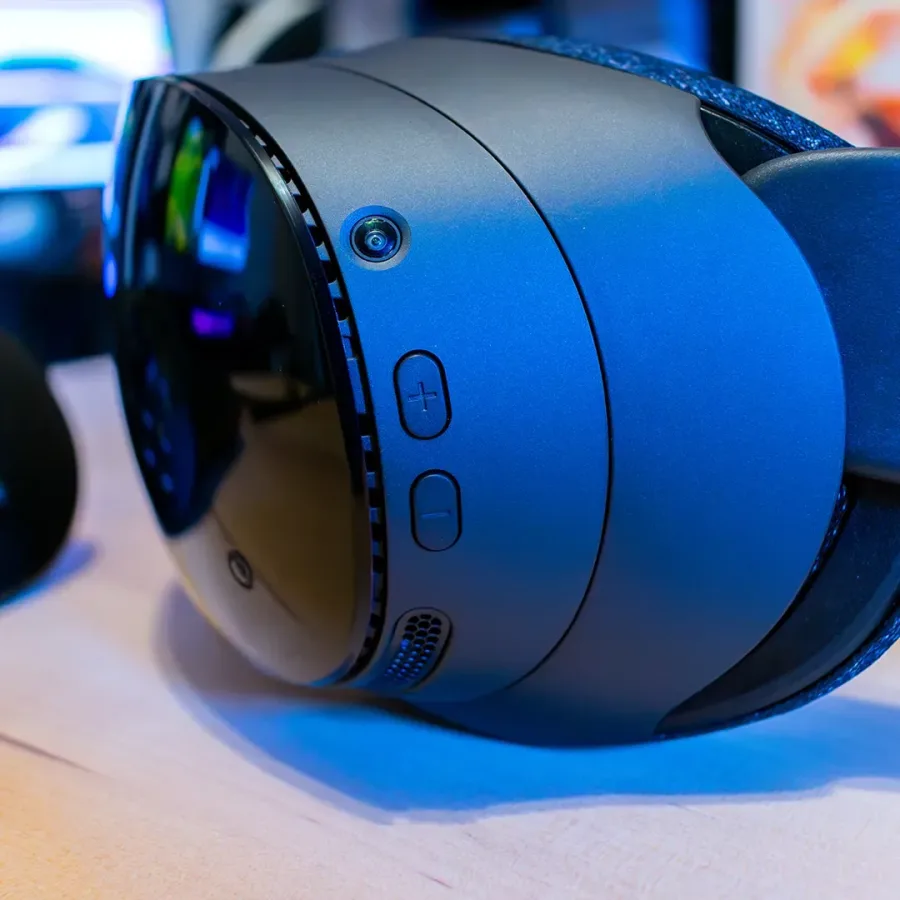
Valve's Steam Frame has arrived with a price that puts it firmly in premium virtual-reality territory. The new headset starts at $1,059 for a 256GB configuration, while a 1TB model costs $1,299. Reservations are open now, and the first units are expected to begin shipping on September 18.
That starting price is likely to be the immediate talking point around Steam Frame. There has been significant interest in whether Valve could produce a comparatively affordable standalone-capable headset while retaining a strong focus on PC virtual reality. Instead, the company's new hardware enters the market above the historical price of the Valve Index and far above the cost associated with mainstream standalone VR options.
Steam Frame is not positioned as a simple replacement for an entry-level headset, however. Its specifications and included accessories point toward a product designed around wireless PCVR streaming, while also offering onboard storage and mobile processing for headset-based software. The package includes two controllers, an eye spacer for people who wear glasses, and a dedicated Wi-Fi 6GHz dongle intended for PCVR streaming.
Steam Frame models and what is included
There are two announced Steam Frame storage options. The lower-capacity model provides 256GB of storage for $1,059. Buyers who want substantially more room for installed applications and other local content can choose the 1TB edition at $1,299.
For useful background on this topic, read Valve Says Steam Deck 2 Goals Remain Intact Despite RAM Price Pressure.
Both versions use Qualcomm's Snapdragon 8 Gen 3 processor and include 16GB of RAM. Storage is the stated differentiator between the two models, while the included accessories remain the same. That means buyers are not being asked to move to the more expensive model to receive the controllers, glasses spacer, or the wireless dongle.
- Steam Frame 256GB: $1,059
- Steam Frame 1TB: $1,299
- Processor: Qualcomm Snapdragon 8 Gen 3
- Memory: 16GB RAM
- Included: two controllers, glasses eye spacer, and dedicated Wi-Fi 6GHz PCVR streaming dongle
The inclusion of a dedicated dongle is especially important to the product's identity. Wireless PCVR can depend heavily on the quality and congestion of a home network, so an included connection solution gives Valve a more direct role in the streaming setup. Steam Frame is built first and foremost around the experience of streaming PCVR games, and hands-on impressions have indicated that it performs strongly in that role.
For players with a sizeable PC gaming library, that focus may be more meaningful than the storage figures alone. A headset that is primarily used as a wireless display and tracking device for a gaming PC has different priorities from one bought chiefly to run standalone applications. Steam Frame appears intended to serve the former audience while still carrying the kind of processor and local storage expected of modern all-in-one VR hardware.
A premium answer to wireless PCVR
Steam Frame includes features that distinguish it from Meta Quest 3, though those additions also arrive alongside a much higher asking price. Valve's headset has eye tracking, a dedicated wireless PC dongle, and twice the RAM. The company's approach is not simply to match the capabilities of a more affordable standalone headset; it is aimed at offering additional technology for users who prioritize PCVR streaming.
Eye tracking is one of the headline features in that comparison. Alongside the headset's networking hardware and memory allocation, it helps explain why Steam Frame should not be viewed solely through the lens of standalone VR value. A buyer looking for an accessible headset mainly for locally played VR games may still find Meta's established hardware to be the more straightforward fit.
That does not make Steam Frame's price unusual across the broader premium VR field. The Samsung Galaxy XR is priced at $1,799, while Pimax's Crystal Light costs $899. Pimax's option is wired-only, an important difference for players who specifically want a cable-free PCVR setup. Steam Frame falls between those examples, and its cost reflects the fact that dedicated PCVR hardware remains a specialized, expensive category.
The practical question for prospective buyers is therefore less about whether $1,059 is inexpensive--it is not--and more about which compromises they want to avoid. Steam Frame is targeting people who want wireless PCVR, included controllers, eye tracking, an onboard mobile platform, and a dedicated 6GHz connection accessory in one package. Players who do not value those elements may have more economical alternatives. Players who do may see a more focused proposition.
Hardware pricing pressures have reached VR
The Steam Frame's cost is also part of a wider hardware pricing story. Valve has indicated that the headset experienced the same kind of price increase affecting its Steam Machine and handheld hardware plans. Component costs have climbed over the past year, particularly amid what has been described as a continuing "RAMpocalypse," and those increases are filtering into products throughout the games business.
Memory pricing is a particularly visible issue because RAM is a core component in nearly every modern gaming device. Steam Frame's 16GB allocation is one of its key specifications, but higher memory costs make that feature more expensive to deliver. The pressure is not limited to smaller manufacturers or enthusiast devices, either: PlayStation 5 and Xbox Series X hardware have also been affected by the broader market conditions.
For Valve, the timing means Steam Frame reaches consumers at a point when hardware buyers are already used to seeing less favorable pricing than they may have expected a year earlier. That creates a challenging launch environment for a product that needs to communicate its premium advantages clearly. The headset has technology that cheaper devices lack, but it must still persuade potential customers that those benefits outweigh a four-figure purchase.
It also reinforces the distinction between a headset made for mass-market standalone use and one intended for dedicated PC players. A standalone-focused buyer may reasonably look at the Steam Frame price and decide that a less expensive alternative better matches their needs. But someone already invested in high-end PC gaming, with an interest in wireless VR streaming and Valve's ecosystem, is evaluating a different set of priorities.
How Steam Frame reservations work
Valve has opened reservations for Steam Frame, and the process mirrors the approach being used for the Steam Machine and Steam Controller. Customers can register interest in either Steam Frame configuration now through September 17 at 10 a.m. PST.
Once that initial reservation window closes, Valve will shuffle the entries and divide customers into a reservation list and a waitlist. Joining during the open period does not mean every customer will immediately receive an order opportunity, but it provides the chance to be placed on the initial reservation list rather than automatically entering at the end of the queue.
- Choose the 256GB or 1TB Steam Frame model and submit a reservation before September 17 at 10 a.m. PST.
- Valve will shuffle registrations after the initial window ends.
- Customers will be assigned to either the reservation list or the waitlist.
- Reservations submitted after the deadline will go to the back of the waitlist.
- As reservation-list customers receive units, Valve will contact waitlisted customers by email and move more people into the reservation process.
Shipping is expected to start on September 18. Demand may make the wait considerable, however. The reservation list for Valve's other recently discussed hardware could extend through the end of the year and potentially into the opening months of the following year, suggesting Steam Frame buyers should be prepared for availability to vary depending on their place in the queue.
Who should consider Steam Frame?
Steam Frame's strongest case is for PCVR enthusiasts who want a headset designed around wireless streaming rather than a low-cost route into standalone VR. The dedicated Wi-Fi 6GHz dongle, eye tracking, 16GB of RAM, and bundled controllers form the core of that case. It is a hardware package aimed at reducing some of the friction associated with untethered PCVR while retaining the local capabilities expected from an all-in-one device.
It is less obviously suited to shoppers looking for the most affordable headset for standalone games. At $1,059 before moving up to the larger-storage model, the price alone will rule it out for many people. In that part of the market, less expensive hardware remains difficult to ignore.
Valve is therefore entering VR with a product that makes few claims to bargain status. Steam Frame is a premium headset with premium positioning, launched during a period of rising component costs and hardware uncertainty. Its success will depend on whether its PCVR-first design, wireless streaming setup, and feature set can convince enthusiasts that it offers enough beyond more affordable alternatives--or beyond wired premium headsets--to justify the investment.
Community
Discussion
Start the conversation.
No comments have been posted yet.