

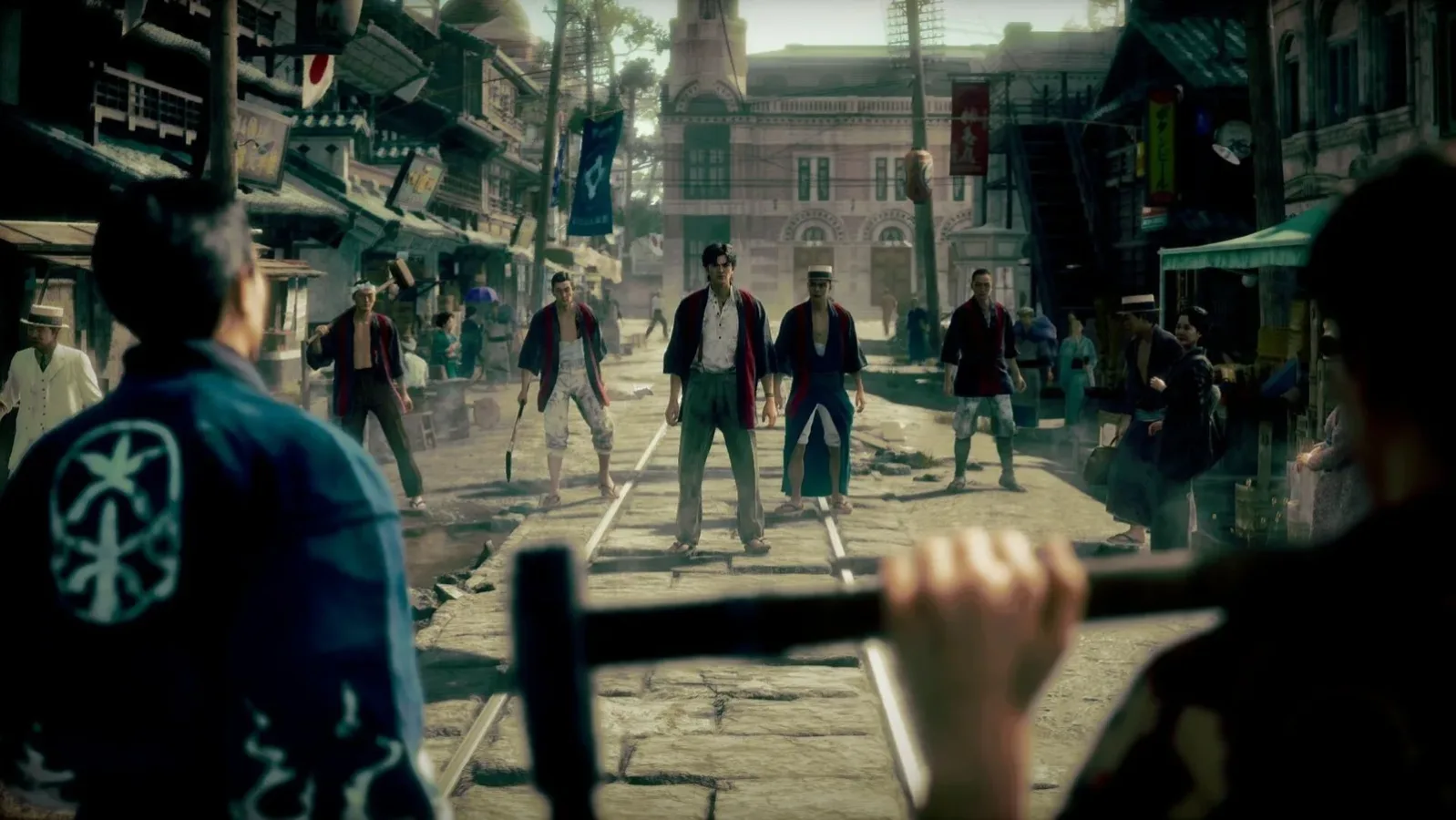
Stranger Than Heaven is shaping up to be a dramatic departure for RGG Studio's long-running crime saga, even while it retains the street fights, dense city districts and strange side encounters that fans associate with Like a Dragon. Set across five points in 20th-century history, the upcoming game follows Makoto Daito, a Japanese-American man attempting to build a life in Japan after escaping persecution in the United States.
Several hours with the opening chapters suggest that this is not simply a period-piece reskin of the familiar formula. Its cities change over decades, its story places Daito's identity at the center of the conflict, and its combat asks players to approach every exchange with considerably more care than the series' traditional button-driven brawling. The result is a game that can still be eccentric, violent and theatrical, but one that seems more committed to a sober crime-thriller mood.
Stranger Than Heaven is due to launch on January 17, 2027 for PC, PlayStation 5 and Xbox Series X|S.
A life shaped by five turbulent eras
The story spans 1915, 1929, 1943, 1951 and 1965. That broad timeframe gives RGG Studio an opportunity to portray Japan not as a fixed backdrop, but as a nation continually reshaped by social change, war, commerce, technology and urban development. The setting's evolution appears to be one of the game's most compelling ideas: locations and cultural details develop alongside Daito himself.
For useful background on this topic, read Govee Smart TV Light Bars Drop to $40 for a Limited-Time Home Entertainment Upgrade.
Daito begins as an outcast in the segregated United States. In 1915 San Francisco, corrupt police accuse him of a crime he did not commit, with racism explicitly informing the situation. His escape takes him to Japan, an ancestral home that does not offer the uncomplicated belonging he may have hoped to find. Rather than removing the prejudice surrounding him, the move exposes him to different forms of hostility and exclusion.
From there, Daito's path moves through the underworld and working life of early- to mid-century Japan. He becomes a hustling dock and factory worker in Kokura, eventually rises as a nightclub owner and businessman in Osaka, and later becomes connected to the Tojo Clan in 1960s Shinjuku. By the end of that journey, he is positioned as a consequential figure in the larger mythology that eventually leads to the worlds of Kazuma Kiryu and Ichiban Kasuga.
That connection gives Stranger Than Heaven obvious appeal for longtime players, but the game is presented as a standalone narrative rather than required historical homework. Its main priority is Daito's life and the compromises, relationships and violence that define his ascent. The structure calls to mind an expansive crime epic, tracking one man over many years as personal ambition intersects with a changing country.
A more grounded perspective for the series
Like a Dragon has long excelled at tonal contrast. Its central stories can be heartfelt and intensely melodramatic, while a few steps away players may be singing karaoke, managing absurd businesses or helping strangers with bizarre problems. Stranger Than Heaven does not discard that heritage. There are still oddball activities and unexpected confrontations beyond the main path. Yet its early material seems more restrained and less eager to undercut its own dramatic weight.
Daito's experience as a mixed-race immigrant is particularly important to that difference. While exploring, players can encounter racial slurs, passive-aggressive hostility and direct violence from people who see him as unwelcome. The premise gives the game a type of discomfort that differs from the usual criminal conspiracies and honor-bound clashes of earlier entries. Daito is not merely a tough outsider arriving in a new district; he is navigating a place tied to his heritage that nevertheless rejects him.
The handling of racism in the opening chapters is often purposeful, showing both overt bigotry and quieter social cruelty. It also makes the setting feel less romanticized. Japan's cities are full of potential, opportunity and local character, but they are not depicted as an immediate refuge for Daito. That tension supports the game's more personal focus and gives its historical setting more meaning than a collection of costumes, old vehicles and architecture.
There are points where the pacing can stumble. As with many narrative-heavy games, a serious scene can be followed by a more conventionally game-like interruption that weakens the momentum. The inclusion of celebrity characters played by Snoop Dogg and Tupac also risks pulling attention away from the period drama. Snoop Dogg's character and his crew address prejudice in a way that can feel unusually self-aware, and the casting itself may prove distracting for players seeking total immersion. Tupac did not appear during the hands-on portion, so it remains unclear how his role will fit into the wider story.
Combat built around individual fists
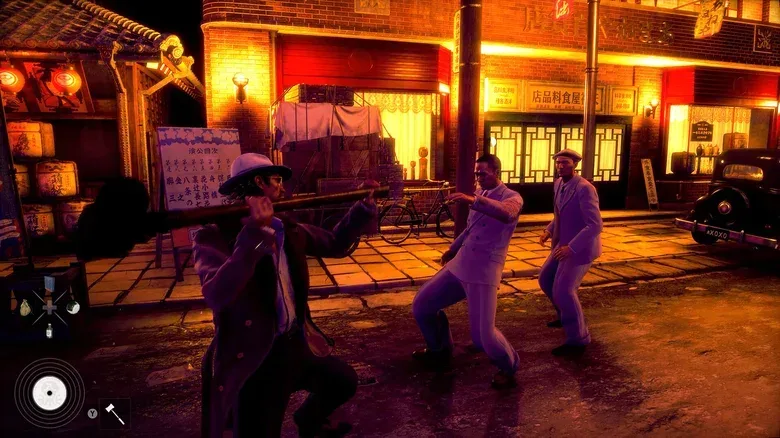
The largest mechanical change is Stranger Than Heaven's fighting system. While it remains an action brawler at heart, it is far less casual than the rapid combos and loose crowd-control of many earlier Like a Dragon games. The controls divide Daito's attacks by arm: left shoulder inputs govern his left-hand light and heavy strikes, while right shoulder inputs handle equivalent attacks from his right side.
That setup makes every fight feel more deliberate. Instead of simply finding a reliable string of attacks and overwhelming a group, players need to consider where blows are coming from, what hand they want to use and when to defend. The approach shares a little DNA with games that map attacks to shoulder controls, though it is designed for a faster, nastier street-fighting rhythm.
Directional blocking is a major part of the challenge. Players must defend on the appropriate side depending on an incoming attack's angle, which can become difficult when multiple enemies close in. It is an idea that sounds manageable in isolation but becomes demanding amid a chaotic fight, particularly while attempting to read feints, reposition around opponents and keep up offensive pressure.
Early demonstrations of the combat had a sink-or-swim quality that made the system difficult to appreciate. Since then, onboarding has been improved in response to feedback from Summer Game Fest 2026, and the revised introduction gives players more room to understand its rhythms. Once the fundamentals begin to click, Daito's attacks have a satisfying sense of force. Punches feel desperate and weighty, while weapons and pressured finishes emphasize that this is a man fighting to survive rather than effortlessly clearing a street.
It may still be a divisive system. Players who prefer the immediately accessible chaos of prior Like a Dragon brawlers could find its defensive demands frustrating. But its complexity fits the game's harsher identity. The fights are not just flashy punctuation between story scenes; they reinforce the sense that Daito is a scrappy, vulnerable figure who must earn every victory.
Familiar weirdness in a less forgiving world
For all of its seriousness, Stranger Than Heaven has not abandoned RGG Studio's affection for the bizarre. The streets remain places where a detour can become an entirely different kind of adventure. One nighttime trip down an alley in Kokura leads to an encounter with a serial killer. This optional adversary is quick with a knife and highly evasive, creating a punishing fight that can send an unprepared player away empty-handed.
That kind of encounter is recognizably Like a Dragon: dangerous, strange and just a little ridiculous in concept. Crucially, it does not appear to overwhelm the game's central drama. Instead, the weirdness exists around Daito's difficult journey, offering surprise without changing the fact that his story is rooted in alienation, ambition and historical change.
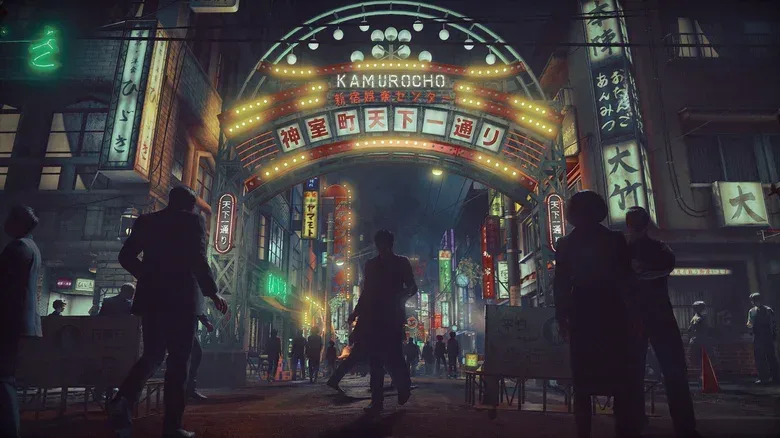
The five-decade structure may be the clearest sign of Stranger Than Heaven's ambition. RGG Studio has always used its city spaces well, building memorable districts that feel alive through shops, nightlife, minigames and side stories. Watching those spaces and their surrounding culture evolve through the first half of the century could give this entry an unusual sense of scale. It is not only Daito who grows older and more powerful; the places he inhabits are meant to transform as well.
An ambitious new branch of Like a Dragon
Stranger Than Heaven appears positioned as both a fresh entry point and a meaningful expansion of Like a Dragon history. Its links to the Tojo Clan and later protagonists should reward series veterans, but its historical protagonist and self-contained premise make it more than a continuity exercise.
Most importantly, the game seems willing to take risks with tone and mechanics. It asks players to inhabit a protagonist facing prejudice in two countries, demands more technical control in combat, and stretches its narrative across an unusually large span of time. There is still room for the offbeat energy that defines RGG Studio's work, but the opening hours indicate a more relentless and emotionally exposed crime story.
Whether every tonal gamble lands will only be clear when the full game arrives. For now, Makoto Daito's journey looks like one of the boldest attempts yet to redefine what a Like a Dragon spin-off can be.
Community
Discussion
Start the conversation.
No comments have been posted yet.