

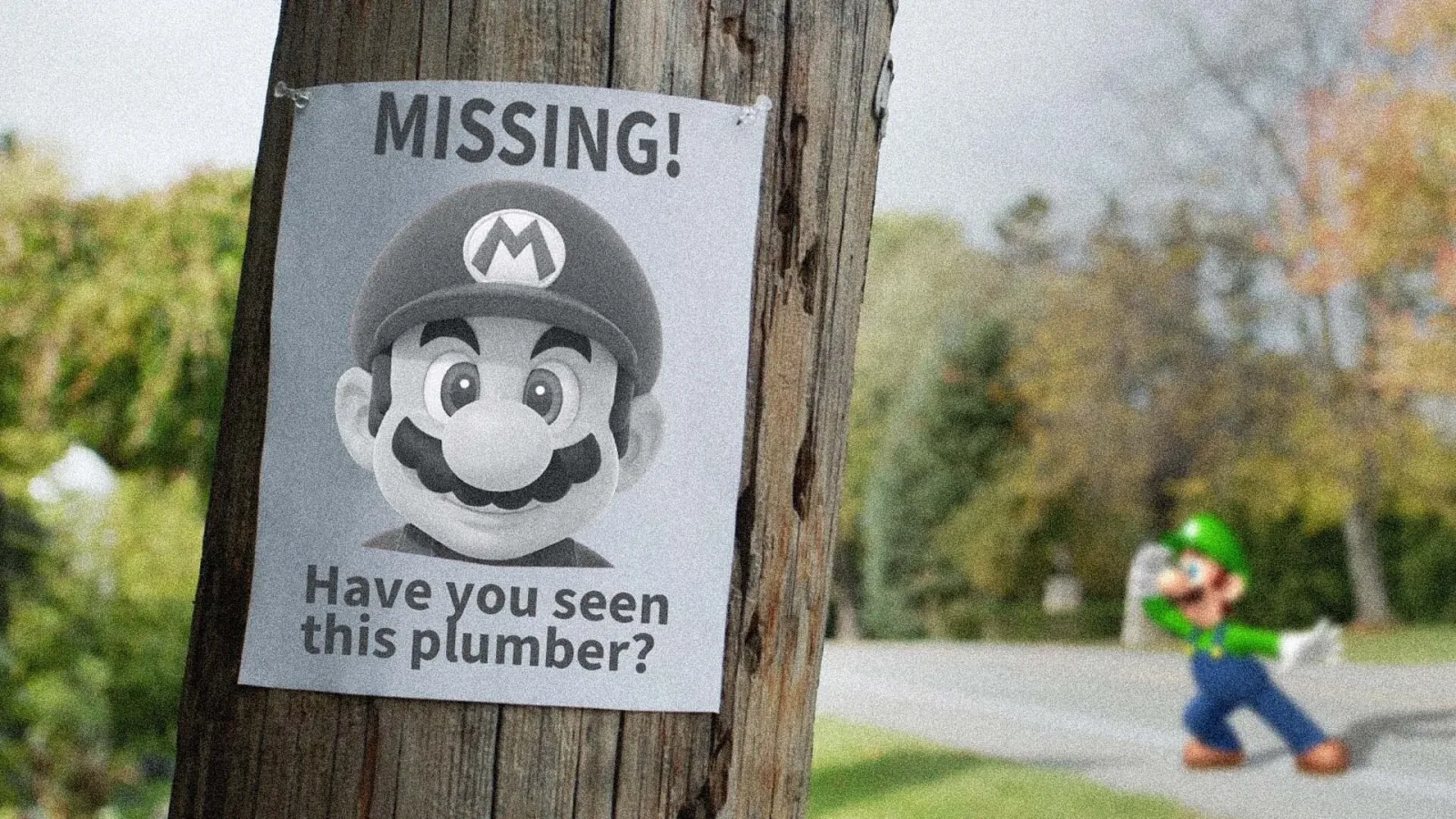
Nintendo Switch 2 has now been on the market for more than a year, and Nintendo's latest Direct presentation made one thing especially conspicuous: the company has plenty of software for the system, plenty of familiar faces, and still no announced new mainline Mario platformer.
That absence is surprising not because Nintendo has ignored Mario altogether. It clearly has not. Mario Kart World is part of the Switch 2 lineup, while Super Mario Bros. Wonder - Nintendo Switch 2 Edition + Meetup in Bellabel Park gives a recent Mario game a system-specific upgrade. Those are substantial uses of the character and his universe. But neither fills the particular role many players associate with the start of a new Nintendo home console: a fully new 3D Mario adventure designed to define what the hardware can do.
At this point in Switch 2's life, the silence around that kind of project is an outlier. Since Mario made the jump to polygonal 3D platforming, Nintendo has generally delivered a new 3D entry very early in each home-console generation. The current gap does not prove that a new game is troubled, delayed, or even far away. Nintendo has said nothing concrete about a new 3D Mario. Still, the historical pattern makes the lack of even an announcement feel unusual.
A rare break from Mario's launch-window history
The comparison is straightforward. Super Mario 64 arrived on Nintendo 64's launch day, immediately establishing analog movement and free-roaming 3D worlds as central to the system's identity. It was not merely another mascot game; it was a showcase for the machine and a landmark for the entire medium.
For useful background on this topic, read PlayStation Plus Game Catalog September 2026 Lineup Includes WWE 2K26 and RuneScape: Dragonwilds.
The games that followed did not all arrive at launch, but the waits were comparatively short:
- Super Mario Sunshine launched nine months after the GameCube's U.S. debut.
- Super Mario Galaxy arrived 12 months after the Wii's U.S. launch.
- Super Mario 3D World released 12 months after the Wii U's U.S. launch.
- Super Mario Odyssey landed seven months after the original Nintendo Switch launched.
That run spans decades, radically different hardware concepts, and several changes in Nintendo's internal development structure. Yet the broader message remained consistent: early in a console generation, players could expect a major original Mario platformer, particularly a 3D one.
Switch 2 has exceeded those previous waits without Nintendo publicly identifying the next game in that lineage. The distinction matters. A release may be some distance away even after a teaser, but an announcement gives fans a sense of direction and tells them that a major Mario project is part of the platform's future. Right now, there is no visible red cap on the road map.
Other Nintendo icons are taking the spotlight
The lack of Mario is more noticeable because Switch 2 is not suffering from a shortage of Nintendo characters. The platform has received attention across much of the company's catalog, including both brand-new games and enhanced versions of existing releases.
Donkey Kong has been particularly prominent through Donkey Kong Bananza. Yoshi, the Inklings, Samus Aran, Link, Kirby, Fox McCloud, Pikmin, Animal Crossing, and Pokémon are also represented in the system's broader software story. Nintendo has announced Metroid Ravenous, an Ocarina of Time remake, and Kirby and the World Beyond; Pikmin have a presence through an upgraded Pikmin 4; and Animal Crossing: New Horizons has received a Switch 2-only upgrade. Pokopia, meanwhile, puts Pokémon in the conversation.
That variety is a strength. It gives the machine a richer identity than one built around a single series, and it allows Nintendo to spotlight franchises that can sometimes wait longer between major releases. There is also an important Mario-adjacent wrinkle: the team associated with 3D Mario made Donkey Kong Bananza, a game that has been warmly received. The talent normally expected to be working on Mario has not been idle.
But that explanation only answers part of the question. Donkey Kong and Mario can share some creative DNA without being interchangeable. A Donkey Kong game can deliver inventive platforming, expressive animation, and big mechanical ideas, yet still not provide the specific kind of exploratory, joyous Mario experience people expect from an Odyssey, Galaxy, or Sunshine successor. Mario remains Nintendo's central mascot, and his mainline platformers tend to be viewed as events beyond the standard cycle of franchise releases.
Ports and upgrades are not the same as a new flagship
Nintendo has leaned into enhanced releases and updated versions for Switch 2, a sensible strategy for a new system that benefits from having a deep library quickly. Upgrades can improve performance, presentation, features, or ease of access, while giving existing players another reason to revisit excellent games. In the case of Super Mario Bros. Wonder - Nintendo Switch 2 Edition + Meetup in Bellabel Park, Mario is visibly present on the newer hardware.
Yet an enhanced 2D game cannot fully replace the anticipation around a new 3D Mario. The latter tends to be where Nintendo reveals its most ambitious platforming concepts. Every major 3D entry has had a strong mechanical identity: the open-ended collecting and analog control of Super Mario 64, FLUDD in Sunshine, gravity in Galaxy, the co-operative and course-driven structure of 3D World, and Cappy's capture system in Odyssey.
Because of that history, fans naturally wonder whether the longer wait could indicate a game with a larger-than-usual ambition. Perhaps Nintendo is exploring an idea that needs time. Perhaps the company simply chose to let other series lead Switch 2's early years. Perhaps its internal schedule shifted as teams completed other projects. All of those possibilities are speculation, not established fact, and Nintendo has not supplied an answer.
There is also no requirement that Nintendo repeat its old formula. Switch 2 is not obligated to receive a 3D Mario on the same timetable as the Nintendo 64, GameCube, Wii, Wii U, or Switch. Changing the order of major releases could be an intentional attempt to make the generation feel less predictable. A healthy release schedule needs more than one star, and Nintendo's current focus on Donkey Kong, Zelda, Metroid, Kirby, Pokémon, and other series demonstrates confidence in its wider bench.
Why the wait still feels bigger than normal
Even with those reasonable explanations, Mario occupies a unique place in Nintendo's business and culture. He is more than a character who appears in sports games, racing games, role-playing games, and party games. When Nintendo puts out a mainline platformer built around him, it is often treated as a statement of creative intent for the hardware generation.
Super Mario Odyssey had that effect for the first Switch. It arrived within seven months of launch and became one of the console's defining games, alongside The Legend of Zelda: Breath of the Wild. The system later built an enormous audience with a broader catalog, but the early presence of an original 3D Mario helped communicate that Nintendo had not left one of its most important traditions behind.
Switch 2 already has reasons to be appealing, and its growing lineup shows Nintendo's willingness to support a range of audiences. Still, the continued lack of a new Mario announcement leaves a conspicuous open space in the console's identity. It is not simply a matter of checking a franchise off a list. It is about the expectation that every new Nintendo platform will eventually get its own unmistakable Mario moment.
For now, fans will have to wait without reading too much into the silence. The next Mario could be announced soon, could be held for a later showcase, or could be positioned after other major releases have had time to breathe. With the Ocarina of Time remake also in Nintendo's plans, the company may have reasons to avoid crowding its own calendar with too many enormous nostalgia-driven releases at once.
But the comparison with past generations remains hard to ignore. More than a year into Switch 2, Nintendo has given the spotlight to many of its celebrated heroes. Mario has appeared around the edges through racing and an upgraded 2D release, while the kind of original 3D outing that traditionally arrives near a console's beginning remains absent. Until Nintendo reveals what its plumber is doing next, the biggest question around the Switch 2 lineup may be the simplest one: where is Mario?
Community
Discussion
Start the conversation.
No comments have been posted yet.