

Warning: this article discusses major story spoilers for The Witcher 3 quest "A Towerful of Mice."
Not every memorable role-playing game quest needs to threaten the fate of a kingdom, introduce a legendary villain, or deliver a mountain of rare loot. Sometimes all it takes is a foggy island, a ruined tower, a handful of frightened villagers, and a story that becomes steadily more awful with every creaking step upstairs.
That is the strength of A Towerful of Mice, one of the earliest major supernatural investigations in The Witcher 3: Wild Hunt. Available during Geralt's work with Keira Metz in Velen and recommended around level six, the quest is technically a side activity. In practice, it is a concentrated showcase of the game's greatest narrative strengths: atmosphere, environmental storytelling, unreliable testimony, grisly folklore, and decisions that feel uncomfortable precisely because there is no neatly heroic answer.
It begins with a curse on Fyke Isle, a lonely location shrouded in marsh mist and troubled memories. Keira, a sorceress hiding from the violent political forces sweeping through the region, wants Geralt's help dealing with the island's haunting. The request is initially straightforward enough. Villagers are scared. The island is cursed. A witcher is paid to investigate monsters and lift curses. Yet the trip to Fyke Isle quickly signals that this will not be an ordinary cleanup job.
For useful background on this topic, read CI Games Secures EUR28.6 Million Financing Ahead of Lords of the Fallen II Launch.
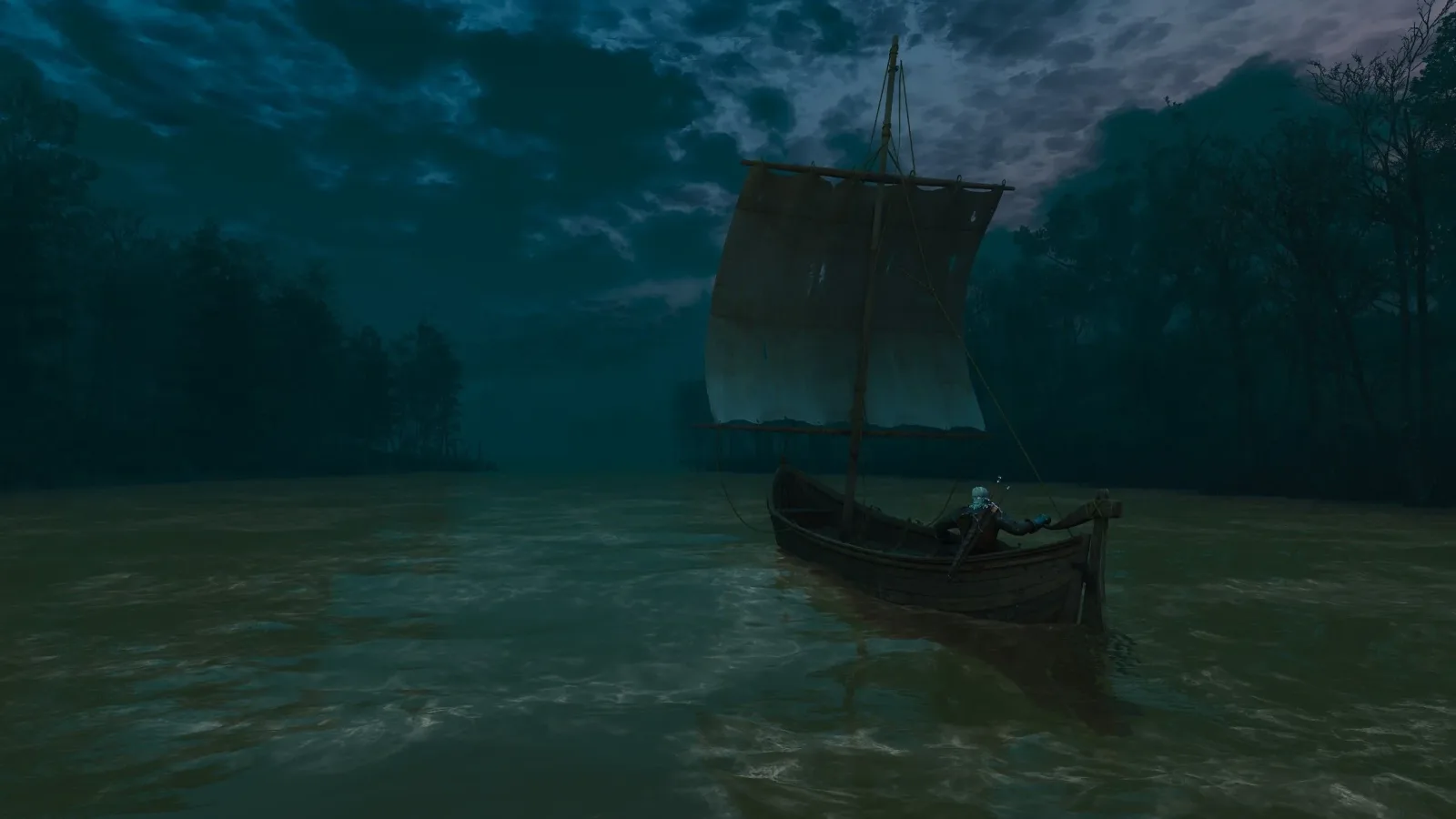
The approach alone does much of the work. Geralt arrives by boat through Velen's bleak waterways, surrounded by dark woods, shallow water, and the intermittent threat of drowners. Fyke Isle does not need a dramatic introduction from a cutscene. Its isolation is the introduction. The tower appears as a destination that feels wrong before Geralt even sets foot inside it, and the journey gives the player time to anticipate whatever has made locals so unwilling to go there themselves.
A haunted house story inside a vast RPG
The Witcher 3 is famous for enormous landscapes, political conflicts, monster contracts, and lengthy quest chains. A Towerful of Mice narrows that vast scale into something more intimate. It is effectively a haunted-house story, built around a tower whose rooms gradually reveal the last hours of the people trapped within it.
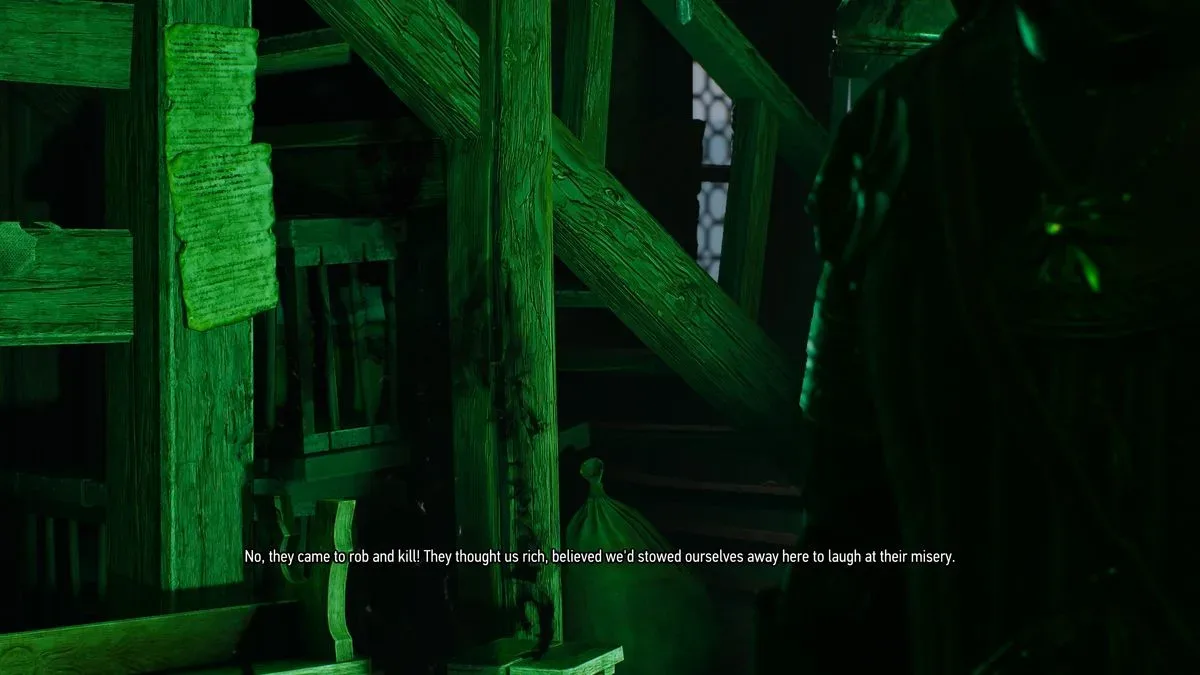
That focus makes the quest unusually potent. Rather than presenting history as a simple exposition dump, it lets Geralt reconstruct a tragedy through spectral scenes. As he explores, he witnesses echoes of the past: terrified peasants, caged rats, a nobleman's household, and a growing sense that something catastrophic is unfolding below the surface of the family's wealth and privilege.
The images are simple but disturbing. Ghostly locals question why rats have been gathered in such numbers. A young woman pleads with her father to help those in danger. The threat of an angry mob moves through the tower even when it cannot be directly seen. In the present, skeletal remains and abandoned rooms confirm that no one escaped the consequences of that night.
It is a remarkably efficient use of space. Each level of the tower draws Geralt, and the player, farther into the truth. The building is not merely a combat arena or a dungeon packed with containers to loot. It is the physical structure of the mystery. Ascending its stairs is a process of uncovering buried guilt, fear, class resentment, betrayal, and death.
The quest's mood has far more in common with classic Gothic fiction than with a conventional fantasy adventure. The island is cut off from safety. The tower contains voices from the past. Love and death are entangled. Rats are both a literal menace and a symbol of decay. Even the architecture helps sell the dread: narrow passages, ruined interiors, dim rooms, and the constant suggestion that the next sound might be a threat.
The tragedy at the center of Fyke Isle
Eventually, Geralt reaches the laboratory at the tower's summit and meets Anabelle, the daughter of the nobleman who once ruled Fyke Isle. Her account gives the mystery an apparent solution, but it also introduces its most important uncertainty.
Anabelle says that she tried to escape the mob by taking a potion intended to mimic death. It left her paralyzed rather than killing her. When she awoke, the mob had departed, but she was still unable to move. She died while rats consumed her alive. Her horror is compounded by her belief that Graham, the man she loved, abandoned her during the chaos.
It is a brutal story, and it is told with enough pain to make an immediate response feel obvious. Anabelle asks Geralt to bring her remains to Graham so that he can bury her. If that does not happen, she proposes an alternative: bring Graham to the tower so that the lovers can finally confront what happened.
This is where A Towerful of Mice becomes more than an effective ghost story. It asks the player to judge a desperate spirit without providing perfect certainty. The quest has supplied an emotionally devastating explanation, but Geralt's world is full of curses, malicious specters, and monsters capable of manipulating sympathy. Compassion is warranted; so is suspicion.
The player can choose to take Anabelle's remains to Graham, trusting that this will allow her to find peace. Or Geralt can refuse that request and instead seek Graham out in the nearby fishing village. Neither path is framed as a triumphant solution. Both are rooted in trying to understand a calamity that happened years earlier, after everyone involved had already been failed by violence and fear.
Graham's return and the Plague Maiden
Meeting Graham changes the emotional texture of the story. He is not portrayed as someone who has simply forgotten Anabelle or moved on without consequence. He remains haunted by the events on Fyke Isle and is willing to return when Geralt explains what may be needed. His grief makes the prospect of a reunion seem almost hopeful, at least for a moment.
But the tower has been withholding the full truth. When Graham reaches Anabelle, she reveals her actual form: a Plague Maiden, a particularly horrific cursed being marked by disease, death, and resentment. The young woman who appeared to be seeking a lover's forgiveness becomes something much more dangerous, with a sunken, mutilated appearance that makes the earlier unease feel entirely justified.
The final test is as cruel as the rest of the quest. Graham must show that his love is real by kissing Anabelle. It is the kind of condition that sounds like a fairy-tale resolution, but the quest refuses to turn it into one. The moment is framed with all the dread the story has accumulated. Geralt can investigate, fight monsters, and identify curses, but there are limits to what his professional detachment can protect others from.
Graham does kiss her. The curse is lifted. Anabelle is briefly restored to her human appearance before vanishing. Graham dies on the tower floor.
It is an ending that resolves the supernatural problem while leaving behind no feeling of victory. The island may no longer be cursed, yet the losses that created the curse cannot be undone. Fyke Isle remains a place shaped by cruelty, panic, and a love that survived only long enough to become fatal.
Why the quest still stands out
Many games offer moral choices, but choices matter most when the player understands what is at stake. The Witcher 3 consistently earns the weight of its decisions by making even small communities and supporting characters feel specific. The people connected to Fyke Isle are not just mechanisms for delivering a monster encounter. Their tragedy has a history, competing interpretations, and consequences that linger after the objective marker disappears.
A Towerful of Mice also demonstrates why Velen is such a memorable setting. Its misery is not decorative. War, persecution, poverty, superstition, and disease shape the region's stories. A cursed tower on an isolated island feels plausible in a land where ordinary people already have every reason to fear the night. The supernatural does not replace the human suffering in the quest; it grows out of it.
The quest is also a reminder that Geralt's job is rarely just about drawing a silver sword. His skills as an investigator matter as much as his combat ability. He listens, follows clues, tests claims, and makes a judgment with incomplete information. Players are invited to inhabit that role, weighing instinct against evidence while knowing that somebody may pay for an incorrect conclusion.
For an early-game quest, its confidence is striking. It trusts players to sit with discomfort instead of offering a clean reward loop. It gives a ghost a sympathetic story, then challenges that sympathy. It lets love endure, but refuses to insist that love can repair everything. And it turns what could have been a quick detour for experience points into an intimate Gothic tragedy.
Fyke Isle may be only one small corner of Velen, but it captures what makes The Witcher 3 endure. Its best side quests do not feel like content placed between the main story's important moments. They feel like complete stories of their own--stories with atmosphere, consequence, and the lingering sadness of a place where even lifting a curse cannot truly make things right.


Community
Discussion
Start the conversation.
No comments have been posted yet.