

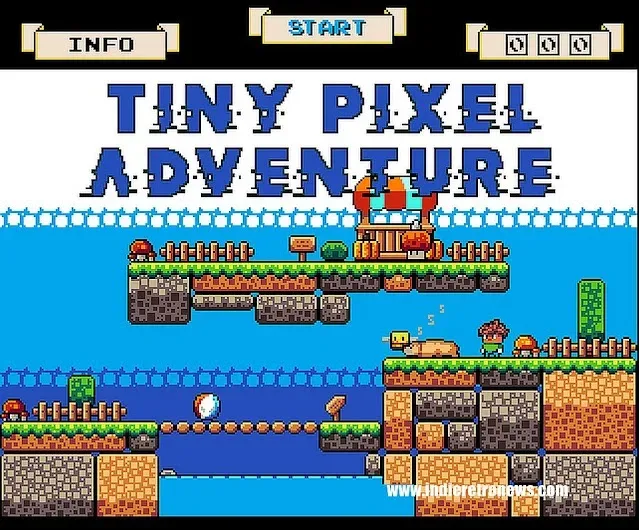
Tiny Pixel Adventure, the colorful retro platform adventure from developer HooGames2017, is available for Commodore Amiga players and has now received a major update. Built with the Scorpion Engine, the game sends a small but brave hero across a dangerous pixel-art world packed with obstacle courses, strange creatures, puzzles, and increasingly challenging areas unlocked through collected keys.
The latest update is described as a substantial one, with an extensive changelog covering bug fixes and performance improvements. Specific individual changes have not been outlined here, but the scale of the notes suggests that this is more than a minor maintenance patch. For a game designed around precise movement, platforming hazards, and encounters with roaming enemies, technical refinements can make a meaningful difference to the overall experience.
Tiny Pixel Adventure follows another Scorpion Engine-based release from HooGames2017, Dr. Dangerous. The newer game takes a notably brighter visual approach, mixing colorful locations with a classically demanding style of action-platform play. Its premise is simple and suitably old-school: keep moving, survive the hazards ahead, overcome the enemies in each quest, and earn the keys needed to push farther into the adventure.
A Classic Amiga-Style Journey Through Dangerous Worlds
The game's structure centers on a succession of quests. Each completed challenge awards a key, and those keys open access to additional areas. That familiar progression model gives Tiny Pixel Adventure a clear sense of forward momentum: every section is both a test in its own right and a gateway to the next part of the world.
For useful background on this topic, read Street Fighter 6 Team Says the Series Needed a Full Reset After Street Fighter V.
Rather than relying solely on straightforward jumps or enemy encounters, the game combines platforming action with puzzle elements. Players must negotiate obstacles while also accounting for the behavior and placement of the game's many adversaries. The result is intended to evoke the kind of arcade-influenced home-computer adventures where awareness, timing, and repeated attempts matter as much as raw speed.
The emphasis on keys also makes each quest feel purposeful. A level is not merely a stage to sprint through; it is an obstacle between the hero and the next locked route. That approach can create a rewarding loop for players who enjoy mapping out hazards, learning safe paths, and gradually turning an initially intimidating level into something manageable.
Bees, Mushrooms, Plants, and Other Unusual Threats
Tiny Pixel Adventure's world is presented as cheerful at first glance, but it is hardly harmless. The game populates its stages with an assortment of odd enemies designed to interrupt a player's progress. Bouncing mushrooms, rolling balls, aggressive bees, and dangerous plants are among the threats standing in the hero's way.
That variety is important to the game's identity. A platform adventure becomes more memorable when every enemy type asks the player to react differently. A rolling object may force careful positioning or a quick leap. A bouncing enemy can make the rhythm of a platforming sequence less predictable. Flying foes such as bees can put pressure on routes that would otherwise seem safe, while stationary plant hazards can turn the ground itself into a danger zone.
The available description frames these creatures as deliberately weird, an appropriate match for a pixel-art adventure that wants to balance colorful charm with escalating peril. Players should expect the world to keep introducing new obstacles and combinations as the journey proceeds. Progress is not simply about opening a path; it is about surviving long enough to earn the right to see what is behind the next door.
Pixel Art and Soundtrack Set the Retro Tone
Visuals and audio are central to Tiny Pixel Adventure's appeal. The game leans into retro pixel graphics, using bright environments and compact character designs to deliver a style that fits naturally with the Commodore Amiga setting. Pixel art is more than a nostalgic filter in games like this. Clear silhouettes, readable hazards, and distinct enemy animation all help make demanding platform challenges understandable at a glance.
The soundtrack is also positioned as a key component of the package. In a quest-based platformer, music has a major role in maintaining energy through repeated attempts and longer stretches of exploration. A strong retro soundtrack can make even a difficult sequence feel inviting enough to retry, while helping each area retain a sense of identity.
Tiny Pixel Adventure appears designed for players who appreciate that full audiovisual combination: colorful graphics, compact action, quirky foes, and music that supports a fast-moving adventure. It is a game built around an intentionally classic sensibility rather than a modern cinematic presentation. The appeal lies in immediate readability, lively presentation, and the satisfaction of mastering a tricky encounter one step at a time.
A Significant Update for the Current Version
The newly announced update is the most important development for returning players. Its changelog is said to be extensive, including a large collection of bug fixes alongside performance improvements. Those categories can cover a broad range of behind-the-scenes work, from smoother behavior during play to corrections for problems discovered after earlier versions became available.
Without a detailed item-by-item breakdown, it would be premature to assume exactly which levels, enemies, mechanics, or technical systems have changed. Still, an update of this scale is encouraging for an Amiga release of this kind. It indicates continued attention to the game after launch and gives interested players a reason to make sure they are using the newest available build.
Performance work is especially welcome in a platform game. Responsive movement and stable presentation are fundamental when the challenge depends on navigating obstacles and reacting to enemies. Bug fixes can be just as valuable, whether they address progression issues, improve reliability, or polish smaller aspects that affect the flow of a quest.
For newcomers, the current version should be the natural starting point. For existing players, the update may be an opportunity to return to unfinished quests, revisit favorite sections, or experience the adventure with its newest round of refinements in place.
Scorpion Engine Continues to Support New Amiga Creations
Tiny Pixel Adventure was created using the Scorpion Engine, reinforcing the continued value of development tools that make new software possible for classic hardware. The Commodore Amiga remains a beloved platform for enthusiasts, and projects such as this show that its game library is still expanding through contemporary homebrew development.
Engine-based development does not make a game's design automatic; its value is in giving creators a practical foundation for building their own worlds, mechanics, art direction, and level challenges. In Tiny Pixel Adventure's case, HooGames2017 has used that foundation for a project focused on colorful action, odd enemy designs, keys, and puzzle-platforming progression.
The connection to Dr. Dangerous may also interest players familiar with the developer's earlier work. While both games share the use of the Scorpion Engine, Tiny Pixel Adventure establishes its own identity through its cheerful but hazardous setting and its quest-based route through locked areas. It is another example of how modern creators can use tools for vintage systems without being limited to copying one fixed genre or style.
What Players Can Expect
- Commodore Amiga action: A new retro-styled adventure built for Amiga players.
- Quest progression: Complete challenges to earn keys and unlock further areas.
- Platforming and puzzles: Navigate environmental obstacles while solving the route ahead.
- Quirky enemies: Face bouncing mushrooms, rolling balls, bees, dangerous plants, and more.
- Pixel-art presentation: Colorful retro visuals paired with a soundtrack designed to support each level's action.
- Major current update: The latest version includes a broad set of bug fixes and performance improvements.
Tiny Pixel Adventure is aimed squarely at players who want a compact, colorful challenge on Commodore Amiga hardware. Its mixture of quests, locked paths, hazards, and unusual enemies gives it a clear arcade-platforming focus, while the recent update suggests that HooGames2017 remains committed to improving the experience. Anyone ready to guide a hero through a strange world of keys, creatures, and dangerous jumps should look for the latest version of this Amiga adventure.
Community
Discussion
Start the conversation.
No comments have been posted yet.