

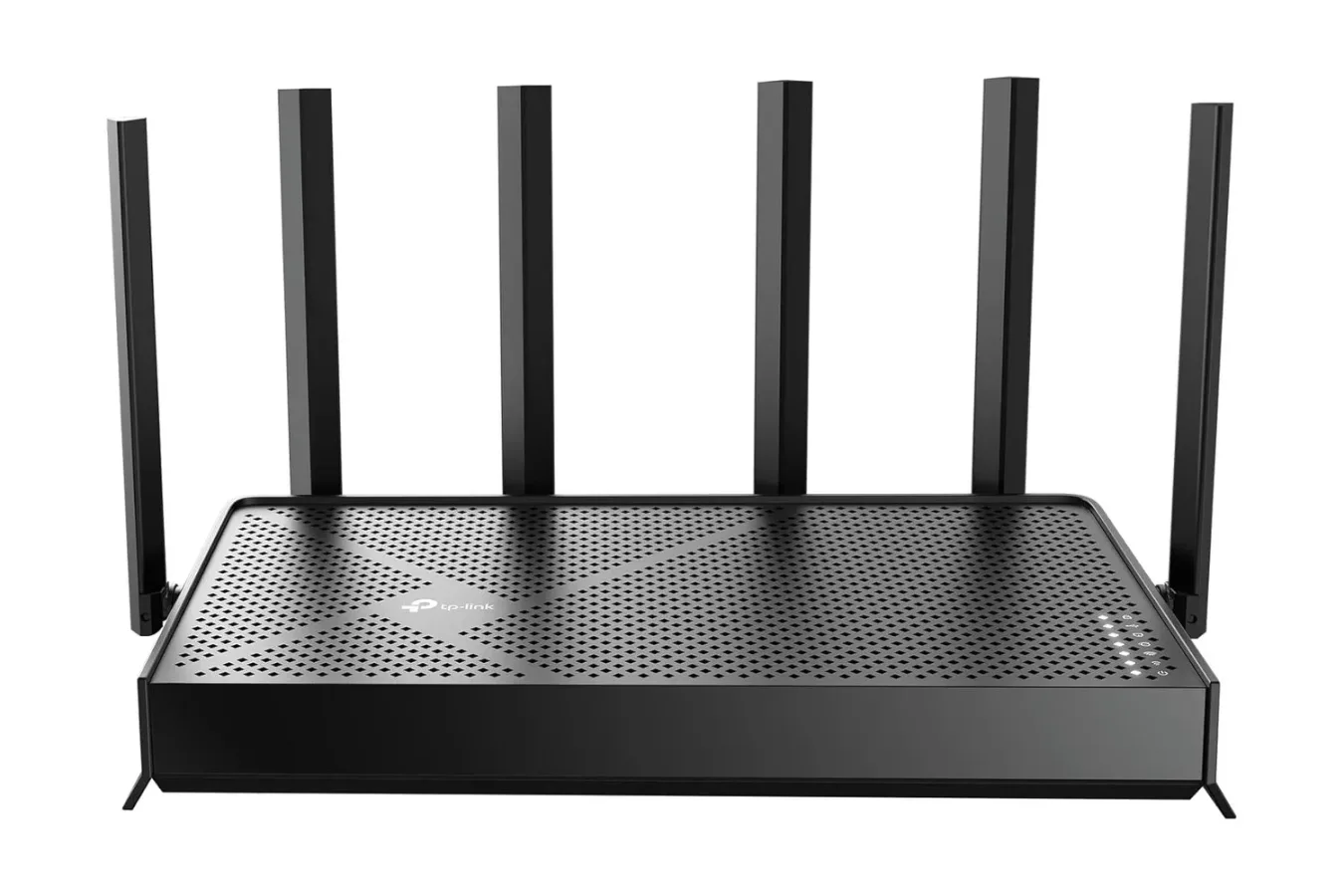
A gaming setup can have a powerful graphics card, a current-generation console, a fast display, and a top-tier controller, yet still feel unreliable when the rest of the household gets online. A movie stream beginning in another room, a video call, cloud backups, smart-home traffic, or several phones scrolling at once can turn a normally smooth online match into a frustrating run of lag spikes. For players whose network hardware is now the weak link, TP-Link's Archer BE400 is discounted for Black Friday.
The Wi-Fi 7 router is currently listed at $122, a 32% reduction from its usual $179 price. That makes it a notably less expensive route into newer wireless networking features than many premium tri-band Wi-Fi 7 models. It is not designed to be the biggest, most feature-packed router in every category. Instead, the Archer BE400 concentrates on the parts of a home network likely to matter most to a gaming household: stronger efficiency under load, broader coverage, modern wired ports, and room to expand later.
Why a router can be a meaningful gaming upgrade
Internet speed gets much of the attention when people troubleshoot online gaming, but the connection entering a home is only part of the equation. The router manages how that connection is shared by every device inside it. Older equipment can become strained as more devices compete for airtime, particularly in homes where streaming video, laptops, phones, consoles, security cameras, and connected appliances are all active at once.
That strain does not always show up as a permanently slow connection. Often, it appears as inconsistency: a match starts with a stable ping and then briefly stutters when someone begins a 4K stream. Downloads may slow down unexpectedly, voice chat can break up, and a device in a distant bedroom may have a much weaker experience than a device near the router. A newer router will not overcome a poor broadband line or fix a game server problem, but it can improve how a busy home handles local wireless traffic.
For useful background on this topic, read Samsung Odyssey Neo G9 57-Inch Dual 4K Gaming Monitor Drops to $1,349 for Black Friday.
The Archer BE400 is built around Wi-Fi 7, the latest major wireless standard supported by an expanding list of devices. PlayStation 5 Pro supports Wi-Fi 7, as do certain recent flagship phones, including Apple's iPhone 16 Pro and Samsung's Galaxy S24 Ultra. A compatible client is required to take advantage of Wi-Fi 7-specific capabilities, but the router can also serve older Wi-Fi devices already in a home.
A dual-band approach keeps the price down
TP-Link's Archer BE400 is a dual-band router, operating on 5GHz and 2.4GHz frequencies. It does not include the 6GHz band found on more expensive tri-band Wi-Fi 7 routers. That omission is important to understand before buying: players looking specifically for 6GHz access, or households that want an additional band reserved for a particularly crowded network, may need to consider a higher-priced alternative.
For many homes, however, the two included bands are a practical compromise. The router is rated for speeds up to 5,764Mbps on 5GHz and up to 688Mbps on 2.4GHz. Those are theoretical wireless ratings rather than a promise that every device will reach those figures. Real-world performance depends on the internet plan, the device being used, distance from the router, walls and interference, and whether the client itself supports the relevant standards. Still, the specifications indicate substantially more headroom than older entry-level networking equipment can offer.
The 5GHz band is generally the part of the network that will be most relevant for nearby gaming devices and modern phones, while 2.4GHz remains useful for range and a large collection of lower-bandwidth smart-home products. By supporting both, the Archer BE400 is positioned to keep a mixed household connected without making Wi-Fi 7 pricing as steep as it can be on tri-band hardware.
Multi-Link Operation is the standout gaming feature
The headline Wi-Fi 7 capability here is Multi-Link Operation, commonly shortened to MLO. With compatible devices, MLO can use both available bands for data transmission rather than relying entirely on one. The intended benefit is improved throughput and lower latency, especially when the network is under pressure.
In gaming terms, this is less about turning an average internet plan into an instant ultra-fast connection and more about keeping performance steadier when conditions change. A player might be in the middle of a competitive game when another person starts a high-resolution stream or begins downloading a large file. Where an older setup may have been more likely to introduce sudden instability, a compatible Wi-Fi 7 client and router can manage traffic more efficiently across the available bands.
The Archer BE400 also supports Multi-RUs and 4K-QAM, two further Wi-Fi 7 technologies intended to improve how efficiently wireless capacity is used. These features matter most in a busy environment with a growing number of active devices. A household may have more networked hardware than it realizes: phones, tablets, televisions, handhelds, PCs, consoles, smart speakers, cameras, lights, appliances, and work laptops can all compete for attention from the same router.
Coverage and capacity for a crowded home
TP-Link rates the Archer BE400 for up to 2,400 square feet of coverage and up to 90 connected devices. As with all coverage claims, the shape and construction of a home will affect the outcome. Thick walls, multiple floors, metal fixtures, and the router's physical placement can dramatically change wireless reach. A centrally positioned router usually has a better chance of serving the home evenly than one hidden in a far corner beside a modem.
Its hardware includes a quad-core processor and six high-performance antennas with Beamforming. Beamforming is intended to direct signal more effectively toward connected devices, rather than broadcasting in a less targeted fashion. That can be particularly relevant for a console or PC located down a hallway or in a bedroom where an older router has struggled to maintain a stable signal.
None of this eliminates the advantages of Ethernet for fixed gaming systems. A wired connection is still often the simplest way to remove wireless interference from the equation. But where running a cable is inconvenient or impossible, better router hardware and newer wireless standards can make a meaningful difference to the consistency of a home connection.
Multi-gig ports offer another upgrade path
The Archer BE400 is not only aimed at wireless users. It includes two 2.5Gbps ports: one can be used for the modem or gateway connection, while another can be used for a wired LAN device. There are also three 1Gbps LAN ports and a USB 3.0 port for shared storage.
For PC players with a multi-gig internet plan and appropriate supporting hardware, the 2.5Gbps LAN option is one of the most compelling parts of the package. Modern games can easily exceed 100GB, and large patches arrive regularly. A 150GB download will not become fast merely because the router has a 2.5Gbps port; the broadband plan, modem, service-provider equipment, and PC network adapter must also support those speeds. But a standard gigabit connection can otherwise be a bottleneck in a network that is capable of more.
Console players can also benefit from the router's wired connectivity even when their systems do not take full advantage of multi-gig bandwidth. A stable Ethernet connection through one of the available LAN ports remains a sensible option for online multiplayer and large downloads.
Expansion, security, and setup considerations
Homes that need more reach later can use TP-Link EasyMesh support to add compatible TP-Link routers or extenders. This can be useful for larger properties, awkward layouts, or rooms where a direct signal remains weak. There is one compatibility detail worth noting: EasyMesh support on the Archer BE400 does not extend to TP-Link's separate Deco mesh systems. Buyers who already use Deco equipment should verify their expansion plans before making the switch.
The router includes TP-Link HomeShield features such as parental controls and real-time protection for smart-home devices. It can also place those devices on a private IoT network, separating them from gaming PCs and consoles. Network segmentation is useful in a home with many connected gadgets, both for organization and for reducing unnecessary exposure between devices.
VPN client and server functions are included as well. That potentially allows network-wide VPN routing without requiring every individual device to run its own separate application, though performance and configuration needs will vary depending on the VPN service and home setup. TP-Link is also a signatory to the Cybersecurity and Infrastructure Security Agency's Secure by Design pledge.
Initial configuration is handled through the free Tether app, with setup presented as a process that takes only a few minutes. As with any router replacement, it is worth having the existing network name, password, and internet-provider connection details available before beginning. Reusing the old Wi-Fi name and password can make reconnecting many household devices easier.
Who should consider the Black Friday price
At $122, the Archer BE400 is best suited to players who have newer Wi-Fi 7-capable devices or who simply need to replace an aging router in a crowded home. It offers a relatively accessible way to add modern Wi-Fi features, two 2.5Gbps ports, and future expansion without moving immediately into expensive tri-band territory.
It is less ideal for shoppers who specifically need 6GHz networking, already own equipment in TP-Link's Deco ecosystem, or have internet service that makes a basic router entirely adequate. The deal is also not a substitute for diagnosing service outages, weak ISP infrastructure, or problems on an individual game's servers.
Still, for households where online matches become unpredictable whenever everyone is using the internet at once, the router may be a more practical gaming improvement than another small hardware upgrade. The Black Friday discount takes the TP-Link Archer BE400 from $179 to $122, making that network refresh considerably easier to justify.
Community
Discussion
Start the conversation.
No comments have been posted yet.