

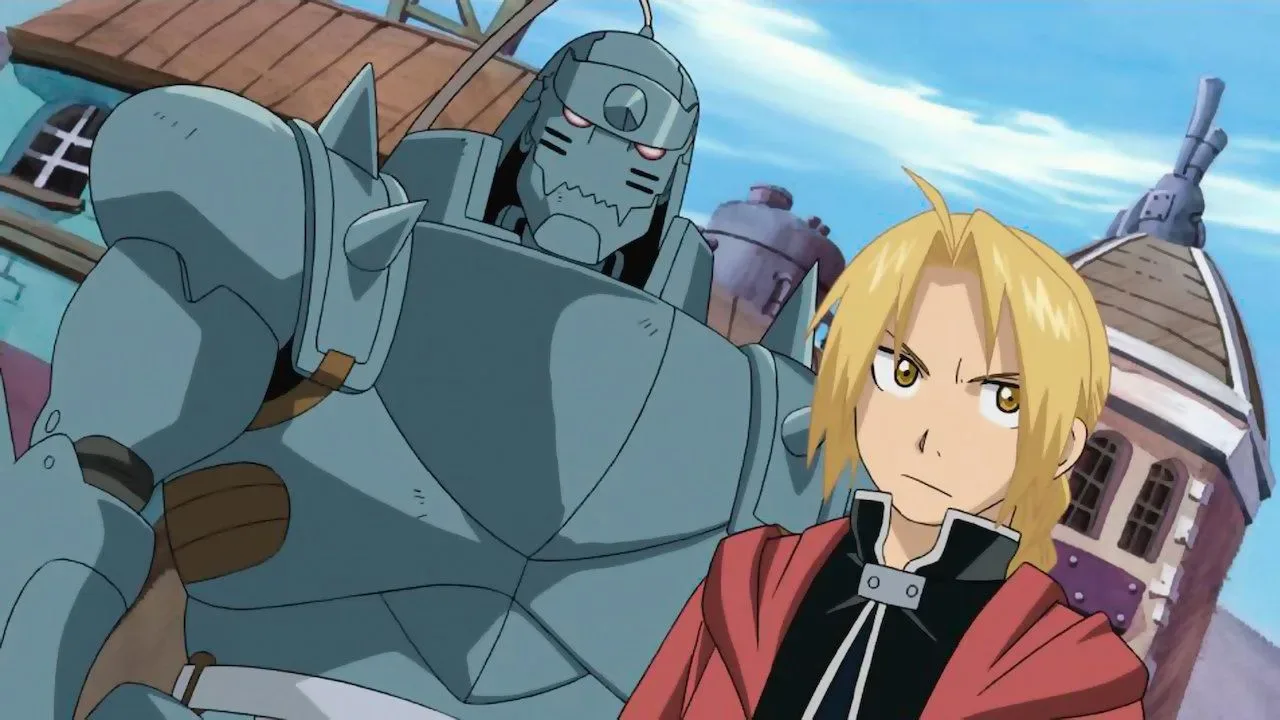
Troy Baker has spent years delivering performances attached to some of games' most recognizable characters, from Joel Miller in The Last of Us to the Joker in Batman: Arkham Origins. Yet the actor has recalled a much earlier setback that sounds almost designed to test a voice performer's confidence: he was initially cast as Greed for the 2003 Fullmetal Alchemist anime, then removed from the job after he could not make one specific laugh work.
The required line was not a conventional piece of dialogue. Baker said the role's opening cue called for roughly 30 seconds of maniacal laughter that had to build in intensity. Speaking during an interview with Party Chat, he described discovering that his range had a very firm boundary when it came to sustaining that kind of vocal performance.
It is an amusing story in hindsight, particularly because Baker later went on to portray the Joker, a character whose voice is inseparable from theatrical and unsettling laughter. But the anecdote also offers a useful glimpse at the unusual demands of voice acting. A performer can have the dramatic instincts, character interpretation, and technical control needed for a major role, only to be stopped cold by one sound effect-like instruction on a script.
A difficult first session as Greed
In the first Fullmetal Alchemist television adaptation, Baker had been brought in to play Greed, one of the story's memorable antagonistic figures. The 2003 series remains highly regarded, though it ultimately diverged from the manga's story as the adaptation moved beyond the material then available. Its English-language cast has long been an important part of the series' identity for many viewers.
For useful background on this topic, read Final Fantasy 7 Revelation Is Designed to Reward Multiple Playthroughs, Hamaguchi Says.
Baker explained that the initial task was to create laughter that escalated over a full half-minute. He and the production reportedly spent somewhere around 15 to 20 minutes attempting to land that single moment. Each try, however, failed to produce the sinister effect the scene needed.
"I found out very quickly the limits of my ability extend right up to 30 seconds of building maniacal laughter," Baker said.
He compared the result to air escaping from a balloon rather than the intimidating, increasingly unhinged laugh the role called for. That image makes clear why the problem was not simply a matter of needing one more take. Voice-over sessions can be intensely precise, and a direction such as "maniacal laughter" leaves room for enormous variation in pitch, breath control, rhythm, menace, and emotional progression. Keeping that performance believable while steadily raising the energy is another challenge altogether.
Eventually, the production decided to move on without him. Baker said the director asked him to step out of the booth, and he characterized the outcome bluntly as being fired from the project. Chris Patton later took the role of Greed in the 2003 anime.
The irony of a future Joker role
For audiences primarily familiar with Baker through video games, the story carries an obvious irony. He later became the voice of Joker in Batman: Arkham Origins, the 2013 action-adventure game set within the Arkham universe. Joker has been played by many actors across comics, animation, film, television, and games, but a volatile laugh is always among the character's defining performance requirements.
Baker himself acknowledged the strange timing in his recollection, noting that his inability to pull off Greed's laughter would become particularly funny when he eventually had to audition for "another certain character" famous for laughing. The contrast does not necessarily mean the earlier experience was irrelevant; performers frequently build technique through exactly these kinds of frustrating sessions. A voice that does not work for one scene, one age, or one direction can evolve substantially with time and practice.
It also highlights how different the two jobs would have been. A long, continuous escalation of laughter is a narrowly specific endurance challenge. Joker, meanwhile, is a complete character performance, with laughter appearing in varied emotional contexts: amused, cruel, triumphant, performative, nervous, or explosive. The demands remain formidable, but they are not identical.
Baker's broader game career makes the difference between character-specific challenges especially clear. Joel in The Last of Us requires a grounded, restrained delivery shaped by grief, survival, and a guarded paternal bond. The Joker requires flamboyance and instability. Roles can ask for radically different physical and vocal approaches, even when they are all filed under the same broad label of voice acting.
Brotherhood gave Baker a second chance
The Greed story did not end with that first unsuccessful session. Baker was able to return to the character in Fullmetal Alchemist Brotherhood, the later anime adaptation that follows the manga's complete storyline through its ending. When he came back, he said his first question was a practical one: would Greed have to do that same maniacal laugh?
The answer, fortunately for Baker, was no.
"No maniacal laughter on this," he recalled being told by the director.
That change gave him the chance to approach Greed without immediately confronting the cue that had derailed the original casting. His eventual performance in Brotherhood became part of a series that has earned an enduring reputation among anime fans and is often placed among the medium's standout television productions.
The two adaptations offer distinct experiences. The 2003 Fullmetal Alchemist series developed its own path after departing from the manga, while Brotherhood was produced later and could adapt the full narrative as written. Both versions continue to have committed fans, and the different casting histories add another layer to their legacy.
Why a single cue can decide a voice role
Stories about auditions and casting can create the mistaken impression that performers are judged only by whether they sound generally right for a character. In reality, a role may hinge on a surprising detail. A scream, cry, animalistic growl, accented line, song lyric, exertion sound, or extended laugh might be essential to a particular scene. If that moment is central to the character's entrance or identity, it can be difficult for a production to work around it.
In Baker's case, the issue was not framed as a lack of interest in the character or a failure to understand Greed. It was a technical obstacle tied to a single extended instruction. There is a difference between delivering a short villainous chuckle after a line and sustaining a convincing arc of insanity for 30 seconds. The latter demands stamina, controlled breathing, consistency, and enough variation to avoid sounding mechanical.
- Breath support: A prolonged laugh has to remain audible and energized without turning strained.
- Progression: "Building" laughter needs a clear change in intensity, not merely repetition.
- Character clarity: The sound must fit the person laughing rather than becoming a generic effect.
- Vocal safety: Aggressive sounds can be physically taxing, making technique especially important during repeated takes.
Those realities help explain why a booth session might spend 15 or 20 minutes on what looks like a brief script notation. In animation and games, short nonverbal sounds can carry as much personality as dialogue. They also need to match the pacing and visual timing of a scene, leaving less room for compromise than outsiders might expect.
A career lesson with a happy ending
Baker's experience with Greed ultimately became a comeback story rather than a permanent early-career disappointment. He was given another opportunity in Fullmetal Alchemist Brotherhood, and his later work across games and animation established him as one of the most familiar voices in modern character-driven entertainment.
There is a reassuring lesson in the anecdote for aspiring actors and creative professionals more broadly. A failed audition, an awkward recording session, or a skill gap exposed in public does not have to define an entire career. Sometimes the lesson is simply that one assignment was not the right fit at that moment. Sometimes the same role can return later under conditions that make a better performance possible.
For Baker, the inability to deliver one particular laugh did not prevent him from eventually taking on Joker, nor did it stop him from returning to Greed. Instead, it became the kind of early-career story that gains humor with distance: a performer known for major dramatic game roles and one of pop culture's most infamous villains once found his limit at exactly 30 seconds of escalating laughter.
As new anime seasons continue to bring high-profile productions and returning franchises to viewers, the story is also a reminder of the work hidden behind animated performances. Even a moment that lasts less than a minute on screen can involve multiple attempts, difficult decisions, and, occasionally, an unexpected second chance years later.
Community
Discussion
Start the conversation.
No comments have been posted yet.