

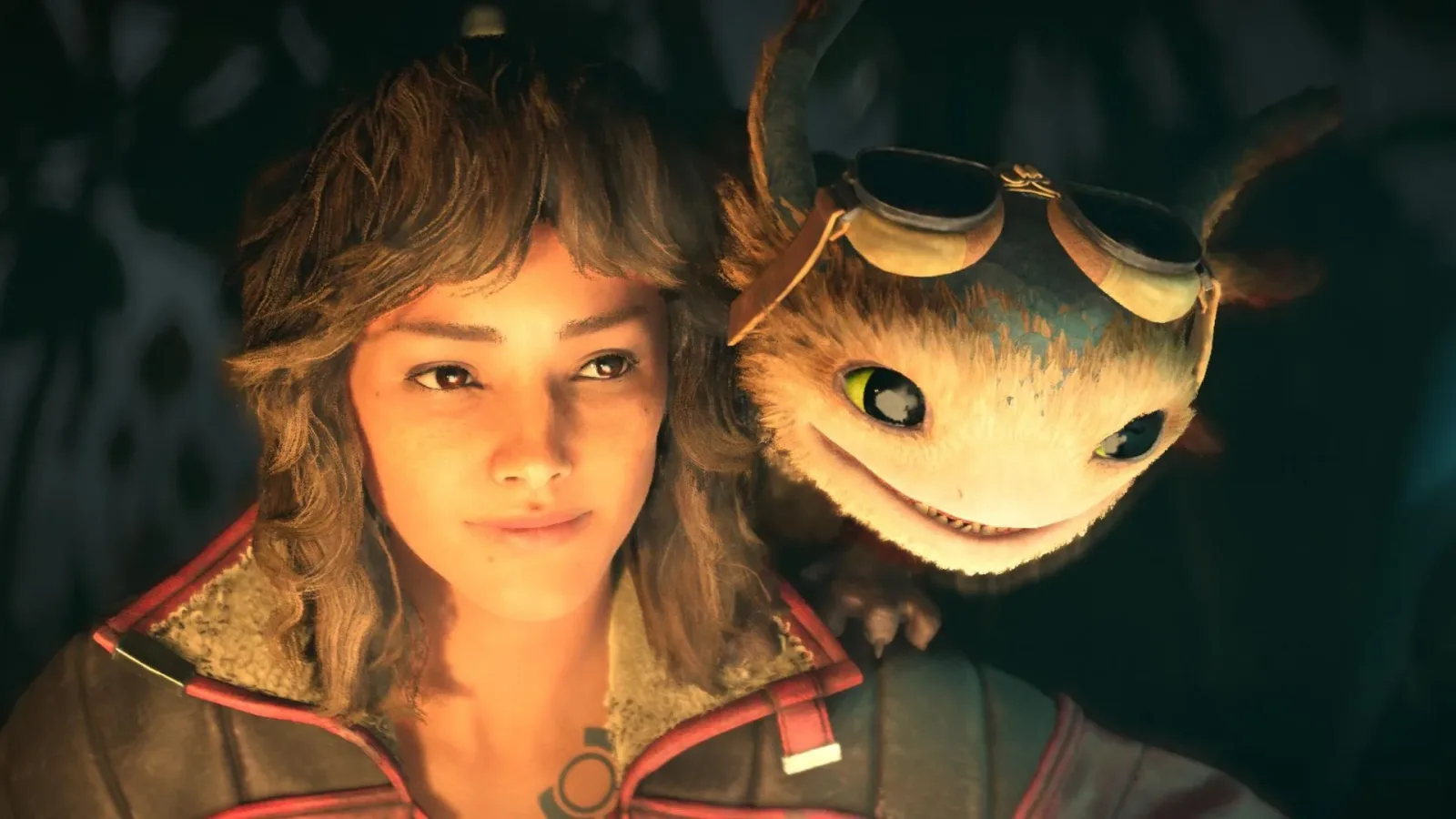
Ubisoft has given its former Creative House 2 a more recognizable identity: Massive Entertainment. The Swedish studio, best known in recent years for leading development on The Division, Avatar: Frontiers of Pandora, and Star Wars Outlaws, is now the name and coordinating center for a wider international group of Ubisoft teams.
The newly branded Massive Entertainment group brings together studios in Malmö, Paris, Montreal, and Toronto. Its portfolio is substantial, covering The Division, Ghost Recon, and Splinter Cell, along with the multiplayer online battle arena game March of Giants and unspecified new original intellectual property. The group does not include Rainbow Six, despite the rest of its Tom Clancy-heavy lineup.
The move is part of Ubisoft's broader 2026 restructuring, which has involved job losses, studio closures, and a reshaping of how the publisher organizes its many worldwide development teams. Creative House 2 was initially presented as a temporary business label. Replacing it with Massive Entertainment signals that Malmö is set to become the central hub for this particular collection of projects and studios.
A familiar collaborative model with a new center
Ubisoft has long built many of its biggest games through collaboration among studios in different countries. A single project can have a lead developer while receiving crucial design, art, technology, production, or support work from a larger network. The Massive Entertainment structure formalizes that approach around a studio name with a long history inside Ubisoft.
For useful background on this topic, read Samsung Odyssey G55C 32-Inch Curved Gaming Monitor Deal Drops Price to $190.
Under the new arrangement, Massive is not simply one developer working on one game at a time. It is the banner for a cross-studio operation encompassing Ubisoft Paris, Ubisoft Montreal, Ubisoft Toronto, and Massive's own Malmö staff. That places an unusually wide collection of established series under one organizational umbrella.
For players, the most notable names are likely The Division, Ghost Recon, and Splinter Cell. Each has a distinct legacy within Ubisoft's catalog. The Division has become one of the publisher's key live-service action franchises; Ghost Recon remains a major tactical military brand; and Splinter Cell is one of Ubisoft's most enduring stealth series. Their shared placement suggests Ubisoft wants a single leadership structure overseeing a significant portion of its Tom Clancy portfolio.
At the same time, there is no indication that the games themselves will necessarily become more alike. The franchises have historically served different audiences and design goals. What the reorganization changes is the management and development framework around them, not a publicly detailed creative plan for their next entries.
March of Giants and new projects join the portfolio
Massive Entertainment's responsibilities extend beyond the established Tom Clancy properties. The group will also handle March of Giants, a MOBA Ubisoft acquired from Amazon, as well as projects described only as new original IP. No further details have been provided on those original games, their genres, development status, or eventual platforms.
That mix gives the new group a broad remit. It includes ongoing and recognizable Ubisoft brands, a recently acquired multiplayer project, and room for new concepts that have not yet been announced. It also potentially includes whatever Massive itself began pursuing after the release of Star Wars Outlaws, though no specific unannounced title has been confirmed.
The scale of the portfolio makes leadership and coordination especially important. Major Ubisoft franchises typically require large teams and long production cycles, while new intellectual property carries a different kind of risk. A structure based around Massive could allow the company to share technology, expertise, and production resources among several teams, even where the games themselves remain separate.
Whether that produces more predictable releases or more ambitious projects will be judged later, when Ubisoft reveals what the reorganized group is actually building. For now, the announcement is mainly a map of responsibilities rather than a slate of new game announcements.
Leadership takes shape in Malmö
Ubisoft had announced in July that Cristoph Hartmann would lead Creative House 2. Hartmann brings roughly two decades of experience at Take-Two Interactive, where he co-founded 2K Games, and he also previously spent time as a vice president at Amazon Games.
He has since been joined by Natalie Francis, formerly chief development officer at Avalanche, who was named studio manager in Massive Entertainment's Malmö office. With the Creative House 2 name now being retired in favor of Massive Entertainment, the Swedish city appears to be the operational capital of the newly defined network.
This is an important distinction in a publisher as large as Ubisoft. Paris, Montreal, Toronto, and Malmö all have significant game-development histories, but the naming decision puts Massive's identity at the forefront. It gives the group a clearer internal and public-facing label than a numbered creative-house designation, while also tying its future to a studio that has shipped several high-profile releases.
From Ronneby strategy specialists to a Ubisoft cornerstone
Massive Entertainment's current role is a long way from its beginnings. The company was founded in 1997 in Ronneby, a small Swedish town, by former students connected to Ronneby kunskapskälla. In its early years, Massive made its name in real-time strategy games, beginning with Ground Control.
Ground Control stood out for its tactical approach and presentation at a time when the strategy genre was crowded with base-building games. Massive later followed it with World in Conflict, another acclaimed strategy release. Those games established the studio as an inventive PC-focused developer before its eventual transition into Ubisoft's much larger global production system.
Vivendi acquired Massive before Ubisoft entered the picture. In 2008, following the merger between Activision and Vivendi, Ubisoft purchased Massive as the studio was being sold off. From there, its work changed dramatically. Rather than continuing solely as a creator of its own strategy series, Massive contributed to franchises including Assassin's Creed and Far Cry before taking a leading role on new projects.
That shift eventually resulted in 2016's The Division, a major step into online open-world action games. Massive subsequently led development on Avatar: Frontiers of Pandora and Star Wars Outlaws. The latter received a mixed initial response but improved over time, becoming a stronger final product than its early reception suggested.
The journey from a small Ronneby studio to the coordinator of teams across several of Ubisoft's largest development centers is striking. Massive's original home was far removed from the scale of modern blockbuster game production. Today, its base in Malmö, Sweden's third-largest city, represents a major local employer and a central point in Ubisoft's reworked studio network.
What this means for Ubisoft's wider restructuring
Massive Entertainment is one piece of a larger organizational overhaul. Ubisoft has divided its games and studios among six creative houses. Elsewhere, the publisher has the Ubisoft-Tencent joint venture Vantage Studios, while several other divisions still carry provisional labels including Creative Houses 3, 4, and 5.
The rebranding of Creative House 2 may therefore offer a preview of how Ubisoft could eventually present its other divisions: less as abstract corporate categories and more as organizations defined by established studio names or clearer identities. For Massive, the change comes with a major responsibility. The group now carries the future of several valuable franchises while navigating Ubisoft's ongoing efforts to stabilize its business.
There are still many unanswered questions. Ubisoft has not outlined the next specific Ghost Recon, Splinter Cell, or The Division projects that will emerge from this structure. It has not explained how the four studios will divide responsibilities on every game, nor has it detailed the new original IP now assigned to Massive Entertainment.
What is clear is that Ubisoft has chosen Massive as more than the developer behind its recent licensed open-world games. It is now a named, multinational development group with a mandate spanning stealth, tactical action, online shooters, competitive multiplayer, and unknown new ventures. The success of that model will depend not on the new sign over the door, but on the games that eventually come out of Malmö, Paris, Montreal, and Toronto.
Community
Discussion
Start the conversation.
No comments have been posted yet.