

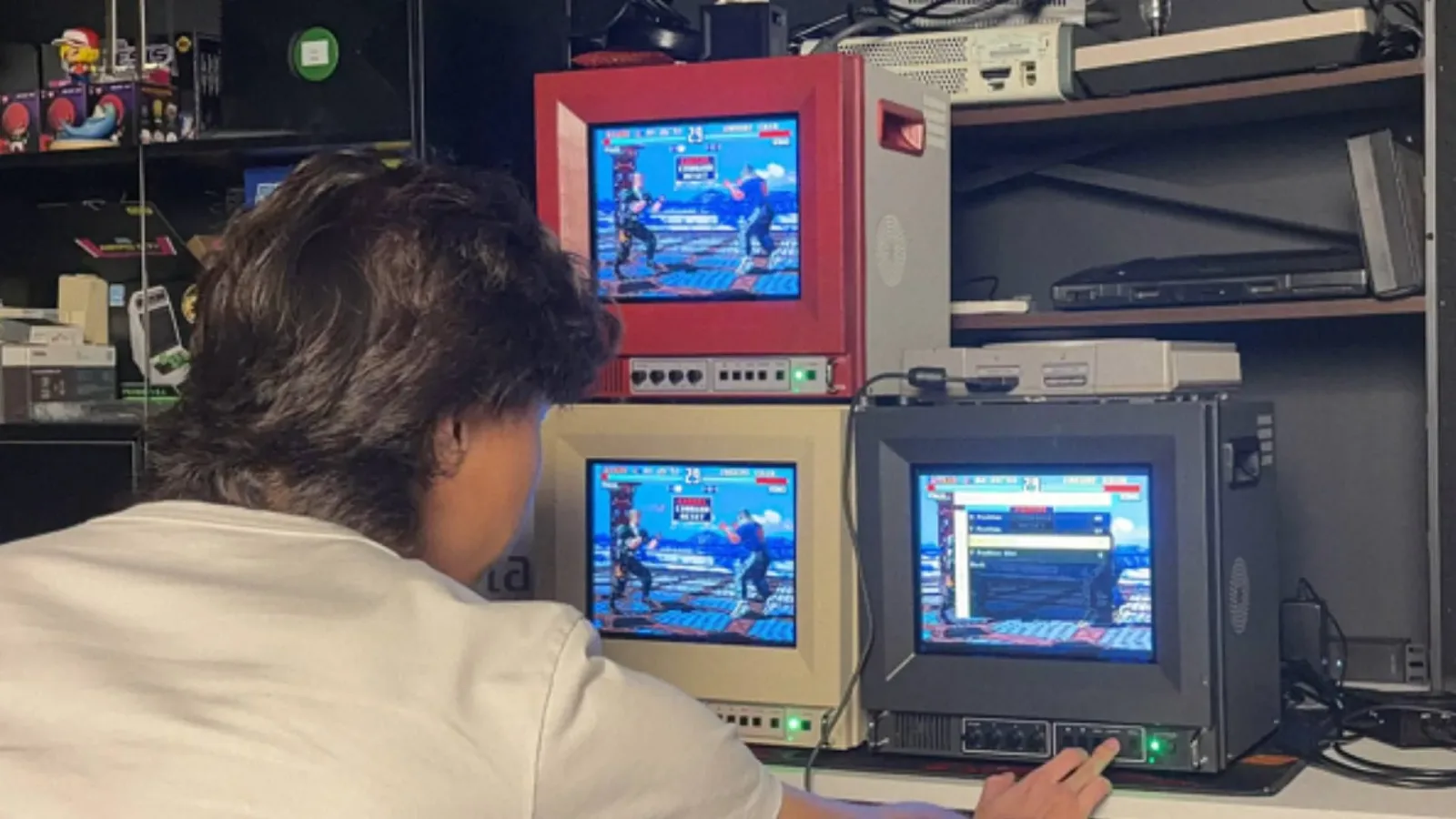
Unico's Traveller ULW10 has arrived in the hands of early reviewers, offering the first meaningful look at how the CRT-styled LCD monitor performs outside of promotional material. The results have raised serious questions for retro players, particularly those who expected a portable display built around the needs of original consoles, RGB hardware, and low-latency play.
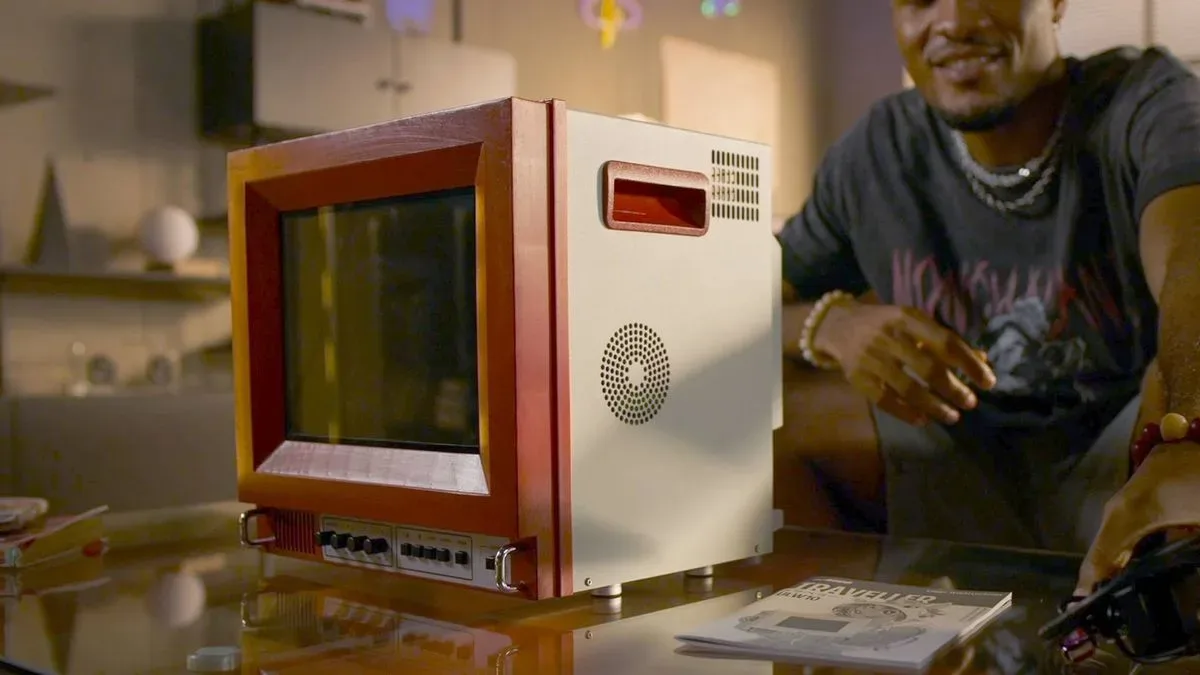
The Traveller ULW10 is designed to resemble a compact professional video monitor, often called a PVM in retro-gaming circles. Its pitch is easy to understand: provide a modern, portable LCD with visual touches associated with classic tube televisions, while adding conveniences such as scanline effects, a shape that can be rotated vertically for TATE arcade games, and internal space intended for hardware such as MiSTer setups.
That concept remains appealing. A small display with a retro presentation could be useful for players who do not have the room, budget, or desire to maintain an aging CRT. But an early prototype examined by RetroRGB founder Robert Neal appears to fall far short of the performance and signal compatibility expected from a device aimed at enthusiasts.
More than 100ms of measured delay
The most serious concern is input latency. Neal measured the Traveller ULW10 prototype at more than 100ms of lag. In practical terms, that is roughly six to nine frames of delay, depending on the frame rate and measurement context.
For useful background on this topic, read Steam Frame Review: Valve's Ambitious VR Headset Struggles to Justify Its Premium Price.
For retro gaming, that is an exceptionally high figure. Older games were built for direct response on CRT televisions, which display an incoming analog image with extremely little processing delay. Even many modern flat-panel displays can feel noticeably less immediate than a CRT. Once latency rises into the region measured on this prototype, timing-sensitive games can become difficult to play as intended.
Fighting games, rhythm titles, shooters, platformers, and speed-focused action games are especially vulnerable. A player may press a button at the correct moment but see the action happen substantially later, disrupting muscle memory and making precise inputs unreliable. The issue is not merely theoretical for collectors and enthusiasts who play original software on original hardware; responsiveness is one of the central reasons many still seek CRTs, dedicated scalers, or modern displays tested for low lag.
The reported measurements applied across both HDMI and RGB connections, and at 1080p, 720p, 480p, and 480i signals. That broad pattern suggests the problem is not limited to one resolution or one input type in the prototype. It instead points toward the display's current processing chain, panel behavior, or both.
Unico has indicated that the situation could be addressed through firmware or by moving to a different panel. Those are potentially significant changes, and they mean the final retail hardware may not perform exactly like the unit tested. At this stage, however, the prototype's measurements make it difficult to view it as a viable CRT alternative.
Missing features matter as much as the styling
The Traveller ULW10 also appears to be missing several features that are particularly important to its intended audience. Most notably, the prototype does not support 240p, a signal format closely associated with a wide range of classic consoles and arcade boards.
Systems including the NES, Super Nintendo, Sega Genesis, PlayStation, Saturn, and many arcade platforms commonly output 240p for their 2D games. Although the number sounds similar to 480i, the two formats behave very differently. A 240p image is progressively drawn in a way that produces the familiar sharp lines and stable presentation associated with classic gaming. By contrast, 480i uses interlacing, alternating fields to construct an image.
On the Traveller ULW10 prototype, 240p material is converted to 480i. That can introduce the visible instability often described as jitter, undermining the clean, consistent image retro players expect. For a display specifically marketed around the aesthetics and use cases of old gaming hardware, a lack of proper 240p handling is a major limitation rather than a minor omission.
Composite input is another absence that could narrow the monitor's usefulness. Composite video is far from the highest-quality connection, but it remains essential for straightforward use with some older systems and stock console setups. The NES is a prominent example, while Nintendo 64 owners also frequently rely on composite video unless they have performed modifications or use external conversion equipment.
Without composite input, players may need extra adapters, scalers, modifications, or entirely different hardware before they can connect consoles that a retro-focused monitor might reasonably be expected to accommodate. That does not automatically make the ULW10 unusable, but it makes its proposed role as a convenient all-in-one retro display considerably less convincing.
A promising enclosure cannot compensate for unsuitable internals
There are positive observations from the early examination. The prototype uses a 3D-printed enclosure, yet the physical construction was described as sturdy and thoughtfully designed. A teardown also indicated that Unico had not simply put a cheap security-camera screen inside a retro-looking shell, a concern that can arise when a product's external styling is much more developed than its technical details.
The shell and feature set show that there is a real idea here. Flat sides make vertical rotation more practical for arcade shooters and other TATE-oriented games. Scanline emulation can help modern panels evoke the look of older displays when implemented well. Storage intended for compact devices such as MiSTer systems could make the unit useful at events, local multiplayer sessions, or small retro-gaming setups.
Yet those advantages depend on the screen doing its fundamental job. Low delay, reliable signal handling, and appropriate legacy connectivity are not optional extras for a premium retro display. They are the baseline requirements that determine whether the product can serve the audience it is targeting.
At an advertised price of $300, the comparison is not simply against inexpensive portable monitors. Buyers will compare it with established upscalers connected to gaming monitors, existing portable solutions, and the continuing option of finding a working CRT. Neal's assessment was particularly sharp on this point, arguing that the campaign had collected roughly $250,000 for a product that was unfinished and had not been adequately tested.
Campaign presentation has already drawn scrutiny
The performance findings arrive after earlier concerns about the Traveller ULW10's Kickstarter presentation. The campaign had used AI-generated imagery instead of product photographs, an approach that made it harder for potential backers to determine what had actually been built and how closely it matched the marketing.
Unico previously said it would remove the AI imagery from its promotional materials and avoid using the technology in future marketing. The company's willingness to respond to that feedback is a positive sign, and there is no indication that the display's problems were the product of an effort to deliberately mislead customers.
Instead, the available evidence points more toward inadequate testing or an incomplete understanding of the technical expectations surrounding retro video. That distinction matters. Designing a low-latency display that correctly handles legacy formats is difficult, especially when the aim is to combine analog inputs, modern digital connections, image processing, portability, and a distinctive industrial design.
But difficulty does not reduce the importance of getting those details right before asking players to fund the product. Retro hardware buyers are often knowledgeable about signal standards, scaling behavior, and latency. Many have spent years navigating the compromises involved in connecting older consoles to new screens. A monitor built specifically for them will naturally be held to a high standard.
What needs to change before the ULW10 can earn a recommendation
For the Traveller ULW10 to become a compelling option, Unico will need to demonstrate improvements with production-representative hardware rather than promises alone. Most importantly, any revised unit needs substantially lower input latency across its advertised inputs and resolutions. The target should be a response level that feels suitable for demanding retro software, not merely one that is acceptable for casual video playback.
Proper 240p support is equally important. Classic consoles should be displayed without forcing their native progressive output through an interlaced conversion that creates instability. The final product would also benefit from clear documentation explaining how it treats 240p, 480i, RGB, and HDMI signals, rather than leaving buyers to discover limitations after purchase.
Connectivity needs another look as well. Composite video may not satisfy image-quality purists, but its inclusion would better align the monitor with the broad reality of retro-console ownership. A device that calls itself portable and retro-friendly should reduce setup friction, not require users to add more boxes to support common systems.
The Traveller ULW10 is therefore not without potential. Its compact faux-CRT concept, rotating-friendly design, scanline option, and internal storage ideas could still appeal to a segment of the retro community. However, the early prototype currently has problems in the areas that matter most. Until Unico shows that its latency, 240p behavior, and input support have been meaningfully corrected, prospective buyers have strong reasons to wait for updated testing before treating the display as a replacement for a CRT or a low-lag modern gaming setup.
Community
Discussion
Start the conversation.
No comments have been posted yet.