

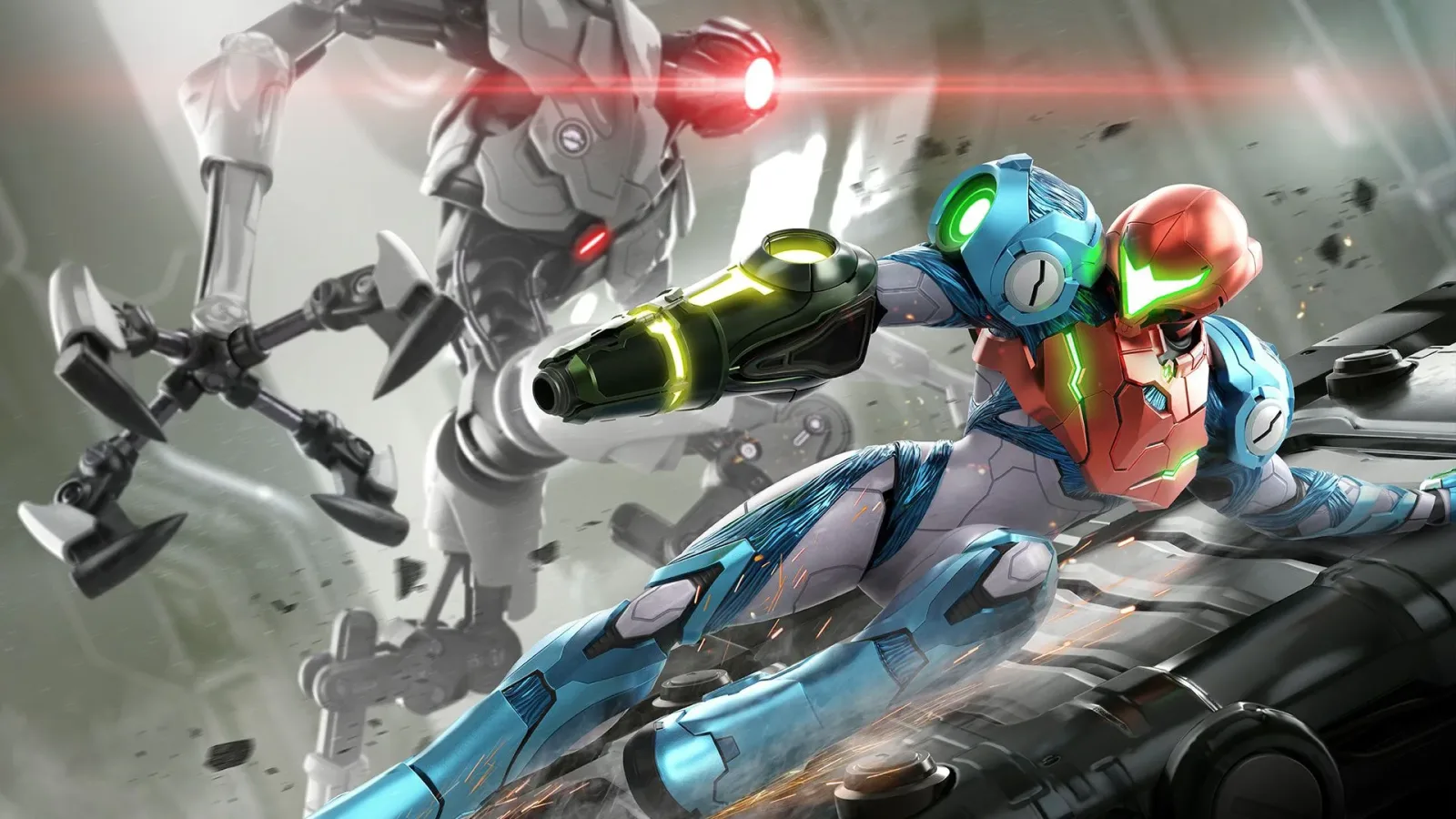
Metroid Dread has made a striking return to the top of Nintendo's US eShop charts, nearly five years after its original release. The renewed momentum follows the reveal of Metroid Ravenous, a newly announced 2D entry that has quickly reignited interest in Samus Aran's long-running sci-fi series.
The chart resurgence is a notable achievement for MercurySteam's 2021 Switch game. Metroid Dread was already an important release for the franchise, completing a story thread that had remained unresolved for years and bringing the side-scrolling style of Metroid back to a much wider audience. Now, excitement around the next chapter appears to be encouraging players who missed it the first time to finally see what all the fuss was about.
At the time of the chart update, Metroid Dread had moved ahead of major Nintendo releases including Super Mario Galaxy, Super Mario Galaxy 2, Super Mario Party Jamboree, and The Legend of Zelda: Tears of the Kingdom on the US eShop. That is substantial company for a five-year-old single-player action adventure, especially one from a series that has historically been beloved but less commercially dominant than Nintendo's biggest names.
A New Metroid Announcement Creates Immediate Demand
Metroid Ravenous was unveiled during last week's Nintendo Direct. While the presentation drew disappointment from some viewers hoping to see more first-party Switch 2 announcements as Nintendo approaches 2026, the appearance of a new 2D Metroid immediately stood out. The project has generated a particularly enthusiastic response among fans of Samus's side-scrolling adventures.
For useful background on this topic, read Takaya Imamura's AI Game Prototype Sparks Debate Among Nintendo Fans.
That enthusiasm is now translating into sales for the game that most recently defined the format. Players interested in Ravenous have an obvious reason to revisit or experience Dread: it is the latest major 2D installment and a crucial point in the series' ongoing narrative. For newcomers, it also offers a modern introduction to the core appeal of Metroid--exploration, isolation, ability-based progression, tense boss encounters, and a constant sense that an unfamiliar world is concealing more than it initially reveals.
The current eShop result was also helped by Nintendo's ongoing sale, which has placed a number of digital titles in front of shoppers browsing for discounts. A promotion alone does not guarantee a five-year-old game will jump to first place, however. The timing alongside the Metroid Ravenous announcement suggests that the series is enjoying a meaningful burst of renewed attention.
Why Metroid Dread Still Matters
When it arrived in 2021, Metroid Dread carried an unusually large weight of expectation. It was positioned as the conclusion to the central arc that began with the original Metroid, continued through Metroid II: Return of Samus, Super Metroid, and Metroid Fusion, and had been discussed in one form or another for many years.
The finished game delivered a fast, demanding interpretation of the classic formula. Its movement systems gave Samus exceptional mobility, while its hostile E.M.M.I. robots brought an extra edge of pressure to specific areas. The resulting experience could be challenging, but it also made the character feel more agile and capable than ever. That combination helped Dread reach players who had not necessarily grown up with the older games.
It also gave the franchise something it had not enjoyed in some time: a contemporary, high-profile 2D release that felt like a major Nintendo event. The Metroid Prime series has its own devoted following and first-person structure, but Dread reminded audiences how distinct the 2D branch remains. It is less about shooting galleries or spectacle and more about methodically transforming a hostile map into a place the player understands and can control.
That identity makes Dread a natural point of entry for anyone interested in Ravenous. It is modern enough to be approachable, yet still firmly rooted in the design principles that made the older games influential across the action-adventure genre.
MercurySteam's Apparent Return Raises Expectations
The announcement has also revived discussion around MercurySteam's role in the franchise. The studio developed Metroid Dread and previously worked on Metroid: Samus Returns, the 2017 Nintendo 3DS reimagining of Metroid II. With MercurySteam seemingly involved once again for the next 2D game, many fans see an opportunity to build on the strengths of its earlier work.
Dread was not simply a nostalgia project. It pushed the series forward through smoother traversal, cinematic boss finishes, more expansive combat options, and an approach to level design that rewarded both direct progress and careful detours. If Metroid Ravenous continues that trajectory, players catching up through Dread now may be doing more than filling a gap in their backlog. They may be getting a sense of the creative foundation for what comes next.
The surge also illustrates the value of a clear sequel announcement for catalog games. A new installment can turn an older entry into essential preparation, particularly when its story, gameplay systems, and development team are closely connected to the new project. In this case, Dread is benefiting from both curiosity and the desire to be ready when Samus returns.
It Is Easier Than Ever to Catch Up on 2D Metroid
There is another difference between the lead-up to Metroid Dread and the buildup around Metroid Ravenous: players now have much broader access to the earlier 2D games on modern Nintendo hardware.
When Dread was approaching launch, anyone attempting to play through its predecessors faced a fragmented path. Metroid and Super Metroid were available on Switch, but other key entries could require older devices. Metroid Fusion and Metroid: Zero Mission could mean returning to a Wii U, while Metroid: Samus Returns remained tied to the Nintendo 3DS.
That situation made a complete series catch-up more difficult than it needed to be. Players could still understand and enjoy Dread without tackling every previous release, but the lack of a single accessible route through Samus's 2D history was an obstacle for those who wanted the full context.
Now, all of the 2D Metroid games can be played to prepare for Ravenous. That availability is a major advantage for Nintendo and for the community around the series. A curious newcomer can begin with the early games, jump into the pivotal Super Metroid, continue through the Game Boy Advance-era chapters, experience the remake of Metroid II, and then arrive at Dread with a fuller understanding of its place in the timeline.
A Sensible Catch-Up Route
There is no single mandatory order, and the games have changed significantly over the decades. Still, players wanting to follow the broad narrative progression before Metroid Ravenous can consider this sequence:
- Metroid or Metroid: Zero Mission
- Metroid II: Return of Samus or Metroid: Samus Returns
- Super Metroid
- Metroid Fusion
- Metroid Dread
Zero Mission is often an approachable alternative to the original Metroid, while Samus Returns offers a more modern-feeling version of the second game's core premise. From there, Super Metroid, Fusion, and Dread form an especially important run for players who want to understand the larger story beats behind Samus's recent journey.
A Strong Sign for Samus's Next Mission
Digital chart positions can change quickly, and a sales event naturally influences what rises to the top. Even so, Metroid Dread overtaking several of Nintendo's most recognizable modern releases is an encouraging signal for the franchise. It demonstrates that the Metroid Ravenous reveal has done more than generate a brief burst of social-media excitement; it has prompted a real return to the series' most recent 2D adventure.
For Nintendo, it is a reminder that Metroid can command attention when the timing, accessibility, and presentation are right. For players, it is an ideal opportunity to explore a defining chapter in Samus Aran's history before the next mission arrives. Metroid Dread may have launched years ago, but its climb to the top of the US eShop shows that its story is far from finished.
Community
Discussion
Start the conversation.
No comments have been posted yet.