

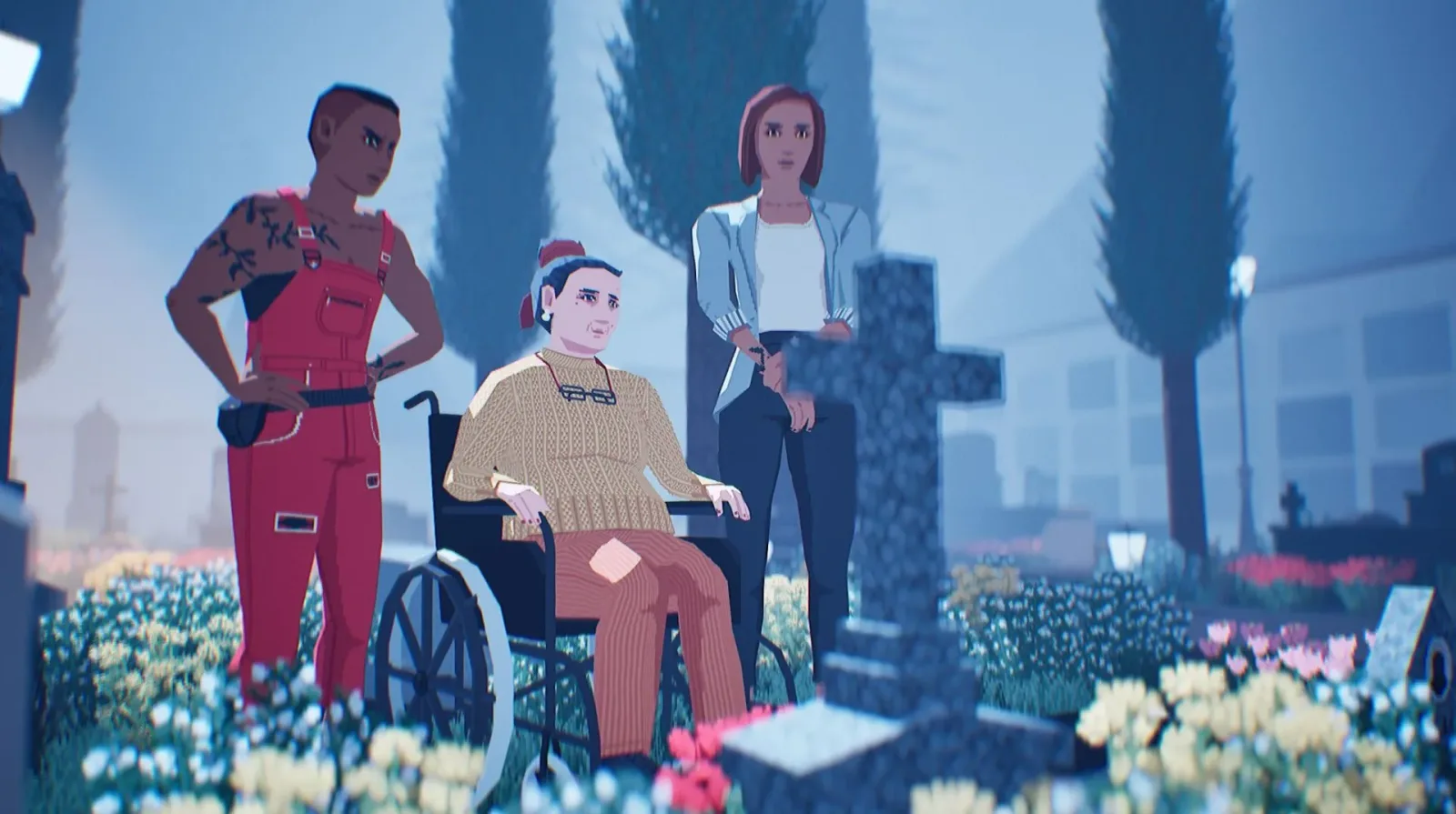
Virtue and a Sledgehammer makes an immediate, unusual promise: return to the hometown that shaped you, confront the grief and memories waiting there, and deal with it all by reducing the place to rubble with an enormous hammer. It is an odd setup for a thoughtful science-fiction drama, but that contradiction appears to be the point. Deconstructeam's latest game pairs the tactile thrill of demolition with a story concerned with consciousness, identity, loss, and the stories people tell themselves about the past.
Available now on Steam for PC for $15, the game puts players in control of Pratelle, a young adult returning home after her mother's death. Rather than choosing a quiet, conventional route through bereavement, Pratelle arrives with a sledgehammer and an intention to tear through the physical remnants of her past. The opening establishes the game's bleakly strange tone quickly: Pratelle retrieves her hammer from her car trunk, where her mother's body is also present, without reacting to it.
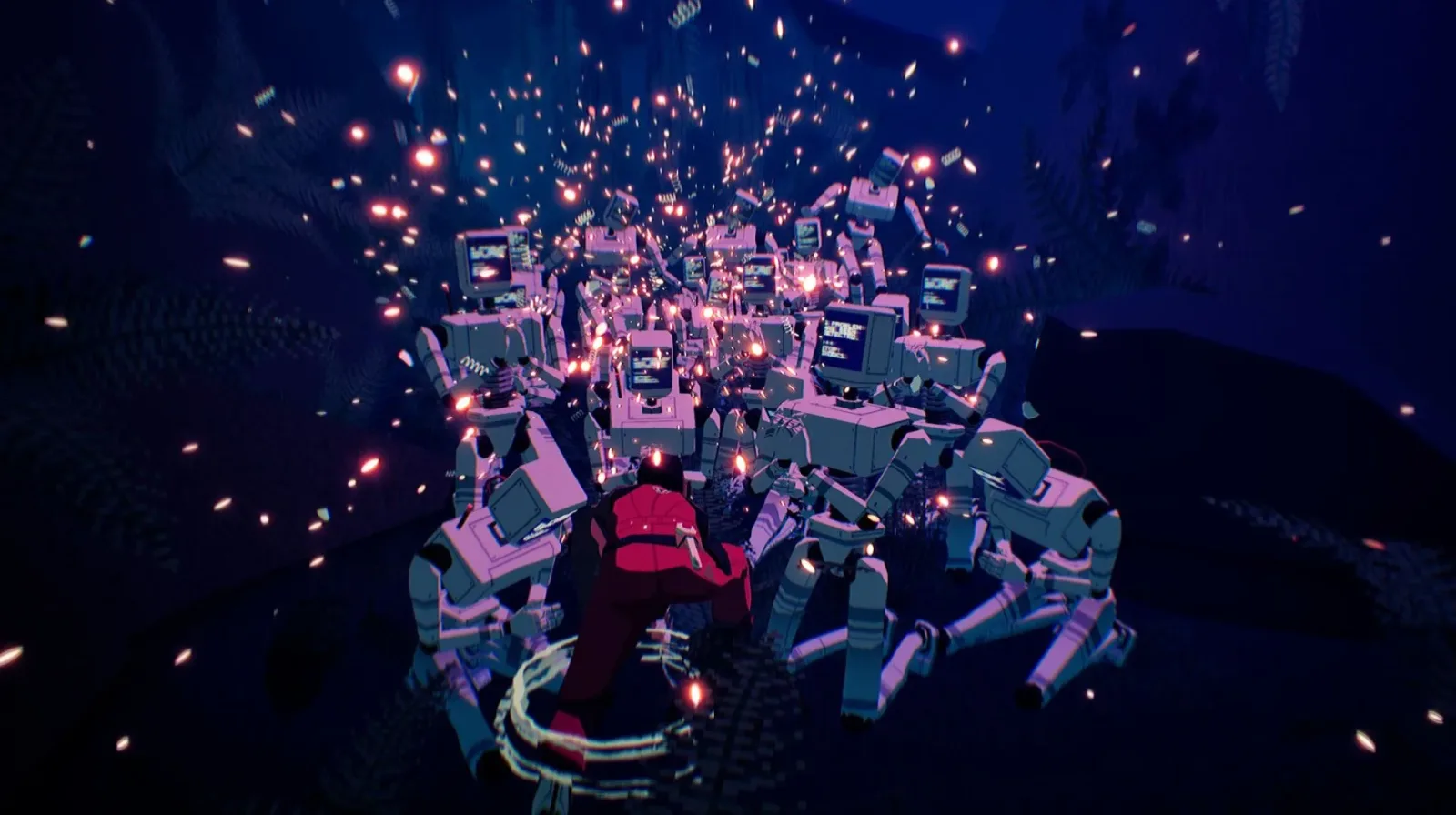
That surreal introduction is only the beginning. The hometown Pratelle returns to is now occupied by robots, many of which claim to contain the consciousnesses of people who once lived there. It is a premise that could sound absurd in a simple description, yet Virtue and a Sledgehammer uses its speculative setting to ask recognizably human questions. Are memories enough to make someone the same person? Can a mind be separated from a body? What remains of a relationship once recollection, guilt, and grief have distorted it?
A hammer with real weight behind it
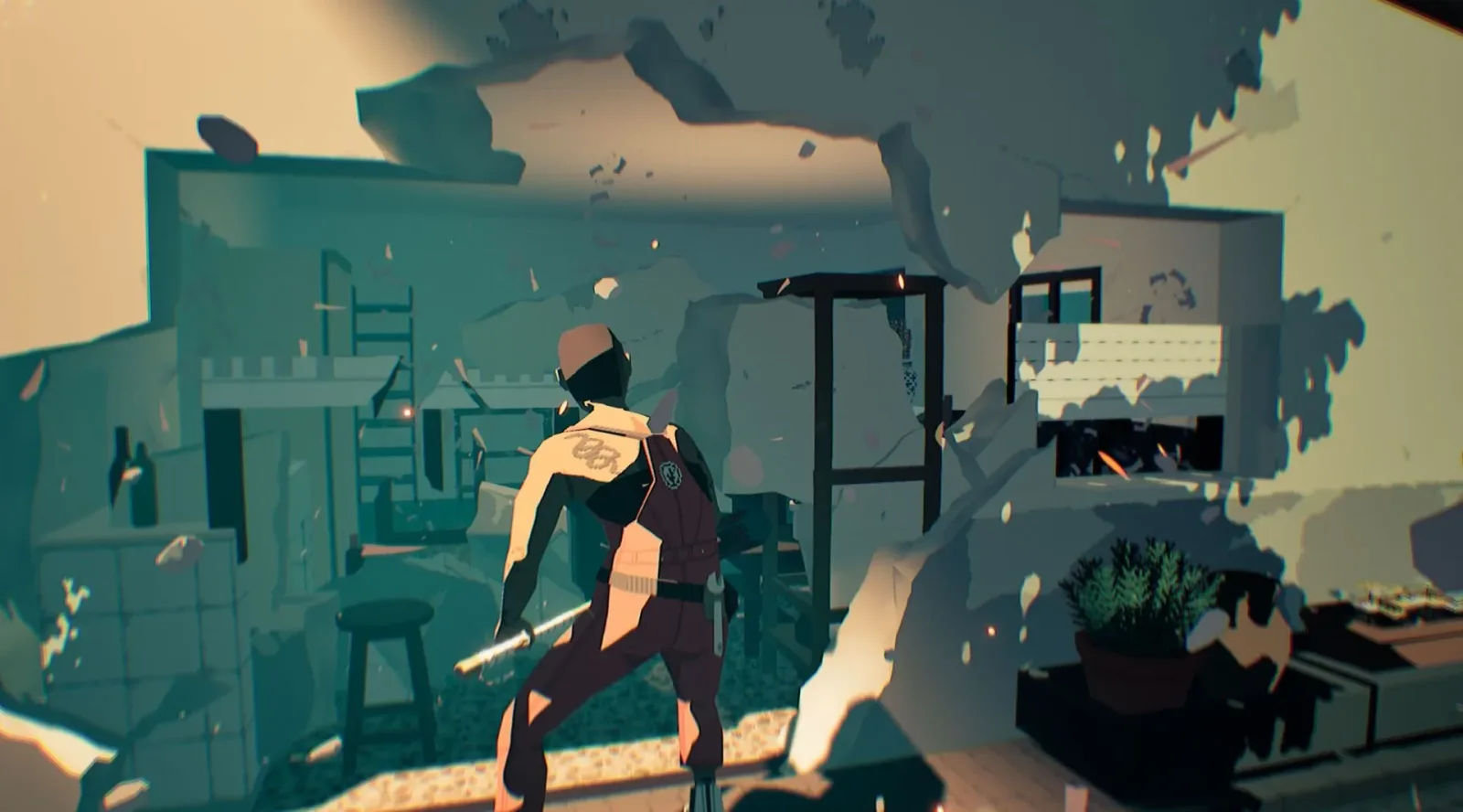
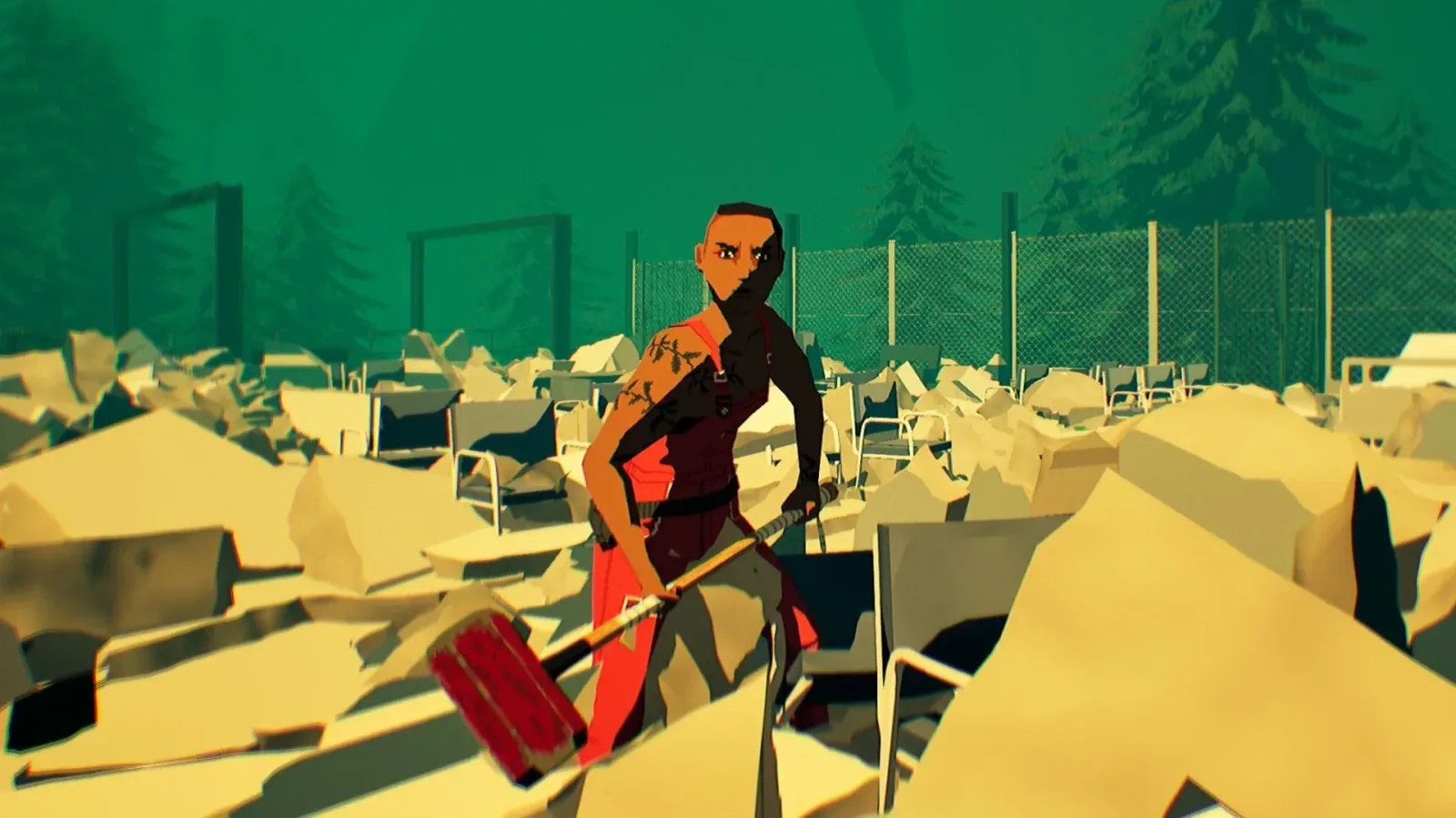
For all of its philosophical interests, Virtue and a Sledgehammer does not lose sight of the joy of breaking things. Its central tool is not a symbolic abstraction that occasionally clears a puzzle; it is a convincingly heavy instrument built for tearing down walls, floors, and entire structures. Buildings can be battered piece by piece until their remaining sections collapse, sending debris and chunks of concrete outward in a chaotic, gratifying cascade.
For useful background on this topic, read Ubisoft Pauses Assassin's Creed Remakes as Hexe Targets a 2027 Update.
The physicality of the hammer is key to why this destruction works. Pratelle does not sprint around the town like an action-game superhero. She lumbers under the weight of the weapon, and each strike requires a measure of commitment. A quick input produces a jab that can push nearby robots away, creating space before a stronger attack. Holding the attack longer creates a broad swing, while an extended charge unleashes a forceful overhead blow able to devastate barriers and mechanical opponents more dramatically.
That limited set of actions is straightforward, but it supports a satisfying rhythm. There is a pause before impact, a sense of mass in the follow-through, and then the payoff of seeing masonry burst apart. The game's appeal is deliberately direct in this respect: a giant hammer is handed to the player, the world is made destructible, and the game understands that this can be deeply cathartic.
There are robots to encounter throughout the town, but the experience is not framed as a conventional combat game. Some of these machine inhabitants talk. Others attack. Many see Pratelle carrying the sledgehammer and attempt to flee or hide. Whether to strike them is left largely in the player's hands, adding a moral unease to what might otherwise be pure demolition fantasy. The game repeatedly places its entertaining destructive systems beside questions about whose destruction is actually being witnessed.
Memory, family, and an uncertain reality
Pratelle's immediate goal is to find Nina, her gifted sister. Nina had become consumed by questions surrounding personhood and the conditions that make an individual truly themselves. Those ideas echo through the town's robot population, whose claims of living consciousness complicate Pratelle's mission and make the setting feel less like a simple post-human fantasy than a fractured emotional landscape.
Virtue and a Sledgehammer leaves room for interpretation about how literally players should take its world. The robots, the altered town, and the unusual state of Pratelle's journey can be read as concrete science-fiction events, but they also function as a means of exploring real emotional experiences through unreality. The game's concerns are not hidden behind its genre framing. It is openly interested in the tension between what people remember, what they choose to forget, and how they decide to define themselves after profound loss.
Exploration feeds directly into that narrative. Red-and-black electrical anomalies float around the environment, and striking them fills a meter. Once full, Pratelle is transported to a strange room of columns containing memories. Interacting with those memories allows players to revisit important moments and choose conversational responses, shaping the version of Pratelle reflected in the story.
Elsewhere, blue-and-white memory fragments scattered around town provide flashbacks that reveal more about Pratelle, Nina, and their mother. These scenes help assemble the family history in pieces rather than delivering every answer at once. The approach suits a story about recollection: the player is not simply handed a definitive account of the family, but instead gathers incidents, impressions, and painful context while smashing through the spaces connected to them.
An art style that makes danger unmistakable
The game's visual presentation reinforces its unstable tone. It blends stylized cartoon design with animation that evokes the PlayStation 2 era, creating a look that is expressive rather than photorealistic. Color is particularly important. When Pratelle is harmed, the world shifts toward aggressive reds and blacks. The closer she gets to danger, the more murky and unreal the view becomes.
This visual feedback also avoids adding a traditional healing loop. Pratelle does not need to search for health items or navigate elaborate recovery systems. Escaping danger for a short time is enough for the threat state to pass. That choice keeps the focus on movement, destruction, exploration, and conversation instead of turning every hostile encounter into a battle of resource management.
The stripped-back design is one of the game's more distinctive strengths. Virtue and a Sledgehammer is not trying to bury its premise beneath layers of crafting, loot, skill trees, or complex combat combinations. Its major verbs are clear: explore, remember, talk, and smash. The result sounds intentionally concentrated, allowing the emotional narrative and the sensation of demolition to carry the experience together.
Heavy subjects handled with care
Players should be aware that the game addresses difficult material. Its story includes suicidal ideation and euthanasia, alongside references to depression and abusive relationships. These are not minor background details, and anyone sensitive to those subjects may want to approach the game cautiously.
At the same time, the material is treated as part of the game's emotional and thematic inquiry rather than deployed merely for shock value. The focus on memory and identity means that painful experiences are not treated as isolated dramatic twists. They inform the characters' relationships and the larger questions surrounding Nina's work, the robot consciousnesses, and Pratelle's destructive return to the town.
The combination can make Virtue and a Sledgehammer feel uneasy in productive ways. Knocking down a wall is exhilarating. Watching a whole structure give way is even more so. But the context repeatedly asks players to consider why Pratelle needs to destroy these places and what, if anything, that destruction can resolve. The sledgehammer is both a source of empowerment and an emblem of avoidance, anger, and grief.
A brief, choice-driven journey with one pacing concern
The full game is estimated to take around four hours, with the exact length depending on how thoroughly players pursue destruction and exploration. Completionists who cannot resist flattening every possible building may naturally spend longer in its environments. Given the premise, that may be a considerable portion of the audience.
The story's ending is shaped by choices made during the journey as well as decisions made near the conclusion, giving the compact runtime some replay value and reinforcing the game's interest in self-definition. Conversations and memory scenes are not just exposition; they contribute to the eventual perspective on Pratelle and the people around her.
Its final stretch is said to be less successful structurally. The last act runs longer than it needs to, with an extended period of trudging that slows the momentum and leaves comparatively little to do. That pacing issue stands out in a game otherwise built around a brisk, focused set of mechanics. Still, it leads into an ending described as nuanced rather than simplistic, one that gives weight to the choices players have made.
A familiar willingness to take risks
Deconstructeam has previously created The Cosmic Wheel Sisterhood and Gods Will Be Watching, games known for approaching storytelling from unusual angles. Virtue and a Sledgehammer continues that tendency, but its most memorable idea may be how cleanly it joins seemingly incompatible moods. It can be funny, grim, therapeutic, contemplative, and intensely physical within the same sequence.
There is an appealing honesty to its construction. It does not pretend that a hammer can solve grief, and it does not turn philosophical science fiction into a lecture detached from play. Instead, it lets the player feel the weight of every swing while gradually uncovering a tale about a family, a town, and the uncertain boundaries of a person's self.
Virtue and a Sledgehammer is therefore likely to appeal to players looking for something stranger than a standard action game and more tactile than a purely dialogue-driven narrative. It offers a compact, sometimes unsettling sci-fi story, meaningful choices, and a remarkably simple form of release: finding a wall that has been standing too long, winding up, and bringing it down.
Community
Discussion
Start the conversation.
No comments have been posted yet.