

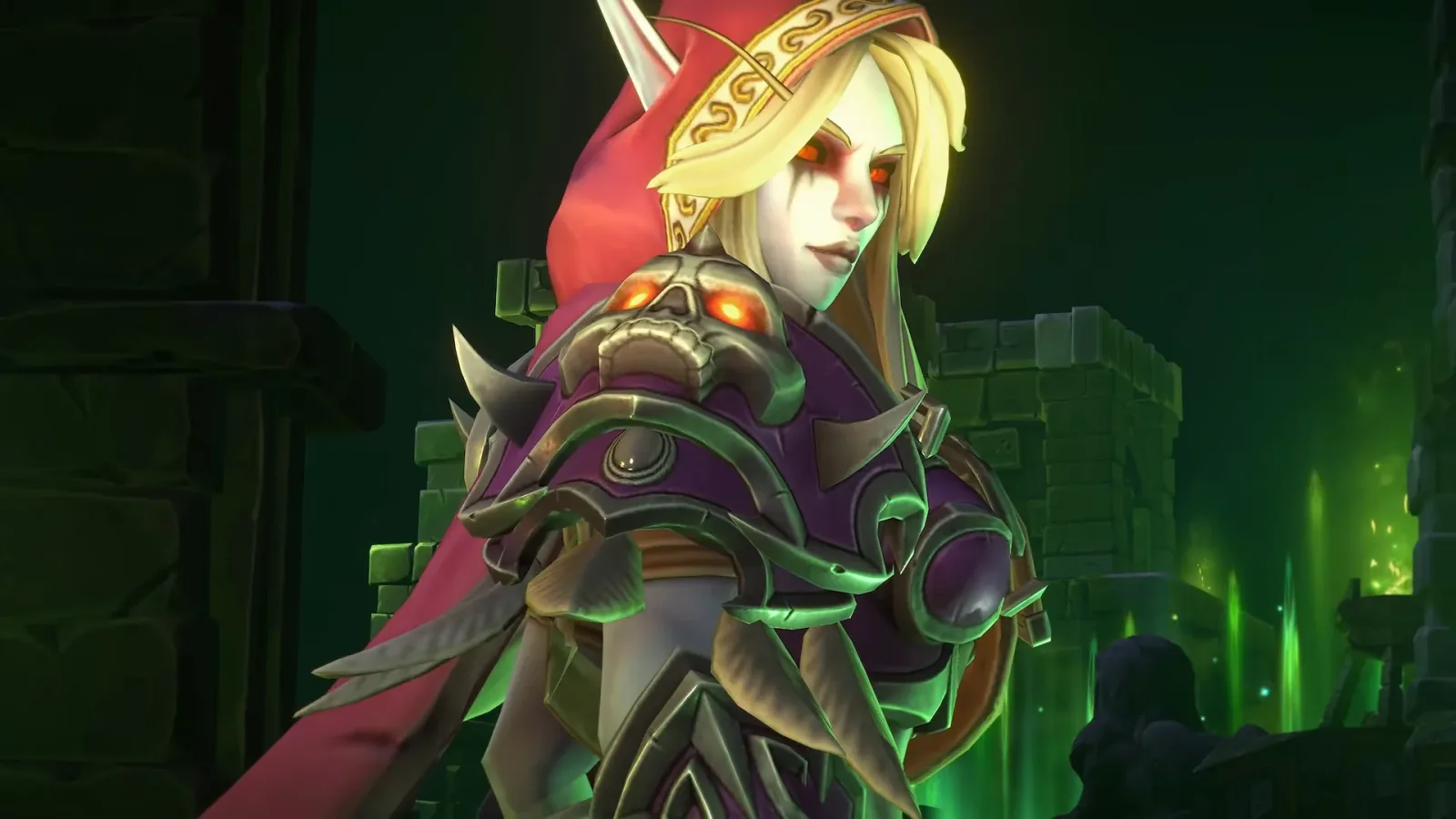
Warcraft III: The Forsaken Kingdom is taking a notably different approach to the kind of experience many players associate with Blizzard's classic real-time strategy game. Rather than centering its new campaign on constructing a base, gathering resources, training armies, and commanding massive battles, the expansion is built more like an RPG. That choice is deliberate: Warcraft leadership sees the format as a way to tell a more intimate, character-focused story within a franchise often defined by world-changing heroes and continent-spanning wars.
The absence of conventional base building may initially surprise players returning to Warcraft III expecting a traditional RTS campaign. But the game has made room for RPG-style adventures before. The original Warcraft III received bonus content starring Rexxar that moved away from the usual strategy framework, and that material remains particularly well regarded among fans. The Forsaken Kingdom follows that precedent, though its release arrives at a time when interest in what comes next for Warcraft's strategy roots is especially high.
A campaign designed for smaller-scale heroes
Speaking at BlizzCon, Warcraft senior manager Brad Chan explained that the RPG emphasis was chosen to support the specific story being told. The Forsaken Kingdom is not primarily about kings, princes, legendary commanders, or figures already wielding enormous power. Instead, it looks toward what Chan described as more "street-level" characters, including a city guard.
That perspective changes what the player needs to do and what the campaign needs to communicate. A base-building RTS structure naturally places players in the role of a commander overseeing a growing military force. It is well suited to stories about territorial control, escalating warfare, and enormous clashes. A character-driven RPG structure, by contrast, can more directly follow an individual's circumstances, relationships, and decisions.
For useful background on this topic, read Control Resonant Plans Deep Accessibility Sliders Without Sacrificing Challenge.
Chan characterized Warcraft III as more than simply an RTS, arguing that its identity has always included RPG elements. Heroes, leveling, items, quests, and campaign missions with distinct narrative goals helped make Warcraft III different from a purely economy-and-army-focused strategy game. In that sense, The Forsaken Kingdom is not rejecting the game's history so much as amplifying one side of it.
The team's stated reasoning also leaves room for different formats in the future. Chan said that if a future Warcraft story calls for large-scale combat and the return of the player as an overarching commander, the developers can lean back into that approach. The choice of genre structure is therefore being framed as a storytelling tool rather than a permanent declaration that Warcraft III has left its RTS foundations behind.
RTS fans are still waiting for more traditional Warcraft III battles
That flexibility will matter to longtime strategy fans. For players who most value Warcraft III's base construction, faction economies, unit compositions, and battlefield management, an RPG-heavy campaign does not necessarily fill the gap left by the years since Warcraft III: Reforged launched. The Forsaken Kingdom may offer a fresh kind of Warcraft III adventure, but it also highlights how hungry part of the audience remains for new content built around the series' most recognizable RTS systems.
Chan argued that the broader RTS genre is still relevant, pointing to current and successful games including Total War, Company of Heroes, Dawn of War, Age of Empires, and Tempest Rising. Those series and games cover a wide range of strategy subgenres, from historical campaigns to science-fiction warfare, but together they demonstrate that there is still an audience for games about tactical positioning, production choices, resource management, and commanding large forces.
For Warcraft, the question is not simply whether RTS games can succeed. It is what kind of Warcraft RTS experience players most want now. Warcraft III has a particular legacy because it combines competitive strategy systems with memorable scripted campaigns and hero-centered progression. A return to classic base building would not need to abandon narrative ambition; it could potentially use the familiar commander perspective to tell a different kind of story.
Game director Ion Hazzikostas suggested that community response to The Forsaken Kingdom will help guide the franchise's next steps in this area. He described Blizzard as re-entering the space with a new Warcraft III story and said feedback will determine what players want more or less of. If the reaction is that the campaign is enjoyable but needs more base construction, army building, and combat at a larger strategic scale, Hazzikostas indicated that the team is open to that feedback.
Warcraft's strongest stories may work best when players inhabit them
Hazzikostas also made a broader argument about Warcraft storytelling and why a game such as Warcraft III can accomplish things that World of Warcraft's MMO format sometimes cannot. In his view, Warcraft III-style games are the franchise's strongest storytelling medium because they allow players to personally inhabit a character's journey rather than observe it from outside.
That distinction is particularly relevant to Arthas Menethil, whose descent remains one of Warcraft's defining narratives. Players did not merely witness Arthas make increasingly catastrophic choices; in Warcraft III, they played through his path. The campaign gave people agency within the structure of his tragedy, placing them beside him as his belief in achieving a greater end drove him toward darker decisions.
Hazzikostas contrasted that experience with the challenge of telling stories in an MMO. An online world needs to preserve room for each player's own adventure, even while asking those players to follow major characters through decisive events. That can make it harder to establish the same direct connection with a central figure. Players see a character's accomplishments and failures, but they may not experience the narrative from within that character's perspective.
Warcraft III's campaign format can bridge that gap. It can put a player in control of a character or a tightly focused group, make their goals immediately understandable, and use gameplay as part of the emotional arc. That is why Arthas has endured as such an iconic Warcraft character: the story's impact is tied not only to cinematics and dialogue, but also to the player's involvement in the journey.
The Forsaken Kingdom fits into a larger Warcraft timeline
The new campaign is also not arriving in isolation. Hazzikostas confirmed that there is franchise-level coordination behind its timing and narrative connections. The Forsaken Kingdom bridges material between Warcraft III and World of Warcraft, while also tying into future Warcraft plans.
Several of those plans circle back to the people, locations, and conflicts associated with Arthas. World of Warcraft: The Last Titan, the next WoW expansion mentioned in the discussion, is set in Northrend, the region that became the seat of Arthas' power. An upcoming limited-time Remix mode will revisit the climax of his story during Wrath of the Lich King. Undead paladins are also planned for both World of Warcraft and WoW: Forever.
The overlap is meaningful because Arthas-related material has repeatedly proven among the most popular content connected to Warcraft, whether players encountered it in Warcraft III, World of Warcraft, or elsewhere in the franchise. Revisiting Northrend, the Lich King era, and related character themes while introducing a Warcraft III campaign creates a coordinated period for one of Warcraft's most recognizable narrative threads.
That does not mean The Forsaken Kingdom is simply an exercise in nostalgia. Its RPG focus suggests a desire to use the Warcraft III format to tell stories that can be more personal than an MMO questline and more grounded than the saga of a monarch or a world-saving champion. The city guard premise is an important signal: Warcraft's world has always been shaped by famous names, but it is also inhabited by ordinary people living amid the consequences of those names' conflicts.
A test for Warcraft III's future direction
Ultimately, The Forsaken Kingdom appears positioned as both a new story and a practical test of what players want from modern Warcraft III. Its RPG structure can demonstrate the strengths of a focused campaign, particularly when the narrative asks players to identify with characters outside the franchise's usual highest tiers of power. At the same time, its lack of traditional base building will ensure that fans eager for a full RTS return make their preferences known.
The encouraging part for that audience is that Warcraft leadership has not dismissed the appeal of classic strategy play. Chan's comments emphasize that large-scale battles, base development, and commanding armies remain available tools when the right story demands them. Hazzikostas's comments go further by placing player feedback at the center of future decisions.
For now, Warcraft III: The Forsaken Kingdom is making its case for a different kind of Warcraft campaign: one where the story begins closer to the ground, follows people who are not yet legends, and uses RPG mechanics to create a more direct connection between player and character. Whether the next chapter shifts back toward lumber, gold mines, and army production may depend on how strongly the community asks for it.
Community
Discussion
Start the conversation.
No comments have been posted yet.