

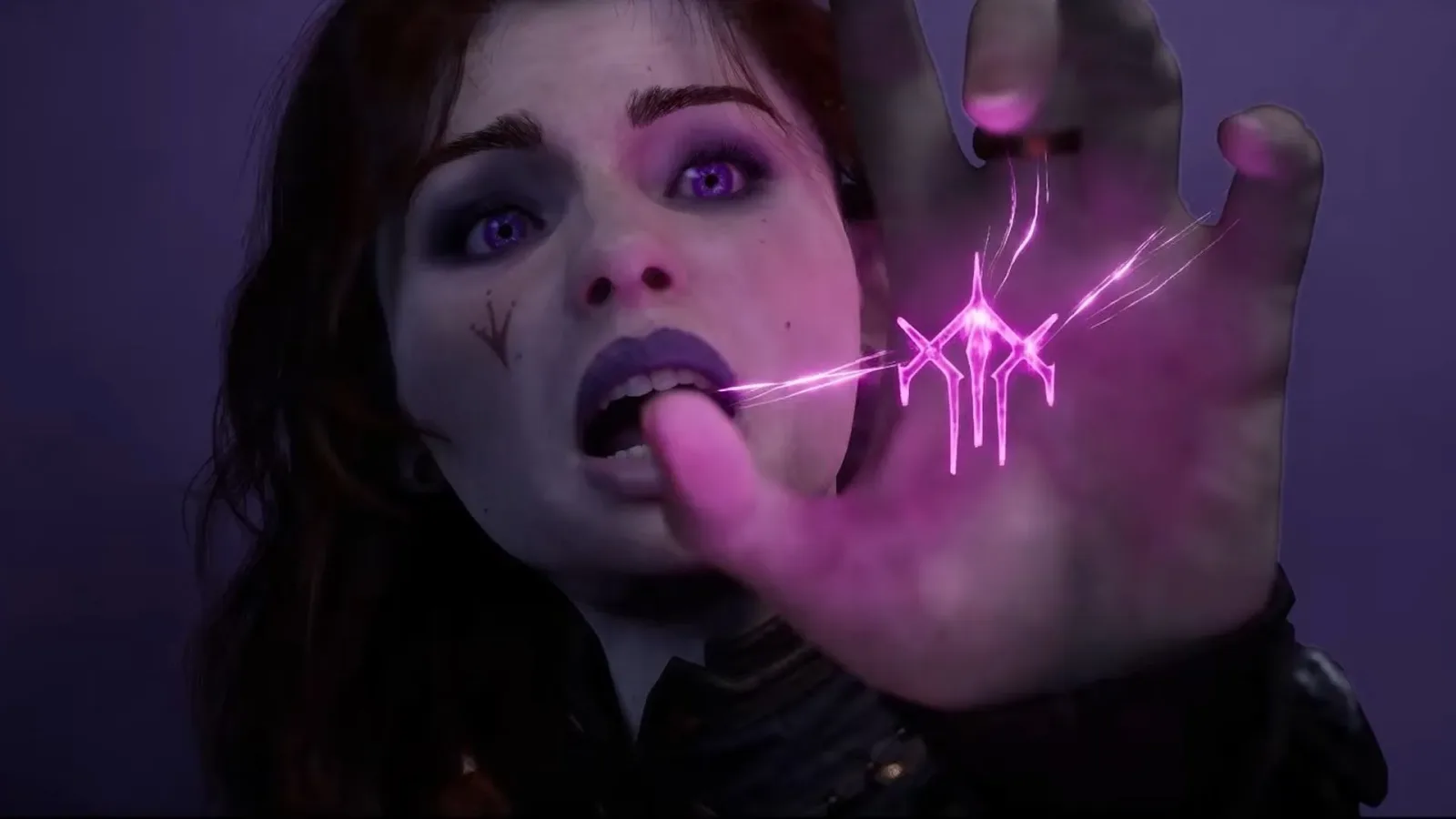
Warlock is taking an approach to fantasy-game spell design that may sound reckless at first: let the magic be wildly powerful before worrying about whether it is perfectly fair. For Invoke Studios, that was not an accident or a temporary mistake in development. It became a guiding idea for a Dungeons & Dragons-inspired open-world action-adventure that wants players to feel clever, dangerous, and improvisational when they use magic.
Invoke Studios head Dominic Guay has explained that the team initially had a familiar response whenever a spell appeared especially dominant: someone would flag it as too strong. Eventually, however, the studio made a conscious shift. Rather than weakening a promising ability before players had a chance to enjoy it, the priority became making it overpowered and fun first, then identifying the limits needed to keep the wider game working.
That philosophy matters because Warlock is not presenting magic as a passive support system or a simple selection from a menu. The game is aiming for spells that meaningfully affect enemies and the surrounding world during real-time encounters. If that ambition lands, the question will not only be whether a spell deals enough damage. It will be whether it creates memorable situations, changes a fight's rhythm, and gives players several ways to approach the same threat.
Powerful spells are meant to create possibilities
The example shared by the development team is Black Tentacles, a spell that can be used against an ogre and its equipment in different ways. Rather than simply casting it at the creature for a standard control effect, a player can attach the ogre's weapon to the ground. The result is an enemy that has effectively been disarmed and left vulnerable to follow-up attacks.
For useful background on this topic, read The Witcher 3: Wild Hunt Remastered Review - The Definitive Return to the Continent.
That is the kind of interaction that makes a spell feel powerful in a more interesting sense than a larger damage number. The player has spotted an opportunity, targeted a specific object, and used magic to reshape the encounter. It is an action that suggests Warlock wants combat to reward awareness of both an enemy and the objects associated with that enemy.
At the same time, the Black Tentacles example also reveals how Invoke Studios is thinking about balance. Casting the spell directly on the ogre is still useful, but the creature can escape more quickly. The spell therefore has different value depending on how it is deployed. Tying down a weapon may produce a longer-lasting tactical advantage, while targeting the monster itself can offer a more immediate, if shorter-lived, interruption.
This is a useful distinction. Balance does not necessarily need to mean stripping out the dramatic effect that made the spell attractive in the first place. It can instead come from context, target choice, duration, enemy behavior, and the trade-offs involved in deciding what needs to be controlled at a particular moment. A spell can remain spectacular while still asking the player to use it thoughtfully.
Real-time casting is central to Warlock's identity
Warlock's magic also appears designed around controller inputs rather than a conventional list of spells selected at a slower pace. Different button combinations will trigger different magical abilities, with the objective being a more immediate style of play. Guay has described the intended flow as one where players can move from melee attacks into multiple spells while continuing to make decisions in the middle of the action.
That detail is important because it separates the game from a system where spellcasting pauses the action or asks the player to repeatedly navigate through large ability wheels. Warlock instead seems to be pursuing a sense of momentum. A player should be able to strike with a weapon, cast, cast again, and react to what happens without feeling as though combat has been interrupted by a separate interface.
There is a difficult design challenge embedded in that goal. Fast access to a large pool of magic can be exhilarating, but it can also become confusing if players struggle to remember inputs or cannot reliably produce the spell they want under pressure. Invoke Studios is clearly aware of that risk, particularly since the controls are doing something different from many other fantasy action games.
The answer, at least in principle, is gradual learning. Players will begin as someone learning to become a warlock, with the character's growth mirroring the player's growing familiarity with the controls. New spells will become available throughout the journey, and the studio says players will gain abilities relatively quickly. That pace should give the game room to expand the player's options without demanding complete mastery at the opening hour.
Learning magic alongside the protagonist
Using character progression as an onboarding structure is a natural fit for a game centered on magical discovery. At the start, a limited toolkit can make every ability easier to understand: what it does, where it is useful, and how it connects to the controls. As more spells enter the mix, players can start considering combinations, alternate targets, and the timing required to weave magic into close-range combat.
The approach could also help preserve the appeal of the overpowered-first philosophy. An advanced spell may initially feel overwhelming in the best possible way, particularly once a player discovers an unexpected environmental use for it. Over time, however, the game can introduce enemies, scenarios, or limitations that encourage a more nuanced understanding of the same tool. The important point is that the spell's fantasy does not have to disappear just because the game asks more from the player later.
Warlock's stated design direction evokes the experimental spirit of Magicka, Arrowhead Game Studios' earlier game, where combining elemental effects could produce a wide range of outcomes. The comparison is not a confirmation that Warlock uses the same kind of elemental-combination framework, and there is still much to learn about the new game's exact mechanics. But the shared idea is easy to see: magic is more compelling when it encourages experimentation instead of functioning as a fixed sequence of isolated attacks.
For Warlock, the key difference may be its combination of open-world adventure, direct action, and a spell system built around controller expression. The ambition is not merely to give players a large inventory of abilities. It is to make those abilities feel like part of how a player moves, fights, reacts, and improvises in real time.
A different Dungeons & Dragons direction
The continued appetite for Dungeons & Dragons games is understandable after the enormous impact of Baldur's Gate 3, but Warlock is not trying to duplicate that experience. Its focus on open-world action-adventure design and immediate magical expression points in a different direction. Where a slower, turn-based structure can emphasize careful planning across every member of a party, Warlock appears to be concentrating on the individual sensation of becoming a more capable spellcaster from moment to moment.
That distinction could be one of the game's biggest strengths. Dungeons & Dragons has room for many interpretations, and games based around its fantasy can highlight entirely different parts of the experience. Warlock's pitch is especially appealing because it focuses on the messy, inventive potential of magic: binding a weapon instead of an enemy, switching rapidly between physical and magical offense, and finding a solution that may not be the most obvious one.
Of course, the promise of flexibility also raises questions that have yet to be answered. It remains unclear how broad the spell selection will be, how extensively objects can be manipulated, how enemy types respond to unusual magic, or how much freedom players will have once the full set of spells is unlocked. Those details will determine whether the system's individual ideas form a deep, consistent whole.
Still, Invoke Studios' willingness to begin with the question of what feels exciting rather than what looks safest is encouraging. Too often, a powerful ability is reduced until it is dependable but unremarkable. Warlock is attempting the harder route: preserve the thrill, then establish rules around it. If the team can maintain that balance, its spellcasting may deliver the kind of stories players remember not because the game told them to do something, but because they noticed a possibility and turned a dangerous spell into their own solution.
Community
Discussion
Start the conversation.
No comments have been posted yet.