

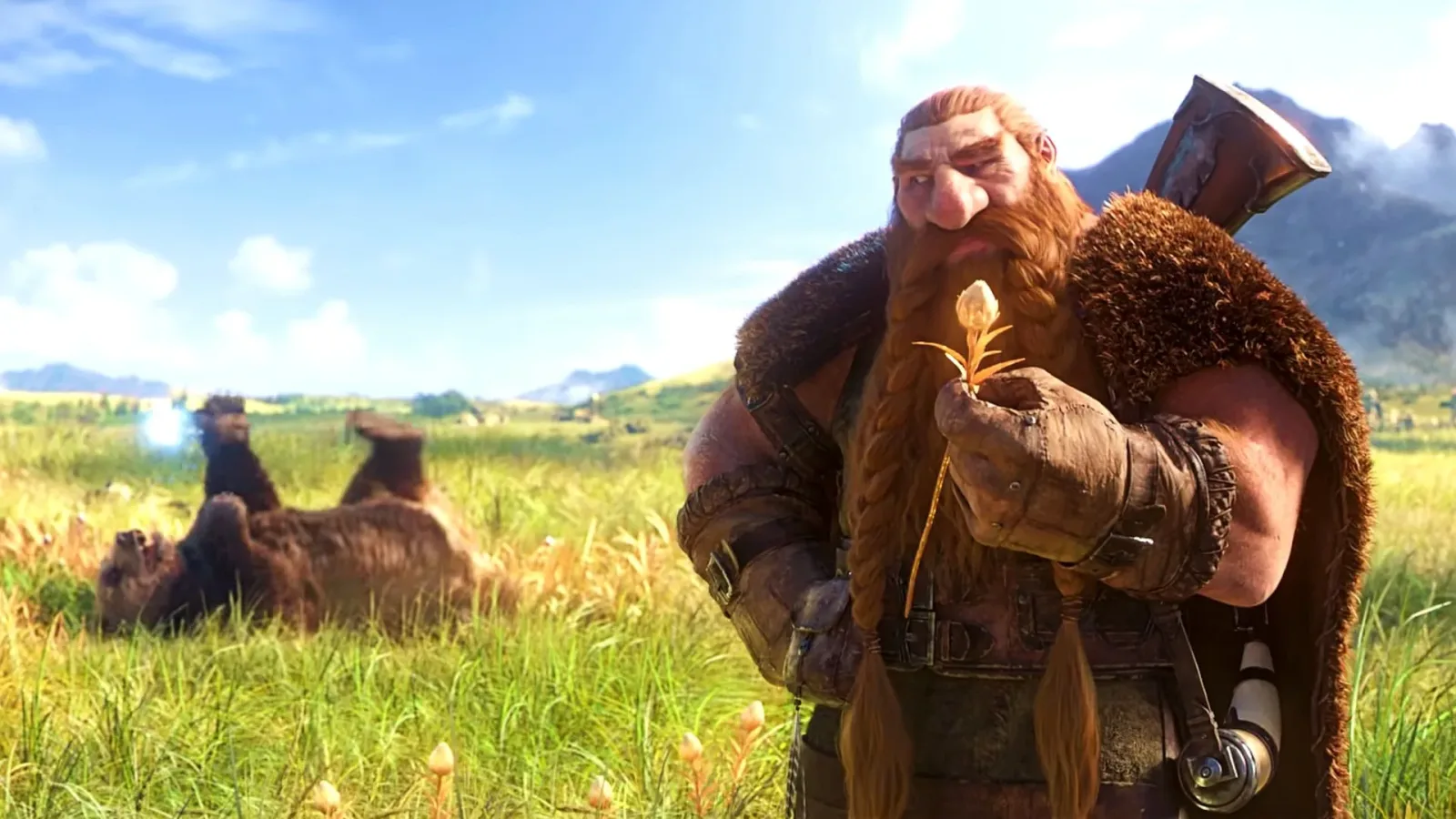
World of Warcraft: Forever is still in Beta, but one of the MMO's longest-running arguments is already back at full volume. Blizzard's latest adjustments to racial traits have prompted a wave of player discussion around faction balance, perceived Alliance advantages, and whether unique race-based bonuses can ever feel fair in a game with two deeply competitive factions.
The update affects Humans, Dwarves, Tauren, Orcs, and the Skyborne, with Blizzard describing the changes as a final pass guided primarily by racial identity. The studio acknowledged that feedback on the Beta traits has been divided: some players believe the new abilities are too broadly designed, while others are concerned that certain options are plainly stronger than their alternatives.
Rather than attempting to make every racial trait identical in value in every possible situation, Blizzard has said it wants races to retain distinct strengths. That approach means some races may naturally perform a little better in particular combat roles. In theory, the design gives a race's mechanical traits a stronger connection to its fantasy. In practice, it has reopened the familiar debate over whether faction choices are being given equal treatment.
Racial identity versus strict balance
Racials have been part of World of Warcraft's identity for a very long time. Each playable race brings its own small mechanical advantages, whether those are tied to damage, utility, survivability, crowd control, or situational combat benefits. These traits are often minor on paper, but their importance can grow substantially for players focused on high-level raiding, dungeon optimization, PvP, leveling efficiency, or competitive server communities.
For useful background on this topic, read Modern Warfare 4 DMZ Triangulation Guide: How to Place Transmitters on Radio Towers.
Blizzard's stated goal with the Forever Beta changes is not to erase those differences. Instead, it is to make them feel more specific to the races that possess them. That is a difficult line to walk. If every racial effect is closely equalized, players may argue that the system lacks flavor and that their race selection barely matters. If traits have clearly specialized strengths, however, players can feel pushed toward a particular faction or race for the content they care about most.
The developer's explanation has therefore done little to settle the matter. Many players understand the appeal of distinct racial identities, but they question whether the current redistribution of bonuses delivers that goal evenly across Alliance and Horde options.
The Tauren and Dwarf comparison fuels backlash
The flashpoint for much of the reaction is a change involving hit chance. Tauren are losing a 1% hit chance modifier, while Humans are gaining it, and players have also drawn attention to the way Dwarves fit into the broader round of adjustments. For critics, moving a desirable combat benefit away from a Horde race while strengthening Alliance choices is not simply an example of specialization. It is evidence of a wider imbalance.
Some community members have framed the issue in blunt faction terms, asking why anyone should choose Horde if Alliance races appear to receive more attractive advantages for PvE-oriented play. Others have described the changes as another case of developer favoritism toward Alliance. The frustration is not limited to one individual trait; it reflects anxiety that small advantages can accumulate into a meaningful difference when guilds and players make decisions at scale.
That concern is especially understandable in a game where social choices have consequences. A player may prefer the look, story, or culture of one race, yet still feel pressure to follow the race that offers the best performance for their chosen activity. When enough competitive players make the same calculation, it can affect faction populations, guild recruitment, group composition, and the perception of which side is the "correct" side for particular endgame goals.
Even a numerical bonus that seems modest can become symbolic. A 1% modifier may not decide every encounter, but players are highly sensitive to what it represents: a possible edge that is unavailable to their preferred faction. The argument is as much about trust in the overall direction of the game as it is about the precise value of a single trait.
Not everyone sees an Alliance advantage
The reaction has not been one-sided. A significant number of players argue that the latest changes should be viewed through the lens Blizzard provided: races are meant to have different niches, not interchangeable toolkits. From that perspective, a race having a better bonus for one style of combat does not automatically mean that its faction is universally favored.
Some players have also pointed to World of Warcraft's long history of faction-specific balance debates. One common response is that Alliance options have often been viewed as stronger in PvE contexts, while Horde has historically been regarded as more appealing for PvP. Other players say the pendulum has swung toward Horde at various points over the game's lifespan, making current complaints feel like a reversal of grievances Alliance players have aired for years.
Those counterarguments do not eliminate the concern around the Forever Beta adjustments, but they illustrate why the discussion remains so hard to resolve. "Balance" means different things to different parts of the community. A player who raids may evaluate traits almost entirely through sustained damage, accuracy, healing throughput, or encounter utility. A PvP-focused player may care far more about burst windows, escape tools, crowd-control resistance, or matchup-specific survivability.
There is also a difference between mathematical parity and player perception. Blizzard could theoretically establish traits that perform within a narrow numerical margin overall, yet players might still object if the strongest effect in their preferred mode belongs to a race they do not want to play. Conversely, a trait can be statistically less valuable while remaining popular because it is useful in everyday gameplay or fits a player's preferred fantasy.
Why racials remain such a sensitive feature
Racial traits create a design challenge because they connect character expression directly to performance. In many RPGs, the decision to select a race is mostly cosmetic or narrative. World of Warcraft has traditionally made that decision more consequential. For some players, that is a defining part of the experience: a Tauren should not feel exactly like a Human with a different silhouette, and a Dwarf should bring something that reflects Dwarven identity.
For others, the same system creates avoidable friction. When permanent character choices carry combat implications, the game can turn a personal preference into an optimization problem. That tension becomes sharper in a game with established faction loyalties, years of player history, and communities that often organize around competitive expectations.
One possible alternative is to make racial combat bonuses effectively negligible, allowing race choice to be driven mostly by aesthetics, lore, and personal attachment. Other major MMOs have moved closer to that model over time. But World of Warcraft's racial system is old enough, recognizable enough, and tied closely enough to its identity that removing its practical impact would also bring its own backlash.
Blizzard's current approach appears to be an attempt to preserve the system's relevance without making every option the same. The early reaction suggests that the studio will need to demonstrate not only that individual traits make thematic sense, but that their combined effect does not create a lasting faction-level advantage.
Skyborne remain part of the wider conversation
The Skyborne are also included in the new batch of racial adjustments, placing the recently introduced race in the middle of the larger balance discussion. The Skyborne have already drawn considerable attention during the Beta, including their $30 cost and their popularity among both Horde and Alliance players.
That popularity makes their tuning particularly visible. Whenever a new playable race is both widely used and mechanically distinctive, every change to its racial kit is likely to be scrutinized. Players will naturally compare it with older options and ask whether its traits are balanced around its fantasy, its commercial position, or its intended role within Forever's evolving faction ecosystem.
For now, Blizzard has not presented the racial pass as the final word on every debate around faction balance. But the language around prioritizing racial identity gives a clear indication of the design philosophy guiding these adjustments. The studio is willing to accept some role-specific differences rather than flattening every trait into perfect equivalence.
A major Beta issue ahead of launch
World of Warcraft: Forever is expected to release early next month, leaving relatively little time for Blizzard to respond if Beta feedback develops into a broader consensus that the racials are unfair. That does not necessarily mean every contentious trait will change before launch. Beta testing exists in part because player behavior can expose problems that are not obvious in internal tuning.
The more important question may be whether Blizzard can communicate how it evaluates racial power across PvE and PvP, and whether it is prepared to make follow-up adjustments after release. Players do not need every race to excel at everything, but many clearly want confidence that choosing Horde, Alliance, or a favorite race will not leave them at a persistent disadvantage in the content they value.
As it stands, the new racial trait pass has accomplished one thing beyond doubt: it has made World of Warcraft: Forever's Beta discussion considerably louder. Whether that attention leads to further tuning or simply another chapter in the game's decades-long faction rivalry will become clearer as launch approaches.
Community
Discussion
Start the conversation.
No comments have been posted yet.