

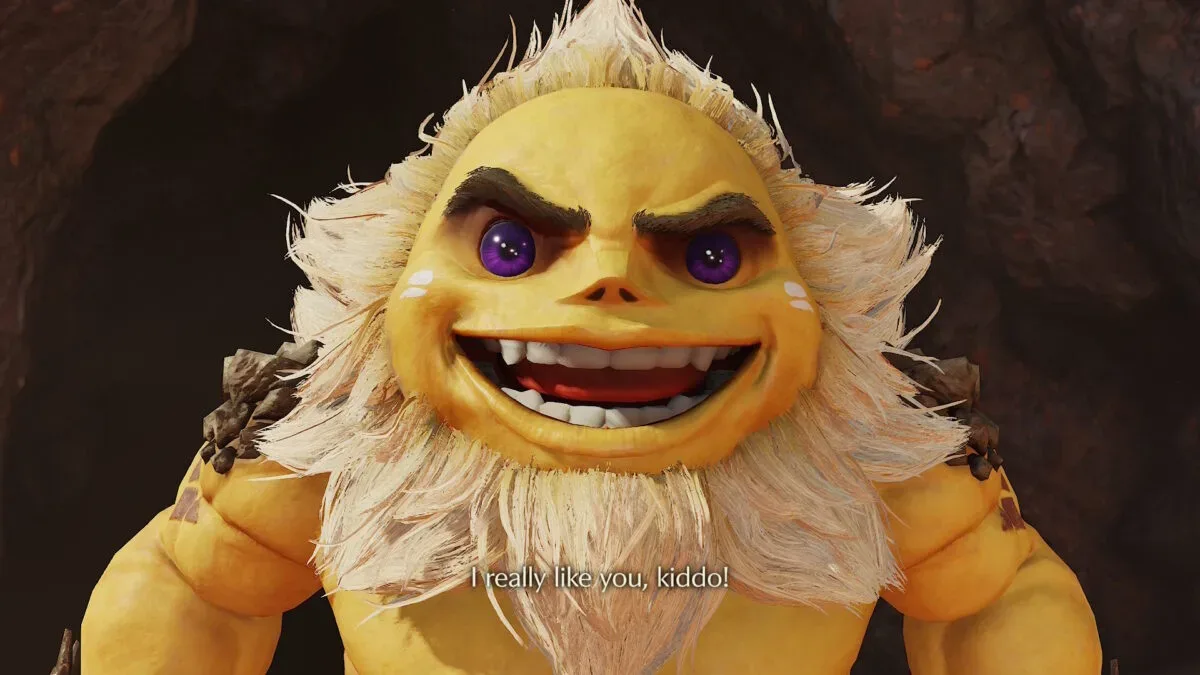
Speedrunning is often seen only at the finish line: a runner steps on stage, launches into a practiced route, executes a stream of impossible-looking tricks, and reaches the credits in a fraction of the time most players need. But the work before that moment can be every bit as captivating. In the case of The Legend of Zelda: Ocarina of Time remake, that work is happening in public, and veteran runner ZFG's ongoing experimentation has made the road to Awesome Games Done Quick 2027 a show of its own.
Awesome Games Done Quick will run from January 3 through January 10, 2027, bringing another packed week of rapid-fire game completions, technical showcases, and fundraising. More than 130 games are slated to appear across the eight-day event. One of the most intriguing entries is an Ocarina of Time remake run, currently estimated at two hours and 20 minutes, with ZFG scheduled to take on Nintendo's new version of the adventure.
That estimate makes an immediate statement about the difference between a newly released remake and a game the community has dissected for decades. The original Nintendo 64 Ocarina of Time has famously been reduced to a best time of just under four minutes, while the Nintendo 3DS remake has been completed in roughly 26 minutes. The new remake, by comparison, is still a frontier. Its movement, item behavior, collision rules, loading, inventory interactions, and crash-prone edge cases are all still being tested. A two-hour run is not a sign that speedrunners are short on ambition; it is evidence of how much there remains to learn.
A speedrun route still being written
ZFG has been livestreaming long sessions dedicated to probing the remake's systems. One recent broadcast ran for around seven and a half hours, and it provided a remarkably clear look at how a modern route comes together before it is ready for a live charity marathon. Rather than simply rehearsing a fixed sequence, the runner was checking theories, retrying awkward setups, examining geometry, and responding to ideas from viewers as new possibilities emerged.
For useful background on this topic, read Pokémon TCG: Flowing Fists Brings Z Mega Evolution Pokémon in February 2027.
That collaborative element is especially important for a game this fresh. A speedrun community does not progress solely because one person discovers every breakthrough in isolation. Players compare notes, identify odd behavior, develop tools to inspect the game more closely, and then determine whether a trick is merely amusing, consistent enough for a real route, or powerful enough to reshape the entire category.
Part of ZFG's testing has involved wireframe technology associated with SloperinaGZ. Viewing the game through that sort of geometry-focused lens makes it easier to understand boundaries, walls, gates, climbable surfaces, and the hidden limits that normally sit behind the world's finished presentation. For casual players, a locked gate or a solid wall is a simple instruction to go somewhere else. For a speedrunner, it is a question: is the barrier real, how far does its collision extend, and can the game be persuaded to place Link on the other side?
That mindset is a major reason speedrunning can make even a familiar Zelda game feel new. The objective is no longer just to gather every required item, defeat every boss, and follow every story beat in the intended order. Instead, runners are looking for ways to reduce or erase requirements. A tiny interaction between the inventory menu and a ledge may become a route-changing discovery. An item meant for combat can turn into a movement tool. A version of Link in the "wrong" era can become the key to carrying gear where it was never supposed to go.
Hookshots, gates, bombs, and risky experiments
Several early discoveries in Ocarina of Time Remake already point toward that potential. The grappling hook and hookshot-related behavior appear to be fertile ground for shortcuts, with runners investigating how the tool affects Link's position and what it can interact with. These mechanics are often central to Zelda speedruns because they combine targeting, momentum, elevation, object collision, and game-state changes in ways developers may not have anticipated players attempting.
Another notable technique concerns getting over gates. The method involves switching inventory items in a way that gradually helps Link gain height, allowing him to climb toward and eventually clear obstacles that would normally halt progress. It is the kind of trick that looks almost magical when seen at full speed, yet its creation depends on patient repetition and close observation. A runner must work out not only why it functions, but also how to perform it reliably under marathon conditions.
Reliability matters enormously at AGDQ. A practice stream can accommodate failures, resets, strange test saves, and dozens of attempts at the same action. On the event stage, runners face a schedule, an audience, a donation-driven presentation, and the pressure of having a large run come together in one shot. A trick that saves a minute but succeeds only occasionally may be rejected in favor of a slower alternative. The best marathon route is not always the absolute fastest route; it is often the route most likely to survive the reality of a live performance.
There are also experiments that blur the game's intended split between child Link and adult Link. Researchers have found ways to access portions intended for adult Link while controlling the younger version of the hero. That can bring meaningful advantages, including opportunities to transfer a child Link equipment setup into the adult inventory. In a Zelda game structured around time travel and era-specific abilities, bypassing those boundaries could ultimately have huge implications.
For now, however, some of these techniques remain unstable. Certain attempts can put the game at risk of crashing, which makes them exciting research material but questionable choices for a major live showcase. One particularly precarious setup involves placing two bombs near climbable grates, using the hookshot in conjunction with a pause-related maneuver to avoid damage, and then clipping through a wall. The exact chain of events may sound like a collection of unrelated actions, because in a sense it is. Speedrunning often lives in those strange overlaps, where systems built for entirely different purposes unexpectedly collide.
Why the learning process is so compelling
Watching a polished speedrun is thrilling because it delivers a rapid sequence of results. Watching the route-development process offers something different: a glimpse at discovery itself. There are wrong ideas, partial successes, unexpected crashes, questions about what changed, and those rare moments when a player realizes a small oddity may have far-reaching consequences.
It also makes the eventual AGDQ run more meaningful. If ZFG reaches the finish in under two hours and 20 minutes, viewers will not simply be seeing a player who memorized a plan. They will be seeing the current culmination of a community's work to understand a newly remade game at a deep technical level. And because the remake is still so young, the run may represent only an early chapter. The most dramatic skips may not have been discovered yet.
That uncertainty gives the event an appealing edge. Ocarina of Time's speedrunning legacy is full of techniques that once seemed absurd before becoming standard knowledge. The remake could develop its own history in a very different direction, depending on which exploits survive deeper testing and which apparent breakthroughs prove too inconsistent or dangerous to use.
AGDQ 2027 has a broad schedule beyond Hyrule
Ocarina of Time Remake is only one part of a varied Awesome Games Done Quick 2027 lineup. The schedule is set to move freely among major releases, cult favorites, small independent games, and older hardware. Players can expect examples ranging from Nintendo 64-era Pokémon Snap to the 2026 platformer Denshattack!, while Tomb Raider: Underworld is expected to be completed in under 30 minutes and Bayonetta 3 has a two-hour estimate.
Retro curiosities remain part of the event's identity as well. The Atari 2600 version of E.T. the Extra-Terrestrial is listed with an estimated 25-minute run. Wednesday's schedule includes Pokémon Violet, the 2026 remake of Star Fox, and Metal Gear Solid 4: Guns of the Patriots. Thursday evening, meanwhile, is shaping up as a particularly strong stretch: Dustforce DX, Halo: Reach, newly added Queen's Domain, and then Ocarina of Time are all due to appear in sequence, with the Zelda run expected at around 9:18 p.m. ET.
The marathon will once again support the Prevent Cancer Foundation. AGDQ raised $2.4 million for the charity during its 2026 event, and the new edition will aim to build on that impact while giving speedrunning communities a global stage.
For now, though, the most absorbing part of the Ocarina of Time Remake story may be the preparation. ZFG's experiments demonstrate that a speedrun is not just an optimized playthrough. It is a moving technical puzzle, built from experimentation, shared knowledge, nerve, and the willingness to spend hours trying to turn one bizarre interaction into a dependable path through Hyrule.
Community
Discussion
Start the conversation.
No comments have been posted yet.