

Control Resonant returns to one of gaming's most compelling supernatural settings and proves that the Federal Bureau of Control still has plenty of disturbing, funny, and fascinating secrets left to uncover. Set seven years after the events of Control, this PlayStation 5 sequel expands its strange fiction beyond the Oldest House and into a Manhattan twisted by a devastating paranatural disaster. It is an ambitious shift in scale and structure, and it occasionally produces the same kinds of design irritations that haunted its predecessor. Yet when its demanding melee encounters or unclear routes threaten to wear thin, another bizarre mission, piece of FBC correspondence, or startling visual detour arrives to make the next discovery feel irresistible.
The result is a strong action sequel that does not always fully reconcile its power fantasy with its punishing balancing. Its new combat direction has exciting ideas but can turn routine fights into protracted wars of attrition. Still, the game's storytelling, characters, atmosphere, and optional investigations make a persuasive case for continuing onward. Control Resonant is at its best when it embraces the uncanny logic of its universe: mundane places conceal impossible horrors, bureaucracy meets cosmic dread, and every unanswered question suggests something stranger waiting behind the next locked door.
A New Faden at the Center of the Crisis
Jesse Faden sealed herself, her allies, and many FBC personnel within the Oldest House when she contained the Hiss, but the threat has not remained confined. Seven years later, a far more destructive paranatural event has spilled into Manhattan, reshaping the city into a reality-bending disaster zone. The Hiss has escaped and possessed citizens who could not evacuate, while the fabric of reality itself appears dangerously unstable. With Jesse mysteriously absent from the bureau, her brother Dylan becomes the person tasked with picking up the pieces.
Dylan is an excellent choice for the lead role. Once positioned as a possessed, traumatized figure in need of rescue, he now has an opportunity to define himself beyond his past. His awkwardness, social uncertainty, and sincere desire to atone for what he has done make him a notably sympathetic protagonist. That softer, more earnest personality creates an appealing contrast with the formidable supernatural abilities that lead others to fear him as a monster.
For useful background on this topic, read Marathon's Symbiosis Update Will Add PvE, Team Deathmatch and a New Perimeter Boss.
His relationship with FBC handler Zoe De Veras is a particular highlight. Their choice-driven conversations add humor, warmth, and dramatic weight to an already wild premise. Zoe's charisma plays well against Dylan's uneasy sincerity, turning their exchanges into more than simple mission chatter. Familiar faces also return, including scientist Emily Pope and altered-item supervisor Frederick Langston. Messages and meetings with these characters help fill in the unsettling state of New York, the consequences of the seven-year lockdown, and the lingering uncertainty surrounding Jesse's fate.
The main narrative features consequential revelations, emotional turns, and several surprises that extend beyond plot alone. Mechanical and visual shifts can arrive from unexpected directions, ensuring the campaign retains an unpredictable quality. More importantly, the story gives the enormous weirdness a human center through Dylan's attempt to become someone better amid a catastrophe no one fully understands.
Manhattan Is a Wonderful Place to Get Lost
Control Resonant's best quality remains its ability to make the paranormal feel both horrifying and oddly mundane. The move to open Manhattan hubs broadens the series' canvas, but the spaces still reflect the gated, ability-driven structure of the Oldest House. Keys and powers gradually open new routes, while a growing suite of movement options makes returning to earlier spaces more rewarding. Warping onto rooftops and hovering across broad gaps make traversal feel appropriately liberating, especially after being asked to navigate such an unstable city.
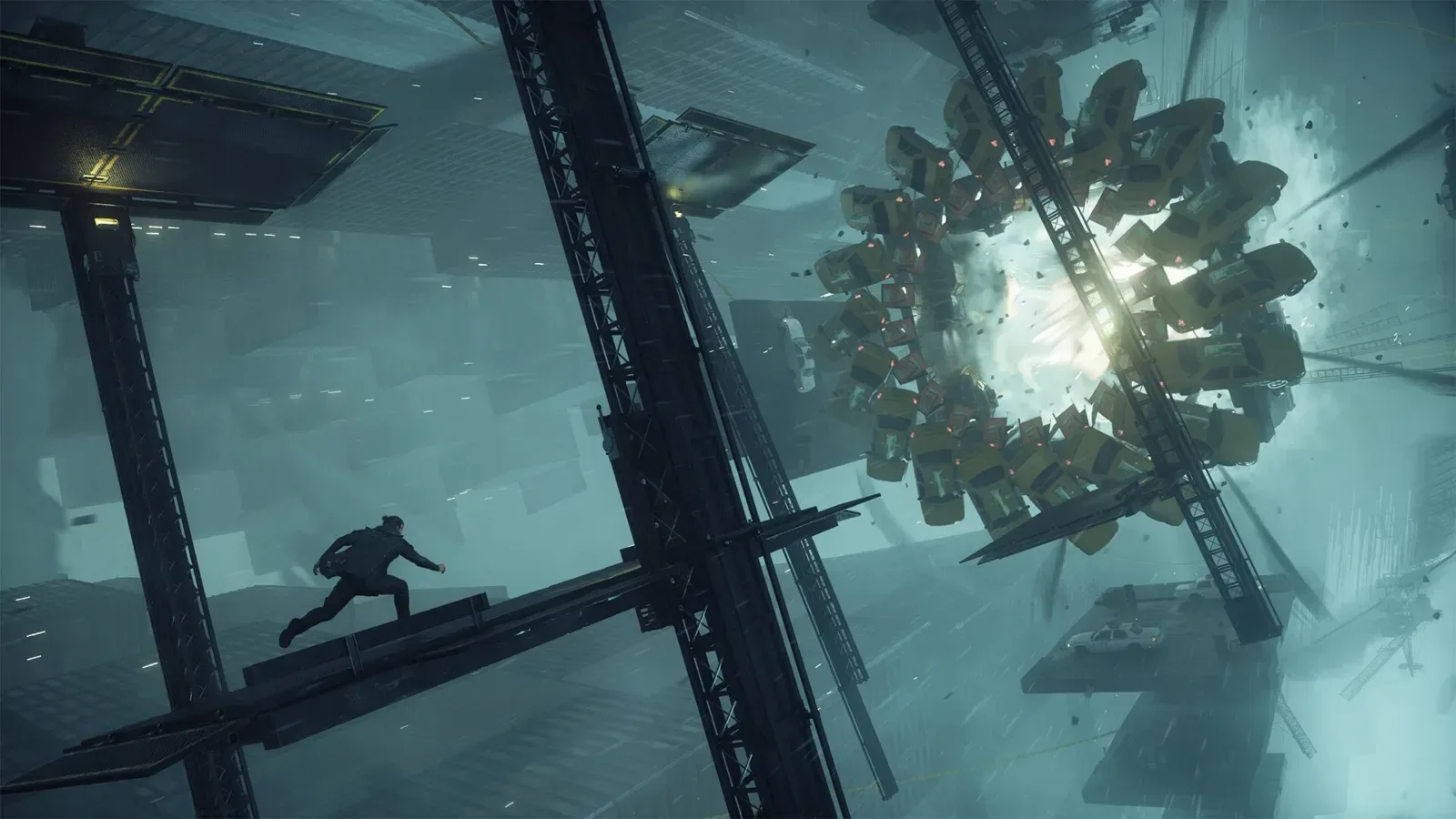
The visual imagination is consistently striking. Some locations resemble surrealist paintings, while others evoke the kind of bold sci-fi cover art that promises a world just beyond comprehension. Manhattan is more than a recognizable city under siege; it becomes a shifting dreamscape where a familiar café, apartment building, or laundromat may conceal an impossible problem. That premise encourages curiosity, and it is easy to understand the urge to investigate every question mark on the map or force open every seemingly ordinary doorway.
Side missions make the most of this setup. One mission asks players to contend with a malevolent karaoke machine. Another turns escape from a taxi-filled pocket dimension into a "spot the difference" visual puzzle. Elsewhere, Dylan may find himself pursuing an FBC employee's difficult supernatural pet. Longer questlines concerning a secret organization and abandoned FBC experiments offer even more reasons to explore. These assignments are not merely diversions; they frequently deliver the game's most inventive stories and gameplay concepts while showing how ordinary citizens react when the paranatural erupts into their lives.
Not every optional activity reaches that standard. Escorting stranded rangers and defending assets against enemy waves feel comparatively thin, especially beside the more carefully authored cases. They resemble obligatory open-world padding in a game that is otherwise unusually good at making side content feel purposeful. Fortunately, these lesser jobs can largely be ignored. The more substantial optional material, however, should not be skipped, both for its rewards and because progression expects a degree of engagement with the broader city.
Melee Combat Finds Its Rhythm, Then Tests Patience
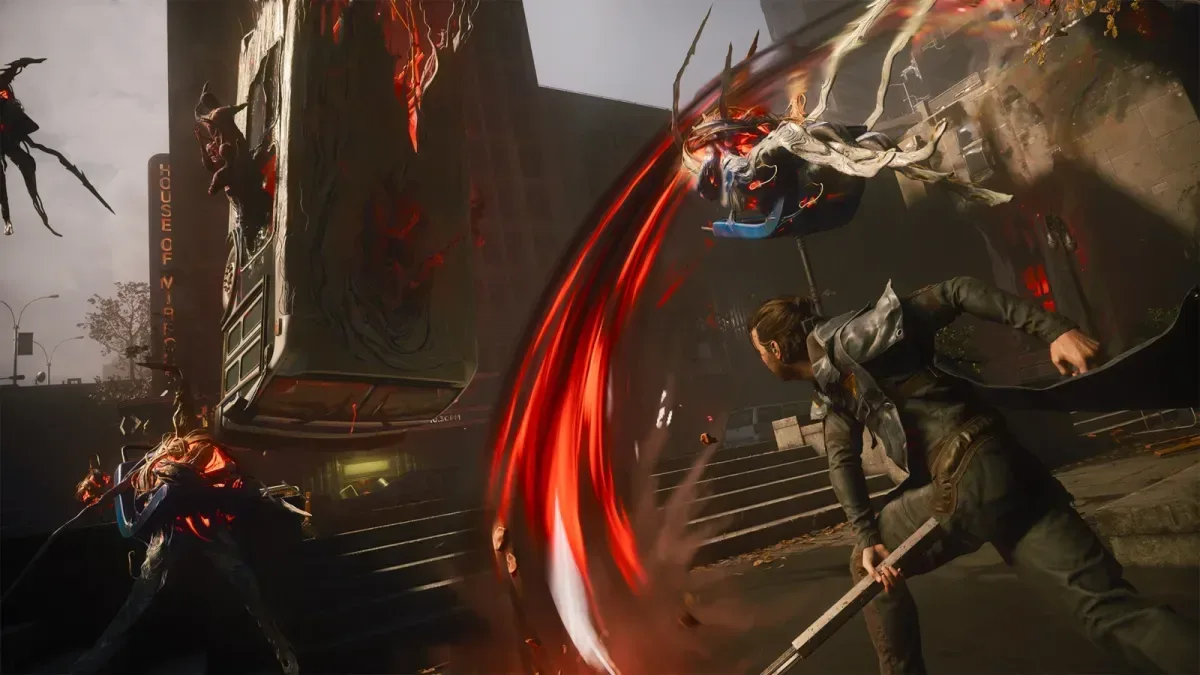
Combat is where Control Resonant makes its largest mechanical departure. Dylan carries the Aberrant, a transforming weapon that can take the form of a one-handed axe, dual sword-like blades, or a two-handed scythe. These forms give the action a stylish, high-flying character and provide a satisfying foundation for the game's character-action ambitions. Basic combos can initially feel repetitive, but finishers help punctuate them with impact. Reinforced punches, hovering spinning blades, and glaive-like attacks give Dylan some impressive ways to overwhelm enemies.
The perfect dodge may be the most consistently satisfying tool in his arsenal. Its speed makes avoiding danger feel responsive, and chaining a successful evade into an attack creates a gratifying rhythm. As Dylan gains supernatural abilities, combat becomes considerably more strategic. Explosive fire can ignite enemies, rapid mold spores can poison them, abstract entities can be summoned as allies, and force-based powers can throw foes into environmental hazards or off elevated ledges. These options help push battles beyond simple attack strings and reward thoughtful use of the full toolkit.
However, the balance does not always support the sense of escalating power the game wants to create. Enemies frequently level alongside Dylan, meaning he rarely gets the chance to simply dominate encounters. Large wave-based battles often involve slowly draining hefty health bars, making them last longer than their ideas can sustain. The decision to have smaller foes respawn continuously until larger enemies are defeated adds urgency, but it can also turn difficult conflicts into exhausting endurance tests.
Some of Dylan's additional weapons are less successful. Sidearms such as the heavy axe and sluggish whip feel comparatively awkward or underpowered, reducing the appeal of experimenting outside the best Aberrant forms. Boss encounters against distorted humans known as Resonants are generally more rewarding, offering better-balanced challenges that test the available abilities without leaning so heavily on attrition. Enemy variety also improves matters, with mold creatures and an additional faction joining the Hiss-infested opposition. Even so, the frequency of roaming enemy groups means repetition eventually becomes hard to ignore.
Exploration Has a Few Rough Edges
The game's layered city design makes movement exciting, but it also creates occasional navigational headaches. Objectives are not always plainly signposted, requiring close attention to obscure openings and environmental clues. That can be satisfying when a newly acquired ability reveals a clever path, but visually disorienting regions that can be approached from several angles are sometimes more frustrating than mysterious. In those moments, the city's dreamlike architecture can become a barrier rather than an invitation.
Still, those annoyances tend to fade quickly because Control Resonant is so effective at planting curiosity. A new message from an old ally, a strange rumor from a neighborhood, or an unexplained visual anomaly can immediately restore the desire to press on. The game understands that lore is one of this universe's greatest strengths, and it continually rewards players who want to know how the FBC, the Hiss, Manhattan, and the Fadens have changed during the years since the lockdown.
Who Should Play Control Resonant?
This is an especially easy recommendation for players who valued Control for its dense lore, unsettling atmosphere, and offbeat supernatural investigations. Those qualities are the sequel's strongest assets, and the move into Manhattan creates room for even more varied scenarios. Players who enjoy demanding action games may also appreciate the melee focus, dodge timing, and growing range of powers, though they should be prepared for uneven difficulty and battles that can feel overly drawn out.
Those seeking a relaxed power fantasy may find the persistent enemy scaling and lengthy encounters frustrating. Likewise, anyone who dislikes obscure navigation or repeated wave defense objectives should expect occasional rough patches. But the game gives its oddest and most imaginative missions enough prominence that its weaker systems do not define the overall experience.
Final Takeaway
Control Resonant earns its 8.5/10 through the strength of its world and the pull of its mysteries. Dylan Faden is a welcome lead, Manhattan is an engrossing paranormal playground, and the game's best quests are as inventive as anything the series has produced. The melee system improves as its supernatural options expand, even if inconsistent balancing, repetitive combat structures, and confusing navigation keep it from reaching a higher level. For anyone eager to return to this bizarre universe, Resonant offers ample reason to keep digging until every last unsettling secret is exposed.


Community
Discussion
Start the conversation.
No comments have been posted yet.