

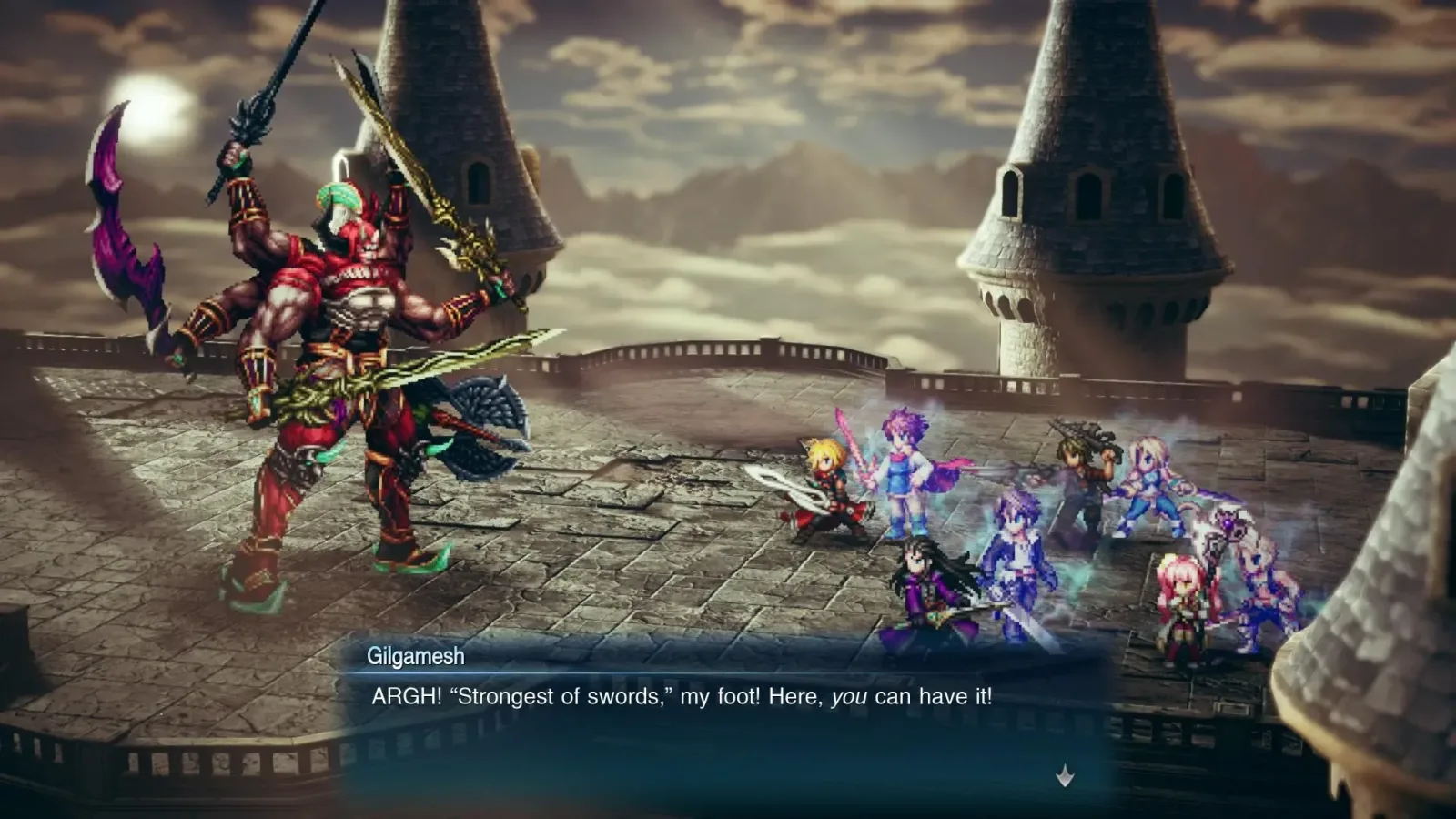
Final Fantasy Resonance earns its 9/10 by doing much more than revisiting a familiar name. Built from the first season of the discontinued Final Fantasy Brave Exvius mobile game, this Switch 2 RPG is not presented as a simple preservation effort or a lightly upgraded port. It has been reshaped into a substantial, standalone adventure with an appealing party, highly flexible progression, handsome HD-2D presentation, and a welcome respect for players' time. It draws strength from decades of Final Fantasy history, but its best quality is that it does not stop at nostalgia.
There is a practical pleasure in seeing material that might otherwise have disappeared given a new life as a full-scale RPG. Square Enix has recently shown an interest in rebuilding discontinued mobile projects into more traditional experiences, and Final Fantasy Resonance makes a persuasive case for that approach. Its origins are visible in the broad premise and some of its inherited components, yet the result feels designed for a premium role-playing game audience rather than adapted for one. The game is approachable, substantial, and satisfying without inflating itself into an exhausting commitment.
A Final Fantasy celebration with its own identity
At first glance, Resonance could be mistaken for a delivery system for callbacks. Its central combat mechanic involves summoning Visions: projections based on characters from Final Fantasy games across the series. Those appearances will naturally be a major attraction for long-time fans, especially because the references are handled with care and occasional clever restraint. They are not simply placed in front of the player for recognition alone. Instead, the Visions form the backbone of the game's progression and party customization.
Each playable character equips a Vision, gaining access to its associated powers, passive benefits, and skills. The system evokes the job experimentation of Final Fantasy V, while its permanent stat growth has echoes of the esper structure in Final Fantasy VI. As characters fight alongside a Vision, that relationship develops and unlocks abilities that can be equipped more freely. A character's role is therefore never completely fixed. Rain may begin as a powerful frontline fighter with natural fire-based attacks, for example, but equipping Cecil Harvey can open paths into light and dark magic as well.
For useful background on this topic, read Kingdom Hearts Was Stronger When Final Fantasy Shared the Spotlight.
That flexibility is the game's most compelling design hook. It encourages players to explore combinations without making the underlying turn-based battles difficult to read. A favorite character can remain in the party while their capabilities shift to meet a new challenge, and the transferable-skill approach rewards investment without forcing everyone into a rigid archetype. Fans who enjoy building unusual class hybrids, optimizing passive bonuses, or simply experimenting with favorite Final Fantasy icons will find plenty to engage with here.
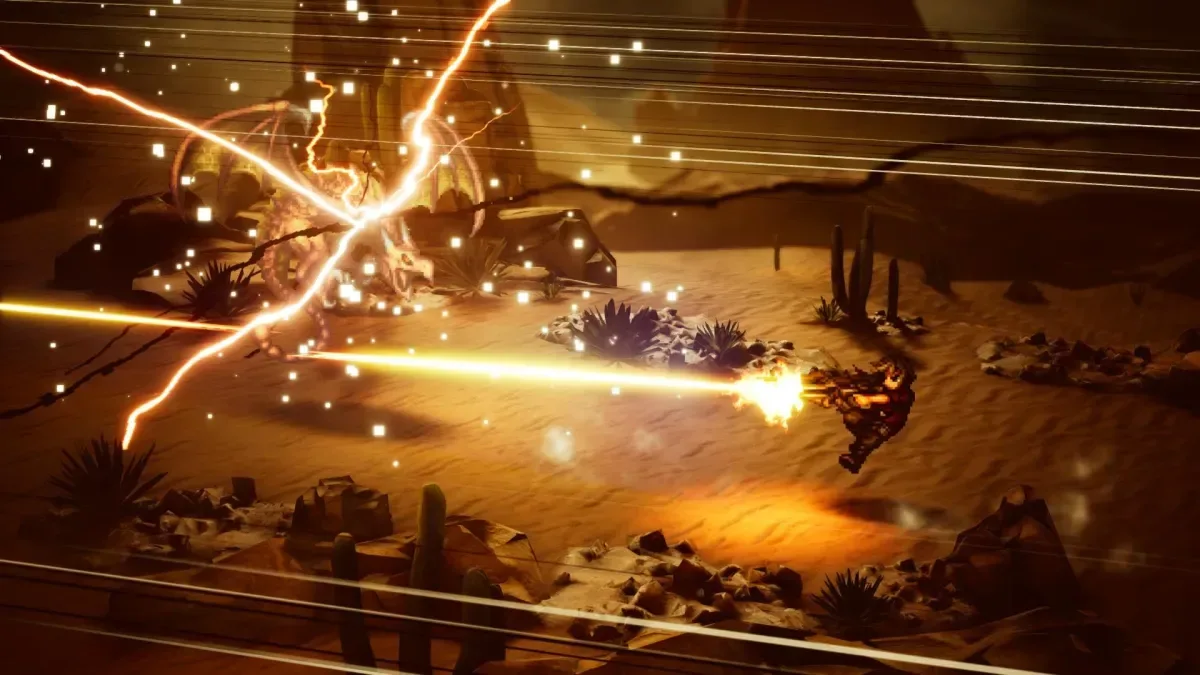
Visions can also be called upon for spectacular super attacks once their conditions have been met. These sequences use CGI presentation to give the game moments of grand theatrical release. The contrast works well: most of Resonance is driven by expressive pixel-art characters and carefully composed environments, then a major summon arrives with the kind of cinematic confidence the series has long pursued. The cameos matter mechanically, but they also preserve that sense of occasion associated with a big Final Fantasy attack.
Classic turn-based combat with a brisk rhythm
Resonance's combat is traditional in structure but modern in pacing. Turn order is clearly displayed, recalling the readable timeline-based approach of Final Fantasy X, and that visibility makes decisions feel deliberate instead of cumbersome. Every party member brings a distinct fighting style and elemental identity. Lasswell is a samurai-oriented ice combatant, Jake brings guns and wind affinity, and Lid can unleash earth-focused attacks featuring an appropriately absurd rain of steel chocobos.
The combat system does not need to reinvent turn-based RPGs to be effective. Its strength lies in how quickly it communicates the important information: who is acting next, what elemental tools are available, and where a Vision's added abilities can reshape a character's options. Battles support the broader customization system rather than existing separately from it. The pace also suits the game's overall scope. This is an RPG that moves confidently from story scene to exploration to encounter instead of regularly bogging down in lengthy routine fights.
Random encounters are still present, which may test patience during stretches where the goal is simply reaching the next destination. An auto-battle option would have softened that inconvenience. However, enemy fights do not occur with the oppressive frequency associated with some older Final Fantasy adventures. Their placement also means that extensive grinding is generally unnecessary, unless the goal is to fully develop a particular Vision. That is a fair compromise: combat remains part of the journey, but the game does not constantly demand repetitive leveling just to keep its story moving.
HD-2D with a stronger visual personality
Final Fantasy Resonance uses HD-2D aesthetics with more confidence than imitation. The look will be immediately recognizable to anyone familiar with Square Enix's recent retro-inspired releases, but it avoids feeling interchangeable with either the Octopath Traveler games or the Dragon Quest HD-2D remakes. Detailed character sprites give the cast a stronger presence, while the environments use lighting, depth, and framing to create a suitably fantastical sense of place.
Most notably, Resonance includes occasional pixel-based cinematic scenes that can be genuinely striking. These moments demonstrate that the game is not treating retro presentation as a limitation or merely a branding exercise. It uses sprite work to deliver drama at a scale that feels distinct from conventional cutscenes. The visual approach is rooted in Final Fantasy's past, yet it has its own texture and rhythm, particularly when paired with the high-impact summon sequences.
Towns are a highlight. They are attractive, varied, and populated with characters and quest-givers worth speaking to, helping the world feel more inhabited than a straightforward route between objectives. The principal limitation is what lies between those destinations. The overworld connective tissue lacks much depth, and the dungeons are rarely as imaginative as the towns or combat system deserve. They are serviceable spaces for battles and progression, not recurring showcases for memorable environmental design or complex exploration.
Rain, Lasswell, and a party worth following
Although Resonance has access to an enormous reservoir of series history, its story remains focused on Rain and the companions who gradually gather around him. Rain carries recognizable traits from past Final Fantasy protagonists: a bright, spiky-haired heroic appearance, an emotionally complicated relationship with his father, and an upbeat disposition that leaves room for darker undertones. Those similarities make him immediately legible, but they do not prevent him from becoming easy to support as the center of this particular journey.
Lasswell, Rain's roommate and closest companion, initially brings to mind the series' familiar serious lancer and rival archetypes. Yet his personal sense of nobility and his troubles are developed with enough specificity that he becomes more than a reference point. The expanding cast is similarly effective because its members have chemistry. Lighthearted side conversations provide humor and texture, while the quality voice work helps sell both the jokes and the more sincere exchanges.
This interpersonal strength is vital. A game built around projections of beloved legacy heroes could easily leave its original characters feeling secondary. Resonance avoids that trap. References to earlier Final Fantasy games are present in abundance, including especially rewarding nods for fans of Final Fantasy XIV, but they are seasoning rather than the meal. The adventure succeeds because it gives players a new group worth caring about, not because it expects the past to carry every emotional beat.
A digestible RPG for series fans and newcomers
At roughly 40 hours, give or take, Final Fantasy Resonance occupies a refreshing middle ground. It is long enough to support a real sense of growth, a robust party system, and a satisfying narrative arc, but it avoids becoming an enormous open-ended undertaking. Generous fast travel further supports the brisk structure. In an era when major RPGs often ask for vast blocks of time, Resonance feels substantial without becoming demanding for its own sake.
It is especially well suited to players who miss classic turn-based Final Fantasy design, those who loved the job-system freedom of Final Fantasy V, and anyone interested in a polished HD-2D RPG with a lively ensemble. Knowledge of Brave Exvius or the larger Final Fantasy catalog can add extra pleasure, but it is not the sole reason to play. Newcomers have a clear entry point through Rain's story and the accessible combat framework.
Final takeaway
Final Fantasy Resonance stands on a sturdy historical foundation, but it does not merely raid that foundation for recognizable faces and familiar music cues. Its Vision system gives legacy material a meaningful gameplay purpose, its cast earns emotional investment, and its presentation makes excellent use of HD-2D techniques. Thin overworld connections, plain dungeons, and the occasional irritation of random encounters keep it from feeling flawless. Even so, the strengths are far more memorable: smart customization, snappy combat, beautiful towns, sharp pixel-art direction, and a story that finds room for a new canon within an old and beloved universe.
For Switch 2 owners seeking a focused, classic-minded RPG with modern polish, Final Fantasy Resonance is one of the easiest recommendations in the series' recent orbit.
Community
Discussion
Start the conversation.
No comments have been posted yet.