

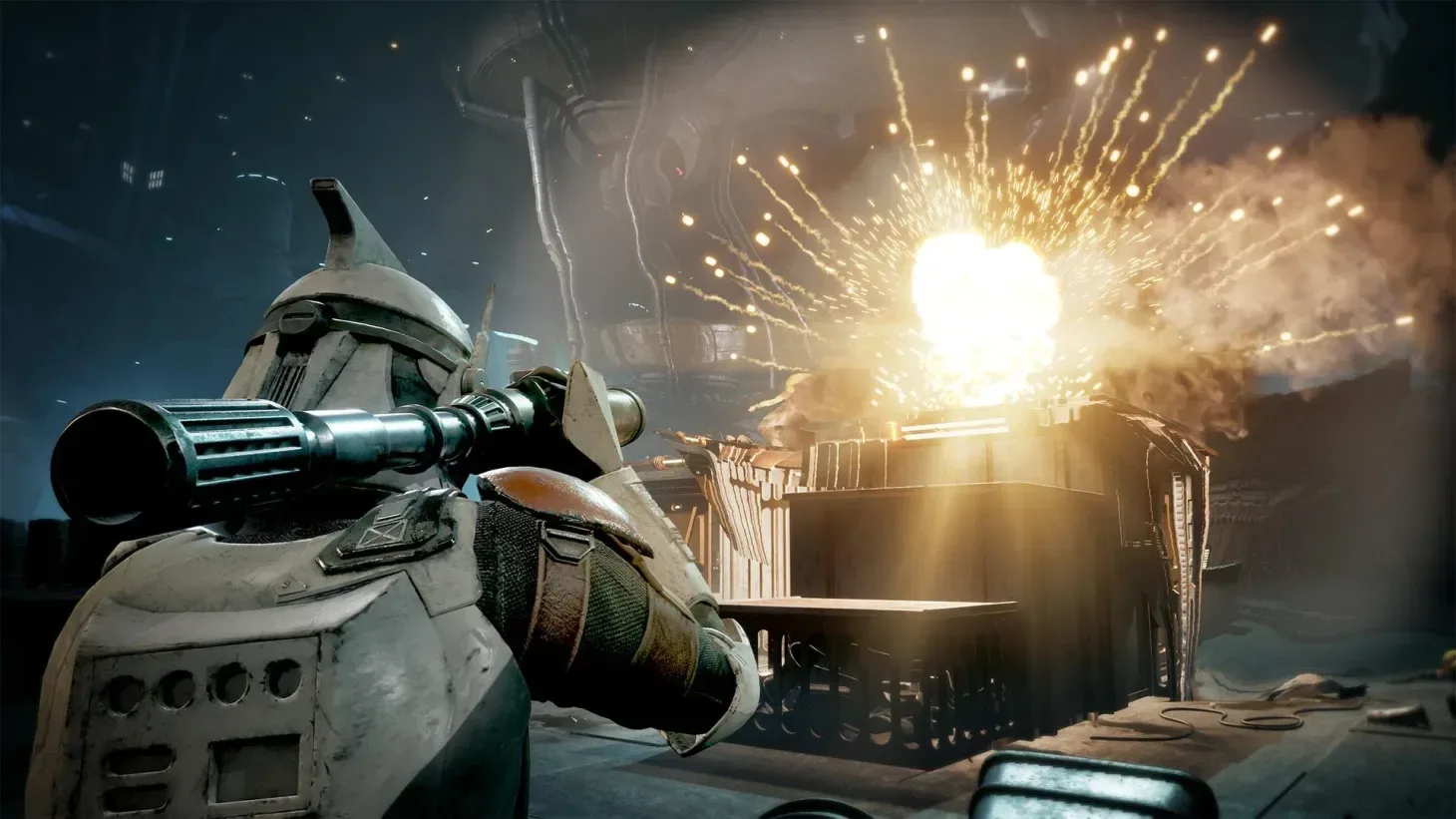
Star Wars Zero Company understands exactly what many strategy fans want from a Clone Wars game: a small team of specialists, a galaxy full of pressure points, dangerous assignments where positioning matters, and just enough room between missions to make every resource decision feel consequential. Set against the Clone Wars, Bit Reactor's tactical game follows a mercenary outfit caught up in an expanding threat, delivering a familiar but deeply effective loop of squad combat, upgrades, equipment, and hard choices.
Its influences are plain to see, particularly for anyone familiar with modern turn-based squad tactics. That familiarity is not a weakness by itself. Zero Company takes a proven structure and applies it with care, using the Star Wars setting to support an engaging campaign of operators, planetary operations, escalating enemy power, and carefully constructed encounters. The result is a game whose systems consistently carry it forward, even as its narrative struggles to generate equal momentum.
A mercenary company in the Clone Wars
Zero Company is the name of the titular mercenary group led by Hawks, a former Galactic Republic military captain who left service after a mission went wrong. Now trying to keep the company afloat during the Clone Wars, Hawks is approached by Republican Intelligence officer Bennic Halloren. Halloren needs Zero Company's expertise to investigate The Coil, a cult whose influence is spreading across the galaxy.
That premise is serviceable, and the Clone Wars is a naturally fertile period for stories about fractured loyalties, covert operations, and desperate military work. The issue is that the central plot and cast rarely develop the kind of personality needed to make the campaign's story feel vital on its own. There are nods to the wider Star Wars universe, and players with a broad knowledge of the franchise may get more out of those references. Still, the game's strongest narrative moments tend to come from its setting and recognizable galactic texture rather than from The Coil's story or Zero Company's character drama.
None of this stops the campaign from functioning. It gives missions context and provides a reason to move across the galaxy. But the writing does not match the electricity of the tactical layer. Star Wars Zero Company is at its best when it lets players solve a dangerous battlefield puzzle, not when it asks them to invest deeply in its larger mystery.
The Den makes every campaign decision count
Between missions, Zero Company returns to its central hub, The Den. This is where the game's strategic management takes shape. Each cycle provides an opportunity to spend resources, improve the company, prepare operators, and choose the next assignment. The structure is approachable, but it creates enough competing priorities to make planning feel satisfying rather than routine.
Credits and Capacitors are used for permanent company upgrades through research. Credits also cover new equipment, improvements for The Den, and rewards connected to expanding influence throughout the galaxy. Intel, meanwhile, is spent on operations and earned by completing missions. Operations offer additional rewards, including Influence in their respective zones, making the choice of where to deploy part of a larger strategic picture.
The appeal lies in how these systems force trade-offs without becoming suffocating. It is possible to see the value of another piece of gear, a lasting research upgrade, or an investment in a particular region, but resources cannot always cover every desirable option. That tension becomes sharper as The Coil grows more dangerous. At times, a menu-based choice requires players to sabotage one of two enemy upgrades. There is no perfect answer: one threat remains in play, and Zero Company must adapt to it.
This gives the campaign a welcome sense of improvisation. The enemy is not passively waiting for the player's squad to become unstoppable. Both sides are developing, and the strategic layer encourages players to respond to the conditions in front of them rather than merely following a fixed optimization path.
Three action points and a great deal of tactical flexibility
On the battlefield, Zero Company is a turn-based tactics game built around three action points per unit. Those points can be spent moving, attacking, or using abilities, with different weapons demanding different amounts of AP. The rules are easy to understand, yet the options available within them support creative turns. A character may reposition into cover, line up an attack, enable an ally, or reserve resources for a more valuable tactical opportunity.
Cover and positioning are crucial. Players are constantly encouraged to find angles that suit their operators, minimize exposure, and shape encounters before they get out of control. Every operator has a specification that defines their active and passive capabilities, and the eventual ability to unlock a second specification substantially expands build possibilities.
Those combinations are where the combat becomes especially rewarding. A sniper can mark an enemy and assist against it, turning a vulnerable target into a focal point for the squad's attacks. A scout can scan a cluster of hostiles to generate Advantage, then set up a devastating rocket strike against the group. Some abilities consume AP, while others use Advantage, generally gained by successfully attacking enemies. That distinction gives the game a satisfying rhythm of preparation, payoff, and opportunistic aggression.
It also ensures that building operators is not just about raising numbers. Squad composition matters, specializations matter, and finding complementary actions matters. The best turns feel like a small chain reaction: one unit creates an opening, another capitalizes on it, and the team turns an intimidating enemy formation into a manageable situation. That is the core pleasure of Zero Company, and it remains strong across the campaign.
Missions that demand more than elimination
Smart squad systems need smart scenarios, and Zero Company delivers on that front. Its missions do not simply ask the team to clear a map of enemies. Objectives and environmental pressures introduce movement, timing, and prioritization concerns that keep battles from settling into predictable routines.
One standout scenario pairs combat with a frantic escape toward an extraction point. As each turn passes, a larger portion of the map behind Zero Company becomes a death zone. The squad cannot afford to bunker down and slowly dismantle every enemy position; it must keep moving, decide when to engage, and make the extraction route the central priority.
Another mission puts Zero Company between two hostile enemy factions that are willing to shoot one another as readily as they target the player. With careful play, that conflict can be exploited, reducing the amount of direct work the mercenary squad needs to do. It is a simple concept, but it makes the battlefield feel more dynamic and rewards players for observing the larger situation instead of treating every opponent as an identical obstacle.
These are the moments that demonstrate why the game is more than a cosmetic genre conversion. The Star Wars setting provides the look and atmosphere, but the encounter design supplies the substance. Zero Company frequently asks players to think beyond damage output: Where should the squad be next turn? Which enemy is most dangerous if left alive? Is an objective worth the risk? Can enemy factions be manipulated into helping? Those questions sustain tension throughout the campaign.
PC context and strategic appeal
On PC, Star Wars Zero Company is a natural fit for players who enjoy deliberate, mouse-and-keyboard-friendly strategy design, though its appeal is rooted in the clarity of its systems rather than any need for genre expertise. The core loop is recognizable enough to welcome veterans of modern tactical games, while its three-AP structure, Advantage economy, and specialization options provide sufficient depth for careful squad planners.
The game is particularly well suited to players who value campaign-level decision-making alongside individual battles. It is not just about executing an encounter flawlessly; it is also about deciding which upgrades to pursue, how to equip operators, where to build Influence, and which growing enemy advantage can be allowed to remain. Those strategic choices make victories feel earned and setbacks feel like problems to be solved rather than arbitrary punishment.
Who should enlist?
Fans of Star Wars who have wanted a methodical squad strategy game set during the Clone Wars should find plenty to enjoy. The setting is used effectively as a framework for covert operations, mercenary work, and galaxy-spanning pressure, even if the actual story is unlikely to become a favorite piece of franchise fiction.
It is also a strong choice for anyone seeking a sci-fi tactical game with carefully designed missions and satisfying character progression. Players who enjoy building synergies between distinct specialists, using cover intelligently, and making the most of constrained resources will find Zero Company consistently rewarding.
Those hoping for a story-led Star Wars epic should set expectations accordingly. The narrative is functional rather than memorable, and the characters are not the primary reason to keep playing. The draw is the tactical engine: layered operator builds, tense objectives, and a strategic campaign that keeps asking for one more considered decision.
Final takeaway
Star Wars Zero Company earns its 8/10 through the quality of its tactical design. The Den's resource management, the pressure of The Coil's advancement, the flexibility of three-action-point turns, and the variety of mission structures all combine into a compelling strategy loop. It may not elevate its story or cast to the same level, but it does not need to when the moment-to-moment play is this reliably engaging.
For Star Wars fans, it is a worthwhile tactical excursion into the Clone Wars. For strategy fans, it is a polished sci-fi squad game that understands the enduring appeal of calculated risks, emergent plans, and pulling a battered team through an objective by the narrowest possible margin.
Community
Discussion
Start the conversation.
No comments have been posted yet.