

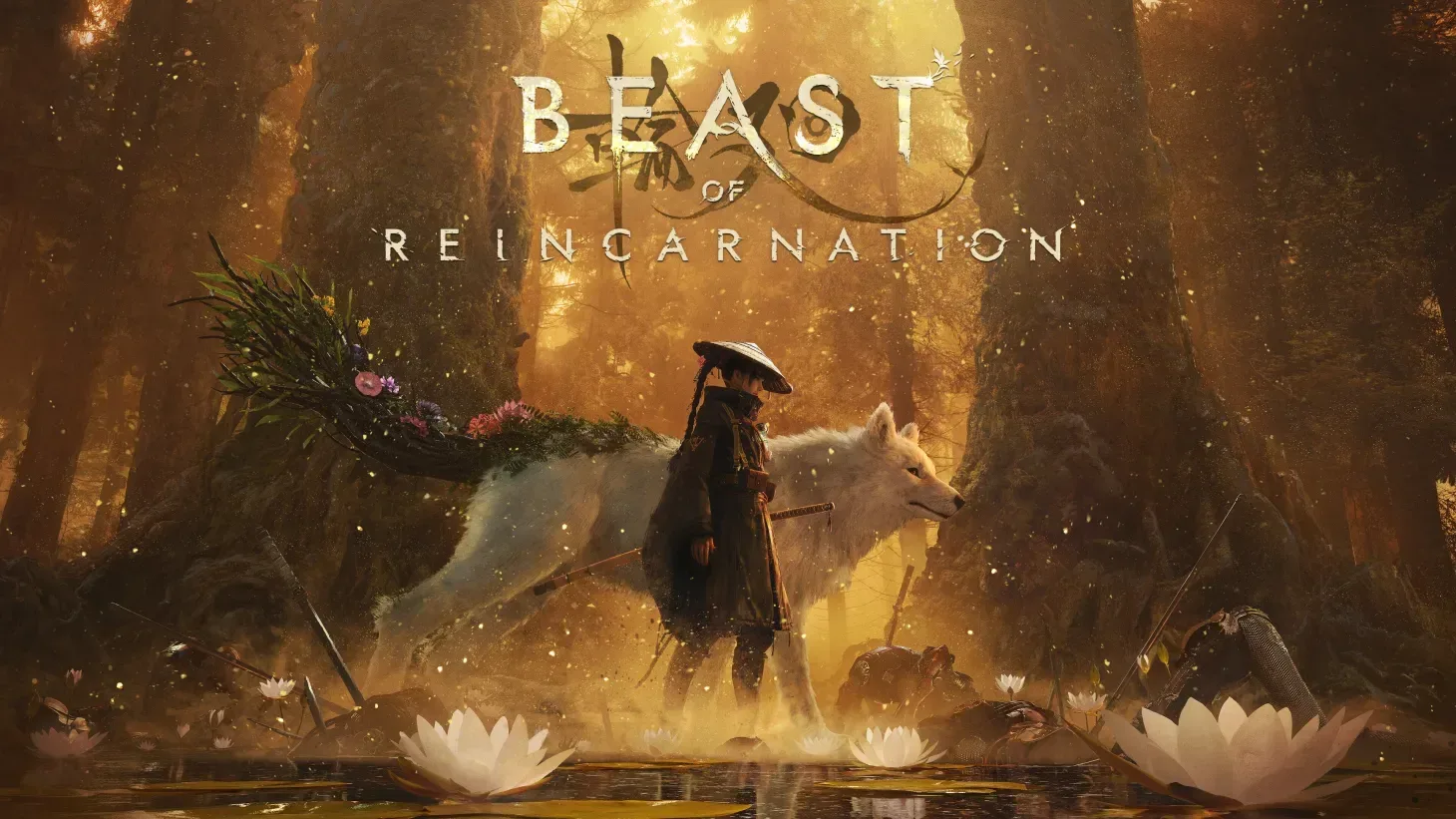
Beast of Reincarnation is at its best when Emma has a sword in hand and a dangerous creature in front of her. Game Freak's action RPG builds its strongest ideas around brisk, readable encounters driven by parries, dodges, elemental effects, and powerful finishers. There is genuine pleasure in learning an enemy's rhythm, triggering a timely defensive response, and converting a brief opening into a punishing combo. Just as importantly, the game gives players enough tools to shape that rhythm around their own preferences.
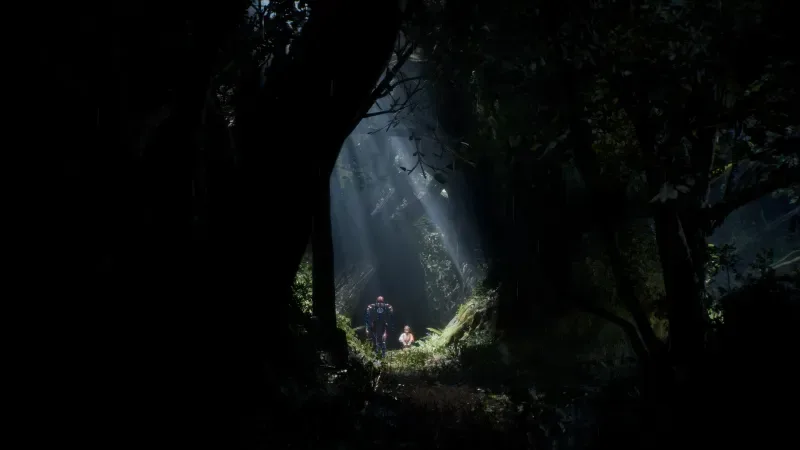
Unfortunately, that battle system has to carry an adventure that often feels strangely inert. Its post-post-apocalyptic Japan has the outline of an evocative setting: ruined concrete infrastructure reclaimed by vegetation, isolated colonies, a spreading blight, and a journey toward a capital that may decide humanity's future. Yet the spaces between fights rarely develop that promise. Wide corridors, repetitive rewards, predictable stage structures, and an overabundance of lengthy exposition turn what could have been a mysterious pilgrimage into a routine march toward the next arena.
On PC, Beast of Reincarnation is a game with a very good action foundation and too little else that feels equally considered. The result is a 6/10: a worthwhile combat showcase for players who enjoy experimenting with builds, but a difficult recommendation for anyone looking for compelling exploration, memorable characters, or a story with much to say beneath its familiar themes.
A mission to purify a faded world
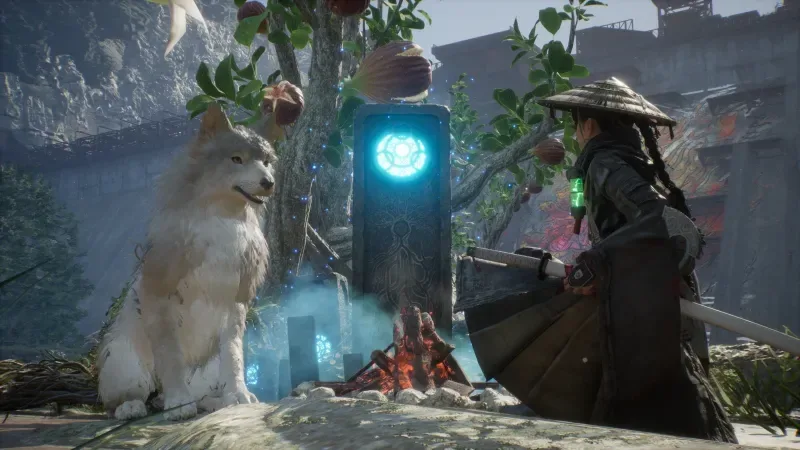
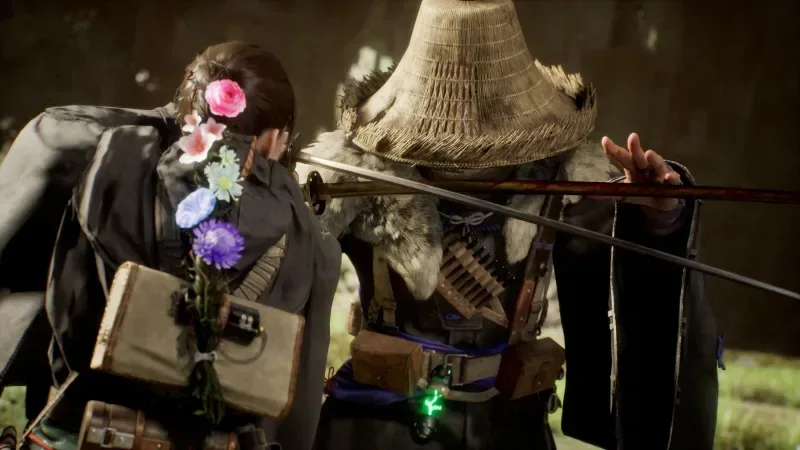
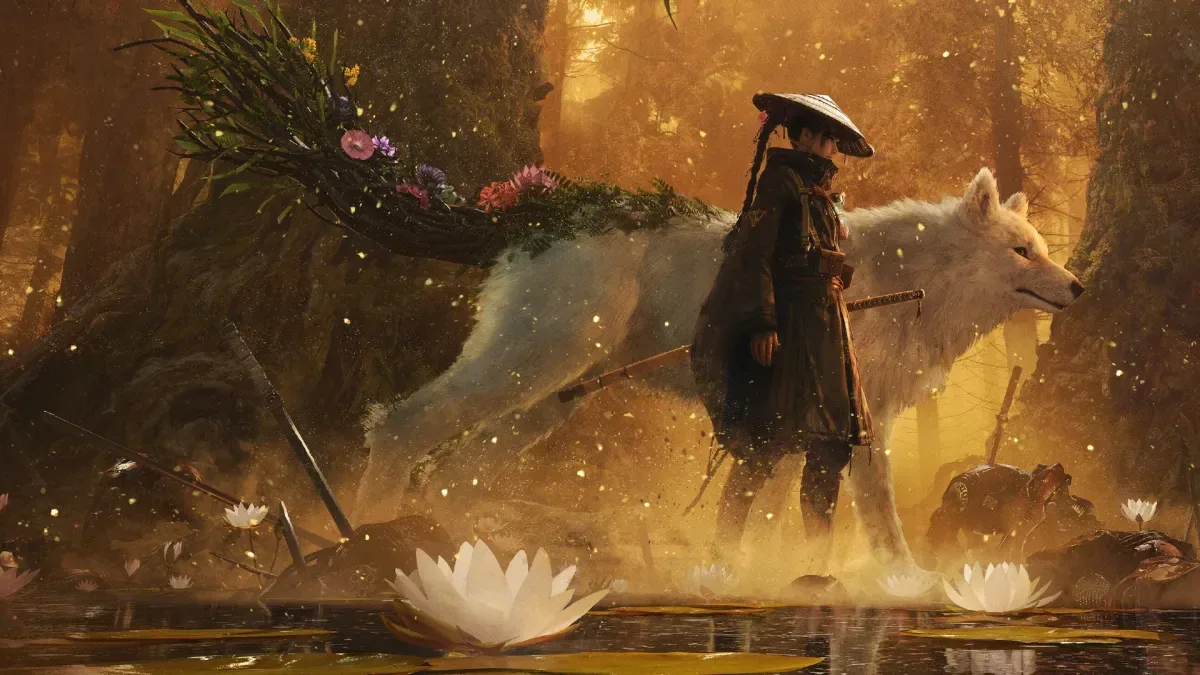
The story follows Emma, a synthetic human known as a purifier. She lacks a soul, though she appears to desire one, and she is sent on a mission to cleanse beasts corrupted by blight. Accompanied by her wolf companion Koo, an enigmatic older man named Brad, and a young girl named Kagura, Emma travels between Japanese colonies in the Cleanse Walker mech. Their ultimate destination is the Capitol, where defeating the Beast of Reincarnation is meant to save mankind.
That premise has enough material for a thoughtful science-fiction fantasy, particularly because Emma's artificial nature could create interesting tension around personhood, family, and purpose. The game instead addresses those ideas directly and repeatedly. Friendship, sacrifice, having a soul, and protecting others are stated in blunt terms during cutscenes that often run beyond ten minutes. The themes are clear, but clarity is not the same as depth, and Beast of Reincarnation seldom leaves room for ambiguity or interpretation.
Emma, Brad, Kagura, and Koo consequently feel more like vehicles for plot points than fully realized traveling companions. Their arcs are easy to anticipate, the villains leave little impression, and developments surrounding Koo draw from well-worn animal-companion storytelling. The final act leans into telegraphed revelations and familiar emotional beats, leading to an anticlimactic conclusion rather than a satisfying payoff for the journey.
The issue is not simply that the narrative is predictable. It is that the game repeatedly stops its most entertaining activity to explain story material that has little dramatic force. Every extended scene after a major milestone makes returning to combat feel like a relief, which is an unhelpful relationship for a game that clearly has so much confidence in its action mechanics.
Combat gives Emma a real identity
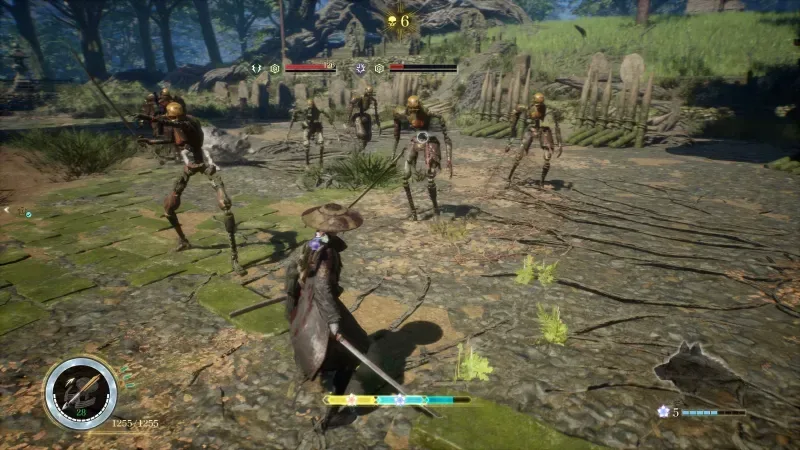
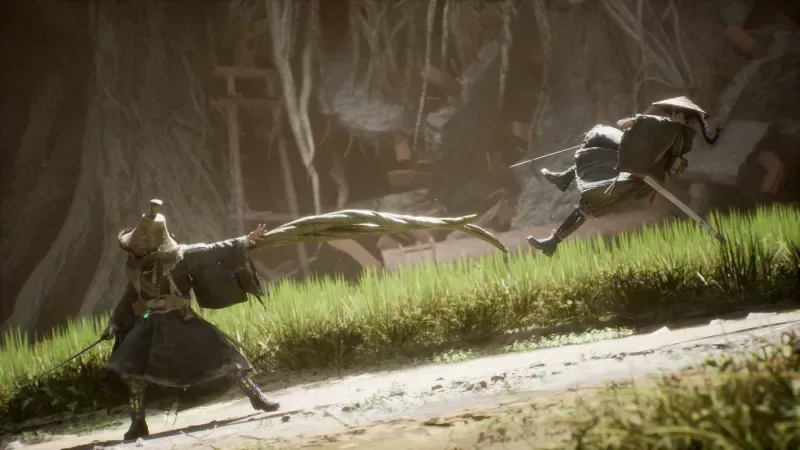
Emma's swordplay is the clear highlight. Beast of Reincarnation takes recognizable cues from parry-heavy action games such as Sekiro and Stellar Blade, using dodge timing, defensive counters, stagger pressure, combo routes, and finishers to make individual fights feel active rather than passive. Enemies are not merely damage sponges; they are opponents whose attacks invite observation and response.
Koo is integral to the system rather than a decorative companion. The wolf supplies quick-time elemental abilities that can be equipped and modified, creating opportunities to build status effects into Emma's attacks. One effective approach centers on lightning: using Koo's lightning Javelin with a modifier that doubles status buildup can quickly apply Shock through an electricity-infused katana. The resulting paralysis window gives Emma time to unleash combo moves and finishers, piling on damage and stagger before an enemy can recover.
That is only one possible direction. Fire, poison, ranged, stealth, and other approaches broaden the available playstyles, while the expanding skill tree supports increasingly specialized versions of Emma and Koo. Skill points used to improve individual moves and abilities are especially satisfying because they create noticeable growth in the tools available during a fight. The tree continues to offer advancement even after the final battle, reinforcing how much the game wants players to keep refining their combat setup.
Traditional role-playing attributes such as attack and defense are less compelling. Attribute points are handed out generously enough that allocating them can feel inconsequential. By contrast, the specific upgrades within the skill tree make a clearer difference, encouraging players to look for synergies between elemental effects, weapon moves, and Koo's support kit.
There are three difficulty settings, and the game takes a relatively welcoming approach to action combat. Generous health recovery, powerful attacks that are easy to access, and forgiving parry and dodge windows lower the barrier to entry. That does not mean every encounter is effortless. Elite enemies and bosses can still demand attention, especially early on when their arenas work well as spaces for learning the game's defensive timing. Experienced action-game players, however, may eventually find themselves feeling exceptionally safe once the systems click.
Repeated bosses and familiar corridors wear down the momentum
Combat does not entirely escape repetition. Bosses return too often, including foes that are supposed to function as major end-of-stage spectacles. Enemy animation reuse becomes noticeable as well, diminishing the sense that each duel is a fresh test. The combat remains enjoyable because the underlying mechanics are so responsive, but the game does not provide enough distinct opposition to consistently preserve that initial thrill.
The broader stage formula is even more limiting. A large boss appears near the beginning of an area, takes enough damage to retreat, and waits in its lair while Emma pushes through the rest of the stage. Eventually, the path circles back to the proper showdown. This structure is clear and functional, but its repeated use makes each zone feel like another variation of the same assignment rather than a unique place with its own sense of discovery.
Visually, the world is dominated by concrete remnants, vines, shrubs, and greenery. The reclaimed ruins can be appealing in isolation, but the explorable environments do not evolve enough to sustain the setting's mystery. Instead of inviting curiosity, many routes simply funnel Emma forward through broad, unchanging hallways filled with familiar enemies and containers.
Emma can use vine-based mobility to double jump and whip herself toward higher perches. In battle, this movement adds flair: launching upward and slamming down with a Helm-Splitter attack is a satisfying way to open on enemies below. Outside of combat, though, the system is underused. These traversal powers mostly lead to another bland corridor, another group of ordinary foes, or another chest containing resources that rarely feel valuable.
Progression without much reason to explore
Loot is one of the biggest reasons Beast of Reincarnation's exploration loses momentum. Chests repeatedly contain similar resources, and the most useful response is often to hit the take-all prompt and continue moving. Seedlings can be grown into crops for Kagura to turn into stat-boosting meals, but the bonuses are minor. Skulls improve the Cleanse Walker, yet that mech can be fully upgraded before the adventure reaches its midpoint. Books can be collected but not read, rations support a hunger system with little practical weight, and currency is plentiful enough that scarcity never becomes a meaningful consideration.
None of these systems is inherently harmful, but together they make detours feel rote. A rewarding action RPG needs to make players curious about what might be around the next corner. Beast of Reincarnation too often makes the answer obvious: more resources, more corridor space, and another direct route to the next fight.
Who should play Beast of Reincarnation?
Players who value accessible, parry-centered action above everything else may find enough to enjoy here. The elemental build options, generous windows for defensive play, and skill-tree depth create a combat loop that can support experimentation well beyond the first successful setup. The New Game+ option may be particularly tempting for those who finish the campaign wanting to test a radically different Emma build.
Players seeking a richly explorable world, intricate role-playing decisions, or emotionally resonant storytelling should temper expectations. The setting has intriguing ingredients, but the game rarely develops them into a world worth lingering in. Its dialogue is overexplained, its character work is thin, and the adventure's collectible and upgrade systems do not make exploration feel consequential.
Final takeaway
Beast of Reincarnation is a combat system in search of a stronger game around it. Emma and Koo offer an enjoyable partnership in battle, with elemental effects, stagger opportunities, swift movement, and customizable skills creating regular moments of action-game satisfaction. Yet the repetitive bosses, rigid stage template, forgettable loot, lifeless environments, and flat narrative prevent that combat from reaching its full potential.
There is enough here to justify a look for fans of flexible sword-based action, especially those who enjoy optimizing status effects and refining a personal build. But even the excellent battles cannot fully compensate for an adventure that too often feels like it is simply moving through the motions between them.
Community
Discussion
Start the conversation.
No comments have been posted yet.